
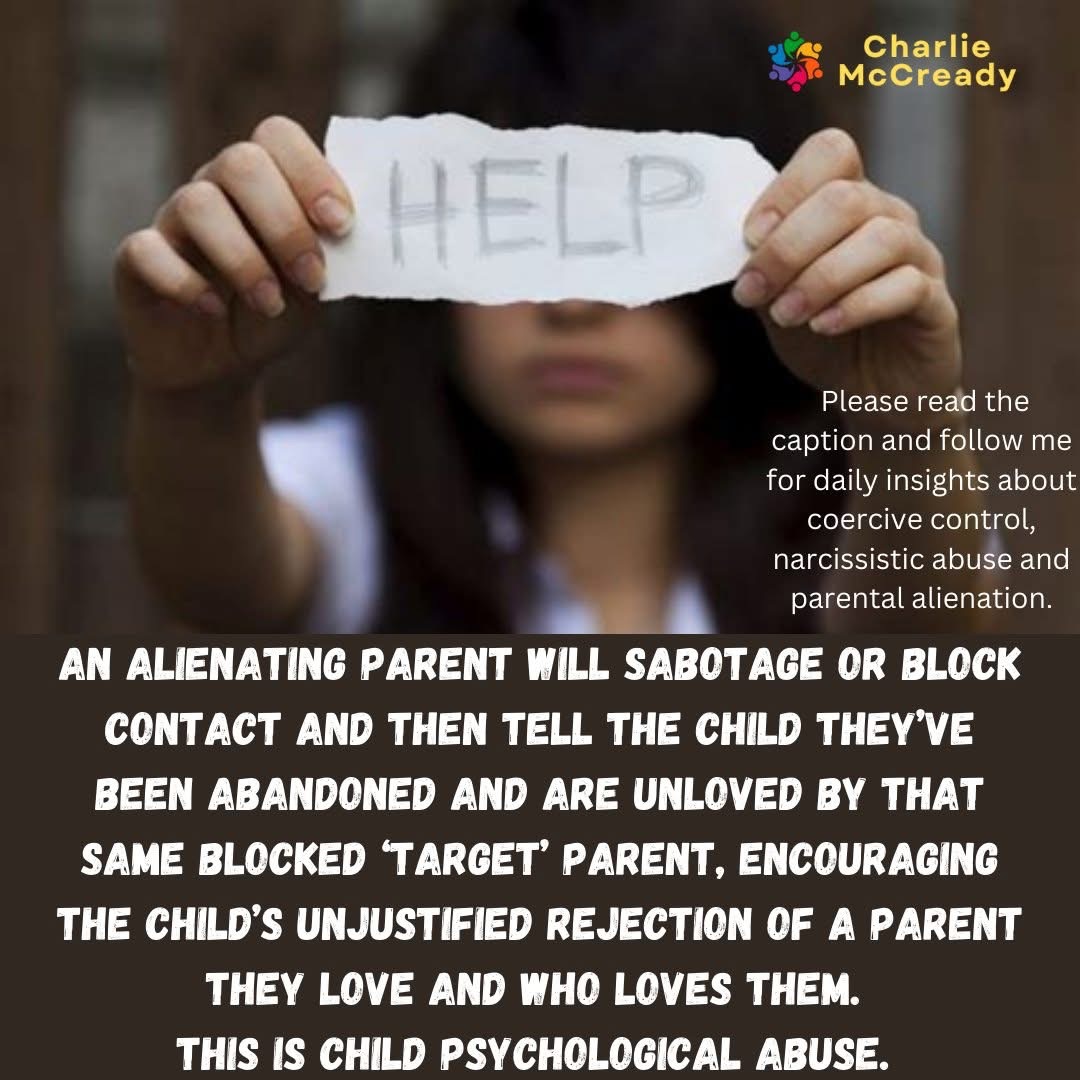
In Abuse in the Family, Alan Kemp defines domestic violence as “a form of maltreatment perpetrated by a person with whom the victim has or had a close personal relationship” (Kemp, p. 36). I believe that using terminology that accurately describes parental alienation as a form of abuse is crucial. Those of us who have experienced it understand that it transcends the label of ‘parental alienation’—a term that is often misunderstood and misused. It encompasses child psychological abuse, spousal psychological abuse, and constitutes a form of violence within the domestic environment.
Kemp’s book serves as an excellent resource for anyone seeking to understand psychological maltreatment, which, in essence, includes parental alienation. The same categories apply: rejecting (spurning), terrorising, corrupting, denying essential stimulation, emotional unavailability, unreliable parenting, neglect in mental health, medical, or educational contexts, degrading or devaluing, isolating, and exploiting.
The alienating parent manipulates and exploits the children, isolating them from a nurturing parent and their family, including grandparents, step-parents, step-children. They deny the children their fundamental needs for love and belonging from the targeted parent, thereby neglecting their mental welfare. This parent dismisses the children’s and the targeted parent’s expressions of love and need for one another. The alienating parent not only terrorises and corrupts the children but also prioritises their own desires above the needs of everyone else, including their own children.
Kemp employs an ecological approach to explore the pervasive issue of family maltreatment, analysing the complex relationships at macro, meso, and micro levels. By addressing questions such as “Why does family maltreatment occur?” “What do its victims experience?” “How do they recover?” “What can we do to help them?” “How can we understand the perpetrators?” and “How might we reduce or prevent family abuse?”, we can better equip ourselves to combat this significant social problem.
The definition of domestic violence presented in Kemp’s work applies aptly to parental alienation, wherein one parent manipulates a child to turn against the other parent, constituting emotional and psychological abuse. My posts are here not to alarm or upset but to spread awareness about what’s known as ‘parental alienation’ and to provide guidance to those who are going through it, as I did myself. Apart from these daily posts, which I hope help you know you’re not alone, and to better understand it’s an attachment disorder, a pathology, it’s not you; please reach out if I can help with the coaching I offer.
#charliemccready
#parentalalienationcoach
#pathogenicparent
#coercivecontrol

 GreatCosmicMothersUnite