

In most families, there is always one person who is either disturbed, disturbing, or whom everyone avoids for their incomprehensible or unhealthy or even seemingly dangerous behavior.
When I was a shaman in service to Santiago Atitlán, there was a consensus among the Tzutujil people that in their families such people had been originally the tenderest of all their relatives and were therefore the most vulnerable to being saddled with the burden of unmetabolized bis or grief inherited from the family’s past.
These individuals were the ones chosen by life to carry the old family grief like a huge sack, so as the rest of their relatives could carry on the typical everyday life free of all the pain and detoured existence that person’s life entailed. In most cases this “chosen” person became hard and strange, drifting “back under the water” as those wise Mayans called it: becoming a hopeless addict of one substance or another.
Instead of being ashamed of that member of the family and treating them as something to hide or as an outcast (though sometimes they themselves had it that way), they were seen more as a gift, a life sacrificed, the jesus of the family who willingly or unwillingly, through their incredible suffering and chaotic unfulfilled existence, made it so the rest could live free to pursue regular reasonably unafflicted lives.
The more generous and conscious of the people knew that the entire group should somehow share the burden amongst them, but people are people, and most lived by the motto adhered to worldwide: better him than us. It seems to me people of the big cities and countries of the modern world are just as deeply afflicted with this very syndrome.
How does this happen? Where does it start? There are a lot of originating possibilities, especially in a family’s past, but all of them involve the gross deferring of grief from a previous generation onto the next generation.
Martin Prechtel, The Smell of Rain on Dust. 🌏🔥 🌙🍃
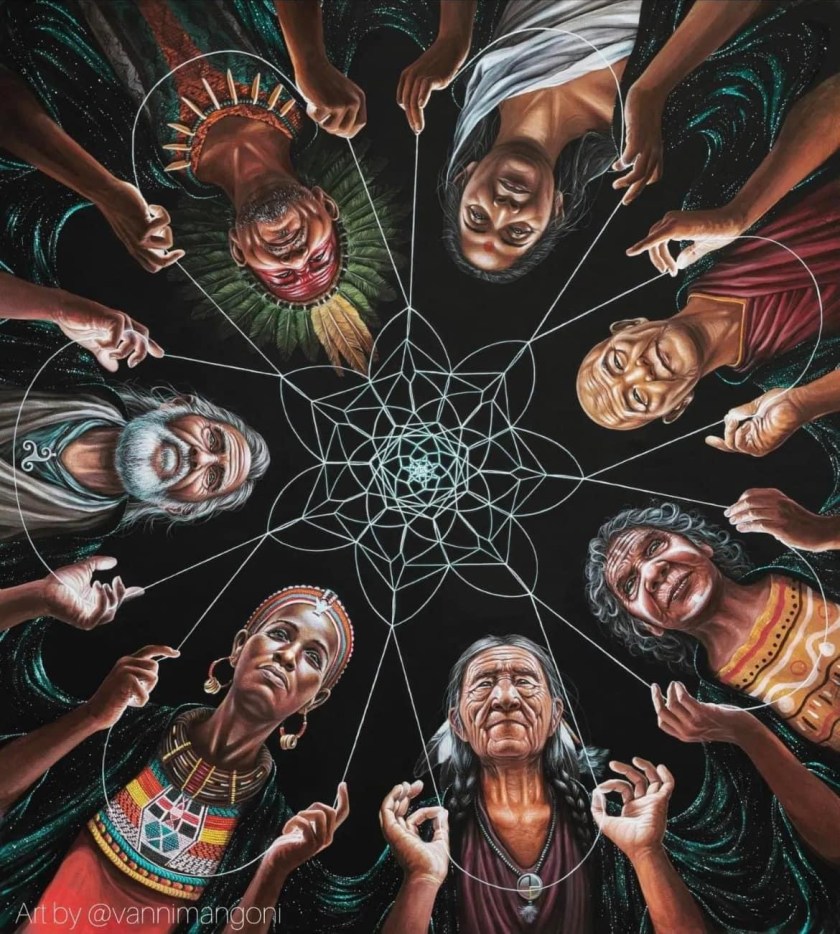
(Thank you for the image, Gavin 💫)

 GreatCosmicMothersUnite