Lonely

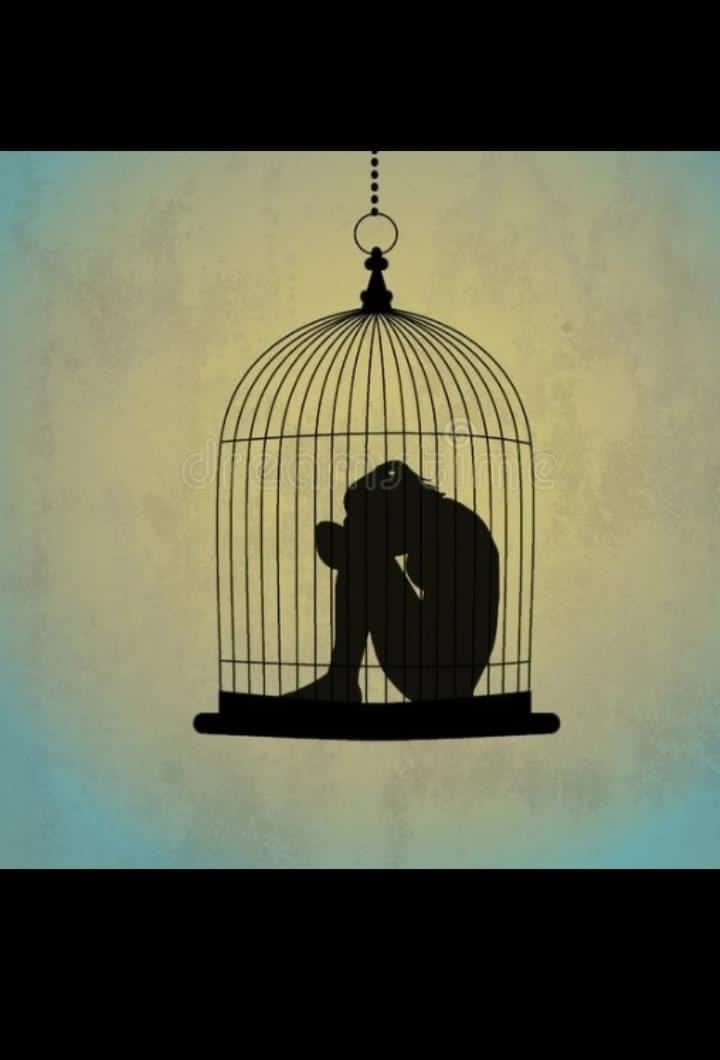
Lonely…….

Have you ever realized how lonely it is when you are in a relationship with a narcissist they can be in the same room with you and you still feel alone. That is because they are emotionally withdrawn from you. We are so confused because of the love bombing stage in the beginning how this person seems to have changed overnight and all those great loving emotions have turned into hateful spiteful hurtful cold undertones. That’s because the love bombing stage is fake it is all fake narcissist once again depending on where they are in the scale don’t feel empathy or sympathy to the degree that we need in order to sustain a healthy relationship. If you’re dealing with a malignant narcissist which is pretty much antisocial personality disorder then they are emotionally impotent entirely void of the capability of caring or nurture. When they do show love or nurture it is false it is just the mask they are wearing. It’s very hard to accept the person you love and care for doesn’t love you but you have to realize and you must accept that they can’t even if they wanted to. It is best for you to become indifferent, to start the journey of separation to remember that all the hurtful things they say and do is the real them take the steps to safely let go so you can find love and be loved where you can love and have it in return.

“Jamie Larsen”

https://youtu.be/RLM0tiZ5Kf8

Never Knew Lonely , by Vince Gill

Narcissist excel at projection & lack of responsibility

The narcissist Sociopath and psychopath are extremely tactical at what they do. their patient and their goal is to convince everyone else that they are the good guy the nice guy or a girl while you are the unstable one insane crazy dramatic over-the-top even abusive they have ways of doing this they practice it when it’s just you and them they will be calm well collected but say some thing that they know will trigger you because they know all your triggers at first you don’t react over the top but they’re gonna watch your emotion build and then they will continue to say more and more triggers until you finally react with reactive abuse. Then they will say something like I am not going to speak with you if you were going to treat me this way I’m not gonna tolerate it. I’m not going to engage with you when you are irrational you’re acting crazy. Then they will ignore you or Stonewall you which will only increase your rage or your emotional rage. I should say you will feel like you were going crazy remember this is all part of their plan after a while they will start doing this in front of people it
especially if you have children they will really do this in front of them making mom look insane While the narcissist looks like the good guy or calm and composed trying to calm down the victim. keep in mind that this individual this abuser has already been talking to everyone else behind your back trying to convince everybody that you’re the crazy one that they are the victim of abuse. In actuality you are the victim of severe abuse but no one is going to believe you because they appear so nice so calm so rational it’s psychological warfare and when you are going up against people that have no morals feel no empathy or sympathy no remorse no guilt and live only to serve their own needs and wants it is damn near impossible to beat them at their own game. These individuals are highly dangerous whether they are the physical or not doesn’t matter the emotional toll emotional damage can take years and years to unravel and rewire the best way to handle these people when they are trying to trigger you it’s a gray rock them which can be very difficult when your emotions are running so high. Just remember to look for the signs to notice what they’re doing and when they’re doing it and leave the room do not let them trigger you you’re far more powerful than you think these individuals do not go after weak people They go after people with high supply, people with empathy sympathy intelligence love happiness all the things that they themselves lack they are like a dark void trying to suck all your light out don’t give it to Them and they’ll get bored with you and eventually leave. But don’t think it’ll stop there they have a tendency to try to keep you on the hook continue the abuse even after you’re gone especially if you have children but you can guard yourself against them.

“Jamie Larsen”

Reality of Adult Children adapted to distortion

Have any of you had an adult or nearly adult, child make you feel like you’re still living with their parent? My oldest decided at 14, he wanted to live with his dad. At 19 now, with the help of his therapist, has seen through the bs and asked me to move in here. Of course, we opened our home for him, got him a job, have bent over backwards to ensure this feels like home to him. I love him being here, for the most part. He often comes to me when I’m just settling into bed, wanting to start an argument though. Because I stayed as long as I did. Because at 14, despite the lawyer and judge telling me I had no leg to stand on, I didn’t fight for him. There’s so much anger directed at me vs his dad and I feel like I’ve stepped back into that relationship again. ESPECIALLY with it all starting when I’m relaxed and ready to go to sleep. All of a sudden, he needs to talk and I’m the worst mom ever and if I try to tell him we can discuss tomorrow, he’s following me everywhere telling me that we need to talk now. I’m having such a hard time feeling the way I feel about my own child. I love him so much, but honestly, after being free from everything for 5 years now, I can not step back into it. I dont know how to get this across though without sounding like I am not willing to discuss it. I told him the other day, we can discuss all of this, im fully open to being candid and honest with you (we’ve had many, many, deep conversations regarding all of this) but that I could not be his punching bag. That I could not he kept up all night because he was itching for a fight with someone. 95% of the time, it absolutely breaks his heart if he sees me upset over something. He goes out of his way to help me, but that 5% its like he is enjoying the hell out of upsetting me. Pushing and pushing and saying absolutely horrible things and it’s like once he has me weak, vulnerable and crying, he’s ready for bed. Not until that point though. I’m really not sure how to handle this or where to even start?

How to Stay with a Narcissist

How To Stay With A Narcissist…

“It is recommended that you understand that the relationship rules for narcissists are different than those for others. The following suggestions will help you to have a close, ongoing relationship with a narcissist:

1. Make sure you collude with your narcissist to reinforce his belief that relationships are one-sided and that he is entitled to have a fantasy wife, child, etc. Become comfortable at living with double standards and performance based approval.

2. Do not require him to share in household or child-rearing responsibilities. Make sure you are willing to carry these weights yourself.In fact, make sure you are ultra-responsible in all areas of your relationship. Do not expect the relationship to be 50-50. A more realistic expectation is that he will require 100 percent of your emotional energy and almost, if not all, of your personal identity.

3. Be available as a sponge or garbage pail to absorb his rage and shame. When he needs a place to dump all his negative emotions, make sure you are readily available with a willingness to listen, understand, forgive, and feel empathy for his anger.

4. Let go of your need to be listened to, validated, or respected.

5. Become comfortable with indirect and incomplete communication. Learn well how to navigate silent treatments and gas-lighting. Do not expect dialogues, but learn to be a captive audience for long monologues and diatribes. Do not ask questions for anything requiring a specific answer. Learn to solve problems without your loved-one’s input or approval.

6. Try not to venture too close to an independent thought. Be sure and check with your narcissist to see if your idea is accurate or smart. He, after all, is an expert on everything and knows what is best. In fact, sometimes it is recommended to steer clear of thinking for yourself altogether.

7. Embrace your relationship with betrayal. Your narcissist will betray you. It might not be sexually, but it will be in one form or another, particularly designed for your specific susceptibilities.

8. Realize that love to you and love to your narcissist have entirely different meanings. For a narcissist, “love” happens when you are a secure, stable source of narcissistic supply. Understand that when a narcissist tells you he loves you it means you are helping him feel good about himself by providing steady narcissistic supply.Narcissistic supply is what narcissists depend on for emotional “stability.” Typical forms of narcissistic supply include sex, power, control, one-sided relationships with no accountability, compliments, subservience, obedience, admiration, and other requirements unique to the individual.

9. Lose yourself in him. Be what he wants you to be. Don’t have your own individuality. To do this, let his words and actions convince you that your value is based on what he claims it is.

10. Learn to dissociate from your emotions. Being with a person who cannot attune with you, see you for who you are, care about your feelings, or value you for your individuality is very painful.It is important to numb your emotions by dissociation, or some other means of anesthesia. It is too hard to feel the emotions engendered by your unmet relationship needs, so being adept at emotional numbness is a recommended goal for a person who wishes to remain close to a narcissist.

11. Be a ready and willing scapegoat to his anger. Narcissists are always angry – their anger is either expressed covertly or overtly. Be open to taking all the blame for everything he is angry about.And even if he’s angry for another reason, be willing to try to fix it for him and make things better.Be aware that a key characteristic of a narcissist is that he is chronically angry. Learn to adjust yourself to this reality.

12. Become comfortable with loneliness. Being in a relationship with a narcissist is a very lonely experience. The more you learn to live with emotional deprivation, the better you will fare in your relationship.

I must warn you, that if you decide to become emotionally healthy, set boundaries, speak up for yourself, and do not follow the above suggestions, your relationship with your narcissist may not be sustainable.

Because narcissists need narcissistic supply like you need love, if you do not remain a good supply source (as these tips are designed to ensure) then you may lose this relationship altogether.”

-Unknown author: borrowed from a friend.

Truth Teller Sherrie Campbell PhD

As our relationships with our toxic family deepens so does their ability to abuse us. When we are in highly dysfunctional families and manipulation and coercion substitute for love, we have no other experience to draw from when it comes to knowing what love is. When we believe that those who love us also abuse us, we are not set up for success in love.

A toxic family has to abuse and keep all members dependent. This is the only way to keep the system too confusing to leave. Further, no one can leave. Any family member who escapes exposes the toxic secrets inside the family system.

It can feel impossible to get out from under a family like this, but it is possible. It takes trusting the truth of your reality. Once you trust yourself you are on your way to getting to the point where enough is enough and you activate on that truth to set yourself free.

Childress on Child Abuse

In the absence of child abuse, parents have the right to parent according to their cultural values, their personal values, and their religious values.

In the absence of child abuse, each parent should have as much time and involvement with their child as possible.

In the absence of child abuse, to restrict either parent’s time and involvement with their child would damage the child’s attachment bond to that parent, thereby harming the child and harming the parent.

Is there child abuse? Let’s get a proper risk assessment for possible child abuse.

Either,

1) child abuse by the targeted parent accounting for the child’s attachment pathology toward that parent,

Or.

2) child psychological abuse by the allied parent, i.e., a shared persecutory delusion created by the collapse of a narcissistic-borderline personality parent surrounding divorce.

One way or the other, we’re looking at a likely child abuse diagnosis. We need a proper risk assessment for possible child abuse.

From Walters & Friedlander: “In some RRD families [resist-refuse dynamic], a parent’s underlying encapsulated delusion about the other parent is at the root of the intractability (cf. Johnston & Campbell, 1988, p. 53ff; Childress, 2013). An encapsulated delusion is a fixed, circumscribed belief that persists over time and is not altered by evidence of the inaccuracy of the belief.” (Walters & Friedlander, 2016, p. 426)

From Walters & Friedlander: “When alienation is the predominant factor in the RRD [resist-refuse dynamic}, the theme of the favored parent’s fixed delusion often is that the rejected parent is sexually, physically, and/or emotionally abusing the child. The child may come to share the parent’s encapsulated delusion and to regard the beliefs as his/her own (cf. Childress, 2013).” (Walters & Friedlander, 2016, p. 426)

Walters, M. G., & Friedlander, S. (2016). When a child rejects a parent: Working with the intractable resist/refuse dynamic. Family Court Review, 54(3), 424–445.

What is the diagnosis? Is there a shared persecutory delusion? We need an answer to that question.

If the mental health person cannot answer that question – is there a shared persecutory delusion? – then they are pointless to the situation because we need an answer to that question.

IT… IS… SIMPLE. Is there a shared persecutory delusion? Yes? No?

How do they know if they don’t even look to see? Do the child’s symptoms meet diagnostic criteria for a persecutory delusion? How about we use Item 11 on the Brief Psychiatric Rating Scale for Unusual Thought Content (delusions), “one of the oldest, most widely used scales to measure psychotic symptoms,” to rate the delusional quality of the belief.

Or you can write the answer on a napkin. Tell us by smoke signals for all I care… we just need an answer, is there a shared persecutory delusion – a fixed and false belief in supposed “victimization”?

The treatment for cancer is different than the treatment for diabetes. Diagnosis guides treatment. If we treat cancer with insulin then the patient dies from the misdiagnosed cancer.

What is the diagnosis?

“I don’t diagnose, I don’t like to pathologize” Then you’re a pretty worthless person to the situation because we need a diagnosis.

Is there child abuse? V995.51 Child Psychological Abuse? Why are we not routinely getting an answer to that question for court-involved family conflict?

They deserve to lose their license. Look at all they’re putting you through because they won’t diagnose Child Psychological Abuse (V995.51) when it’s warranted. They have duty to protect obligations, and they are not protecting your child.

Knowledge is power. Planning is power. The pathogen is now-reactive. Plan ahead, move step-by-step on a linear path to the goal. You want a written treatment plan to fix things please.

Google mental health treatment plans and read the first two returns – one of those please.

Craig Childress, Psy.D.
Clinical Psychologist, CA PSY 18857

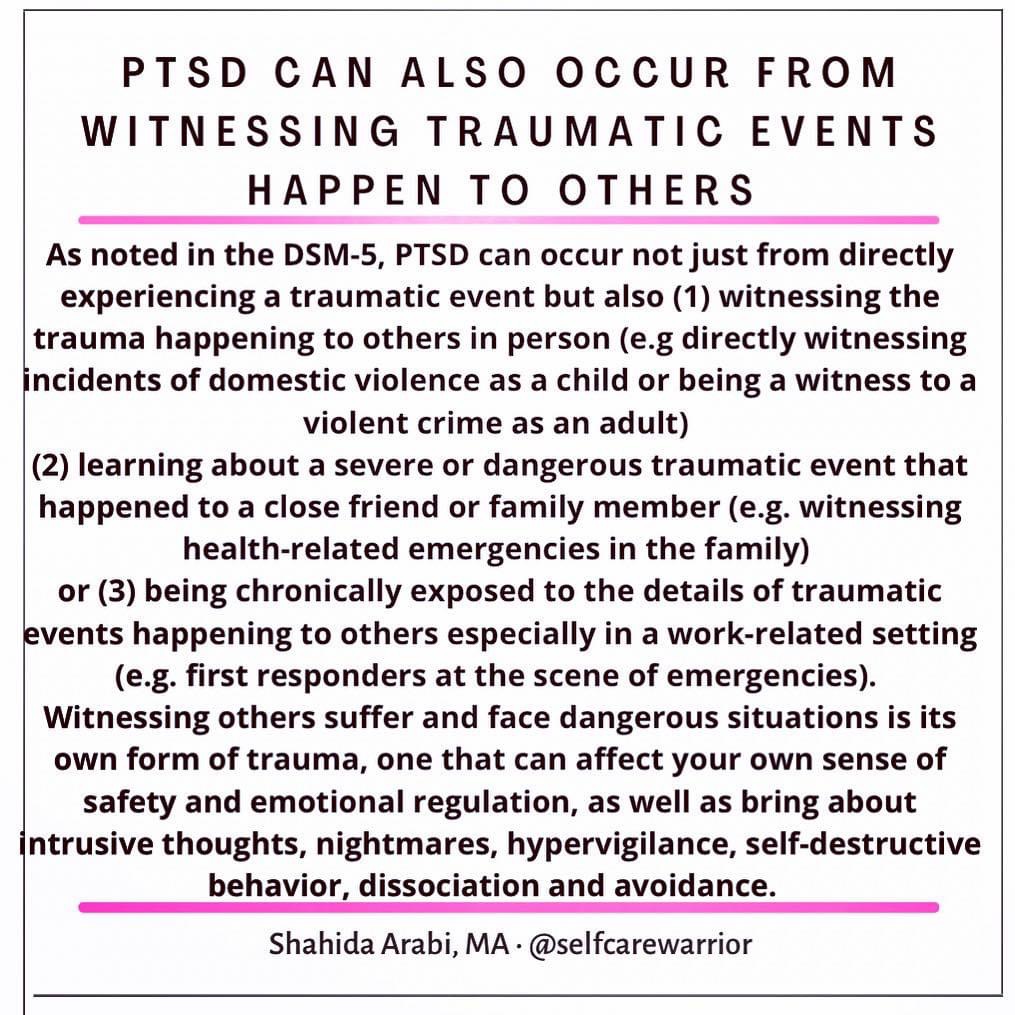
Trauma via being Witness to Events

PTSD can occur not just from directly experiencing a severe traumatic event but also witnessing it happen to others, including close friends, family and loved ones as well as being chronically exposed to the details of the trauma of others in work-related settings.

#narcissisticabuse #toxicrelationships #toxicpeople #emotionalabuse #shahidaarabi

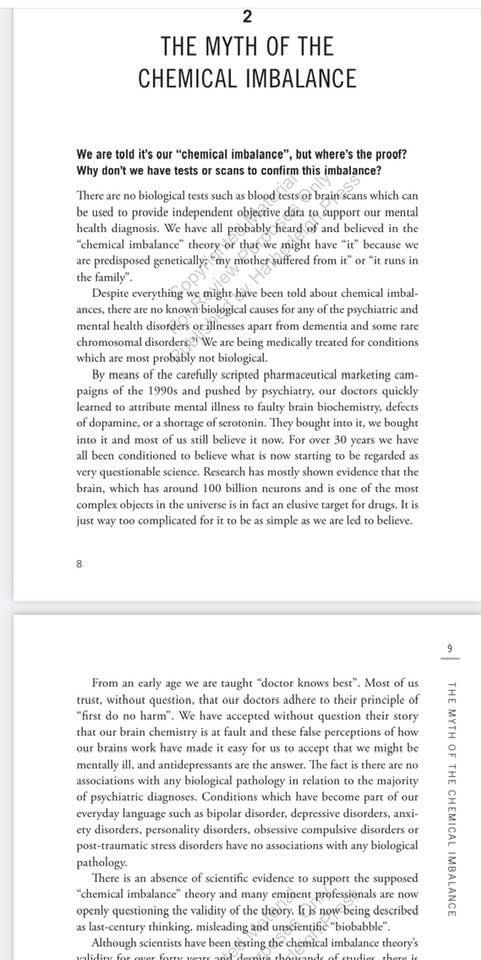
The Myth of Chemical Imbalance

From my book “Antidepressed”. By means of the careful scripted pharmaceutical marketing campaigns of the 1990s and pushed by psychiatry, our doctors learned to quickly attribute mental illness to faulty brain biochemistry…defects of dopamine…shortages of serotonin….The covert DSM has been cleverly and unceremoniously drilled into our psyche and until very recently we have generally accepted it without question.”