
Tag: Children
War Vet Brains in kids of Alienation Conflict
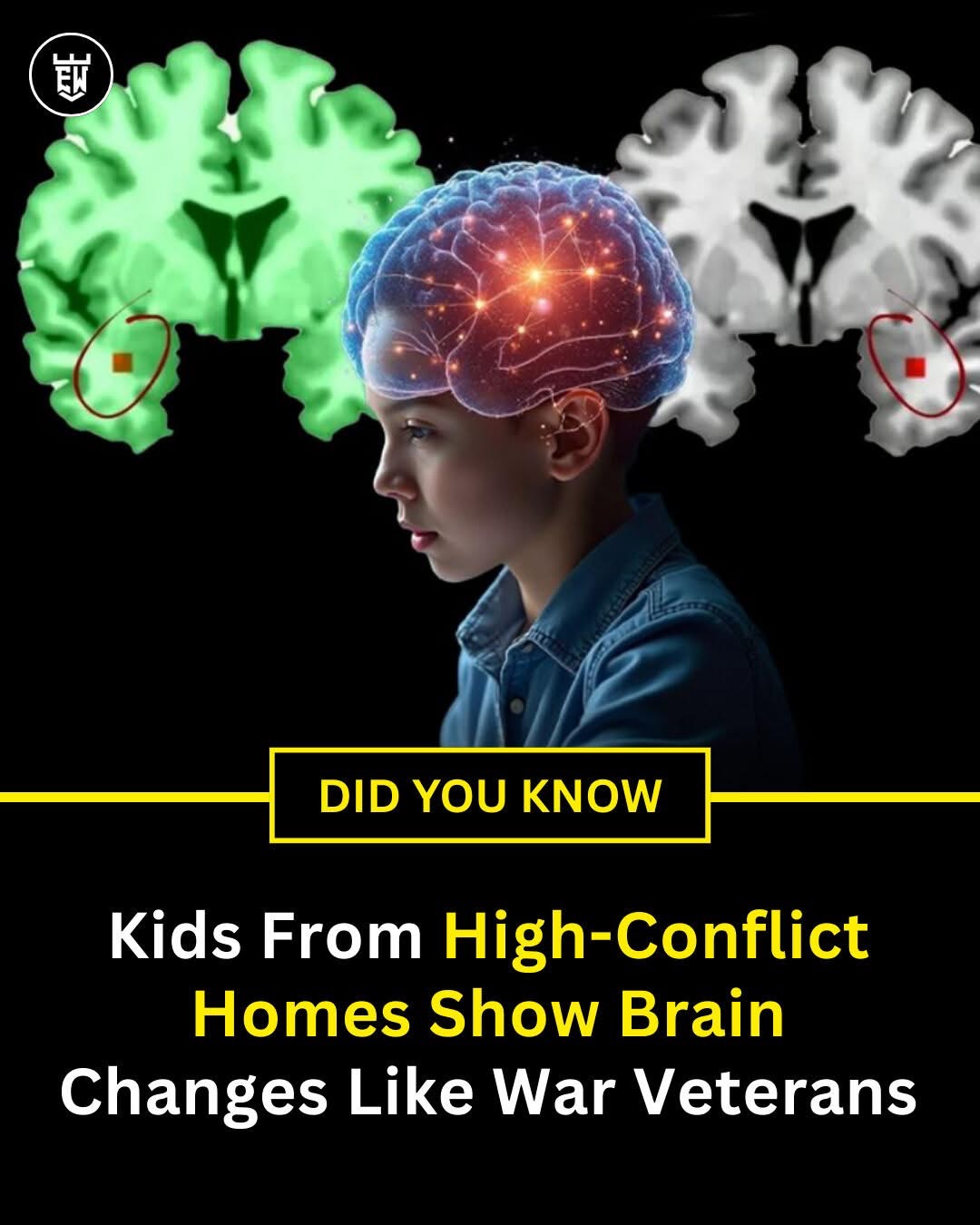
A groundbreaking study using brain scans has revealed a disturbing parallel: children exposed to intense family conflict show brain changes similar to those found in combat veterans. That’s right — the emotional warfare inside a home can mimic the neurological toll of literal battlefield trauma.
Researchers found that kids who witness chronic yelling, aggressive arguments, or domestic tension have altered brain activity in areas linked to fear, stress, and emotional regulation. These are the same brain regions often affected in soldiers returning from war zones.
The amygdala, a part of the brain responsible for processing threats and fear, becomes hypersensitive, constantly on alert. Meanwhile, the prefrontal cortex, which helps manage emotions and make rational decisions, often becomes underdeveloped or impaired. This combination can lead to long-term emotional difficulties, anxiety, or even PTSD-like symptoms later in life.
What makes this even more alarming is that many families underestimate the impact of loud fights or emotional tension on children. But the science is clear: a child’s brain is shaped by the emotional climate they grow up in.
This discovery highlights the urgent need for family therapy, safe environments, and emotional education to protect developing minds. Just because there are no visible bruises doesn’t mean the damage isn’t real.
#DidYouKnow #ChildPsychology #BrainFacts #MindMirror #FamilyHealth #TraumaScience
Like having you’re children die; everyday
Born to be whole
The Cost of Being the Emotional Healer in a Dysfunctional Family.
When a family system is built on silence, suppression, or survival,
someone always gets assigned the unspoken role of the healer.
Not because they were ready —
but because they were willing.
Willing to listen.
Willing to soothe.
Willing to become emotionally available in a system that gave them nothing in return.
If this was you,
you became the stabilizer.
The peacekeeper.
The one who “understood.”
You decoded moods like a second language.
You anticipated everyone’s emotional needs — while yours became invisible.
And here’s the tragic psychology of it:
In many trauma-bonded families,
the child who senses the most becomes responsible for the most.
Not by force — but by emotional delegation.
You were praised for your maturity,
not realizing that “maturity” was code for self-abandonment.
Because what they called “wise beyond your years”
was really a child performing as a therapist.
According to Internal Family Systems (IFS),
a part of you became a manager —
tasked with keeping everyone else okay
so the system didn’t collapse.
But this comes at a cost:
The healer is rarely allowed to break.
The one who absorbs becomes the one who disappears.
And the more you regulated the chaos around you,
the less they noticed the storm INSIDE YOU.
Jungian theory would call this a fracture of individuation —
when your identity becomes fused with function.
You don’t know who you are without fixing someone.
But here’s the truth they never told you:
Healing isn’t your job.
Your nervous system was never meant to be the family’s emotional regulator.
You were meant to be a child.
Not a counsellor.
Not a mirror.
Not a bandage for generational wounds.
And now that you’re older,
you don’t owe anyone the version of you that kept them comfortable.
You can set it down.
The soothing.
The translating.
The pretending you’re fine.
You’re allowed to fall apart.
To be held.
To rebuild an identity that isn’t built on being useful.
Being the healer gave you survival.
But it’s not who you are.
You’re not their anchor.
You’re not their lifeboat.
You’re not the glue that holds the dysfunction in place.
You’re the one who gets to step out of the role.
Who gets to be more than what they needed from you.
Who gets to begin again — on your terms.
You were not born to be their solution.
You were born to be whole.

Mother / Child cellular bond
“Pregnancy marks the start of the bond between mother and child, but did you know that a mother and her baby share more than just a physical and emotional connection? This is due to a fascinating phenomenon called fetal maternal microchimerism, where fetal cells persist in the mother’s body long after childbirth. Conversely, maternal cells also pass over to the fetus. While the science behind this concept is in the early stages, it sheds some light on the biological bond between mother and child.
What is fetal maternal microchimerism?
Fetal maternal microchimerism (FMM) refers to the presence of fetal cells in a mother’s body post-pregnancy. According to a study published by WILEY Periodicals, during gestation, cells from the developing fetus cross the placenta and enter the mother’s bloodstream, embedding themselves in her tissues and organs. These fetal cells can persist for decades, becoming a permanent part of the mother’s biological makeup.
Interestingly, this phenomenon is not one-sided. Maternal cells can also travel into the fetus. This unique relationship challenges the traditional view that a mother’s body completely separates from her child after birth.
How do fetal cells affect a mother’s body?
Scientists have found fetal cells in various maternal tissues, including the heart, brain, liver, and even the skin. But what are these cells doing in the mother’s body?
Tissue repair and regeneration: Fetal cells may have stem-cell-like properties, meaning they might aid in tissue repair. Research suggests that these cells may help heal injuries or even protect against certain diseases. For example, in animal studies, fetal cells have been found in damaged heart tissue, leading some scientists to believe they may assist in cardiac repair.
Immune system influence: According to a review article by Obstetric Medical, “maternal acquisition of fetal genetic material has been proposed to play a role in inducing materno-fetal tolerance during pregnancy, a factor potentially contributing to why certain autoimmune diseases, like rheumatoid arthritis (RA), are temporarily ameliorated during pregnancy.” . . .
A lasting connection between mother and child
Fetal maternal microchimerism is a powerful reminder that the bond between mother and child is more than just emotional—it’s cellular. Even after a child is born, part of them remains within their mother, influencing her health.
As researchers continue to explore this fascinating field, the implications of fetal microchimerism could reshape our understanding of pregnancy, maternal health, and even medical treatments. Whether aiding in tissue repair, influencing immunity, or playing a role in disease susceptibility, these lingering fetal cells highlight the deep, lasting connection between mother and child—one that science is only beginning to understand.
Final thoughts
Overall, fetal maternal microchimerism is a testament to the profound and lasting relationship between a mother and her baby. As research advances, we may uncover even more surprising ways in which these tiny remnants of our children continue to shape our health and well-being long after birth.”
~ Tessa Anderson
(Link in comment section)
Art: Lucy Pierce
Lucy Pierce- Artist and Wordsmith,
#SacredSistersFullMoonCircle #WomensWisdom #WomensEmpowerment #Goddess #GoddessCircle #GoddessStudies #EarthWisdom #CyclicalLiving #WheeloftheYear #Mythology #Magick #Folklore #FolkTradition #SeasonoftheMother #FetalMaternalConnection

 GreatCosmicMothersUnite