

💯
Exposing CPS –
Family Manipulation exposed
Stop getting antidepressants from your family Dr or NP
Totally agree , they were not educated for that reason . Often taking the recommend RX from a drug rep who is not educated either but spewing what they’ve been told from the pharmaceutical companies.
A child’s Inner Experience
Why Do They Need to Keep Their Distance for So Long?”
Many estranged or distant adult children struggle with feelings that are hard for parents to see. Understanding these inner conflicts can help you better grasp why your child may keep their guard up, even if you’re longing for closeness.
From their perspective, some common fears and worries include:
“My parent is more interested in preserving their image of themselves as a good parent than in taking responsibility for the past.”
For many adult children, the deepest need is to feel that their pain is taken seriously. If they sense that a parent’s focus is on proving they were not at fault, rather than acknowledging the child’s experience, it can make reconciliation feel impossible. Even if you strongly disagree with their interpretation, the perception that you’re defending your position instead of hearing them can block closeness.
“If I’m kind to my parent, they’ll take that as a free pass for the things that bother me.”
Some adult children fear that showing warmth will erase or minimize their struggles. Being nice might feel like saying, “It wasn’t so bad after all.” For them, distance can be a way of keeping the past on the record.
“If I act warmly, it might look like the past doesn’t matter.”
Your child may want to feel understood without having to constantly restate their pain. If they sense that their kindness will be used as evidence that the past wasn’t as important, they may withhold affection as a way of insisting that their story still counts.
“It’s scary to let myself get close—I might feel how much I still need them, lower my guard, and get hurt again.”
Many estranged children still carry a longing for their parent’s love and approval. But closeness makes them vulnerable to disappointment, dependency or enmeshment. The act of staying distant can feel safer than those risks.
“It feels weak to admit or show how much love or dependence I still feel for them.”
Some adult children believe that acknowledging their love or need makes them powerless, or undermines the independence they’ve worked so hard to establish. What looks like coldness may actually be self-protection.
What This Means for Parents
It’s important to remember that these fears don’t necessarily reflect the whole truth about you as a parent—they reflect your child’s inner experience. That distinction matters, because it can help you respond without defensiveness.
If you need help in understanding your child’s estrangement, join us TONIGHT for
“What Could They Be Thinking??”
Tuesday Sep2 at 430 Pacific
Register here https://drjoshuacoleman.as.me/Whatcouldtheybethinking

Damage done by abusive Alienator
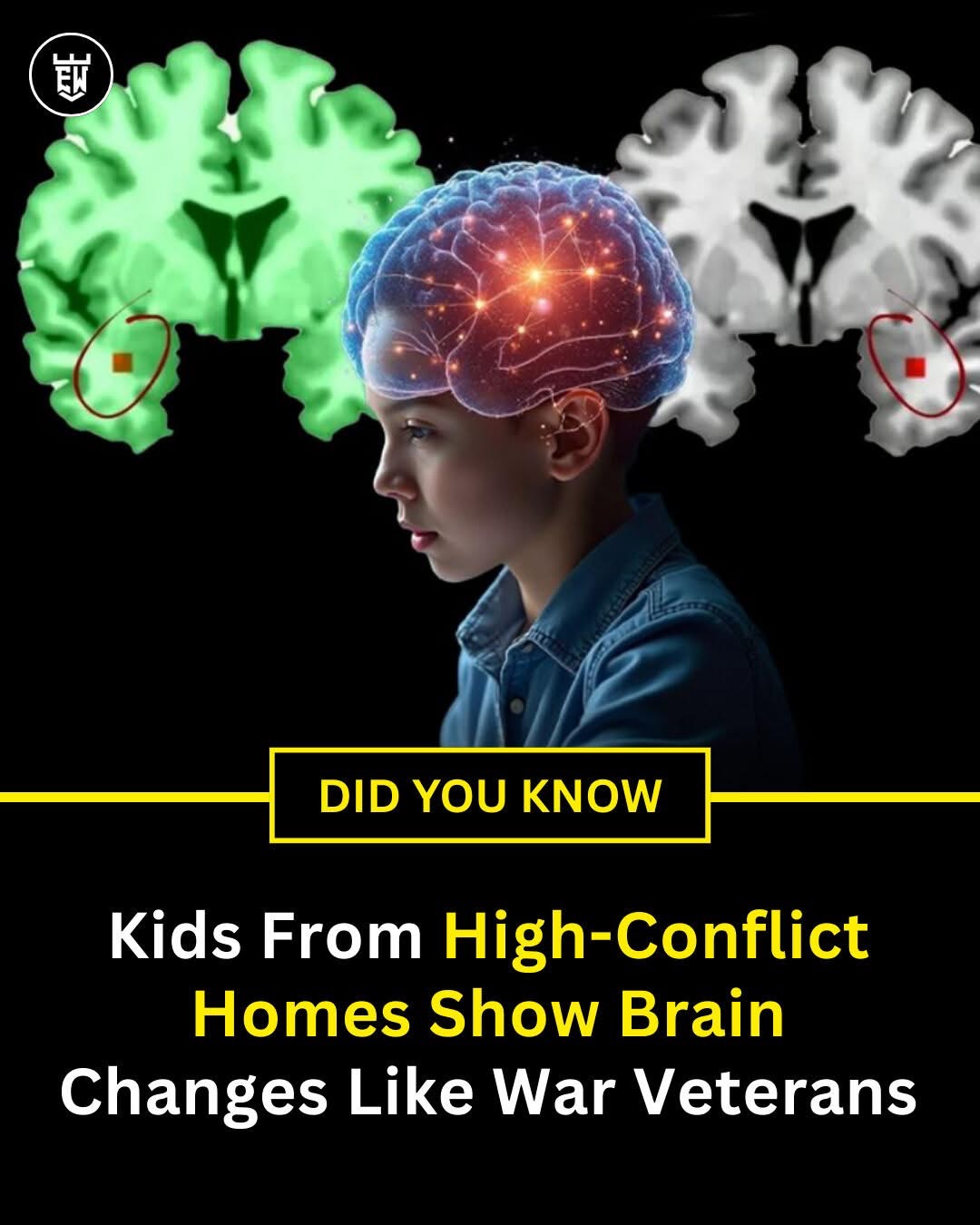
War Vet Brains in kids of Alienation Conflict
A groundbreaking study using brain scans has revealed a disturbing parallel: children exposed to intense family conflict show brain changes similar to those found in combat veterans. That’s right — the emotional warfare inside a home can mimic the neurological toll of literal battlefield trauma.
Researchers found that kids who witness chronic yelling, aggressive arguments, or domestic tension have altered brain activity in areas linked to fear, stress, and emotional regulation. These are the same brain regions often affected in soldiers returning from war zones.
The amygdala, a part of the brain responsible for processing threats and fear, becomes hypersensitive, constantly on alert. Meanwhile, the prefrontal cortex, which helps manage emotions and make rational decisions, often becomes underdeveloped or impaired. This combination can lead to long-term emotional difficulties, anxiety, or even PTSD-like symptoms later in life.
What makes this even more alarming is that many families underestimate the impact of loud fights or emotional tension on children. But the science is clear: a child’s brain is shaped by the emotional climate they grow up in.
This discovery highlights the urgent need for family therapy, safe environments, and emotional education to protect developing minds. Just because there are no visible bruises doesn’t mean the damage isn’t real.
#DidYouKnow #ChildPsychology #BrainFacts #MindMirror #FamilyHealth #TraumaScience
Like having you’re children die; everyday
Bob Dylan Extended/ Knocking on Heaven’s 🚪 Door
This popped into my head as I lay in my bed with a robe on and my hair in a Bonet with heavy of conditioner..
I’m Thankful to be done with things that weight me down or hold me back . It brings joy to some to challenge and to win over others . And must place me in that competition I didn’t sign up for .
I signed up for pulling Heaven to Earth and I’ve known that space exist .
Thus this song 🎶 came to mind and I was transported . It’s more than a dream😘👍💯
* headphones highly recommended and tissues
S
Betrayal Trauma
“💥Read this:💥
💔There’s a cultural movement I want to address head-on: adult children choosing no contact with their parents.
🤔Many who make this decision insist it wasn’t impulsive. They’ve sat in therapy sessions, told their stories, catalogued their pain, and often wrestled with the choice for a long time. Therapists, hearing only their perspective, frequently agree: no contact may be the healthiest option.
😯But notice—these are sessions the parent is not invited to. The other half of the story is absent. The relationship itself is not in the room.
🤔It’s like doing marriage therapy with one spouse missing: you can validate the pain, but you cannot repair the bond.
🤔And so silence is prescribed. The phone goes unanswered. Holidays pass unacknowledged. Letters are returned. Gifts unopened.
💔💔And what remains is not just the pain of the past, but a second wound layered on top: betrayal.
💔When Silence Becomes Its Own Injury
💔💔I think of a mother I worked with (details changed). Her daughter went no contact for two years. During that time, the mother did everything her daughter had asked—therapy, reflection, tangible change. She longed not for perfection, but for another chance.
💔When her daughter finally reappeared, she expected relief. Instead, she was met with her mother’s trembling hands and a voice that shook: “I don’t know if I can trust you not to leave me again.”
💔The daughter had assumed reconciliation could begin where things left off. But the mother was now carrying a new injury: betrayal trauma.
What We Learn from Couples Therapy
😯We see this dynamic clearly in couples’ work. When infidelity is discovered, it is not just a “marital problem.” It is a betrayal trauma. Research shows that the betrayed partner often develops symptoms severe enough to meet criteria for post-traumatic stress disorder (PTSD).
🤔The healing process must follow an order of operations:
🤔Acknowledge and tend to the trauma first.
Only then can the relationship’s deeper vulnerabilities be addressed.
Skip that order, and reconciliation fails. Why? Because betrayal doesn’t just wound—it destabilizes trust at the foundation.
💥Estrangement as Betrayal💥
💔Estrangement is not infidelity. Parent–child bonds are not romantic. But betrayal is betrayal.
💔💔Parents who are cut off don’t just echo PTSD symptoms💔—they meet the criteria. Intrusive thoughts. Avoidance. Negative shifts in mood and belief. Hyperarousal. I see it again and again in my work: they replay unanswered voicemails, they withdraw from social connection, they lose interest in what once gave life meaning.
💔And beyond the symptoms, there is the unthinkable reality: discovering that your own child—the one you raised from birth,
💔💔the one whose existence shaped your identity—is capable of abandoning you altogether. The person you love most is not dead, but gone by choice. Functionally absent, yet still alive.
💔That awareness shatters a parent’s belief system. It is not only the relationship that breaks—it is their entire way of understanding themselves and others. If my child could do this, what does that say about me? About love? About safety in the world?
💔This is why reconciliation, when it comes, does not begin with a blank slate. It begins with a parent carrying the wound of abandonment at the deepest level of attachment. And it is a wound very difficult to walk back from.
The Illusion of Benign Silence
💔Part of why no contact has gained traction is because we want to believe it’s benign. We want to believe it’s passive, even surgical—like a scalpel excising a cancerous lesion. Clean. Precise. Necessary.
💔But in practice, it’s rarely that. More often, it lands like a blunt-force bludgeon. The adult child may feel empowered by the silence, but for the parent, it’s not quiet—it’s shattering. It’s not the steady hand of a surgeon—it’s the sudden swing of an axe.
And like any blunt-force injury, it leaves trauma in its wake.
💔One of the most damaging narratives I see—promoted both by therapists and by adult children themselves—is that accountability rests entirely on the parent’s shoulders. The parent must do all the apologizing, all the repairing, all the changing. And until they do, the child bears no responsibility to engage in the relationship.
💔But once betrayal trauma has been created, that imbalance will never work. A relationship cannot heal when one side claims all the power and the other is asked to carry all the blame.
💔And here is the harder truth: what does it say about a clinician—or about any person—who promotes this kind of one-way accountability? At best, it reflects a fundamental misunderstanding of how relationships heal. At worst, it becomes an endorsement of relational cruelty dressed up as “boundaries.”
💔True reconciliation requires mutuality. Both people must face the pain that has been created, name their own part, and participate in repair. Without that, what is being offered is not healing at all, but a permanent imbalance of power that ensures the relationship will remain fragile, or collapse altogether.
Where My Field Must Reckon
Here is where I want to challenge my own profession.
Too often, therapists collude with estrangement because we are only hearing one side of the story. We validate the pain of the adult child (as we should). But we stop there. We do not invite the parent into the room.
And when we don’t, we risk mistaking rupture for healing. We allow no contact to masquerade as a healthy boundary, when in truth it is a relational detonation.
✌️I am not saying adult children must remain in abusive relationships. But I am saying we need more imagination than silence. We need to help them articulate boundaries, confront painful truths, and insist on change—with the parent in the room, not banished from it.
✌️A Harder, More Honest Path
💔💔No contact feels decisive. It feels like relief. But it almost always makes reconciliation harder. Healing the original wound is difficult enough. Adding betrayal trauma on top makes repair exponentially more complex.
💕Families can heal. I have seen it. But only when both sides acknowledge not just the past, but the pain of the cutoff itself.
The Truth We Must Say Out Loud
💔No contact isn’t neutral.
It isn’t clean.
It isn’t without consequence.
💔We like to imagine it’s a scalpel—precise, measured, cutting away only what is diseased. But more often, it strikes like a blunt-force bludgeon. It doesn’t just remove what was harmful. It crushes what was vital too: trust, belonging, the very possibility of safety in connection.
🌼And if reconciliation is ever to occur, the first step will always be this: acknowledging that the silence itself inflicted a wound.
Until that truth is spoken, healing cannot begin.
💛Finally, here is the deeper understanding. Up until he was forced to choose between his wife’s family and his own, we had an unusually respectful, caring relationship, with much support and compassion. So now, after eleven years of no contact, now that the the grandchildren have forgotten who we are, and we have wondered if we wasted our lives, we agree we dont want them back. Trust has been blown to pieces. We have nothing left for them.
💕We’ve Been Subverted—And It’s Showing Up in Our Families
How demoralization, destabilization, crisis, and normalization are reshaping our understanding of kinship—and why we need to talk about it.
🌼This isn’t a Diagnosis.
Why “emotionally immature parent” belongs in the dustbin of pop psychology—alongside foam bats and primal screams.
How Do You Grieve Someone Who’s Still Alive?
Ambiguous loss is the cruel paradox of estrangement—learning to hold love and grief for someone who is both here and gone.
Written by RACHEL HAACK”
 GreatCosmicMothersUnite