
Tag: distorted
Divided Families
Killers of marriage
KILLERS OF MARRIAGE
1. Laziness kills marriage.
2. Suspicion kills marriage.
3. Lack of Trust kills marriage.
4. Lack of Mutual Respect kills marriage.
5. Unforgiveness, Bitterness, Hatred, Malice, and Anger kill marriage.
6. Unnecessary Arguments kill marriage.
7. Keeping Secrets from Your Spouse kills marriage.
8. Infidelity (financial, emotional, psychological, material, etc.) kills marriage.
9. Poor Communication kills marriage.
10. Lies easily kill marriage; be sincere with your spouse in every aspect.
11. Prioritizing Parents/Family Over Your Spouse kills marriage.
12. Lack of or Unenjoyable Intimacy kills marriage.
13. Nagging kills marriage.
14. Too Much Talk and Careless Talk kill marriage.
15. Spending Little Time with Your Spouse kills marriage.
16. Being Too Independent-Minded kills marriage.
17. Love for Partying, Money, Impulse Buying, and Financial Indiscipline kills marriage.
18. Exposing Your Spouse’s Inadequacies to Your Parents or Siblings kills marriage.
19. Neglecting Spiritual Practices and Not Praying Together kills not only marriage but also your life.
20. Spurning Correction and Reprimand kills marriage.
21. Always Wearing a Sad Face and Being Moody kills marriage.
22. Extreme Feminism Advocacy kills marriage.
23. Male Chauvinism kills marriage.
24. Uncontrolled Temper and Anger kill marriage.
25. Not Understanding Your Role and Responsibility in Marriage as instituted by God kills marriage.
26. Ignoring the Spiritual, Emotional, and Physical Needs of Your Spouse kills marriage.
27. Threatening the Security of a Spouse will have detrimental effects on the marriage.
28. Lack of Knowledge of and Obedience to the Word of God kills marriage.
Psychiatry
Narcissist parent
Credit Goes To The Respective Owner✍️

Being the villain 🦹
Narcissist-Jeckyll & Hyde
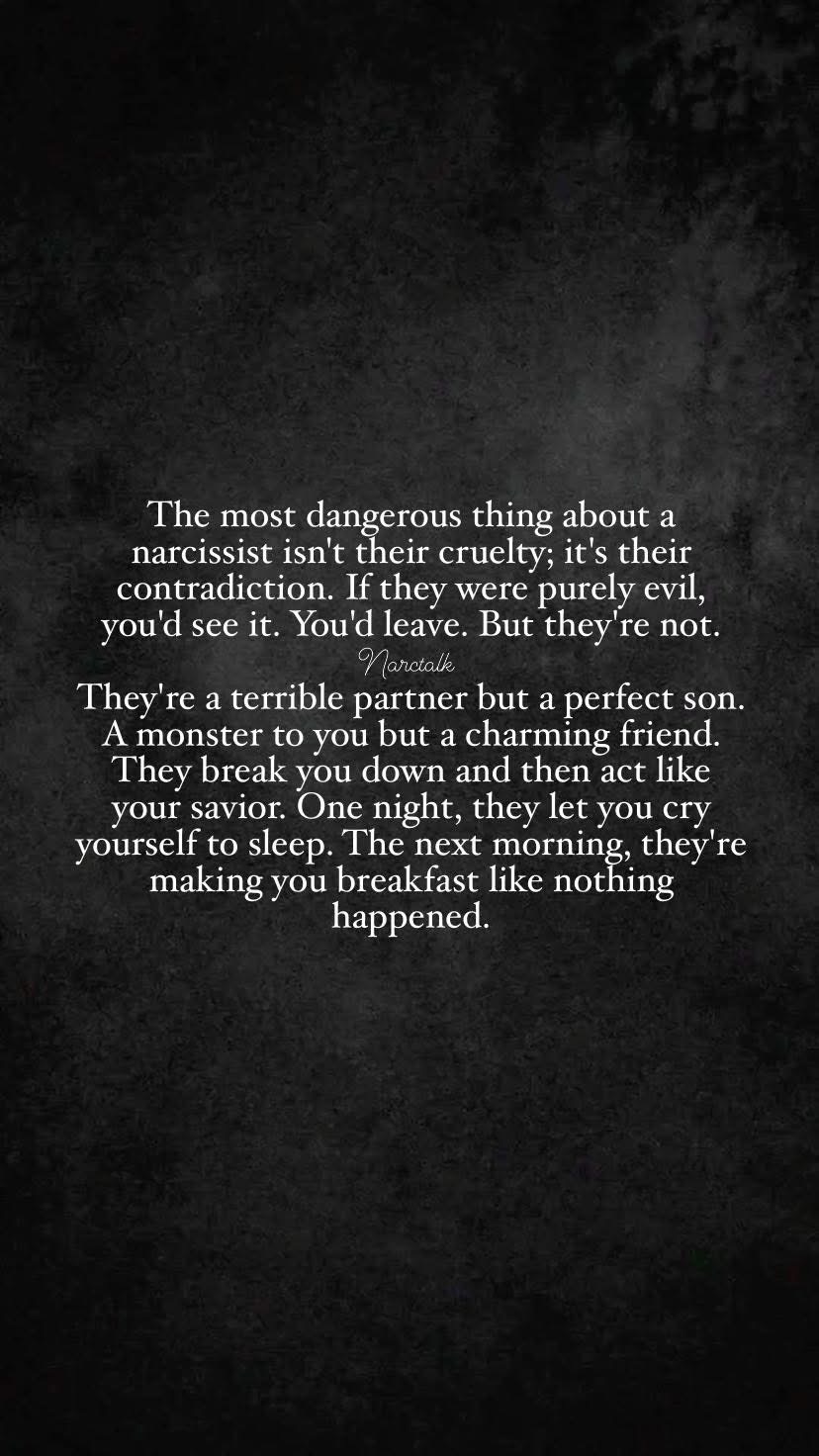
The most dangerous thing about a narcissist isn’t their cruelty; it’s their contradiction. If they were purely evil, you’d see it. You’d leave. But they’re not. They’re a terrible partner but a perfect son. A monster to you but a charming friend. They break you down and then act like your savior. One night, they let you cry yourself to sleep. The next morning, they’re making you breakfast like nothing happened.
This Jekyll-and-Hyde behavior is a hallmark of narcissistic manipulation. By oscillating between cruelty and kindness, they create a sense of emotional whiplash, leaving their victims questioning what’s real and what’s just their imagination. This push-pull dynamic can be incredibly damaging, as it erodes trust, fosters anxiety, and makes it difficult for victims to discern the narcissist’s true intentions.
The contradictions also make it challenging for others to understand the situation. Friends and family might see the narcissist’s charming side and believe the victim is overreacting or being too sensitive. This lack of support can further isolate the victim and make them feel trapped in the toxic relationship.
It’s essential to recognize the dangers of narcissistic behavior and the devastating impact it can have on victims. By acknowledging the complexities of narcissistic manipulation, we can better support those affected and help them break free from the cycle of abuse.
Inside a families “ war zone “
Narcissist will suck the feminine out of you 💯🎯
Narcissist: All they need do in their mind
A child’s Inner Experience
Why Do They Need to Keep Their Distance for So Long?”
Many estranged or distant adult children struggle with feelings that are hard for parents to see. Understanding these inner conflicts can help you better grasp why your child may keep their guard up, even if you’re longing for closeness.
From their perspective, some common fears and worries include:
“My parent is more interested in preserving their image of themselves as a good parent than in taking responsibility for the past.”
For many adult children, the deepest need is to feel that their pain is taken seriously. If they sense that a parent’s focus is on proving they were not at fault, rather than acknowledging the child’s experience, it can make reconciliation feel impossible. Even if you strongly disagree with their interpretation, the perception that you’re defending your position instead of hearing them can block closeness.
“If I’m kind to my parent, they’ll take that as a free pass for the things that bother me.”
Some adult children fear that showing warmth will erase or minimize their struggles. Being nice might feel like saying, “It wasn’t so bad after all.” For them, distance can be a way of keeping the past on the record.
“If I act warmly, it might look like the past doesn’t matter.”
Your child may want to feel understood without having to constantly restate their pain. If they sense that their kindness will be used as evidence that the past wasn’t as important, they may withhold affection as a way of insisting that their story still counts.
“It’s scary to let myself get close—I might feel how much I still need them, lower my guard, and get hurt again.”
Many estranged children still carry a longing for their parent’s love and approval. But closeness makes them vulnerable to disappointment, dependency or enmeshment. The act of staying distant can feel safer than those risks.
“It feels weak to admit or show how much love or dependence I still feel for them.”
Some adult children believe that acknowledging their love or need makes them powerless, or undermines the independence they’ve worked so hard to establish. What looks like coldness may actually be self-protection.
What This Means for Parents
It’s important to remember that these fears don’t necessarily reflect the whole truth about you as a parent—they reflect your child’s inner experience. That distinction matters, because it can help you respond without defensiveness.
If you need help in understanding your child’s estrangement, join us TONIGHT for
“What Could They Be Thinking??”
Tuesday Sep2 at 430 Pacific
Register here https://drjoshuacoleman.as.me/Whatcouldtheybethinking

 GreatCosmicMothersUnite