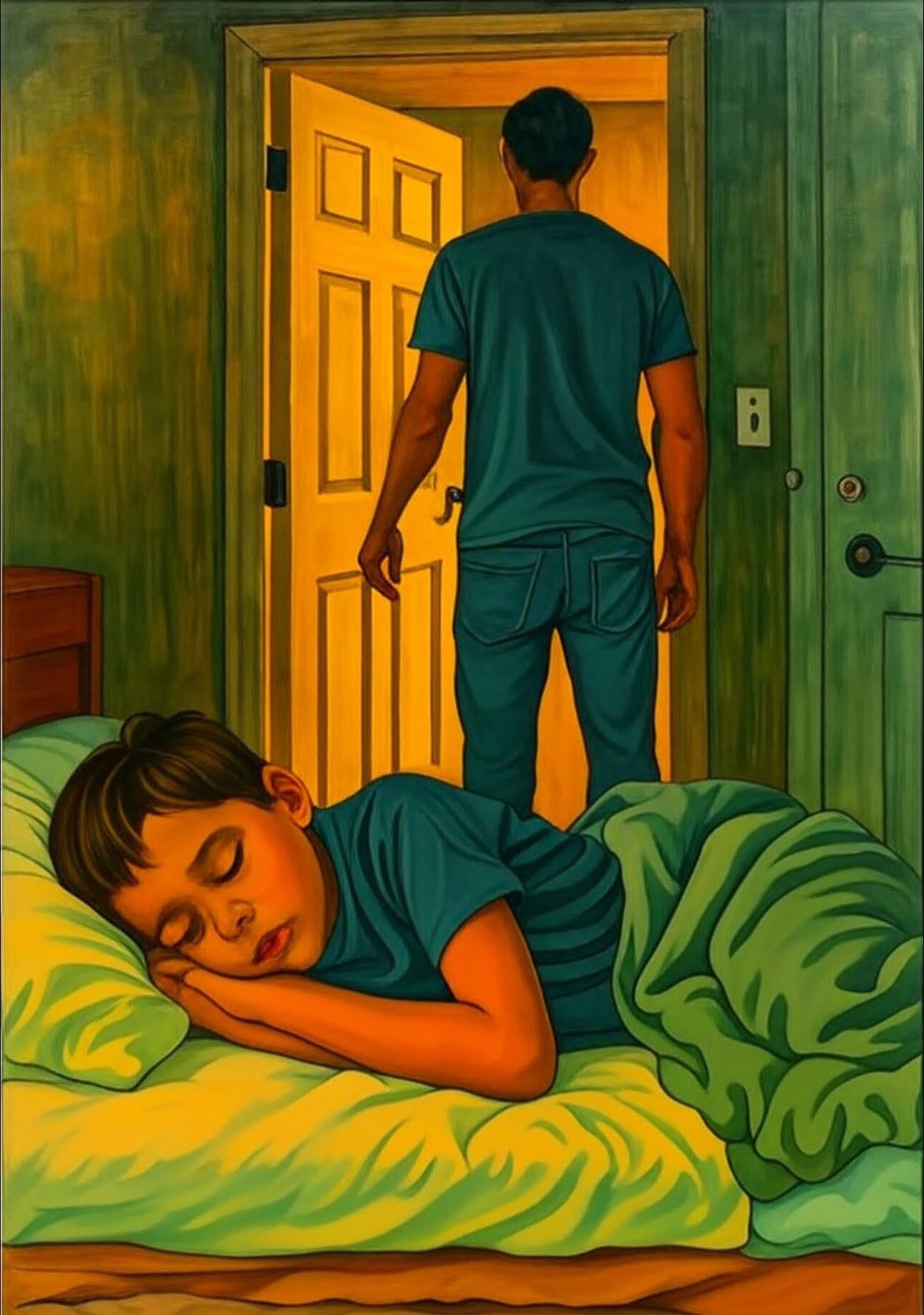
Alienated Kids are groomed into emotional servitude

Parental alienation doesn’t just separate a child from a parent—it rewires their nervous system.

Alienated children are often conditioned to believe:

• They must manage the alienating parent’s emotional state.

• Any deviation from loyalty is betrayal.

• Their love must be earned through compliance, silence, or performance.

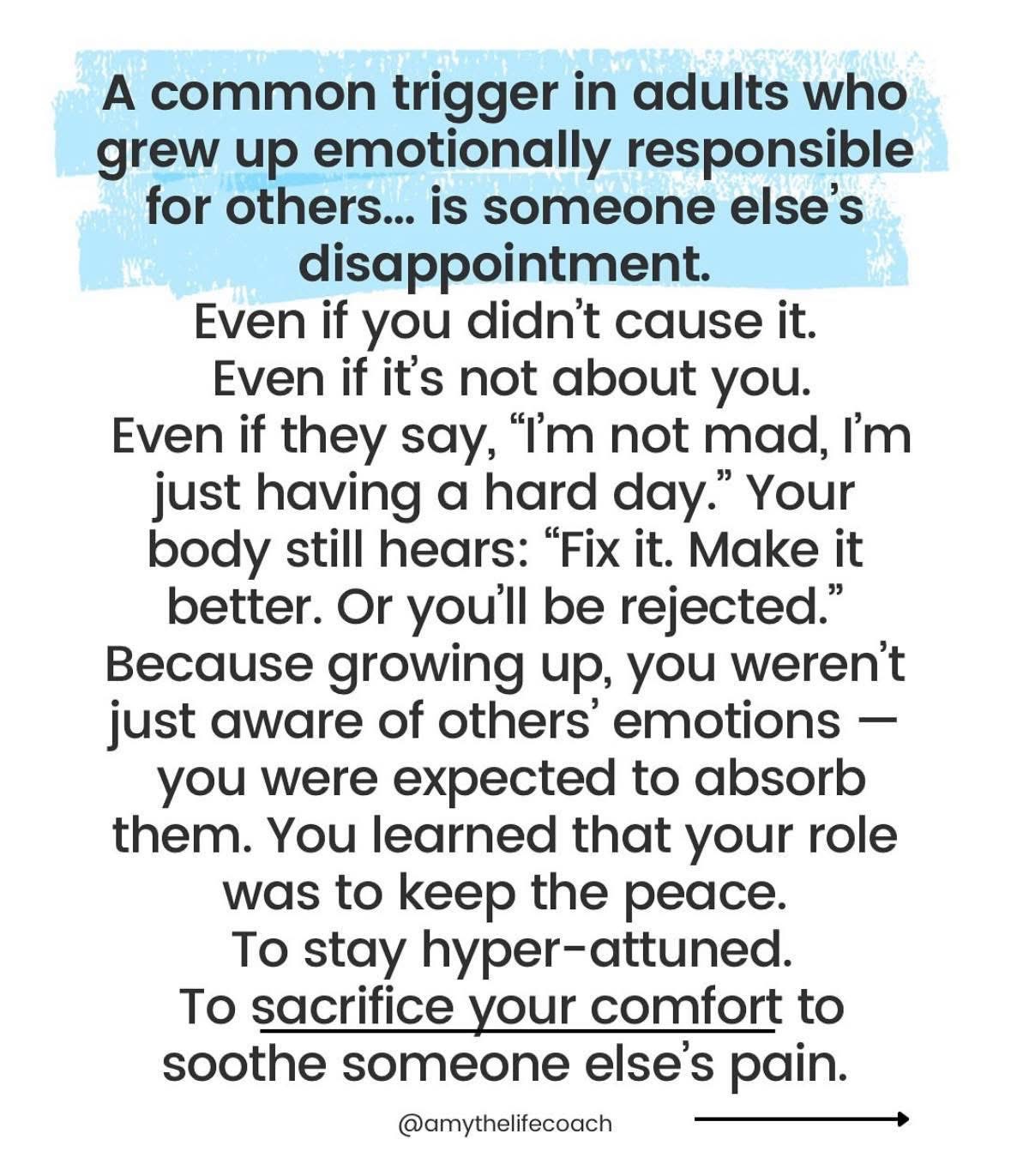
This grooming creates a child who becomes hyper-attuned to the needs, moods, and reactions of others. The message they internalize is clear:

“You are responsible for how I feel.”

And if the child doesn’t manage that emotional state correctly, the cost is often rejection, guilt, withdrawal of affection, or punishment.

They learn to sacrifice their comfort, truth, and identity to maintain approval.

They become peacekeepers.

Performers.

Caretakers of chaos.

This is emotional enmeshment masked as loyalty—and it leaves long-term scars.

What This Looks Like in Adulthood

These children often grow up to:

• Feel triggered by other people’s disappointment—even when it’s not directed at them

• Feel responsible for fixing everything

• Have difficulty saying “no” or disappointing others

• Lose their sense of self in relationships

• Seek external validation at the expense of their own truth

Their inner narrative becomes:

“If I don’t fix this, I’ll lose love.”

“If I don’t keep the peace, I’ll be punished.”

“If someone’s unhappy, it must be my fault.”

This is not their fault. It’s the result of living in survival mode for years under the weight of manipulation.

How to Help Your Alienated Child Heal When They Come Back

When your child returns—emotionally or physically—you have a rare and sacred opportunity. Not to explain your pain. Not to clear your name. But to give them space to discover who they are without pressure.

Here’s how:

1. Give Them Emotional Sovereignty

Let them know they are not responsible for your healing. Say:

“You’re not here to take care of my feelings. I’m here to hold space for yours.”

2. Model Nervous System Regulation

If you stay calm, grounded, and regulated—even when they test boundaries—they will feel the difference. You become the safe space they never had.

3. Normalize Their Confusion and Mixed Emotions

Let them know it’s okay to feel loyalty to both parents. Don’t force them to choose sides. Instead, affirm:

“You’re allowed to love us both. You’re allowed to have your own experience.”

4. Don’t Trauma-Dump

They don’t need to hear your whole story or pain. They need to know they’re loved and safe. If they ask, share—but only what they can emotionally handle.

5. Help Them Rebuild Identity

Encourage expression through creativity, exploration, and play. Say things like:

“What do you love?”

“What makes you feel alive?”

“You don’t need to perform here. Just be.”

6. Celebrate Autonomy

They were stripped of autonomy in the alienation dynamic. Give it back. Let them choose the pace of reconnection. Let them have opinions. Let them say no.

Healing Begins With You

If you want your child to shed the burdens placed on them, you must never place new ones on their shoulders. Let their nervous system relearn what it feels like to be near someone who doesn’t demand anything of them except presence.

You are not here to pull them back into your world.

You’re here to witness the return to their own.
When a man leaves; everyone pays the price

The absence of a father is a child’s greatest disaster, not poverty or divorce. Emotionally, spiritually, and structurally, it fractures their foundation.

1. Cheating Breaks More Than Marriage

A man’s betrayal teaches his son loyalty is optional and his daughter love is unreliable, shattering their identity.

2. Women, Stop Pushing Men Out

Turning homes into battlefields and using courts to take kids isn’t motherhood—it’s manipulation backed by legal weapons.

3. Courts Enable Generational Damage

Faithful men lose everything, while emotional sabotage is rewarded with custody and praise, leaving kids fatherless.

4. Science Says Fathers Matter

Children thrive with two parents, but fathers uniquely provide structure, discipline, and identity. Only men raise men.

5. Men, Lead or Don’t Start

If you can’t commit to monogamy, don’t create a family. One moment of lust can fracture decades of lineage.

6. Kids Don’t Heal from Absence

Children don’t understand “irreconcilable differences.” They just know Dad’s gone, carrying unanswered questions into adulthood.

Final Word: Stay Revolutionary

To men tempted to leave: fight harder. To women weaponizing courts: stop.

To fathers who stay: thank you. When a father leaves, he takes the structure with him.

Much Love Ramxo ❤️

Narcissist & their partners

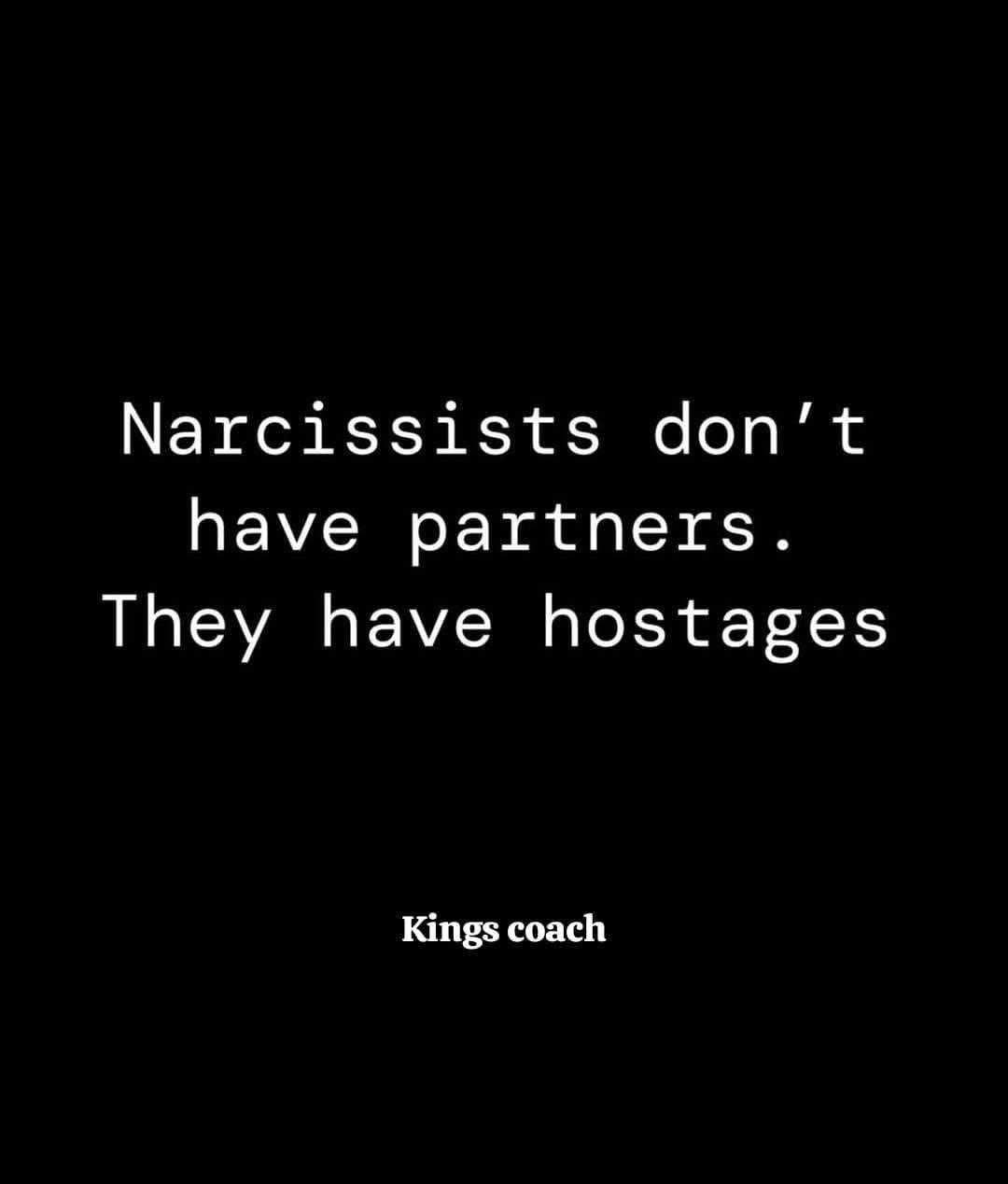
Narcissists don’t have partners. They have hostages. What seems like a relationship at first glance is actually a calculated setup—a psychological trap designed to control, manipulate, and diminish the other person. It often begins with love bombing: intense affection, grand promises, and the illusion of a deep, soulful connection. But slowly, the mask slips.

As time passes, the narcissist’s need for admiration outweighs any genuine care. Criticism replaces compliments. Confusion replaces clarity. The partner, once cherished, becomes a tool to regulate the narcissist’s fragile ego. Gaslighting, blame-shifting, silent treatments, and emotional withdrawal become routine weapons of control.

The person on the receiving end often begins to question their reality, their worth, even their sanity. They’re made to feel responsible for the narcissist’s moods, failures, and anger. Boundaries are ignored, and independence is slowly stripped away until what remains is someone isolated, anxious, and emotionally exhausted.

And yet, they stay—not out of love, but out of fear, hope, and psychological entrapment. This isn’t love. It’s captivity. The narcissist doesn’t seek partnership; they seek possession. What they call a relationship is, in truth, a cage—beautifully decorated, perhaps, but a cage nonetheless.

To call this a partnership is to misunderstand the dynamics entirely. It’s not mutual. It’s not equal. It’s survival for one, and dominance for the other. In the end, the only way out is to recognize the prison for what it is and walk away—for healing, for peace, for freedom.”

Alienated Dad / Charlie McCready

Once I understood X was using our sons to get information and further impart abuse as I was insulted time after time it became a no brainer

Let em go

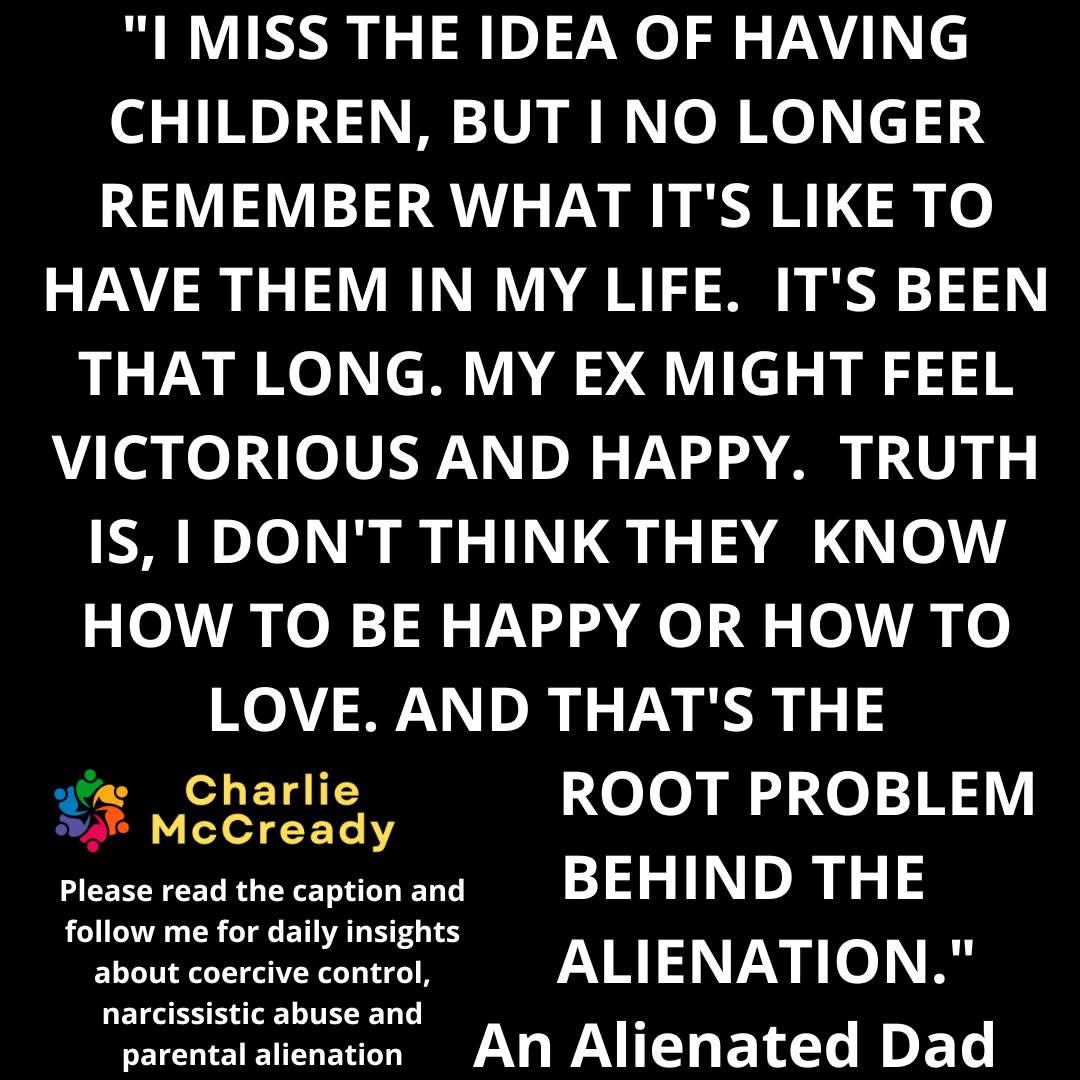
The quote on this post is from an alienated dad who got so tired of fighting, being sad and accustomed to not having his children in his life, that he has gotten to a point of acceptance, ‘surrendering’ to it. For a long time he couldn’t understand the alignment (trauma bonding) with a parent he knows his children find difficult. He worked on understanding the pathology behind alienating behaviours. Even so, there are still those days of feeling that loss, and his quote encapsulates the deep longing for the presence of his children in his life, even though their absence has become a painful reality he has grown accustomed to. Despite the emotional distance and the expanse of time, the yearning for his children lingers but he has also found a way to ‘detach’ too. In the detachment that comes with the acceptance, he has found some peace of mind. Importantly, he also decided not to stay stuck in grief and got on with his life. He remarried and is happy. That’s not to say he ‘gave up’ but he came to a point of just saying his children will come to them if they want to come to them … In this detachment, he discovered a newfound peace of mind. ⁠

While we cannot control the actions of others, we have the power to shape our own destinies. Alienators won’t change and are typically incapable of love or happiness – not lasting, not real. Relationships really aren’t their thing. But we can move on, and love, and be happy. We owe it to ourselves. Our doors are always open to our children, but we’re getting on with our lives too. Crucially, this father’s story exemplifies resilience. He refused to be defined solely by the absence of his children. He made the courageous choice to move forward, embracing love, and finding happiness anew. In his remarriage and the life he has rebuilt, he demonstrates the remarkable capacity of the human spirit to heal and thrive, even in the face of unimaginable pain. We can choose to love again, to be happy, and to live fulfilling lives no matter what.

#charliemccready

#parentalalienationcoach

#fathersrights

#mothersrights

#childrensrights

Charlie McCready – Coercive Control

An alienating parent will often engage in mirroring and projection. They are not the same thing. ⁠

Mirroring is when someone reflects back to you your own emotions or behaviours. When someone calls you “crazy” or “oversensitive” after you’ve expressed feeling upset, it could be considered mirroring because they are using those words to reflect the emotions they perceive in you, generally because they’ve triggered it. It is like holding up a mirror to your emotions and labelling them with those terms.⁠

Projection is when someone attributes their own feelings, thoughts, or characteristics onto you. So if the alienating parent calls you “angry” or “controlling,” it could be that they feel or feel the need to be that way and unconsciously or consciously placing them onto you. It’s a defence mechanism where they distance themselves from their own feelings by attributing them to someone else.⁠

In both cases, the person’s words and actions can be emotionally hurtful, especially if they use negative labels to dismiss or belittle you. These dynamics can be part of emotional abuse or manipulation. If you find yourself in a situation where someone uses hurtful language or manipulation, it’s important to prioritise your emotional well-being and consider seeking support from friends, family, or professionals.

#charliemccready

#parentalalienationcoach

#emotionalabuse

#parentalalienation

#coercivecontrol