
Childress Psy D – King of the Hill

Can we play a game? I want to play a game. It’s a fun game.

It’s called King of the Hill. Ever play it?

I have. Around the age of 12 or so, someone was doing some home building in the neighborhood and brought in truckloads of dirt which they piled into small mounds in a field… and left it there all summer.

The mounds of dirt were perfect for playing King of the Hill, and our neighborhood collective of kids quickly figured that out. It’s a fun game.

Someone starts by standing on top of the hill yelling loudly “I’m King of the Hill” and all the other kids come running to play. Then one-by-one the other kids take their turn at trying to push the King of the Hill off the hill and taking the hill for themselves… for a while… then one-by-one the kids take their turn at pushing that kid off the hill.

You keep going around and around, and eventually the King rises.
Eventually some kid would remain on top of the hill and defeat all the other kids… that’s when the mob-attacks begin.

The rest of the kids would now group-up in twos and threes, how many kids does it take to dethrone the King? At that point, it’s all about the neighborhood honor and bragging rights.

“Do you remember when it took six kids to push Tony off the Hill? He was a mighty King.”

I wanna play King of the Hill. It’s fun. Do you wanna play? I think you’ll like it, it’s a fun game.

I’ll start. “I’m King of the Hill.”

Now one-by-one the other neighborhood kids can try to push me off. It’s so much fun. Have you ever played it? I have. It’s fun.

First, though, we need a hill. You cannot play King of the Hill without a hill. I know the perfect hill. The Expert Hill.

Who’s the world’s Top Number1 Expert regarding the child custody and attachment pathology in the family courts?

Me. I’m the Top Number 1 Expert.

Now… push me off… if you can.

Who’s better than me? Who’s a more Expert expert than I am? Who knows more? Bring your vitae and let’s see.

At first that may seem like a strong statement, and it is, but it’s not as unusual as it seems. We can eliminate nearly everyone else in large groups. Watch.

First we can eliminate all the psychology people who don’t work in the family courts. If they don’t work with the pathology they can’t be the worlds Number 1 Top Expert in it.

So we can eliminate Bessell van der Kolk and Ed Tronick because… they don’t work in the family courts. They know nothing about this attachment pathology that’s here. It’s a dark pathology that’s here.

So immediately we cut the competitors down to just the neighborhood kids who work with the pathology in the family courts.

But we can continue to eliminate the remaining contenders in groups as well. Next.. delusions.

Who has experience in the diagnostic assessment of delusional thought disorders? The pathology in the family courts is a shared (induced) persecutory delusion – acknowledged by Walters & Friedlander who cite to me as the expert in delusional thought disorders.

If you don’t know delusional thought disorders then you don’t know this pathology because that’s what this pathology is – Walters & Friedlander; Family Court Review, 2016.

None of the forensic psychologists have training or experience in the diagnostic assessment of delusional thought disorders – none – zero.

I do. Lots of experience and lots of training.

The ONLY place you get professional-level knowledge of delusional thought disorders is in schizophrenia. No forensic psychologists have experience in schizophrenia.

I do.

For 12 years I worked at UCLA on a major NIMH clinical research project on schizophrenia… where I was trained each year to r=.90 diagnostic reliability to the authors of the Brief Psychiatric Rating Scale, Dr. Ventura and Dr. Lukoff.

The BPRS is “one of the oldest, most widely used scales to measure psychotic symptoms” (Wikipedia: BPRS). Delusions is item 11 Unusual Thought Content.

I was trained by the best, the authors of the BPRS, for 12 years in the diagnostic assessment of delusional thought disorders. Here’s the entry from my vitae:

9/85 – 9/98 Research Associate
UCLA Neuropsychiatric Institute
Principle Investigator: Keith Nuechterlein, Ph.D.

Area: Longitudinal study of initial-onset schizophrenia. Received annual training to research and clinical reliability in the rating of psychotic symptoms using the Brief Psychiatric Rating Scale (BPRS). Managed all aspects of data collection and data processing.

Dr.Childress: 12 years of annual training in the diagnostic assessment of delusional thought disorders to 90% reliability to the authors of the BPRS, “one of the oldest, most widely used scales to measure psychotic symptoms” (Wikipedia: BPRS)..

Forensic psychologists: zero training – zero experience.

The forensic psychologist tumble down the hill en masse.

I’m King of the Hill. I am the world’s Number 1 Top Expert regarding the attachment pathology in the family courts.

We’ve eliminated everyone else.

No one in the family courts has experience in the diagnostic assessment of delusional thought disorders, I do, and the pathology is a persecutory delusion.

But wait… there’s even more, another layer of expertise that divides me from them.

This is an attachment pathology. A child rejecting a parent is an attachment pathology. Expertise in attachment pathology is found within the Early Childhood Mental Health specialization, children ages zero-to-five… the attachment years.

I have Early Childhood Mental Health specialization. Look at my vitae.

So let’s see who remains. No one.

The Gardnerian PAS “experts”? They still believe in the tooth fairy. The PAS “experts” are a fringe group of professionals who reject the diagnostic guidance of the American Psychiatric Association and who reject the ethical guidance of the American Psychological Association.

I assert that the use of the construct of “parental alienation” in a professional capacity is substantially beneath professional standards of practice in clinical psychology and is a violation of Standard 2.04 of the APA ethics code, Bases for Scientific and Professional Judgments.

I assert that the Gardnerian PAS “experts” are unethical – violations to Standards 2.01 and 2.04 of the APA ethics code.

I assert that the Gardnerian PAS “experts” are ignorant. They don’t apply the knowledge (2.04) because they don’t know the knowledge (2.01). The ONLY way they’re “experts” in anything is in their imaginations – they need to make things up.

Google ignorance: lack of knowledge or information

I assert that the reason the PAS “experts” don’t apply the established scientific and professional knowledge of the discipline is because they don’t know the established scientific and professional knowledge of the discipline.

I’ll also assert that they’ve misdiagnosed the pathology this entire time because they’re lazy, ignorant (lack of knowledge or information), and unethical. If you misdiagnose the pathology for 40 years, you’re not an expert, you’re incompetent.

The diagnosis of a shared delusion was in the DSM-IV the entire time, a Shared Psychotic Disorder. They had the diagnosis IN the DSM the entire time, they simply misdiagnosed it for 40 years because they were fixated on making up “new” pathology rather than apply knowledge… because they don’t know the knowledge.

They are ignorant. They are incompetent. They are unethical.

And they are atrocious diagnosticians.

Who’s that leave?

This is fun. Isn’t this fun? I think it’s fun.

We can eliminate whole groups of people from the competition so the remaining field is small, just the neighborhood kids, like Billy Bernet up on PAS Ln, and Susie Deutsch from over on Forensic Psychology St.

Let’s play King of the Hill.

I’m wondering, do you think it would be helpful to your efforts to protect your children if Dr. Childress was the acknowledged Number 1 Top Expert regarding the attachment pathology in the family courts?

Do you think you might find that helpful in your efforts to protect your children?

I think so.

I am the Worlds Top Number 1 Expert on the pathology in the family courts. That’s reality. That’s not boast, that reality. My expertise is supported by my vitae.

If you want to push me off the hill… bring your vitae.

I have 12 years at UCLA on a schizophrenia research project being trained annually in the diagnostic assessment of delusional thought disorders.

I have Early Childhood Mental Health specialization which is spot-on the attachment system and attachment pathology.

I’ve worked in the family courts with his specific pathology for the past decade and I’ve written the book, Foundations, that describes the pathology in detail at three separate levels of analysis.

I am the world’s Number 1 Top Expert regarding the attachment pathology in the family courts – if not me… who?

Bring your vitae. Push me off the hill. Until someone pushes me off the hill, it’s my hill, I’m King of the Hill. Wanna play? It’s a fun game.

Who else? Name someone.

1) Who is in the family courts working with the pathology that’s here.

2) With training and experience in the diagnostic assessment of delusional thought disorders.

3) With Early Childhood Mental Health education, training, and clinical experience in the attachment system and attachment pathology.

Tronick or Bessel? They don’t work in the family courts. If they come to the family courts, I’ll happily concede the hill to them – but until they come here, they don’t know what’s here. It’s dark.T

Who? The outside folks are gone. The forensic psychologists are gone. The PAS “experts” are gone. Who’s left?

Do you parents think that you might find it helpful to have the world’s Number 1 Top Expert regarding the attachment pathology in the family courts be Dr. Childress?

I think so.

So let’s play King of the Hill. It’s a fun game. Have you ever played King of the Hill? I have. It’s fun.

One kid climbs the hill and yells, “I’m King of the Hill” and the other kids come running. It’s a rough-n-tumble sort of play that boys like to do. It’s fun.

Let’s play.

Craig Childress, Psy.D.
Clinical Psychologist, CA PSY 18857
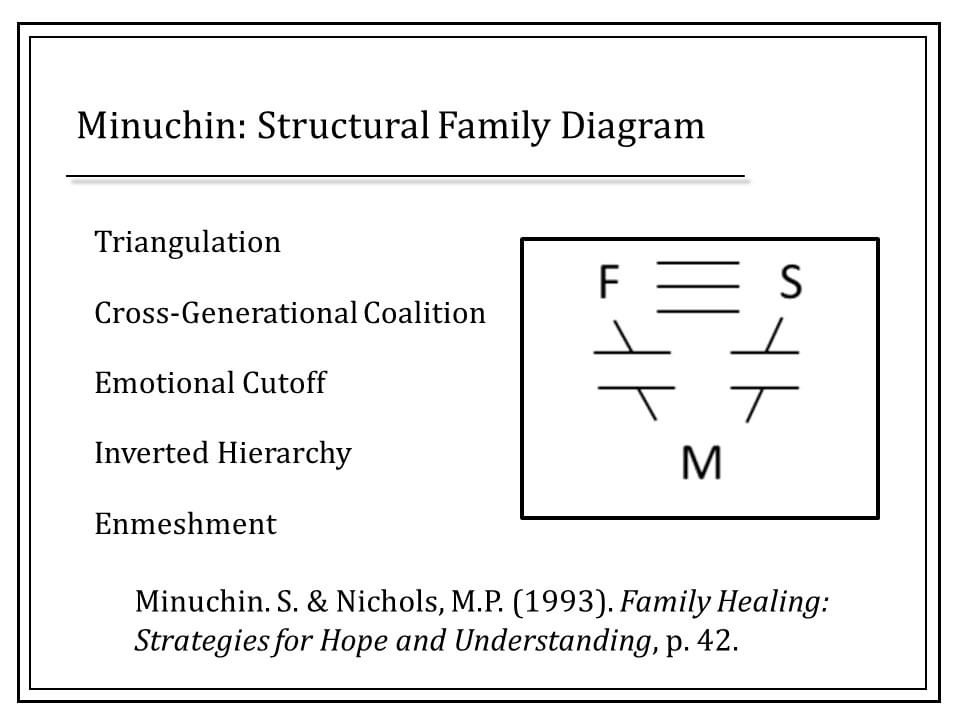
Childress PsyD Correct Terms /Child Psychological abuse

Proper Terms – whoo-hoo – they’re wonderfully helpful.

Look how wonderful switching to proper professional language can be – cross-generational coalition – emotional cutoff – enmeshment – inverted hierarchy.

They each give a different focus to the pathology, while the nonsense made-up construct of “parental alienation” is just one big blob of a thing. No precision.

Bad Parenting: cross-generational coalition.

The cross-generational coalition allows you to single out the bad parenting from everything else – apart from the child consequences in pathology and symptoms, the cross-generational coalition (a “perverse triangle”; Haley) refers just to what the pathological parent is doing by creating the alliance with the child against you.

Child Rejection: emotional cutoff

Using the professional construct of an emotional cutoff allows you to separate the effects on the child, the attachment pathology (emotional cutoff), from the bad parenting (cross-generational coalition). That’s helpful because now you can be more precise. Are you talking about the bad parenting of your ex- (forming a cross-generational coalition with the child against you), or are you talking about the effect on your child (the emotional cutoff and attachment pathology).

And they are both fully grounded professional constructs that are NOT “controversial” and are completely accepted – with lots of associated linkages to additional information about each family construct.

Judging You – inverted hierarchy

When a child is empowered by the cross-generational coalition with one parent against the other to judge the targeted parent as if the parent was the child and the child was the parent, that’s called an inverted hierarchy.

All those minor made-up grievances of the child… now become a symptom feature of the pathology of the ex-spouse (cross-generational coalition) rather than a serious attack on you.

When you use the proper language of family systems of an inverted hierarchy from the child’s cross-generational coalition with the allied parent, the nonsense attack on you now becomes the symptom of an inverted hierarchy – which is a symptom created by the cross-generational coalition.

They thought they were attacking you… no… they are displaying a symptom feature of the pathology.

Brainwashing – enmeshment

Don’t use “brainwashing” – use the construct of enmeshment, it’s called a “boundary violation” and is a totally established construct. The allied parent and child have an enmeshed psychological relationship created by the manipulative parenting of the pathological parent.

From Kerig: “Examination of the theoretical and empirical literatures suggests that there are four distinguishable dimensions to the phenomenon of boundary dissolution: role reversal, intrusiveness, enmeshment, and spousification.” (Kerig, 2005, p. 7)

From Kerig: “Enmeshment in one parent-child relationship is often counterbalanced by disengagement between the child and the other parent (Cowan & Cowan, 1990; Jacobvitz, Riggs, & Johnson, 1999).” (Kerig, 2005, p. 10)

From Minuchin: “Enmeshment and disengagement refer to a transactional style, or preference for a type of interaction, not to a qualitative difference between functional and dysfunctional… Operations at the extremes, however, indicate areas of possible pathology. A highly enmeshed subsystem of mother and children, for example, can exclude father, who becomes disengaged in the extreme.” (p. 55)

Do you get all those wonderful quotes and support from “parental alienation”? No. It’s just a big amorphous blob that solves nothing and locks you into “controversy” and conflict.

Don’t listen to the Fox and Cat, Pinocchio. Listen to the cricket, stay in school and use real knowledge to solve your problems.

Add psychological control to your use of descriptions. That’s another bad-parenting term that explains how the child is manipulated and… psychologically controlled… by the pathological parent.

Manipulation – psychological control

Stone, Buehler, and Barber: “The concept of triangles “describes the way any three people relate to each other and involve others in emotional issues between them” (Bowen, 1989, p. 306). In the anxiety-filled environment of conflict, a third person is triangulated, either temporarily or permanently, to ease the anxious feelings of the conflicting partners. By default, that third person is exposed to an anxiety-provoking and disturbing atmosphere. For example, a child might become the scapegoat or focus of attention, thereby transferring the tension from the marital dyad to the parent-child dyad. Unresolved tension in the marital relationship might spill over to the parent-child relationship through parents’ use of psychological control as a way of securing and maintaining a strong emotional alliance and level of support from the child. As a consequence, the triangulated youth might feel pressured or obliged to listen to or agree with one parents’ complaints against the other. The resulting enmeshment and cross-generational coalition would exemplify parents’ use of psychological control to coerce and maintain a parent-youth emotional alliance against the other parent (Haley, 1976; Minuchin, 1974).” (Stone, Buehler, & Barber, 2002, p. 86-87).

See? All there in one tidy quote from the research literature – not even the family court literature – outside – real knowledge applied to the pathology in the family court.

Do you get that with the blob-construct of “parental alienation”? Nope. You lose all of your power when you leave established knowledge… which is exactly what the pathogen wants.

The construct of “parental alienation” is bait – don’t take the bait. Use real knowledge… and you will force them to use real knowledge in return. If you talk about cross-generational coalitions and inverted hierarchies… they’ll have to respond using the same constructs in a coherent way.

You will be educating them by being more educated than them so they’ll have to catch up to the patient.

The patient should NEVER have to explain the pathology to the doctor. That should never happen. But it happens here. That gives you an indication of how bad the professionals are here in the family courts – they are ignorant like a rock – they are unethical – they are not competent to be doing what they’re doing.

It’s their job to protect your child and you from abuse, all forms of abuse. They are failing in their professional duty to protect obligations. We need to hold incompetence accountable. They need to stand-up and acquire the professional backbone to protect your child from child abuse.

That is all it takes. All that is required is for them to do their job. They are failing. They need to be held accountable for their failure… and they need to be successful in protecting your child from abuse.

You’re the protective parent. I know that and you know that. Protecting your children from child abuse is a serious-serious professional matter. All mental health professionals have duty to protect obligations.

There are three dangerous pathologies – suicide – homicide – abuse (child, spousal, elder). Whenever a mental health professional encounters any of the three dangerous pathologies… they have duty to protect obligations.

Risk Assessment Handout
https://drcachildress-consulting.com/wp-content/uploads/2022/03/1-Handout-Risk-Assessment-3-22.pdf

You are more powerful than you know, but only if you claim your power.

Craig Childress, Psy.D.
Clinical Psychologist, CA PSY 18857

All mental health professionals have duty to protect obligations.

APA , Childress agree, not such thing as parental alienation , it’s Child Psychological Abuse, continuation of Malignant , intimate partner violence

I have tried to change my site to CPA , and will need help doing so.

I’m self taught , with some help from friends on all things computer

Am I clear? I want to be entirely clear. I agree with the American Psychiatric Association.

I’m an old-school conservative clinical psychologist. I apply knowledge, I don’t create it.

The Gardnerian PAS “experts” are a rag-tag group of misfit toys. Am I being vague? I don’t want to be vague, I want to be clear.

They reject the diagnostic guidance of the American Psychiatric Association – they think the APA is wrong and that they know more about diagnosis than the APA – and they reject the ethical guidance of the American Psychological Association – they think ethical standards don’t apply to them.

They’re wrong, they do. Ethical Standards of practice are mandatory. Ethical practice is not optional, it is required.

In 2013 the American Psychiatric Association made its determination on the diagnostic construct of “parental alienation” with the publication of the DSM-5. They said no – the APA said there is no such thing as “parental alienation”. For all professionals, that’s the end of it. That’s the end of the discussion. The APA said no, it does not exist as a diagnostic entity.

I agree 100% with the American Psychiatric Association. The construct of “parental alienation” is the worst diagnostic model for a pathology ever constructed since the beginning of time. It is awful, absolutely awful in so many ways.

The American Psychiatric Association is right. I agree with the American Psychiatric Association, there is no such thing as “parental alienation” – Childress, year 1.

The Gardnerian PAS “experts” assert that the APA is wrong. They assert that they know more about diagnosis and pathology than the American Psychiatric Association does, and they CONTINUE to use a diagnostic construct that does NOT exist in professional psychology.

In continuing to use the construct of “parental alienation” in a professional capacity, the Gardnerian PAS “experts” substantially degrade the quality of mental health services in the family courts.

The Gardnerian PAS “experts” are a fringe group of professionals who reject the diagnostic guidance of the American Psychiatric Association and the ethical guidance of the American Psychological Association.

Meanwhile, the forensic custody evaluators in the family courts are ignorant, incompetent, and unethical – and no one cares. They are simply financially exploiting the parent while solving nothing.

We need a pilot program for the family courts with university involvement for evaluation research to develop standardized high-quality diagnostic assessment and treatment protocols.

Amicus Letter for CA SB-331
https://drcachildress-consulting.com/wp-content/uploads/2023/04/SB-331-Childress-amicus-letter-4-17-23.pdf

Risk Assessment Handout
https://drcachildress-consulting.com/wp-content/uploads/2022/03/1-Handout-Risk-Assessment-3-22.pdf

Craig Childress, Psy.D.
Clinical Psychologist, CA PSY 18857

Childress on the Targeted Parent

It’s all here ; the result of my diagnosis

by a psychiatrist Axis l was “ problematic

marriage . That deserved a diagnosis of

Bipolar l , from an alumni of psychiatrist!

Of course he listed Histrionic Personality

which ignored the very apparent Domestic

Abuse ,the toxic to me RX began with

Lithium which being a metal ; I’m allergic

to . Upon my complaints of horrid side

effects , a coated version of Lithium was

prescribed ! I was unaware and too ill

to research and did not have a partner who

was interested in anything but my ability’s

to keep his house and his kids .

Ever feel your world is upside-down. I wanna talk about that.

I’ve decided I want to talk about you this Sunday. I was thinking I might want to tell you about your children. Empathy and all that, help you understand what’s going on. But I decided not yet.

I want to talk about you first, the targeted parent as everyone calls you, the chosen parent as Dorcy calls you. She’s right, the child is choosing you to lead the family, the other parent can’t do it, they’re collapsing.

You need support. We’re working on it… your world is a work in progress shall we say. Do things seem a little upside-down. Yeah, i know. That’s ’cause it is… upside-down. That’s true. You live in a crazy world of family stuff right now.

You’re called the targeted parent because you’re the target of spousal abuse – you’re being emotionally and psychologically abused by the other spouse and parent using the child as the weapon.

It is a savage and brutal form of spousal abuse, to use the child as the weapon. Sadistic? Dark Tetrad.

You know that. You live it. I know it too. I want to talk about that. This pathology is spousal abuse. Emotional spousal abuse, psychological spousal abuse, financial spousal abuse, using the child as the weapon of spousal revenge and retaliation.

Everyone says, “It’s not about you, it’s about the child” – no – it’s entirely about you – this is spousal abuse using the child as the weapon. That’s what’s at the driving core of everything… spousal abuse of you.

In weaponizing the child into the spousal abuse, the pathological parent creates such significant psychopathology in the child that it rises to a level of Child Psychological Abuse (DSM-5 V995.51).

But the reason is the weaponization of the child into the spousal abuse, the spousal emotional and psychological abuse is the driving core of everything (DSM-5 V995.82 Spouse or Partner Abuse, Psychological).

You know it’s true. You live it. I know it’s true too. I wanna talk about you being abused by this pathology, by the other parent weaponizing the child.

This is a savage and immensely brutal emotional and psychological spousal abuse of the targeted parent. You know that. I know that. I wanna talk about that. I want to talk about you, the targeted parent.

You’re a target… but you’re not a victim. Being a victim is in your mind, not in reality. You control you. Yeah, you’ve got a big target on you… so move faster and more skillfully than the pathology does. It’s pattern, it’s predictable.

The pathology seeks to destabilize you in every way possible – it tries to trigger you into your fears. Don’t trigger, plan ahead. Trauma is pattern, it replicates pattern.

You want a treatment plan, a written treatment plan to fix things. Hold onto that and don’t let go.

I wanna talk about you, not behind your back or anything, right to your face sort of… your virtual face in this-here cyber-world place thingy I love the Internet.

Sunday at 8:00 Pacific, let’s talk about you, the targeted parent over coffee. We’ll see if we can get things right-side up again. Crazy world, eh?

Craig Childress, Psy.D.
Clinical Psychologists, CA PSY 18857

Childress : Let’s Roll

What happens when Bill Bernet dies, what happens to the Gardnerian PAS movement? Who takes over?

Not to be morbid, but Bill’s old, I’m old, what happens when we depart? With AB-PA, I’m not involved so everyone just goes on applying the knowledge of Bowlby, Minuchin, and Beck, the established scientific knowledge of the disciple.

But when Bill departs for the hinterlands, who follows him as the leader of the PAS-squad? Linda Gottlieb? No. Amy Baker? She’s a researcher. Jennifer Harman? She’s likely going down with Linda. Karen Woodall is in England… Demosthenes Lorandos? I don’t think he’ll have the clout to carry a movement… and with Dr. Childress attacking on Standard 2.04 and 2.01, I don’t think Demosthenes is going to be the next leader.

I don’t see one. Who’s the rising young star of Gardner’s PAS model? All the early career psychologists will go toward AB-PA because it gives them more expanse to grow into their profession.

I think we’ve reached the time death for Gardner’s PAS model. We’re watching the final death throes of PAS.

Everything shifts to the forensic psychologists. The DV-monkeys are active and howling, with Kayden’s Law they smell victory. They want Dorcy… the no “reunification workshops” of Kayden’s Law could be called the Dorcy Clause, and it could equally read – “No Dorcy.”

The pathogen hates Dorcy, frothing hatred. The pathogen hates her because it knows she has the cure of its pain, the cure for the pathology – the pathogen knows she sees it… and solves it.

For over a decade the pathogen has tried to destroy Dorcy with every manner of slander and attack. She’s still here. Stupid pathogen.

There is no way Dorcy, an unlicensed professional, survives a decade in the immensely hostile world of the family courts… unless she’s the real-deal.

She’s the real-deal. That’s why she has the full support of Dr. Childress – she’s had my full support since 2014 and I haven’t wavered.

We’re going into Kayden’s Law world now, here come the DV-monkeys. They want to stop Dorcy – by legislation. Stay close, Dorcy. I’m at your side on the battlefield and I’m not going anywhere.

Bring it. It’s time. Let’s do this and finish this.

We need to end the fight-and-fight surrounding the child. So let’s do that. If that means more fighting for a while… okay. Let’s do it and get it done… so we can move forward.

I formed a Facebook group with Dorcy, the Alliance to Solve Parental Alienation. I got it up to 16,000 members… then I left. I gave the group to Dorcy. I had a platform of 16,000 members and I gave it away.

Why?

Because I am entering a period of conflict. I carry the voice of destruction. Dorcy is all about reunion and bonding. We are carrying different energies to the same purpose.

I wanted to maintain the separation to keep her clean from the fight-and-fight to come… my job. My people, my job.

She can remain focused on her role. Each to our role, you have the most special role of all. Dorcy will explain it.

Battle’s coming. I hear the horns, do you hear them? I do. They’re calling us, it’s time. Break out the drums and pipes, don your armor, prepare.

The paradigm is shifting.

The outcome I recommend is an AB-PA/High Road pilot program for the family courts with university involvement for evaluation research. I’d recommend Stanford Forensic Psychiatry as the PI. If you want a solution, that is the solution.

They don’t want a solution… yet. We just need to get their attention first. That will be happening soon.

The change agents I’m using do not create incremental change – they create transformational change. They’re different change agents than most people use, sort of a craftsman’s art of change.

There’s big change and little change, and then there’s transformations, an entirely different change agent set. The transformational change agents come from humanistic-existential psychology. They’re hard to use.

Most people don’t know how to create transformational change.

Dorcy used contextual change agents, no one else uses the change agents she uses. I wouldn’t call them complicated or hard, I’d call them elegant and immensely effective for trauma pathology.

Psychotherapy uses change agents based on the treatment school, cognitive behavioral use their change agents, family system therapy uses its agents of change, psychoanalysis uses it’s change agent approaches.

None of them use a context-based change agent like Dorcy in her High Road workshop. That’s why when we co-presented her High Road ABA single-case data to the national convention of the American Psychological Association I submitted to Division 24 Society for Theoretical and Philosophical Psychology.

By analogy, if psychotherapy were all the different types of carbon-based lifeforms, Dorcy’s change agent approach is like a silicon-based life form – entirely unique.

Everything is headed for the Tower of Destruction, watch as it all collapses – the Gardnerians – the forensic psychologists – the approach in the family courts – everything is changing.

Because it needs to change.

Dr. Childress & Dorcy Pruter will hold the center of the battlefield. Not a chance we’re budging. We know exactly where we are, and we’re exactly where we are supposed to be, doing exactly what we are supposed to do.

Your turn. You’re the chosen parent. You’re the protective parent. You’re the authentic parent. It’s time to live into your role. You just need support. You have support. Let’s go get you more.

Ignore the chaos, ignore the destruction. That’s my job. Remain focused on your task… you want a written treatment plan to fix things… for that you’ll need a diagnosis… for that you’ll need a proper assessment to reach an accurate diagnosis to guide the development of an effective treatment plan to fix things.

Because it’s always in the child’s best interest to fix family conflict. So let’s do that.

I want Valkyries.

Craig Childress, Psy..D.
Clinical Psychologist, CA PSY 18857

Childress offers response to questions

Prepare your questions for Dr. Childress.

On this New Year, I will be providing an email address here and I’ll ask for your questions. Any question. From anyone.

I’m attending to parents, but attorneys and mental health professionals can ask questions too. Now-adult kids recovering. Anyone. Any question.

There’s no such thing as a dumb question. Well, actually, that’s not true, but that’s okay, ask it anyway. Any question.

Except what’s my favorite color, no trick questions to get me confused.

In January, I’ll ask you to send me your questions to the email address I provide. In February, I’ll start answering your questions on YouTube. All your questions. Even the stupid questions. My favorite color is blue, no wait… red… now look what you’ve done, I’m all confused.

Why not?

You have questions. That likely means more people just like you have the same question. I could answer your questions over-and-over each time one-by-one… or all together on YouTube – whee, don’t you love the Internet. I do. Best thing since fire.

So prepare your questions for Dr. Childress. I don’t need your stories. You think I need your stories to understand your questions, I don’t. I could tell you your stories. I want your questions – I can tell exactly your story by your question – each story has its questions.

I’ll won’t read your stories, I know your stories. I’ll read the sentences that end with this ? thing.

That sentence, the one that ends with that ? thing, is called a question. That’s what I’ll read and answer.

I’ll group your questions sort of, and I’ll start posting YouTube videos in February answering your questions, in 10-15 minute segments until there are no more questions – and a lot of answers on YouTube for everyone now and into the future.

Don’t ‘cha love the Internet. I do. Best thing since fire. Internet gud, and oh my goodness, no one knows your a dog. What’s your question for Dr. Childress? January 2022.

Craig Childress, Psy.D.
Clinical Psychologist, CA PSY 18857

Healthcare & Legal: Two Parallel Systems – Dr. Craig Childress: Attachment Based “Parental Alienation” (AB-PA)

https://drcraigchildressblog.com/2021/09/23/healthcare-legal-two-parallel-systems/?blogsub=subscribed#subscribe-blog

Craig Childress PsyD -APA

Oh boy, the APA has proposed new Guidelines for Child Custody Evaluations in Family Law Proceedings.

They are inviting “public comment” on a website they set up, I’ve got some comments.

They’re only allowing five comments in their five little boxes before they ratify the Guidelines and pass them.

Five’s not enough, there’s way more things wrong than just five. So I’ll be providing them with their five little box-comments, and then I’m doing a line-by-line analysis I’ll be posting to my website.

That’s going to be my first Comment – “See my line-by-line Commentary posted to my website.” Then I’ll give them my four most important critiques:

2) Violation to Principle D Justice

3) Violation to Standards 2.04 and 9.01 and failure in their duty to protect.

4) No inter-rater reliability, so they are not valid assessments of anything.

5) Harm to the client parent and child

If I’m the APA, I’d be worried about a class-action lawsuit with these Guidelines being the smoking gun for their collusion with and cover-up of unethical and negligent malpractice in the industry and practice of child custody evaluations.

And holy cow, if any child custody evaluator follows the Guidelines, they will become immensely vulnerable to a malpractice lawsuit on multiple counts. So that’s going to be kind of a problem for them.

I’m obviously available to testify in a malpractice or class-action lawsuit. I’m not a lawyer, I’m a psychologist, the lawyers need to do what lawyers do. My line-by-line Commentary on the proposed Guidelines for Child Custody Evaluations in Family Law Proceedings is likely to be helpful with that.

In the next day or two, I’ll be posting my little box-comments here on my Public Facebook page. Feel free to use any or all of my comments as your own in your comments to the APA.

Here we go, cowabunga baby.

There is a reason for the APA ethics code. Because unethical practice hurts people, like here.

If you believe the shared delusion, you are part of the shared delusion, you are part of the pathology. When that pathology is child abuse, you, the mental health person are part of the child abuse – you, the mental health person are the child abuser.

If you are a mental health person who is colluding with the psychological abuse of the child, you need to lose your license to practice.

Google ignorance: lack of information or knowledge

Google incompetence: inability to do something successfully; ineptitude.

Google negligence: failure to take proper care in doing something. Law: failure to use reasonable care, resulting in damage or injury to another.

It’s not my license on the line.

Listen to this from the Guidelines: “These guidelines endeavor to provide aspirational direction to those psychologists who are asked to perform child custody evaluations.”

“endeavor” – you either provide or you don’t… they try.

“aspirational direction” – absolutely nothing – these Guidelines provide absolutely nothing – wait – they endeavor to provide absolutely nothing. That’s their goal, we’ll see if they achieve providing “aspirational direction” to child custody evaluators who don’t know what they’re doing; i.e., are incompetent by definition of the English language.

From the Guidelines: “Many training programs offer at least limited forensic exposure to family law, and psychologists are asked to perform child custody evaluations with varying levels of supervised experience in this area.”

Oh good, that’s probably so reassuring to parents, your child custody evaluator may have at least limited training exposure to what they’re doing, with varying levels of supervised experience actually conducting assessments of family conflict.

So for all the child custody evaluators who are incompetent and don’t know what you’re doing, good news. A secret “Working Group” of forensic psychologists are providing you with “aspirational direction.”

Whew. Boy, I’m sure glad these child custody evaluators with at least some limited training and experience in assessing family conflict now have “aspirational direction” in conducting assessments they only have minimal training to conduct.

Oh my goodness, and what about all the child custody evaluators who do NOT have at least limited exposure to assessing court-involved family conflict? I guess the “aspirational direction” provided by the APA for their ignorance and incompetence will help tremendously.

Thanks APA for your endeavor to provide “aspirational direction” (absolutely nothing) for ignorant child custody evaluators in the conduct of child custody evaluations.

From the Guidelines: “These Guidelines provide general recommendations for psychologists who seek to increase their awareness, knowledge, and skills in performing child custody evaluations.”

Are the Guidelines providing “general recommendations” or aspirational direction? Why would competent child custody evaluators need “general recommendations.”

General recommendations: 1) do the right thing, make accurate decisions, don’t be biased. There, all solved. Things are so much better now. I guess that child custody evaluators just start doing evaluations without these aspirational directions, so they get lost and confused about what they’re doing.

It’s so useful to have these aspirational general recommendations for the ignorant child custody evaluators who only have limited (or no) training and experience in assessing family conflict.

Stay tuned – the Dr. Childress Five Comments to the Guidelines for Child Custody Evaluations in Family Law Proceedings are on their way here to my Public Facebook page – share to your heart’s content.

Followed by a line-by-line Commentary from Dr. Childress posted to my website.

It’s time.

Craig Childress, Psy.D.
Clinical Psychologist, PSY 18857

Craig on Delusional Disorder ie Pathogen

Oh my god, pathogen, I just had a great idea, you’ll love this… it’s a solution for our disagreement.
I say you have a thought disorder, a delusion, a shared persecutory delusion – I’m being very specific, an ICD-10 diagnosis of F24 – a real thing.
You say you don’t.  You say your thinking is just fine, you are rational and don’t have a delusion.
So how do we resolve this? I say you have a delusional disorder and you say you don’t.  I know, a Mental Status Exam of thought and perception – of frontal lobe executive function systems.
Google “mental status exam” and read the NCBI entry, better yet, here it is:
Mental Status Examhttps://www.ncbi.nlm.nih.gov/books/NBK320/
Oh my gosh, we actually have a clinical diagnostic assessment procedure that will answer our question.  Isn’t that great?  We don’t have to argue about it, we’ll just get it diagnosed. See there where it says,
From NCBI: “Does the patient harbor realistic concerns, or are these concerns elevated to the level of irrational fear? Is the patient responding in exaggerated fashion to actual events, or is there no discernible basis in reality for the patient’s beliefs or behavior?”
Perfect assessment protocol, right? 
Oh, but it says it’s hard to do the MSE of thought and perception. See, it says,
From the NCBI: “Of all portions of the mental status examination, the evaluation of a potential thought disorder is one of the most difficult and requires considerable experience. The primary-care physician will frequently desire formal psychiatric consultation in patients exhibiting such disorders.”
Good news, pathogen.  I have that “considerable experience” in the Mental Status Exam of thought and perception (frontal lobe executive function systems) from 12 years of annual training at a UCLA project on schizophrenia in the MSE of thought and perception.
Holy cow, pathogen, I’m one of the most experienced professionals around at diagnosing delusional pathology.  Tell ya what, how ’bout a bonus… how about we rate how severe your delusion is?  Not just whether or not you are delusional… how about we tell you just how delusional you are on a 7-point scale?
The Brief Psychiatric Rating Scale – look it up on Wikipedia – the BPRS, “one of the oldest, most widely used scales to measure psychotic symptoms.”
Well waddya know.  For 12 years I was trained annually in the MSE of thought and perception, rating the severity of the delusions on the BPRS, “one of the oldest, most widely used scales to measure psychotic symptoms.”
Is that just not the best news, pathogen.  Dr. Childress is one of THE most experienced psychologists in diagnosing delusional pathology… AND… there is a way to do it, the Mental Status Exam of thought and perception.
Yay.  Isn’t that great news?  So not only can we tell IF you are delusional… we can tell how severe it is on a 7-point scale.  With this court-involved shared delusional disorder of the child with the allied parent, I’d likely rate the child’s delusional beliefs as around a 5 Moderately Severe on the BPPS.  There’s full conviction and impairment to functioning.
For you Trump-mind cult people, you might be a 4, full conviction but encapsulated and no functional impairment, or you could go all the way to 7 Extremely Severe if you’re QAnon preoccupied with the delusional beliefs.
The BPRS, it has excellent psychometrics, that’s why it’s used so regularly in rating psychotic symptoms.  Or we could use the PANSS if you’d like, the Positive and Negative Symptom Scale. Up to you, it’s your assessment, which scale would you like to use?
My-oh-my, the Mental Status Exam of thought and perception.  Perfect.  They’re tricky, the frontal lobe executive functions are subtle and you have to know what you’re doing, the “evaluation of a potential thought disorder is one of the most difficult and requires considerable experience,” that is true.
And whoa, whaddya know, I have exactly that “considerable experience.”  Must be kismet, don’t ya think there pathogen buddy?  Such good news.
There’s actually a way to diagnose thought disorders.  Do you know why?  Because they’re not rational, they’re delusions, they don’t make sense.  What an MSE of thought an perception does is not look at the content… we look at the process – the way and how of the reasoning systems.
If it’s logical and rational, it doesn’t matter the content, the process of thinking is clean.  If there’s a delusion present, however, the process of thinking is all out-of-kilter… the process doesn’t make sense… it’s not coherent, it’s illogical and internally inconsistent.  It doesn’t make sense – not the content, the process.
It’s called a Mental Status Exam of thought and perception, of the frontal lobe executive function systems.  Useful thing to know when dealing with delusional pathology, how to diagnose it.
I thought you’d be thrilled to hear that pathogen, that Dr. Childress is one of the foremost clinical experts in the diagnosis of thought disorders and delusional pathology.
ICD-10 F24 – a real thing, a real diagnosis.  The MSE of thought and perception – a real thing, a real assessment for delusional beliefs. The BPRS – a real thing, a real rating scale for delusions.
Oh my goodness, well would you look at that… reality exists.
Craig Childress, Psy.D.Clinical Psychologist, PSY 18857

Craivghttps://www.ncbi.nlm.nih.gov/books/NBK320/