Charlie Mc Cready

All stated here and more

Family courts, counsellors, and psychologists should be looking out for a child who is emotionally cut off from one parent with whom there was previously a loving relationship. Now the child finds that parent repellent and doesn’t want anything to do with any aspect of that parent’s life. Everything about that ‘target’ parent is deemed to be bad, wrong, and dangerous, and the child might express anxiety when the other parent is mentioned. The child is free to judge and criticise – they behave as if they’re above the other parent/grandiosity. There will probably be psychological ‘splitting’ where one parent is all good/a hero and the other parent is a monster/bad. There’s no grey – the alienated parent doesn’t even appear to be a force for good in the child’s memories. The alignment with one parent is strong with shared (delusional) thoughts, beliefs and behaviours. There may also be parentification, a kind of role reversal where the child regulates the parent, and acts as confidant and protector. The child has been privy to adult concerns and conversations. Bottom line; one parent is usually willing to cooperate, co-parent, find solutions, be reasonable, they are exhausted, heartbroken, and might not present well (and who would given this dreadful experience), and another parent, the alienator, is confident, charming, absolutely sure of their ‘victory’, but also throwing allegations, and not willing to cooperate or co-parent. These are a few signs of both alienated child/alienating parent, and plenty for the courts and counsellors and schools and anyone involved in child protection to be alert to and act upon.

If you like our posts, please help us help others by sharing our posts to other people and sites. My mission is to spread awareness about parental alienation, inform and uplift. We’re also on Instagram, and we’d love you to follow us there too.

The Personal Authority 9 Step Program helps my clients understand and deal with their alienated child/ren, the alienating parent, plus how to overcome the mental and emotional issues that they experience. This program can help transform your experience of alienation and how you live your life. Typically people experience a change in mindset after a few weeks. Please send me a message if you are interested to know more, and I can send you testimonials and further details on what the program covers and the benefits you could gain
parentalalienation

parentalalienationawareness

alienatedparent

highconflictdivorce

divorce

coparentingwithanarcissist

narcissisticabuseawareness

consciousparenting

family

custody

custodybattle

Knowledge is key to eradicating the pathogen in Child Psychology Abuse via Narcissist – Childress

Childress – 2015: Allies: Binding Sites of Ignorance

“The third defensive meme-structure of the pathogen is to seduce and employ allies. It exploits allies to both enact the pathology (primarily the ally of the child, but also at times extended family such as step-parents or grandparents), and also to disable threats that might interfere with the pathogen’s ability to enact the pathology.

Because it seeks to remain hidden as its primary defense, the pathogen seeks “binding sites of ignorance” which don’t see the pathogen, and which it can then turn into allies to enact the pathology or disable efforts to interfere with the pathology.

The pathogen uses the ignorance of others as its primary means to remain hidden.

Our primary weapon is therefore knowledge, which we will use to expose the pathogen.” (Childress, 2015)

Craig Childress, Psy.D.
Clinical Psychologist, CA PSY 18857

Medically Assisted Suicide is Not a Win to Metal Health

Canada has law that 12 year old mentally I’ll children can ask for assisted suicide

Medically-Assisted Suicide Is Not a Win for Mental Health

By Megan Wildhood

Disability rights advocates argue that difficulty in accessing medical assistance in dying services is unjust and oppressive, that forcing someone to stay alive against their will is abusive and devalues human life since it doesn’t respect the power of choice. Whether you agree or disagree with that, the problem is the precedent it has set: this is no longer about physical illnesses known to be degenerative and fatal; it is expanding well beyond that into the areas of mental health and even socioeconomics.

Canada’s MAID program, which has been in the spotlight lately, has drastically lowered the requirements for who can qualify for their services. The kinds of diagnoses have expanded from physical illnesses known to be terminal to “mental illnesses”—and some applicants are being accepted for MAID simply because they’re poor. The worst part is that the process has been streamlined so that the time from application to death is getting alarmingly short.

www.madinamerica.com/2023/03/medically-assisted-suicide-mental-health/

Inherited Bequests Trauma for a child – Craig Childress PsyD

From Shaw: “Exposure to parental narcissistic pathology constitutes cumulative relational trauma, which subverts the development of intersubjective relating capacities in the developing child. This trauma is inherited and bequeathed intergenerationally.” (p. 46)

Shaw, D. (2010). Enter Ghosts: The loss of intersubjectivity in clinical work with adult children of pathological narcissists. Psychoanalytic Dialogues, 20(1), 46-59.

The pathology in the family courts is parental narcissistic-borderline-dark personality pathology. As professionals, both legal and mental health, we need to know where we are.

When we work in ADHD, there’s a set of factors that become part of the picture for that pathology, impulsivity, school behavior problems, medication trials. When we work autism there’s a set of factors that become part of that picture, ABA, special ed at school, sensory regulation.

When we work in the family courts surrounding high-conflict custody litigation, there’s a set of factors that are part of the picture. Parental narcissistic-borderline-dark personality spectrum pathology is a primary defining factor of the pathology.

In the family courts, we’re into the personality disorder spectrum of pathology – narcissistic-borderline-dark personalities; the Dark Triad, Vulnerable Dark Triad, Dark Tetrad.

The pathology in the family courts is a trauma pathology rippling through the family from prior generations. The trauma is currently contained in the personality pathology of the parent. The trauma pathology is being transferred intergenerationally to the child (Shaw, 2010).

The symptom of the trans-generational trauma is the attachment pathology in a parent-child bond. We know it’s a trauma pathology by the severity of the symptoms – trauma adds the adjective “extreme” to any symptom.

Extreme sadness, suicidality – trauma
Extreme anxiety, panic – trauma
Extreme anger, rage – trauma
Extreme behavior, out of control – trauma

When “extreme” is added to any situation, we’re in a trauma pathology. If you’re working with trauma pathology, you MUST know van der Kolk and complex trauma.

van der Kolk and others offer training for professionals in trauma and child development understanding related to complex trauma. Parents, you can take these courses as well. Knowledge is a wonderful thing to have.

NICABM Training
https://www.nicabm.com/

I’m a trauma psychologist out of foster care. I’ve worked child abuse and trauma up-close and personal. I know child abuse. I understand what trauma does.

I’ve also taken the courses offered through NICABM and placed them onto my vitae. I’m a role-model. I’m not an expert, I’m basic competence. If you’re working in the family courts… you should know as much as me.

If you’re working with child abuse and trauma and you don’t know as much as Dr. Childress does about child abuse and trauma, why not? Are you just lazy? Must be. Or don’t you think knowing what you’re doing is necessary to what you do?

Do you think you’re entitled to be ignorant?

You should know more than me. I’m the baseline, I’m the floor not the ceiling. I’m basic competence.

The lives of these children in the family courts hangs in the balance of our professional knowledge and competence. They deserve the highest caliber of professional knowledge and competence.

The highest.

The decision before the court is hugely momentous for determining the future life-course for a child. The court deserves the highest caliber of professional knowledge and competence to assist in its decisions.

The highest.

We have obligations. If that’s too hard, if you don’t want to be the best there is, then go work somewhere else, don’t come to the family courts. Here… we have obligations.

Bowlby – attachment. Know it.

Minuchin – family systems. Know it.

Beck – personality disorders. Know it.

van der Kolk – complex trauma.. Know it.

DSM-5 – know it – use it. Diagnose the pathology – V995.51 Child Psychological Abuse; V995.82 Spouse or Partner Abuse, Psychological. Protect the child. Protect the parent.

We have obligations. The pathology in the family courts is a trauma pathology – narcissistic-borderline-dark personality pathology transferring trauma intergenerationally to the child through the pathogenic parenting that unresolved trauma creates.

In all cases of severe attachment pathology surrounding child custody conflict, a proper risk assessment for possible child abuse needs to be conducted to the appropriate differential diagnoses for each parent.

Google negligence: failure to take proper care in doing something

Trauma is pattern. Pattern repeats itself. Until we stop the trauma from repeating itself – we must protect the child.

Craig Childress, Psy.D.
Clinical Psychologist, CA PSY 18857

Unmourned Loss

Our problem is not that as children our needs were unmet, but that, as adults, they are still unmourned. In fact, neediness itself tells us nothing about how much we need from others; it tells us how much we need to grieve the irrevocably barren past and evoke our own inner source of nurturance. What was missed can never be made up for, only mourned and let go of. We are grieving the irretrievable aspect of what we lost and the irreplaceable aspect of what we missed. Only these two realizations led to resolution of grief because only these acknowledge, without denial, how truly bereft we were or are. From the pit of this deep admission that something is irrevocably over and gone we finally stand clear of the insatiable need to find it again from our parents or partner. To have sought it was to have denied how utter was its absence.

~ David Richo

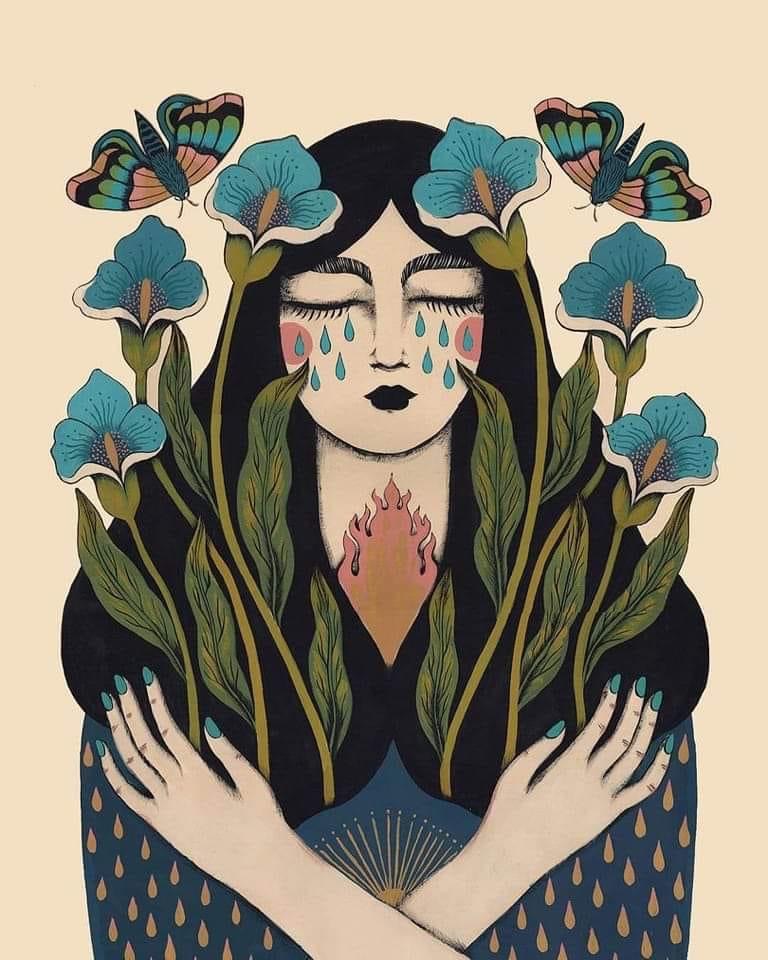
[Art: Jennifer Parks http://www.spectralgardens.com%5D

Loss of a Mother

THE LOSS OF A MOTHER

Is an inevitable part of our life.

We know it will come around

and we know the day will hurt

but we are not prepared,

never prepared

for the tearing.

The tearing of a part of our soul

from its very seams

stitches pulled asunder

heart wrenched in half

soul split in two.

But that tearing is not what you may think

it is it is not her leaving you

it is the loss of her physical form

which you have been so very used and attached to.

And now she must remove that part

for it no longer serves you

and you no longer need it

despite what you may think.

Because she made you well

and she built all of her love into you

cell by cell

thought by thought

lesson by lesson.

And the split that you feel

is simply the new the new way

you will carry on your love

for your mother

with your mother

just in a different way

for she did not leave

mother’s cannot leave

they are in you

look inside

she’s there

and that bond

that connection

is unable to be taken now

that is all yours to keep

forevermore.

Donna Ashworth

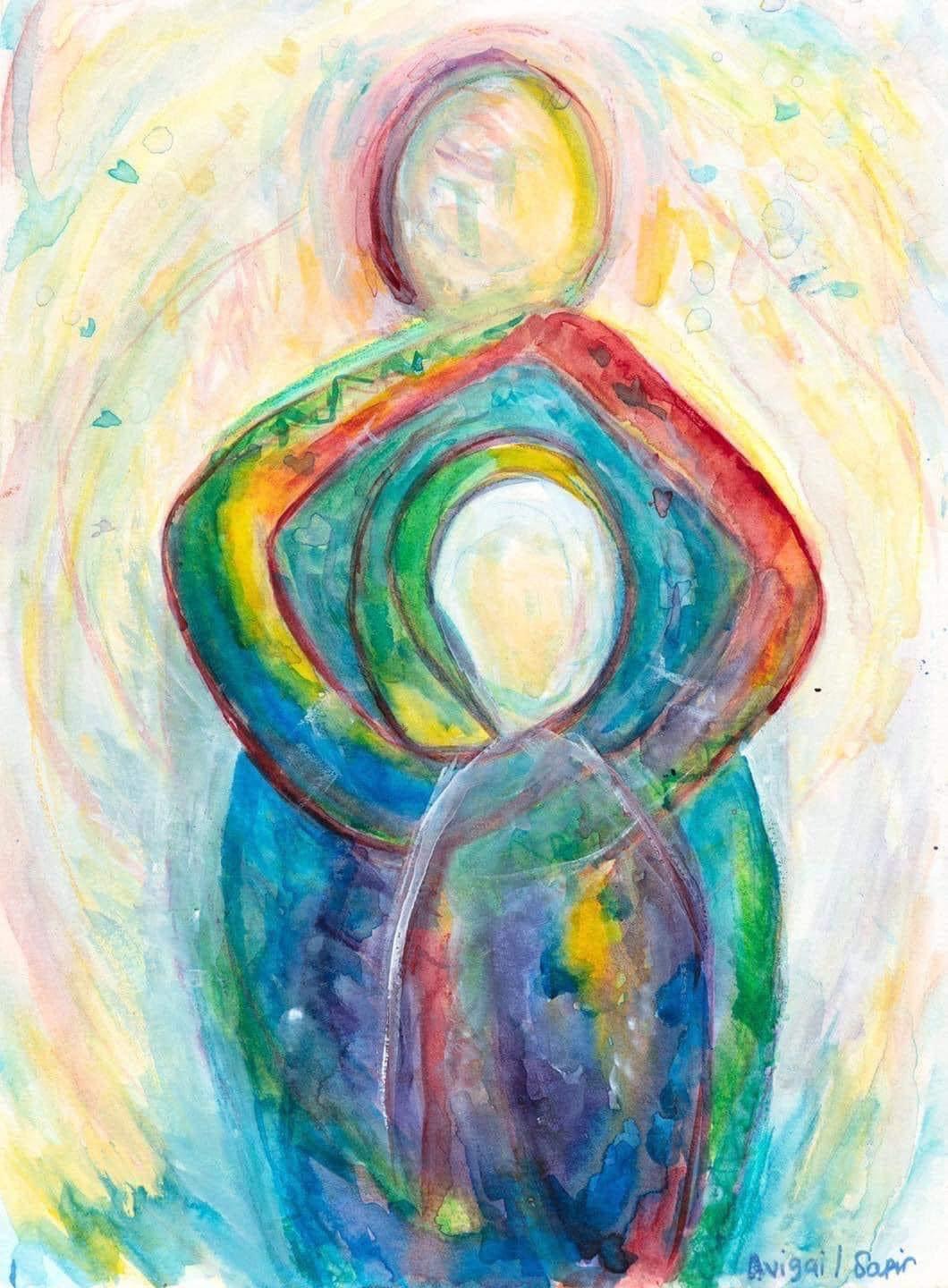
Artist: Avigail Sapir Art