

Tag: Child Abuse
Dead Parents Clone
Dead Mother : Narcissist Style
This was extremely enlightening and affirming
Childress on attachment
Childress on Gardner
Debate. I wanna debate someone sometime.
I don’t care who, I don’t care what it’s about. It can be about forensic psychology. It can be about Gardner’s PAS. It can be about AB-PA. It can be about the future of the family courts.
Forensic psychology is a failed experiment in service delivery that needs to end, and we need to return to clinical psychology – diagnosis and treatment – in the family courts.
Forensic psychology needs to end. It solves nothing and never has.
Gardner’s PAS is the worst model for a pathology ever developed in the history of humanity – the worst – in 2013 it had a full and complete review by the American Psychiatric Association and it was fully rejected as a diagnostic construct.
The Gardnerian PAS “experts” are a fringe group of mental health people (not professionals) who reject the diagnostic guidance of the American Psychiatric Association and the ethical guidance of the American Psychological Association.
Forensic psychology and Gardner’s PAS are both creations of the pathology designed to degrade the mental health response to the pathology. We need to return to clinical psychology.
We need to establish standards of practice to which ALL mental health people can be held accountable – this is the APA ethics code. Everyone – everyone – must apply exactly the same knowledge (the best) to reach exactly the same conclusions (accurate) and make exactly the same recommendations (effective).
Everyone must be held accountable to ethical standards of practice – ethical practice is not optional – it is required… mandatory… no exceptions because you think you’re “special” – everyone.
Do you want to argue that? Fine. Let’s debate. A 2-hour moderated online debate – Dr. Childress vs. Anyone.
Topic: The Role of Forensic and Clinical Psychology in the Family Courts – Dr. Childress vs. Anyone.
Topic: Does PAS Offer a Solution to Custody Conflict in the Family Courts? Dr. Childress vs. Anyone.
Topic: Does AB-PA Offer a Solution to Custody Conflict in the Family Courts? Dr. Childress vs. Anyone.
Topic: AB-PA vs. PAS as a Solution for the Family Courts – Dr. Childress vs. Anyone.
Topic: Does “Parental Alienation” Exist? – Dr. Childress vs. Anyone.
Topic: Are Forensic Psychology and PAS Creations of the Pathology? – Dr. Childress vs. Anyone.
Topic: Anything You’d Like – Dr. Childress vs. Anyone.
A 2-hour online moderated debate – Dr. Chidress vs. Anyone about anything. Pick the topic, pick the opponent, set the date and the platform, send me an invite… and let’s debate the issues.
Dr. Childress vs. Anyone about anything.
Bill Bernet? Jennifer Harman? Karen Woodall? Anyone?
Stahl or Simon? Susan Deutsch? Matthew Sullivan? Anyone?
Crickets is all I hear. The pathogen does not want to debate issues, it wants to hide in ignorance and apathy.
If there’s a debate… there’s clarity… and it remains online, up on the Internet for everyone to see. The pathogen does not want to be seen. They refuse to debate because they will be exposed for all to see.
I know that. They know that. I see the pathogen moving in minds that you don’t necessarily see… yet.
Forensic psychology and Gardner’s PAS are products of a pathogen – a trauma pathogen in the attachment networks – their purpose is to degrade the mental health response in the family courts.
Forensic psychology is the capture – PAS is the bait.
Find a forensic psychologist or PAS “expert” who disagrees – Debate – a 2-hour moderated online Debate: Is Forensic Psychology a Product of the Pathology it Seeks to Solve?
Find a Gardnerian “expert” who disagrees – Debate – a 2-hour moderated online Debate: Was PAS Created by the Pathology as Bait for Parents?
Topic: Is Forensic Psychology in Violation of Multiple Ethical Standards and Principles of the APA Ethics Code?
Affirmative – Dr. Childress
Negative – ? ? ? no one… because it’s true.
The forensic psychologists are exploiting a “vulnerable population” (compromised autonomy in decision-making) for their own personal financial gain. Forensic psychology is in violation of Principle D Justice protections for equal-access and equal-quality of services. Forensic psychologists are routinely and consistently in violation of Standards 2.04, 9.01, 2.01, and 3.04 of the APA ethics code, and routinely in violation of the duty to protect obligations.
Debate – Dr. Childress vs. Anyone.
July, 2022… I wonder how long they can hide? The pathogen loves to hide. That’s it’s first defense. It’s second defense is to seek allies. Don’t agree… let’s debate it – anywhere – anytime – anyone.
The pathogen hides… not anymore.
Craig Childress, Psy.D.
Clinical Psychologist, CA PSY 18857
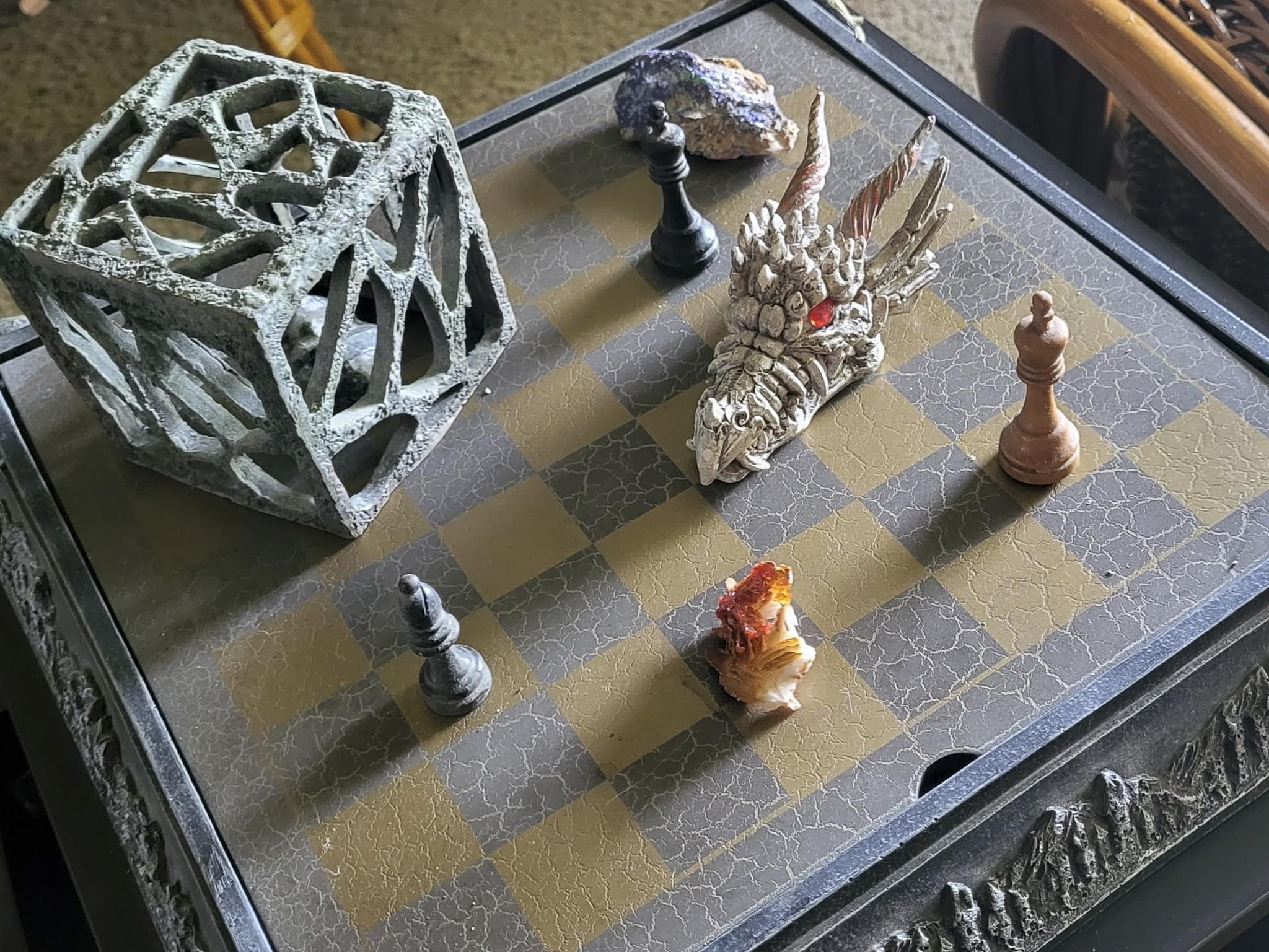
Checkers : Craig Childress PsyD
Childress on persecution delusion ie parental alienation /ChildAbuse
From Bernet (2020): “A good generic definition for PA is the following: a mental condition in which…”
According to Dr. Bernet, his “parental alienation” construct is a “mental condition” that exists within a person.
It is not a relational process in the family, it is “mental condition” someone has – you have “parental alienation” like you would have Schizophrenia and Bipolar Disorder, you have a “mental condition” of “parental alienation”.
According to Dr. Bernet, “parental alienation” is not a parent-child relationship process, it is a thing someone has – you have a mental condition of “parental alienation”, it is not a relational process between two people according to this definition.
According to Dr. Bernet, “parental alienation” exists only within one person, it is the “mental condition” of that person. Which person has the “mental condition” of “parental alienation”, the parent or the child?
Does the parent start with the mental condition of “parental alienation” and then give this “mental condition” to the child, or does the child independently develop the “mental condition” of “parental alienation”?
The parent is clearly transmitting the “mental condition” to the child, to form a shared “mental condition.”
What is that shared “mental condition”? It is a fixed and false belief in supposed “victimization”, i.e., it is a shared delusional disorder.
The “mental condition” is called a persecutory delusion. When the parent induces the persecutory delusion in the child, it becomes a shared delusional disorder.
There is no such thing as “parental alienation” – it is an encapsulated shared persecutory delusion (Childress, 2015). Dr. Bernet is simply an abysmal diagnostician.
I’m barely into my line-by-line review of his “five-factor” model and already it’s just PAS with lipstick, and he’s just identified the shared persecutory delusion – “parental alienation” is a mental condition (not a relational process).
Therefore, “parental alienation” exists in the person as a mental condition. What is that mental condition? A fixed and false belief that the child is being malevolently treated in some way by the targeted parent.
That is a persecutory delusion.
From the APS: “Persecutory Type: delusions that the person (or someone to whom the person is close) is being malevolently treated in some way.
That is the “mental condition” of a persecutory delusion. That is the “mental condition” of the parent, that is the “mental condition” of the child. The pathology is a shared persecutory delusion (Childress, 2015), as described in the journal Family Court Review by Walters and Friedlander (2016),
From Walters & Friedlander: “In some RRD families [resist-refuse dynamic], a parent’s underlying encapsulated delusion about the other parent is at the root of the intractability (cf. Johnston & Campbell, 1988, p. 53ff; Childress, 2013). An encapsulated delusion is a fixed, circumscribed belief that persists over time and is not altered by evidence of the inaccuracy of the belief.” (Walters & Friedlander, 2016, p. 426)
From Walters & Friedlander: “When alienation is the predominant factor in the RRD [resist-refuse dynamic}, the theme of the favored parent’s fixed delusion often is that the rejected parent is sexually, physically, and/or emotionally abusing the child. The child may come to share the parent’s encapsulated delusion and to regard the beliefs as his/her own (cf. Childress, 2013).” (Walters & Friedlander, 2016, p. 426)
Walters, M. G., & Friedlander, S. (2016). When a child rejects a parent: Working with the intractable resist/refuse dynamic. Family Court Review, 54(3), 424–445.
There is no such thing as “parental alienation” and the use of that construct in a professional capacity is substantially beneath professional standards of practice and is in violation of Standard 2.04 Bases for Scientific and Professional Judgments of the APA ethics code.
The pathology is an encapsulated shared persecutory delusion. The assessment for delusional thought disorder pathology is a Mental Status Exam of thought and perception.
That is the mental healthcare information that Dr. Bernet should be dispensing to the public – not psychiatric misinformation based on rejected models of diagnosis and pathology.
Dr. Bernet rejects the diagnostic guidance of the American Psychiatric Association. He thinks he knows more than they do. He thinks he’s right and the American Psychiatric Association is wrong.
No… Dr. Bernet is wrong and the American Psychiatric Association is right – there is no such diagnostic pathology as “parental alienation” – the pathology in the family courts is a shared persecutory delusion (Childress, 2015; Walters & Friedlander, 2016).
Dr. Bernet rejects the ethical guidance of the American Psychological Association, he thinks standards of ethical practice don’t apply to him.
No, he’s wrong. Ethical standards of practice are not optional, and no doctors are exempt from their ethical obligations to their patients to provide the most accurate healthcare information possible to their patients.
Healthcare information from the established scientific and professional knowledge of the discipline. The “mental condition” is an shared persecutory delusion (Childress, 2015; Walters & Friedlander, 2016).
Line… by… line…
Craig Childress, Psy.D.
Clinical Psychologist, CA PSY 18857
Delusional Distorted Disorder ~ Childress
I have two questions for you:
Q1: What happens when you’re a sane person surrounded by people in a shared delusional disorder?
Q2: Am I talking about the family courts or our current political surround?
It’s called parallel process. It’s because they are both from the same pathology, the collapse of narcissistic personality pathology into persecutory delusions (Millon, 2011)
A show of hands, is my first question about the family courts or about our political surround? One… two… keep your hands up… three… Okay, wait, maybe this will be easier. All of you who think Q1 is about you in the family courts, go stand in that corner, and all of you who think it’s about our political surround, go stand over there, that’ll make it easier.
It’s called parallel process – if you have the eyes to see.
Forensic psychology and Gardner’s PAS were created by the pathology – they are symptom features of the pathology.
Take a deep breath, we’re going the next level in. There is a reason I refer to it as a pathogen. It operates like a virus of the mind. It’s in our attachment networks, from unresolved childhood trauma. The attachment system is a motivational system.
This pathogen (damaged information structures) has access to our motivational networks. It has motivational control of us.
You’re unique here. You have your own “special” psychologists just for you… who specifically do NOT diagnose or treat pathology. Curious.
You’re given a diagnosis to achieve by one man, a Richard Gardner back in 1985 – PAS – that’s not really an actual diagnosis, which has no treatment, and which has to be proven to a judge at trial – the hardest thing possible to do. Curious.
It’s a shared delusional disorder. Why don’t you simply diagnose the pathology with real diagnoses? Curious.
We are returning to the established scientific and professional knowledge of the discipline. We are going to accurately diagnose the pathology in the family courts, and we are going to fix the pathology in the family with effective treatment.
This is child abuse. If you believe the shared delusion, you become part of the shared delusion, you are part of the pathology. When that pathology is child abuse, you are part of the child abuse, you are the child abuser.
This was an attempted coup, the overthrow of American democracy. If you believe the shared delusion, you become part of the shared delusion, you become part of the overthrow of American democracy, you become a traitor to America.
Q1: What happens when your a sane person surrounded by people in a shared delusional disorder?
Craig Childress, Psy.D.
Clinical Psychologist, CA PSY 18857
ABA – Craig Childress
Amazing.
Do you know how amazing this ABA data is? No. That’s because you’re heathen savages – savages I say.
This is absolutely amazing in multiple ways. When the Wheel turns on this pathology in the family courts and the world reorients into reality… professional people are going to be amazed by two things about this data, first Dorcy, then Dr. Childress.
It will be an unfolding amazement. I’m actually more amazing than Dorcy, but it unfolds through layers. Dorcy shifts context to shift brain states. I’m inside your brain changing your brain networks directly, tweaking things here, fiddling with that regulatory thing over there.
I know your brain. I’m in your brain. As long as I’m here, I might as well do some helpful stuff to tidy-up the untidy.
Dorcy Pruter is Amazing
First… Amazing number one is Dorcy’s High Road workshop (B phase), she recovered a child from three years of documented child psychological abuse, documented by three separate psychologists across the three year span… in two days.
That’s it, in two days she completely recovered the 15-year-old child from three years of documented child psychological abuse.
Two days is all it took. That is drop-dead amazing, there is NO psychotherapy for anything that fixes anything in two days, are you kidding me? That is amazing – stunningly amazing.
In psychotherapy we talk in weeks or months, not days, and certainly not days to a full and complete recovery – of anything.
It’s because what she does is not psychotherapy. Dorcy uses a different approach, the High Road workshop uses a different change-agent approach to recovery.
It’s simple, it’s elegant, it’s way-way effective – look at that rapid-rise in the B phase over just two days, from 1s and 2s (awful) right before the workshop, to 5s and 6s (wonderful) by the end of two days… two days – of her typical 4-day workshop.
Wrap your head around that for added amazement. Dorcy is so exceptionally talented at recovering children and families that she could adapt her typical 4-day workshop to get a recovery of normal-range bonding and functioning in two days when she needs to… a recovery that remained stable for a full week after the workshop with no additional support while I was away in the Netherlands and before I could start my Second A phase follow-up therapy.
Dr. Childress is Amazing
That’s the second amazing thing… me. My data is a sleeper amazing thing but boy is it amazing. It’s in those 12 circled numbers at different points on the wiggly-wiggly lines.
Blue is the attachment system. Gold is emotional regulation. Silver is mood and arousal: Affection (Aff), Cooperation (Co), and Social Involvement (SI). The Parent Child Relationship Rating Scale (Childress, 2015) is an amazing outcome measure (three amazing things).
Look how Blue and Gold were out-of-synch at the start, then look how in-synch they are after my first therapy session at (5). I entrained the emotional regulation networks to the attachment system in my first session – that is amazing – and the data shows it – that is amazing data.
I’m in the child’s brain working the child’s neurological networks. I have something to say about each of those 12 circled numbers. I know exactly what I’m doing, and I can explain it in detail.
Did I want the blue and gold lines to synchronize from my intervention in the first session? Yes, I wanted to entrain the emotional regulation networks with the attachment networks, with attachment guiding emotional regulation.
The only thing I didn’t know at the time was how exquisitely sensitive the Parent-Child Relationship Rating Scale is to the functioning of the various brain systems that it would show my work. I crafted an incredibly wonderful outcome measure in the PC-RRS.
My work ripples across days in the networks of the person’s brain – and weeks, sometimes months. Typically not years, not in just one session. To do things that would ripple for years would take at least three sessions, and the context would need to be right.
The key mid-points in the data set are (6) and (7), these points are two and three days respectively after my session at data point (5). First, right before the three-system integration, there’s that beautiful V-drop of all three systems into a consolidation point at (6), then a bounce-back into an absolutely perfectly amazing three-system integration point at (7).
That’s about as good as it gets. There’s your standard, therapists of the future – match that V-drop and three system integration in the attachment system, emotional regulation networks, and mood & arousal networks.
Then, after the three-system integration, there is a perfect synchronous entrainment of the emotional regulation networks to the attachment networks, with attachment over (guiding) emotional regulation… all before the second session. How did I do that?
These are daily ratings from the targeted-mom. Targeted parents have zero reason to under-report symptoms. If there’s a problem, they want to fix it so they’ll say there’s a problem.
She was rating 3-4-5s normal-range, even into 6s and 7s wonderful-range sometimes. The 15-year old young man only dropped to 2 twice, once at data point (3) and once at (11). Look what happened after the two data-points because the two 2-ratings are different from one another.
The first 2-drop at (3) was before I began my work at (5). The second 2-drop at (11) was because of a thing I gave him to think about in our second therapy session at (10).
That first 2-drop at (3), and the subsequent recovery and stabilization, is entirely on Dorcy’s High Road workshop – I hadn’t started my therapy work until (5). They had a problem and recovered even before I started my work. Dorcy got a full, complete, and stable recovery of the parent-child attachment bond… in just two days.
I saw that the emotional regulation networks (gold) were not entrained on the attachment networks (blue) so I did something in my first treatment session to fix that.
That’s what occurred at the three-system integration point at (7) – which had been preceded by a nice consolidation V at (6). Those two, the V-drop at (6) and the bounce-back at (7), were the entrainment of emotional regulation networks on the attachment networks.
I did something in session one that rippled in the child’s brain networks for days – changing things – integrating things, until it all came together at (7), and the emotional regulation networks became perfectly entrained on the attachment networks, with attachment higher (guiding emotional responding).
That’s a perfect entrainment of emotional regulation and attachment after (7). The only reason it separated at (11) is because I did something in my next therapy session at (10) – i gave him something to consider, not overtly, just in his networks.
He figured it out, which is the way-big bounce-back that followed.
Replicate the Single-Case Research
I can tell you what is happening in the child’s brain at all 12 circled numbers. You’re just not curious yet. I’ll wait.
You don’t even appreciate the implications of the dramatic B phase recovery achieved by the High Road workshop. Stunningly amazing – yet entirely ignored by all the mental health people out there.
That’s pretty amazing too. I’ll be talking about the lack of motivation once we get this pathology fixed. It’s a motivational pathology, and it has a social-distribution feature.
A single-case ABA is research-based proof that the intervention is effective. The only methodological problem with the single-case design is it’s only one child. Will it work with another child or is it something unique about this particular child?
So do it again – replicate the research. On any High Road workshop, continue to collect the Parent-Child Relationship Rating Scale (Childress, 2015) to complete the ABA design.
Dorcy collects her High Road data on every workshop. Just collect the follow-up data to see what happens after the workshop ends. Does the child regress back to 1s and 2s once the workshop ends? Or is the recovery she achieves to a normal-range relationship and normal-range functioning (3-4-5) stably maintained following the High Road workshop?
Collect the data and find out – each time. That’s the advantage of a single-case research design… it has clinical application. A single-case ABAB research design applied to clinical practice is considered the highest caliber of clinical care.
It combines an empirical research study with clinical care to prove – prove – that the treatment intervention is effective in resolving the problem each time – with that specific case. That is the highest quality of clinical care, to document with data the treatment’s success.
Amazing Data – Amazing Truth
The High Road single-case ABA is amazing data. I’ve worked major NIMH research, I was in charge of all-things data at Keith Neuchterlein’s NIMH research at UCLA. I’ve worked with Jim Swanson’s MTA team at UCI. I know research, I know data.
The High Road single-case ABA clinical research is amazing. It will unfold in its amazing in layers of comprehension.
Everyone fights about everything over here. Currently Dr. Childress is alone. The pathogen wants to keep Dr. Childress and AB-PA hidden so no one knows. That won’t last. The fighting surrounding me will subside as the pathogen’s lies fall away and the truth remains.
An amazing truth. First… there’s the amazing truth of Dorcy Pruter and the High Road workshop. Then there’s the amazing truth of 12 circled numbers in the therapy of Dr. Childress.
Then there’s the amazing truth of the sensitivity and wonderfulness of the Parent-Child Relationship Rating scale as an outcome measure.
Then comes the amazing truth of AB-PA – the Diagnostic Checklist for Pathogenic Parenting and the Parenting Practices Rating Scale – that provide a standardized, reliable, and valid assessment protocol for the pathology in the family courts.
Conduct the Research – Be Amazed
Where’s the research on the accuracy of the predictions made by AB-PA? Do the research and you’ll have it.
I’m a clinical psychologist in private practice – I know research but I don’t do research, that’s not what clinical psychologists do. We do assessment, diagnosis, and treatment – others do the research.
I gave you research anyway just to get you started – and research is not even what I do. I’ve lapped the forensic psychologists and PAS experts several times. They haven’t even made it to the first turn and I’m already over the finish line – it is solved. That’s the truth.
You just need to do it.
You want research from a clinical psychologist? I’ve given you the High Road single-case ABA as proof – there’s the research – we presented the High Road single-case ABA directly to the American Psychological Association in 2019 in a peer-reviewed paper, peer-reviewed by the president of Division 24 Society for Theoretical and Philosophical Psychology.
I’m a clinical psychologist in private practice. I’ve done my job. I’ve given you the diagnosis worked out in detail, and I’ve given you the diagnostic assessment protocol. I’ve even identified the required treatment for you – court-adapted DBT (Linehan) informed by the attachment treatment of EFT (Johnson).
I can do things you cannot yet comprehend – like synchronize your brain networks… just by interacting with you… and you have no idea I’m doing it when I’m doing it (am I doing it now?), just like for days after my therapy the child rippled the impact until the three-system consolidation at point (7)… three days later.
My work ripples within and across time. I’ve been telling you, I work about three to five years ahead, sometimes more, sometimes less. It depends on what’s needed.
I’ve fixed the systems dysfunction here in the family courts and within professional psychology. I’ve solved the pathology in the family courts and fixed it. You just don’t listen – yet.
The moment, the very instant the paradigm shift to AB-PA occurs… the pathology is solved for everyone everywhere.
Try it.
The Paradigm Shift to AB-PA
Start by using the Diagnostic Checklist for Pathogenic Parenting – start by simply collecting that for all children in family court conflict. You don’t need to do anything else… just routinely and consistently collect the three Diagnostic Indicators of AB-PA for all cases of court-involved family conflict… and see what happens as a result.
Things will change… and everything will be fixed. Watch. Try it. You’ll see. Everyone here fights-and-fights about everything. Once the fighting ends and you’re open to a solution… then solve it.
AB-PA as described in Foundations (Childress, 2015) is a 100% true and accurate description of the pathology. What’s true is true. None of AB-PA is Dr. Childress, that’s why it’s true.
You all want to fight about everything. If you want to fight about AB-PA, take it up with Bowlby, Minuchin, Beck, van der Kolk, Tronick, Kohut, and the DSM-5. Because that’s what AB-PA is, I’m not here.
All of AB-PA is simply the established scientific and professional knowledge of the discipline applied. If you don’t agree with the established knowledge of professional psychology, take it up with the established knowledge.
There are amazing things that unfold in layers once someone has the curiosity to look. No one has the curiosity to look yet. They don’t want to solve anything yet. When they want to solve things, then they’ll look, and the solution will unfold once they are motivated.
It’s a motivational pathology – the attachment system is a motivational system – attachment pathology is a pathology in motivation. AB-PA is an indicator.
They are not motivated yet.
Be amazed, because there’s some amazing things. The pathogen fights and fights to hide. We will be calming the fight-and-fight, and when it calms… things will happen.
Looking Backwards in Time
Once this is done and you’re looking back from everything solved to where we were… you will see the path we took. You will be amazed, you had no idea what was happening.
I did. Storms come. Storms go. I’m the bringer of storms that come, and when the storm leaves you will have a solution. A solution to what? To everything you need a solution for.
It will be an unfolding process. Some things will remain dormant beneath the surface of your possible awareness until the proper context arrives to release them, then they will ripple out in their impact.
The entry point for the amazement is the High Road single-clase ABA data. Replicate the ABAB single-case research with each High Road workshop. Personally, I’d recommend you do it formally as part of a research collaboration with CCPI. Collaborate with CCPI and do the research.
Dorcy’s a businesswoman and family coach, not a university researcher person. Dr. Childress is a clinical psychologist, not a university researcher investigator.
The university research investigators need to conduct research on the High Road workshop. The university research investigators need to conduct research on the diagnostic model of AB-PA.
Collect the data. If you simply collect the symptom data using the Diagnostic Checklist for Pathogenic Parenting, the pathology in the family courts will be solved. Watch.
Just do it and be amazed. Collect the data from the Diagnostic Checklist for Pathogenic Parenting routinely for each child in family court custody conflict… and everything will unfold into solutions.
Don’t believe me? Try it. Just try it. There is no harm in just collecting the data in every case. See what happens when you do this, when you simply collect the data from the Diagnostic Checklist for Pathogenic Parenting (Childress, 2015).
You’ll be amazed at what happens. Do it and then look at the result to see what happens.
Try it. See what happens. You’ll be amazed.
Craig Childress, Psy.D.
Clinical Psychologist, CA PSY 18857
Craig Childress ; Reality Check
I first encountered the “five-factor” model of PAS this past year in a forensic child custody report. The forensic evaluator cited the “five-factor” model of PAS to assert that there was NO “parental alienation” because the child did not meet criteria for the “five-factor” model of PAS.
By all indications of the symptom reporting, however, the child did meet diagnostic criteria for AB-PA. So now I must review and critique the “five-factor model” of PAS proposed by Dr. Bernet in order to protect the child from continuing child psychological abuse by the pathogenic parent.
I want everyone to let that fully sink in. The forensic evaluator cited the five-factor model of Dr. Bernet as the reason there was NO “parental alienation” and the child should therefore be left in the sole-custody care of the pathological and psychologically abusive parent.
I am simply second-opinion review on that matter. I am simply telling you the current status of the field.
The reason I put the term “five-factors” in quotes is because I have yet to see the factor analysis that supports that there are five factors to PAS. If there is no factor analysis, then to claim there is a five-factor model is professionally deceptive.
The assumption in research is that the term “factors” applies to a factor analysis conducted on a data set. While the term “factor” has a more loosely defined meaning in the general population, professional reporting in the journal literature is expected to be more precise in its use of research-related language.
First thing to note – before anything – is that Dr. Bernet has yet to demonstrate that there is a pathology called “parental alienation” with one-, two-, three-, four-, or eleven proposed components to PAS. There is no PAS – so – there are no factors, however many, to a non-existent thing.
He starts with an assumption that there is a thing PAS. That is not a valid assumption. He needs to prove this assumption that there IS a PAS before he can begin to describe the features for PAS.
If Dr. Bernet proposes that his recent “five-factor” model of PAS proves there is a pathology of PAS, he is wrong. A DSM-5 diagnosis for PAS proves there is a pathology of PAS. Once he proves there IS a PAS, then he can begin to describe its features.
PAS was completely and fully rejected as a diagnostic construct by the American Psychiatric Association in 2013. PAS is NOT a diagnostic pathology. Yet Dr. Bernet has difficulty adjusting to that reality. He believes he knows more about pathology and its diagnosis than the American Psychiatric Association, and he continues to believe he is ‘discovering’ a new pathology when the American Psychiatric Association has said that is not true.
Note that these articles from 2020-2022 are relatively recent. The ripples have yet to ripple. Fist comes the rock, then the splash, then the ripples.
From Bernet (2020): “Although the phenomenon that we know as parental alienation (PA) had been described in the mental health and legal literature for many years, it was eventually given a name-parental alienation syndrome (PAS)-by Richard Gardner in 1985 (Gardner, 1985). As time went on, most writers abandoned the use of the word syndrome and simply referred to this mental condition as parental alienation. For purposes of this article, PAS and PA are synonymous.”
He simply acts as if everyone now simply accepts the pathology of “parental alienation” as described by Gardner’s PAS model. Dr. Bernet fully and completely disregards that PAS was fully and completely rejected as a diagnostic pathology by the American Psychiatric Association 2013.
Denial is a symptom of thought disorder.
Dr. Bernet went into a time-portal in 1985 and has failed to come out. He remains in 1985. In 2022 he is still making the exact same proposal for Gardner’s PAS. This “five-factor” model is not a new thing – it is PAS from 1985.
Just so everyone is clear – there is NOTHING new in a “five-factor” model of Parental Alienation Syndrome. That construct has been fully and completely rejected by the American Psychiatric Association in 2013 after a full and complete review.
Dr. Bernet has yet to demonstrate there is even a construct of “parental alienation” that has one factor. I will await his presentation of the data set for the factor analysis that identified five factors to the non-existent pathology of PAS.
Dr. Bernet is fully and completely stuck in a time-warp to 1985. Time has not advanced beyond that point for him, and he cannot comprehend or integrate that the construct of PAS has been rejected… and is entirely unnecessary.
To be clear… who is Dr. Bernet? A retired MD psychiatrist. That is it. Just one person, a retired MD psychiatrist who’s obsessed with Gardner’s PAS and cannot let go.
To be clear… who is Richard Gardner? One MD psychiatrist in the 1980s working in the family courts. That’s it. Gardner skipped the step of diagnosis, and instead he led everyone astray by making a new-pathology proposal.
Gardner was wrong. There is no new pathology. Gardner was just a poor diagnostician.
The pathology in the family courts is entirely – entirely – solvable without the construct of “parental alienation” – and, in fact, the solution requires an end to the use of that construct and a return to the established scientific and professional knowledge of the discipline, and poof, everything is solved immediately.
We can only achieve competence by establishing standards of practice. We cannot establish standards of practice requiring everyone to apply the five-factor model of PAS proposed by Bernet.
But that is Dr. Bernet’s expectation, that everyone do what Dr. Bernet tells them to do – not what the American Psychiatric Association says. Not what the ethical Standards of the American Psychological Association says.
Don’t apply Bowlby, don’t apply Minuchin, don’t apply Beck, don’t apply van der Kolk, don’t apply Tronick, don’t apply van der Kolk, don’t apply Kohut, don’t apply the DSM-5 – INSTEAD – apply Bernet.
That’s Dr. Bernet’s expectation in proposing a “five-factor” model of PAS. That was his life’s work. He is a retired MD psychiatrist leading a “movement” for Gardner’s PAS. He was crushed when the American Psychiatric Association said no.
He can’t let go. It’s is legacy. He must fight for his legacy, he can’t fade away into irrelevance. So he simply disregards the decisions of the American Psychiatric Association – they’re wrong – Bill’s right.
He needs to be right. He must be right.
So just for starters, I’m not even off of page 1 in my line-by-line peer-review of the “five-factor” model of PAS proposed by Dr. Bernet and the PAS “experts” and it is clear there is nothing new in their proposal – it’s just Gardner’s PAS… one more time.
From Bernet (2020): “For purposes of this article, PAS and PA are synonymous.”
See. It’s just PAS with lipstick.
I look forward to a more complete presentation of the factor analysis that supports a “five-factor” model of Carrot Rejection Syndrome.
This could have been avoided, but the pathogen is self-destructive. It wants to be seen. It wants us to see and heal it, but it cannot reveal its inadequacy, because once we see how damaged and inadequate they are we’ll reject them.
And their fears are true. Once we see the inadequacy of PAS, we’ll reject it.
I don’t care how many angels can dance on the head of a pin. We need to protect these children and their parents – today – and “parental alienation” will never do that.
This is not personal. It is professional. This pathology has a social distribution feature – it is the only shared pathology. The Garnderian PAS “experts” are a symptom.
Gardnerian PAS was created by the pathogen as bait to lure the targeted parents into endless unproductive fighting in the courts rather than getting an accurate diagnosis and treatment plan from healthcare.
They are a symptom feature. Some things can only be seen looking the other direction in time, from the future to the past. Are we ever going to return to 1985 to adopt PAS as the solution?
No.
It’s time to move on from one retired MD psychiatrist struggling to hold onto meaning in a failed career. History is written by the victors. That won’t be PAS.
Craig Childress, Psy.D.
Clinical Psychologist, CA PSY 18857
 GreatCosmicMothersUnite