Author: GreatCosmicMothersUnited
I have joined with many parents affected with the surreal , yet accepted issue of child abuse via Pathogenic Parenting / Domestic abuse.
As a survivor of Domestic Abuse, denial abounded that 3 sons were not affected. In my
desire to be family to those who have found me lacking . As a survivor of psychiatric abuse, therapist who abused also and toxic prescribed medications took me to hell on earth with few moments of heaven.
I will share my life, my experiences and my studies and research.. I will talk to small circles and I will council ; as targeted parents , grandparents , aunts , uncles etc. , are
denied contact with a child for reasons that serve the abuser ...further abusing the child.
I grasp the trauma and I have looked at the lost connection to a higher power..
I grasp when one is accustomed to privilege, equality can feel like discrimination..
Shame and affluence silences a lot of facts , truths that have been labeled "negative".
It is about liberation of the soul from projections of a alienator , and abuser ..
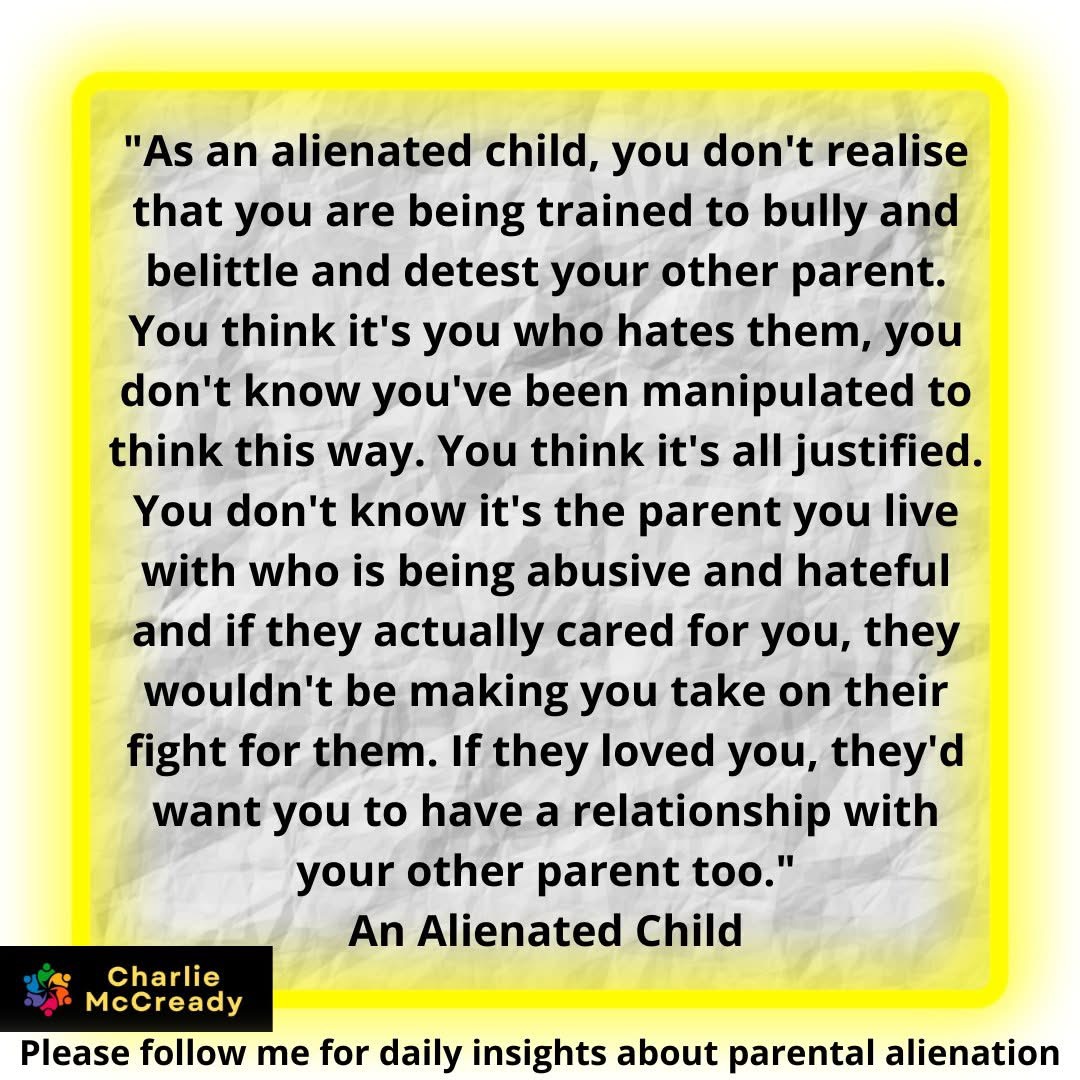
The manipulated alienated child – Charlie Mc Cready
It’s painful for the alienated child when they realise they’d put their trust in a parent who didn’t entirely have their best interests in mind, they were mostly thinking of themselves. They were being childish, vengeful and selfish when as a parent they’d have been expected, and trusted to be emotionally mature, mentally balanced, nurturing, and unconditionally loving.
Coming to terms with being manipulated, lied to, and deprived of a relationship with a loving parent can be a challenging process for an alienated child. It often involves recognising and acknowledging what really happened, which can evoke feelings of anger, sadness, and betrayal. Healing and reconciliation requires support from people who understand parental alienation. They can gradually gain insight into the dynamics at play and develop a healthier perspective on the situation. It is essential for the child to separate their own identity and emotions from the alienating parent’s influence, allowing them to reclaim their autonomy and make informed decisions about their relationships. Ultimately, the healing process involves finding ways to rebuild trust, establish boundaries, and create a fulfilling life that includes a sense of love and connection with both parents, regardless of the alienating parent’s actions.
A significant amount of programming of false beliefs and fictions need to be untangled so they can move on with their life as a sovereign, happy, healthy-minded individual who is free to love who they choose, not only who their alienating parent allows them to love.
Alienated children need to be immensely brave and strong to break free, but they can and do. Some cut ties with the alienating parent; some find a way to have both parents in their lives, which was always the best situation for them.
#charliemccready
#parentalalienationcoach
#alienatedparent
#coercivecontrol
#narcissisticabuseawareness
#parentalalienationawareness
#parentalalienation
#childpsychologicalabuse
#mothersmatter
#FathersMatter
#FamilyCourt
#custody
Bad people lie , mostly to themselves
Matriarchal society of Native Americans ❤️💯
NURTURING:When Europeans first arrived in North America, they were amazed by the Indigenous People and their culture and how it differed from their own. Children appeared to be indulged and lavished with affection more than European children, who were often disciplined by force. This tenderness instilled in them a sense of honor and respect through example. Native appearance and dress were understandably different, but strangely, native infants at birth were as light of skin as any from Europe. As they aged, their skins took on the hues of adults.��The women of these strange new people were esteemed and honored by society, unlike European women. American tribes had a matriarchal society in which children “belonged” to their mothers and were raised by them. The words of these women held sway. It was often their voices that ended conflicts or chose a direction for the entire clan or tribe.��In this painting, the Clan Mothers welcome new additions to the village. They will be raised in the old ways and and someday may become leaders of their people. (written with the help of Beth Kennedy — author and Clan Mother)Courtesy ~ JohnBuxton

Weaponized Self Importance/ Narcissist Behavior
“ Open Door “ 2024 💯❤️🙌
HARRP – Electromagnetic Brain Control/ All over the World
Grandparents baby sitting
As a medicated 52 year old Granny , I totally wanted to help care for eldest grandchild .
A drug change was made with my agreement to aide in my weight loss and the side effects were horrific and aided in flipping me into what’s referred to a mania .
Then baby had a day of horrific reactions to Soy formula which I thought I had given him at first .
However baby has to go to day care $$$
Granddaddy that’s was caring part time had a form of cancer .
Emotional Reality of Life
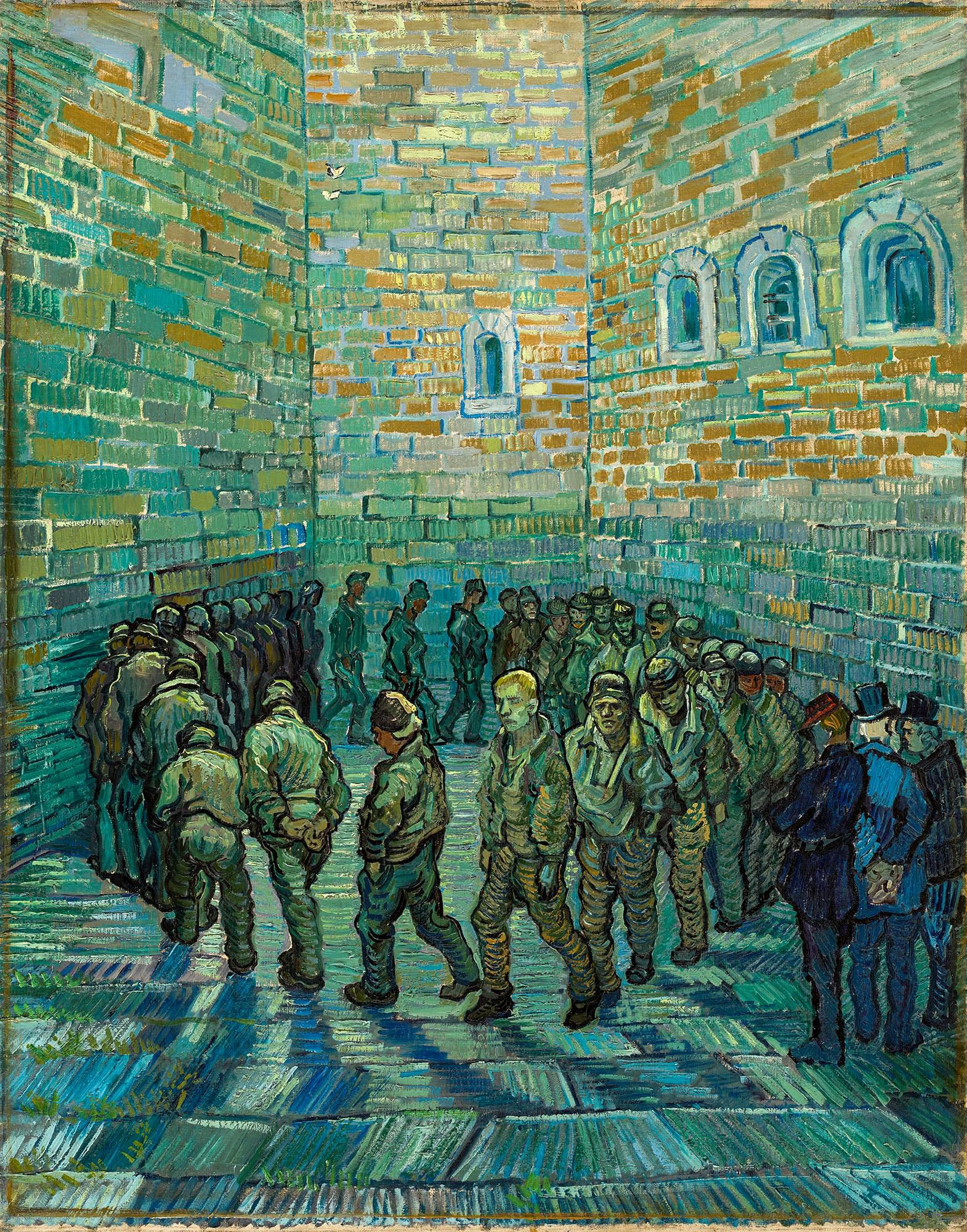
Ever felt you were in a loop from which there just seemed no escape? That’s what Vincent van Gogh tries to capture in his painting Prisoners’ Round,and believe me, it is much deeper than it seems. So let’s break it down!
This painting here was inspired by an earlier work by Gustave Doré; but Vincent Van Gogh? He took it to a whole new level!
We see a group of prisoners walking in a tight circle in a dreary prison yard. No destination, no end in sight. It is essentially the same as being stuck in a looping Monday morning. Seriously, though, this is more than just a gloomy prison scene; it is teeming with heavy symbolism.
First of all, take a look at the round movement of the prisoners. Round and round they move, caught in some kind of ‘no end’ cycle. Van Gogh was super interested in depicting what it’s like to be confined, physically and psychologically. These men aren’t only prisoners of the state, but they are also prisoners of their existence. Ever feel like you are walking in circles in your own life? Same.
And look at that wall, so lofty, almost overwhelming. Van Gogh knew a thing or two about feeling shut down; he did this during his stay in a psychiatric hospital. The walls here seem symbolic of his loneliness and isolation, and he wasn’t afraid to tell it.
Now, the cool part is right in the middle of the painting. Check out the guy turning around and directly facing us. He’s breaking the fourth wall! This prisoner can almost be considered a stand-in figure for Van Gogh himself, giving his regards to his confinement and, somehow, relating to us viewers. He is not a part of the crowd; he’s aware. It’s that sort of “Wait a minute, this is my life?” moment we all have sometimes.
What does this amount to? Well, Van Gogh was all about the emotional reality of life, and this painting feels hauntingly like what it means to feel trapped-be it within a physical space or simply in your head; we’ve all been there. Stuck? Don’t worry, even Van Gogh had those moments.