Alienated Child – Charlie McCready

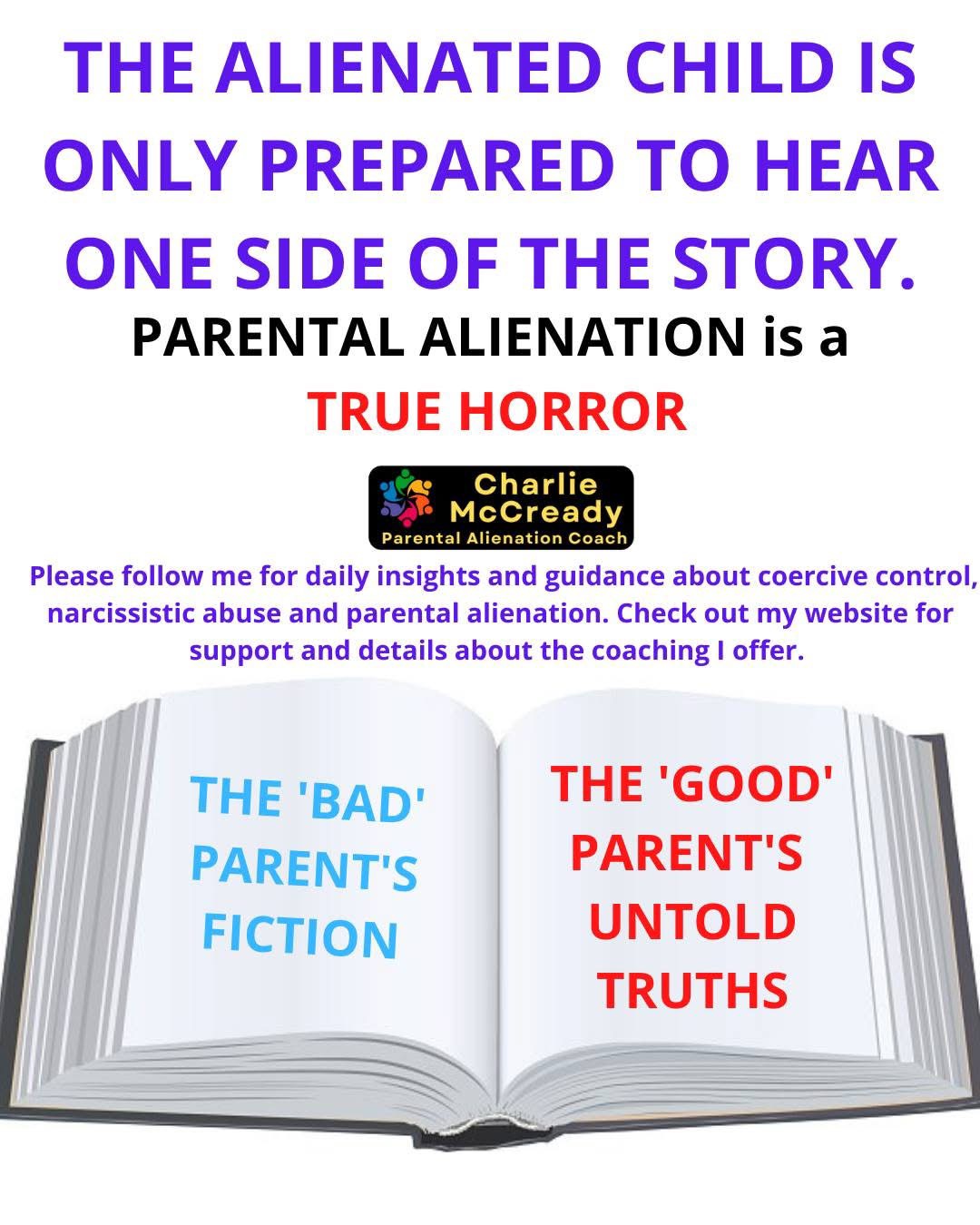
The alienated child unconsciously aligns with the parent who is presenting themselves as being good, loving, protective, ‘the only one’. The child then consciously rejects the apparently ‘bad’ parent. Despite how it might appear, this is agonising, traumatic, confusing, and upsetting to them, and yet all the anger and negativity induced is projected onto the ‘target’ parent. It’s quite easy to manipulate this alienation (denigration, judgement, emotional cut-off and/or actual no contact) when that child only hears only one side of the story, over and over again. It’s a horror story, a fiction they come to believe is real. The triangulation/alienation keeps the truth out of bounds and censored, and the ‘target’ parent becomes the monster in the story, a creation of the alienating parent’s imagination and disordered pathology. , The rejection of a loving parent by the alienating child is a coping mechanism. They ‘split’ – good, bad – and think they hate the ‘bad’ parent, and love the ‘good’ parent. This child is terrified of being abandoned by the parent who has inflicted forced compliance and shared persecutory delusions on their child, telling the child they’re the only parent … it’s trauma bonding, similar to Stockholm syndrome, and it is, of course, emotional and psychological abuse. To re-establish any relationship with the rejected parent, that child basically needs to find the courage (because of induced shame, guilt, fear, confusion, anger … the whole parental alienator’s toxic pathology) to hear the other side of the story. In many cases, it might be a story that the target parent is unable to tell if it causes more pain to that child. Often it is better to close the book on the past. It depends on the child and situation. You have to ‘read’ them to see how much they would benefit from hearing anything from previous chapters. It’s painful for any of us – our alienated children being no exception – to find out we’ve been duped, controlled, manipulated, emotionally abused deprived of the love and nurture of a loving, available parent, and believing them to be something they are not. If and when your alienated child reaches out, keep your words in the present tense, and loving, turning the page on the past, and focussing on creating a better future moving forwards.

#charliemccready

#parentalalienationcoach

#alienatedparent

#traumabonding

#coparentingwithanarcissist
Alienate – Charlie McCready

Parental alienation is a harrowing, vengeful form of psychological abuse, where one parent (sometimes with help from others) systematically erodes the attachment bonds of the child with their other ‘target’ parent. They actively sow seeds of doubt and misinformation, manipulating the thoughts and beliefs of innocent children against their own flesh and blood. It involves projecting the alienating parent’s own insecurities and faults onto the ‘target’ parent, creating a distorted reality for the child. Blame is shifted, and responsibility is deflected, all while the alienating parent gains control by isolating the alienated parent from family life. The result is a toxic environment where the child is emotionally torn, experiencing conflicting feelings due to the cognitive dissonance created by the stark contrast between the alienating parent’s manipulative narratives and the actual truth. This relentless psychological onslaught fractures trust, distorts reality, and inflicts deep emotional wounds, leaving all parties, especially the children, in a state of profound turmoil and confusion. There’s debate over the term ‘parental alienation’ and it could certainly be called pathogenic parenting, hostile aggressive parenting, intractable contact, narcissistic parenting, disordered parenting, malicious parent syndrome, psychological manipulation, emotional abuse, domestic partner abuse, child psychological abuse, spousal abuse, domestic violence, family bond obstruction or child alienation … it is abuse by any other name.

#charliemccready

#parentalalienationcoach

#alienatedparent

#coercivecontrol

#parentalalienationischildabuse

#parentalalienationawareness

#parentalalienation

#narcissisticabuseawareness

#narcissisticparent

#parentalalienationisreal

#custodybattle

#custodybattle

#FamilyCourt

#ChildCustody

Narcissistic traits & Alienation – Charlie McCready

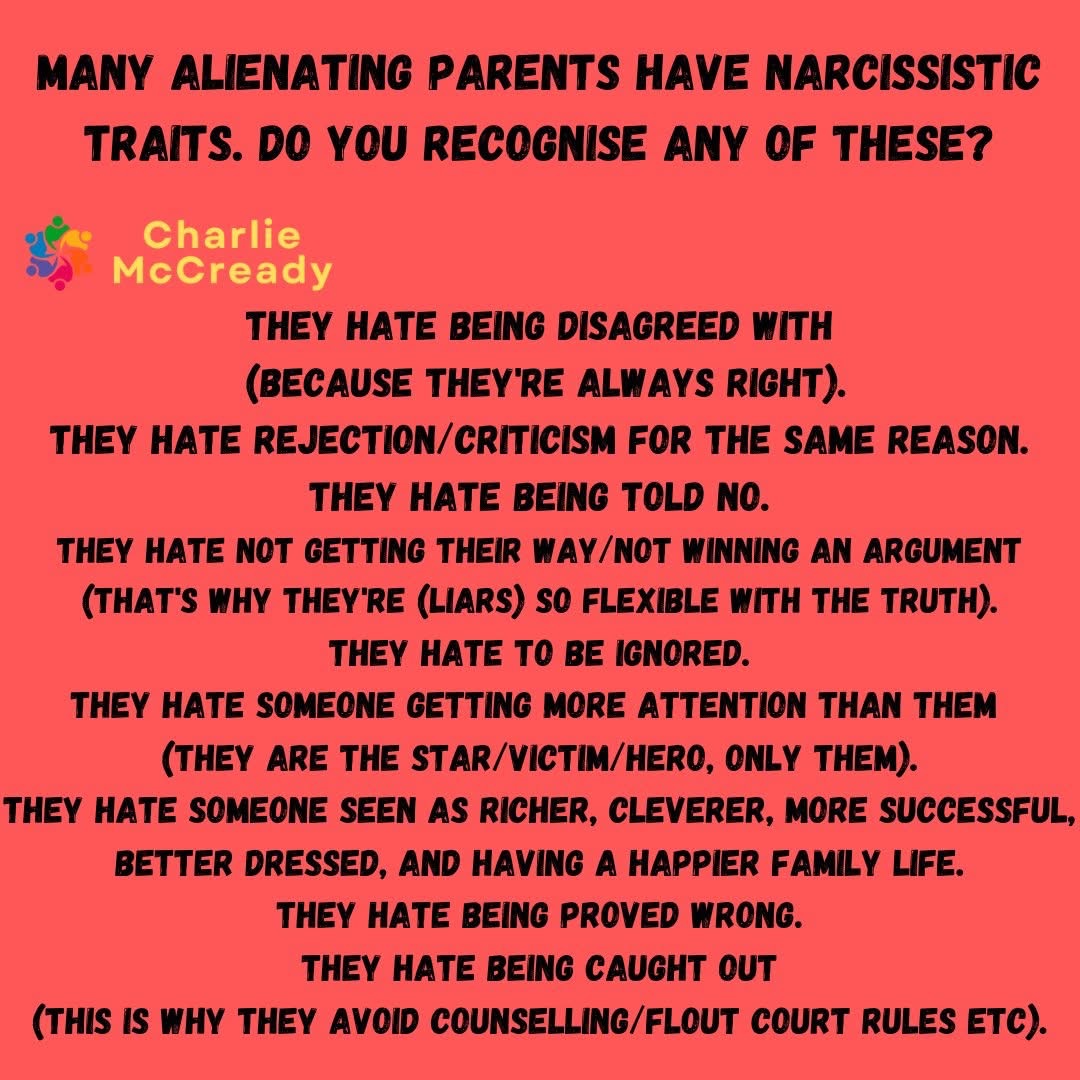
Many alienating parents exhibit narcissistic traits, which include an intense need for admiration and a lack of empathy for others. They are sensitive to rejection and criticism because it challenges their self-perceived superiority. Being told “no” or not getting their way threatens their sense of control and dominance. Their flexibility with the truth (aka outright lies and deceptions) stems from a desire to maintain their self-image as flawless. They consider themselves something of a hero! Being ignored undermines their need for validation from the outside world. Also, they resent others’ success or attention, feeling threatened by anyone who outshines them. In the case of ‘parental alienation’, this extends to fearing or being threatened by the idea that the children love their ex. They avoid counselling and disregard court rules to evade exposure or accountability, reinforcing their manipulative tactics. Believe it or not, many of these behaviours stem from their deep-seated insecurity and the compulsion to maintain a facade of perfection and superiority.

#charliemccready

#parentalalienationcoach

#narcissisticabuseawareness

#narcissisticparent

#gaslighting

#coercivecontrol

#parentalalienationawareness

#parentalalienation

#mothersmatter

#FathersMatterToo

#FathersMatter

#FamilyCourtReform

#FamilyCourt

#ChildCustody

#custodybattle

#custody

#mothersrights

#FathersRights

#fathersrightsmovement

#childrensrights

Alienated Kids are groomed into emotional servitude

Parental alienation doesn’t just separate a child from a parent—it rewires their nervous system.

Alienated children are often conditioned to believe:

• They must manage the alienating parent’s emotional state.

• Any deviation from loyalty is betrayal.

• Their love must be earned through compliance, silence, or performance.

This grooming creates a child who becomes hyper-attuned to the needs, moods, and reactions of others. The message they internalize is clear:

“You are responsible for how I feel.”

And if the child doesn’t manage that emotional state correctly, the cost is often rejection, guilt, withdrawal of affection, or punishment.

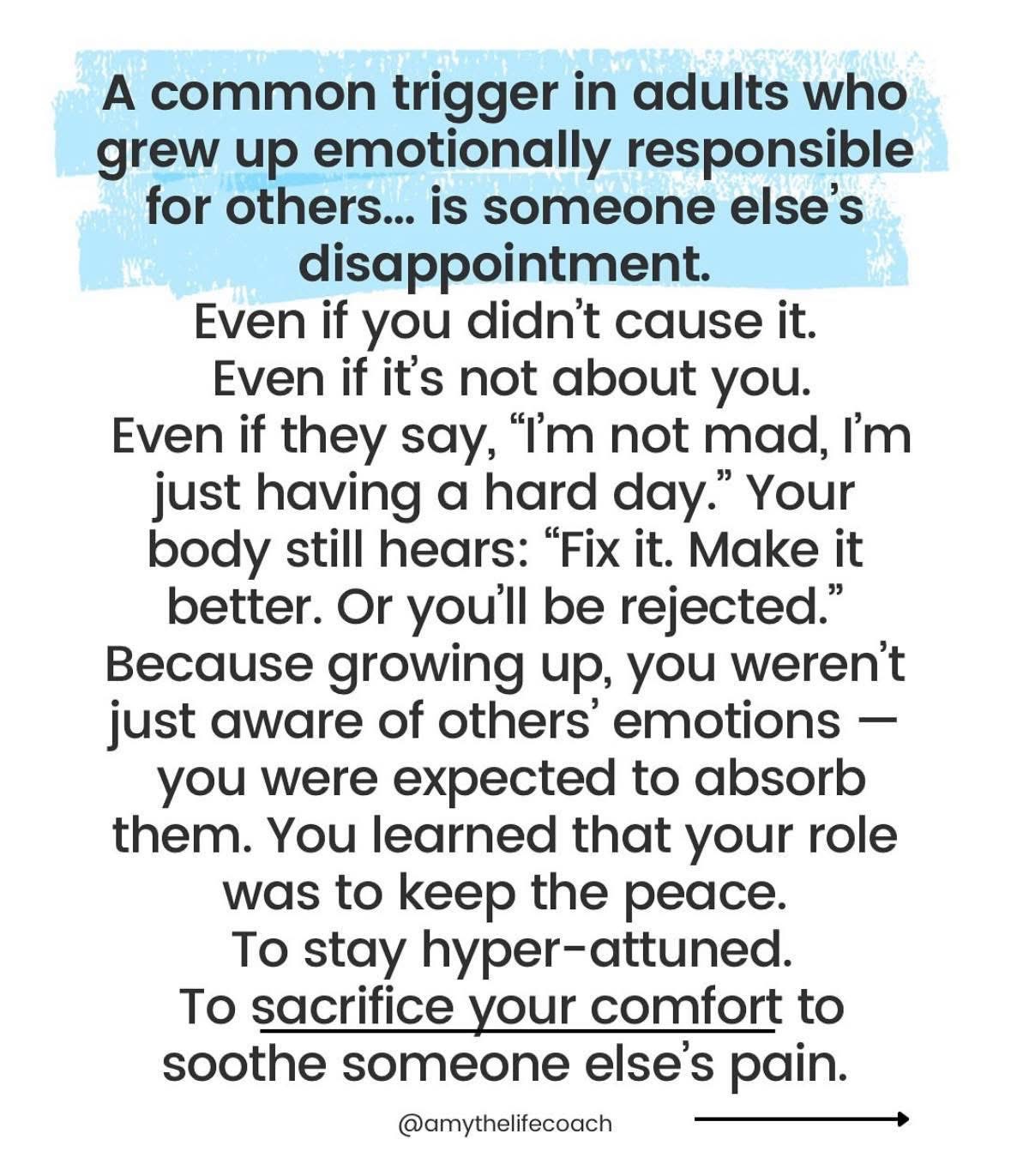
They learn to sacrifice their comfort, truth, and identity to maintain approval.

They become peacekeepers.

Performers.

Caretakers of chaos.

This is emotional enmeshment masked as loyalty—and it leaves long-term scars.

What This Looks Like in Adulthood

These children often grow up to:

• Feel triggered by other people’s disappointment—even when it’s not directed at them

• Feel responsible for fixing everything

• Have difficulty saying “no” or disappointing others

• Lose their sense of self in relationships

• Seek external validation at the expense of their own truth

Their inner narrative becomes:

“If I don’t fix this, I’ll lose love.”

“If I don’t keep the peace, I’ll be punished.”

“If someone’s unhappy, it must be my fault.”

This is not their fault. It’s the result of living in survival mode for years under the weight of manipulation.

How to Help Your Alienated Child Heal When They Come Back

When your child returns—emotionally or physically—you have a rare and sacred opportunity. Not to explain your pain. Not to clear your name. But to give them space to discover who they are without pressure.

Here’s how:

1. Give Them Emotional Sovereignty

Let them know they are not responsible for your healing. Say:

“You’re not here to take care of my feelings. I’m here to hold space for yours.”

2. Model Nervous System Regulation

If you stay calm, grounded, and regulated—even when they test boundaries—they will feel the difference. You become the safe space they never had.

3. Normalize Their Confusion and Mixed Emotions

Let them know it’s okay to feel loyalty to both parents. Don’t force them to choose sides. Instead, affirm:

“You’re allowed to love us both. You’re allowed to have your own experience.”

4. Don’t Trauma-Dump

They don’t need to hear your whole story or pain. They need to know they’re loved and safe. If they ask, share—but only what they can emotionally handle.

5. Help Them Rebuild Identity

Encourage expression through creativity, exploration, and play. Say things like:

“What do you love?”

“What makes you feel alive?”

“You don’t need to perform here. Just be.”

6. Celebrate Autonomy

They were stripped of autonomy in the alienation dynamic. Give it back. Let them choose the pace of reconnection. Let them have opinions. Let them say no.

Healing Begins With You

If you want your child to shed the burdens placed on them, you must never place new ones on their shoulders. Let their nervous system relearn what it feels like to be near someone who doesn’t demand anything of them except presence.

You are not here to pull them back into your world.

You’re here to witness the return to their own.