
Tag: wisdoms
Depression is inflammation
Health Begins Inside
In Hawaii, there is a powerful phrase,
– Mai Na Loko , which translates to
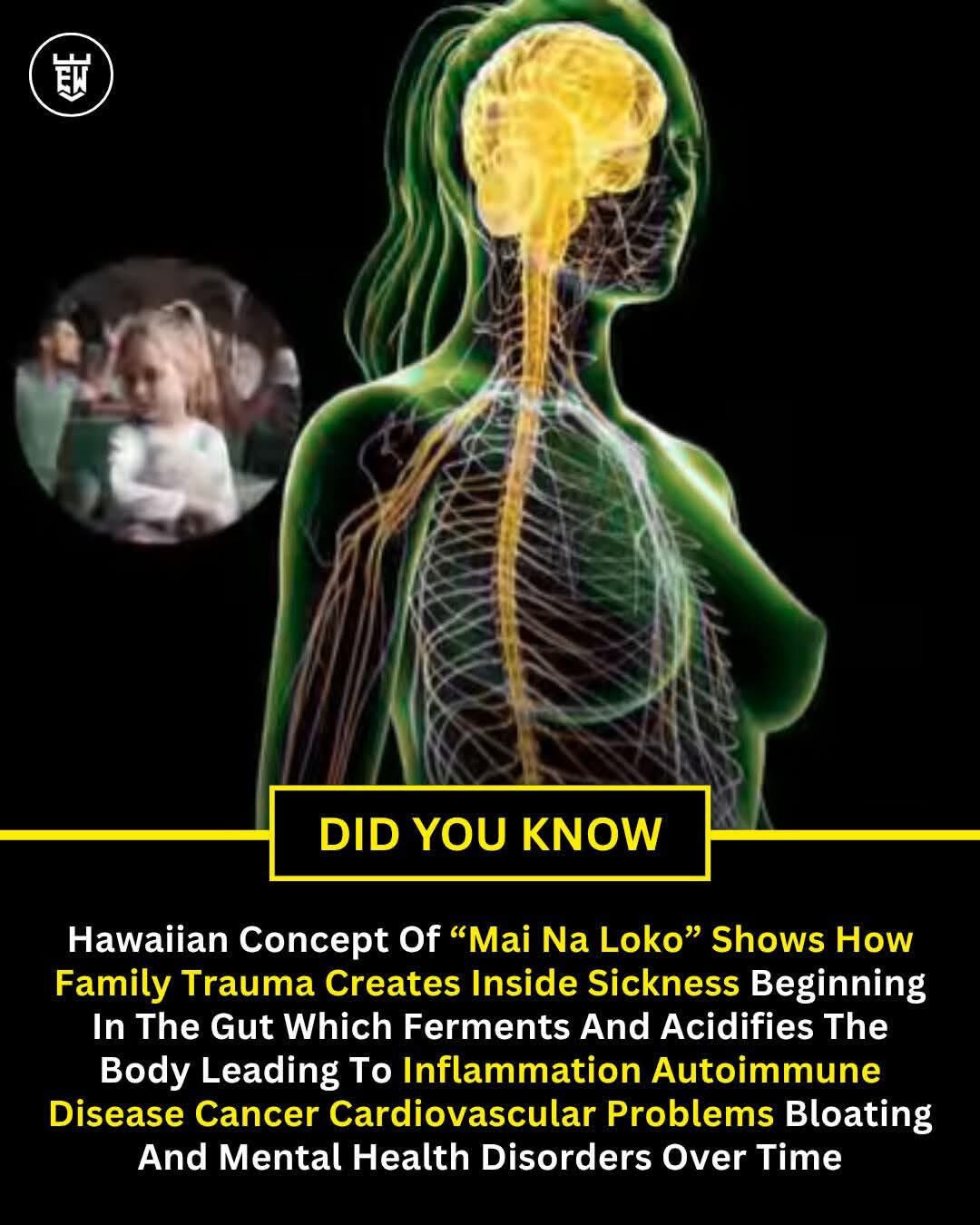
“inside sickness.” It describes how deep emotional wounds, particularly those caused by family conflict or trauma , can make the body physically ill.
Modern science now supports this wisdom, showing that emotional pain often begins in the gut and spreads throughout the body.
When stress, betrayal, or unresolved trauma festers, the body responds with heightened cortisol and disrupted gut microbiota. Over time, this creates an acidic internal environment where harmful bacteria thrive. The result is chronic inflammation, a silent driver behind bloating, digestive distress, autoimmune conditions, cardiovascular issues, and even certain cancers.
Researchers are also finding that trauma-related inflammation doesn’t stay in the gut. It crosses into the brain, altering mood and cognition, increasing the risk of anxiety, depression, and other mental health disorders. The gut-brain connection proves that what happens emotionally is inseparable from what happens physically.
Hawaiian culture understood this long before Western medicine gave it a name. Mai Na Loko is a reminder that family dynamics, love, or lack of it, directly influence health. Toxic relationships can quite literally ferment inside the body, while healing, compassion, and connection can restore balance.
This knowledge calls for a holistic view of health, where emotional well-being, family bonds, and inner peace are as important as diet and exercise. Addressing unresolved trauma through therapy, communication, or mindfulness is not just about mental healing, it is also a powerful step toward physical recovery.
Health begins inside. What we hold in our hearts and minds shapes what happens in our bodies.
#TraumaHealing #GutHealth #MindBodyConnection #Wellness #ScienceNews
Narcissist feeding off you
A narcissistic man doesn’t just show up out of nowhere. He’s built out of a wound. A boy who was either rejected by his mother or worshipped until it warped him. If he was rejected, he grew up starving for approval. If he was idolized, he grew up addicted to control. Either way, he never learned what real love feels like.
The golden child, the one placed on the pedestal, learns early that love has conditions. Loved when he performs. Praised when he pleases. Rewarded when he obeys. But underneath, he’s suffocated. He grows into a man who craves dominance but resents the very power that controls him.
So when you meet him, it feels like love. He adores you, idolizes you, calls you perfect. But it isn’t love—it’s recognition. You remind him of the comfort and the chaos he’s always known. And just like that, you’re no longer his partner. You become his mirror.
That’s when the shift happens. Tenderness becomes criticism. Affection becomes control. Vulnerability becomes rage. He punishes you, not because you failed him, but because your presence forces him to feel the pain he’s been running from all his life. To him, love is a trap. Affection is weakness. Connection is danger.
This is why you end up walking on eggshells. This is why you keep trying to fix him. This is how you slip into the cycle—caretaker, healer, mother figure—while he turns cold, dismissive, and cruel. And the rage he’s carried toward her? It lands on you.
Here’s the part you need to hear. His pain might explain him, but it doesn’t excuse him. You cannot love the little boy inside a grown man who refuses to face himself. You can’t fix it. You can’t save him. That healing doesn’t come from your devotion. It only comes from his own self-awareness.
Until he confronts that wound, he will keep wounding women who try to love him. And if you’ve been there, you know exactly how true this is.
So remember this—he doesn’t love women, he feeds on them.

 GreatCosmicMothersUnite