
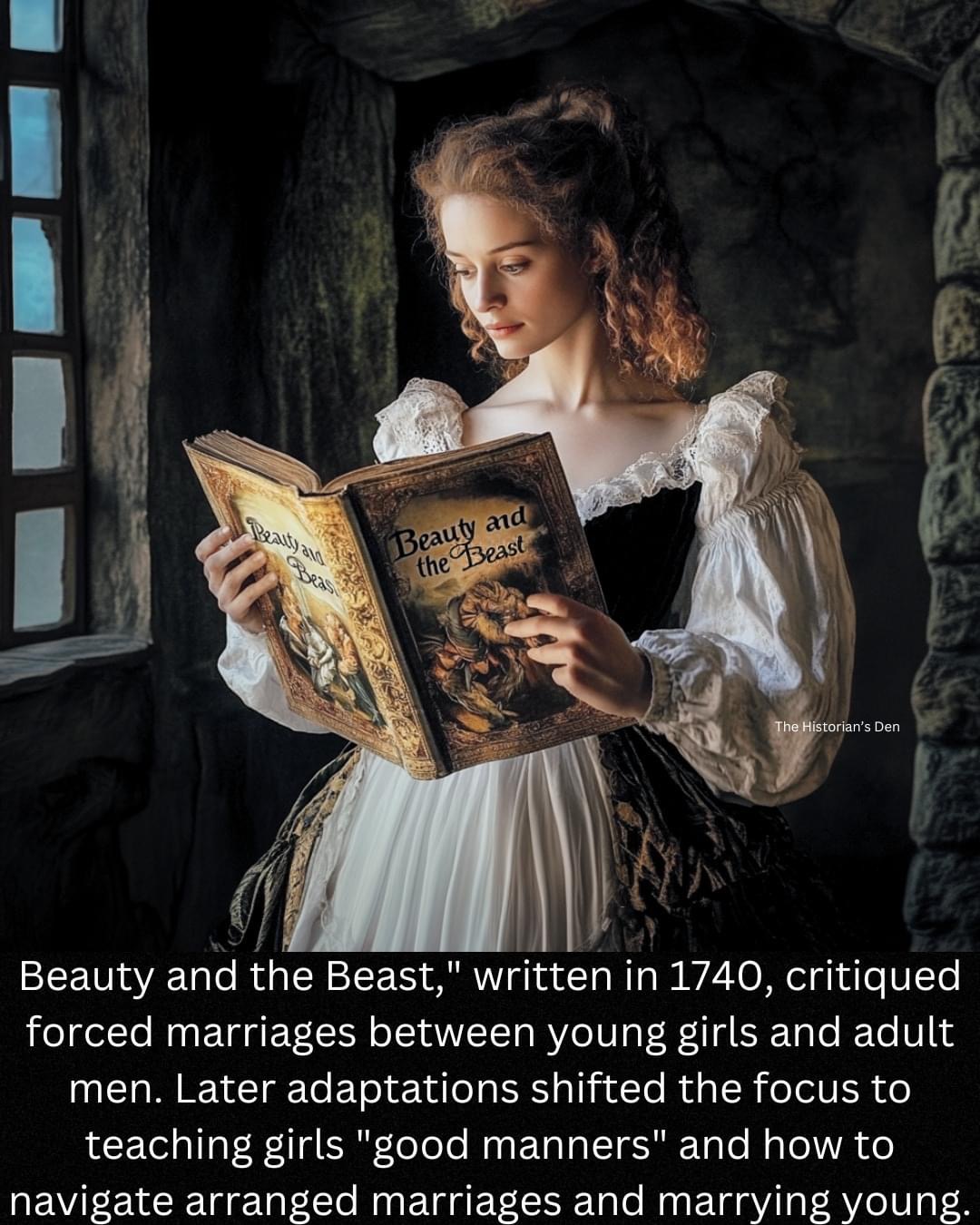
The original version of “Beauty and the Beast,” published in 1740 by Gabrielle-Suzanne Barbot de Villeneuve, was more than just a fairy tale. French writer Jeanne-Marie le Prince de Beaumont later produced the most famous version of the tale, titled “La Belle et la Bête,” in the 1750s. Rather than a simple fantasy, de Beaumont’s rendition served as a critique of women’s rights during that era, cleverly hidden behind layers of marital guidance.
In this version, the “Beauty” character is distinctly comparable to the too-beautiful Madame de Ganges. Like the Marchioness, Beauty willingly goes to, but then is forced to submit to the will of a ferocious beast. De Beaumont’s work sheds light on societal expectations and the challenges faced by women, emphasizing the importance of agency and autonomy in relationships. Later adaptations shifted the emphasis to teaching young girls “good manners” and how to navigate the idea of marrying young and being in arranged marriages. So, while the Disney adaptations may focus on romance and magic, the original tale had deeper layers of meaning.

 GreatCosmicMothersUnite