
Tag: education
Recovery language in substance abuse
New research published in Critical Social Work reveals that dominant understandings of recovery, such as maintaining abstinence, can be experienced by service users as oppressive.
The critical discourse analysis of qualitative interviews with individuals struggling with substance use issues in rural Ontario examined power dynamics inherent to discourse on substance addiction recovery. The author concludes by offering recommendations such as training and education to address stigma and implicit biases among clinicians and the inclusion of individuals experiencing substance abuse issues in research, policy development, clinical practice, and education.
Researcher Sandra R. McNeil of the University of Windsor writes:
“By shaping who should recover, how they should recover, and what recovery should look like, recovery discourse constitutes categories of inclusion and exclusion. Viewing substance use recovery through a critical lens exposes ideological values that perpetuate substance use stigma at micro and macro levels. Equally important are the numerous, intersecting forms of stigma related to race, class, gender, sexuality, ability, appearance, geography, and types of substance use that are capable of (de)constructing structural inequities.”
Kid codes
Spirit Within : ancestors
Our Ancestors walk with us. They stand over us as tall as the mountains. They walk beside us as quiet as the air we breathe… yet, we hear them. We hear them as they whisper to the trees, we hear them in the rustle of the leaves, the sway of the tall grasses in the fields, and in the songs sung from the tall pines. We can feel their warmth through the colors, see their reflection looking back at us from the waters. They touch who we are and we absorb their wisdom through the vibration of Life surrounding us. Walk quietly, walk gently, let Spirit guide you.
– redskyhawk
Walking the Earth Touching the Sky
© 2022 RedskyHawk/Tina Phillips

What’s in our Air ? Global Skywatch
Healers
The Gallows would be too kind
for those who did what they did.
Although, I have heard it said
that the gallows belong to people
who behave like shit.
The gift of healing is in our womb.
Hangings nor burning can distinguish what has been passed down from the first woman to us.
We are healers,
the knowers of things.
Our ways are not hidden,
evil, or undeserving of respect.
It’s silly to believe that those who were sentenced to death were all that was left.
Healers are coming out in groves.
We vow to never forget.
🖤🖤🖤 Hope Strait 🖤🖤🖤
🖤A Moon Woman’s Musings🖤
Manufacturing Madness -Thomas Szasz
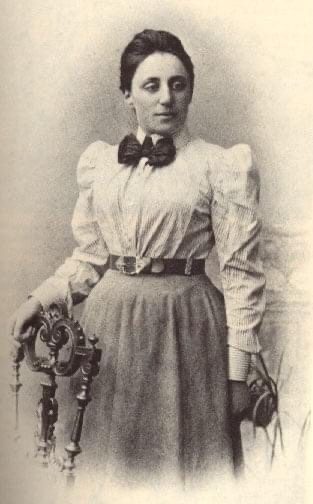
Not allowed to Dr , she taught
“What will our soldiers think when they return to the university and find that they are required to learn at the feet of a woman?”
Such was the response of a faculty member at the idea of Emmy Noether joining the University of Göttingen to teach mathematics in 1915. So instead of receiving the title she deserved, Emmy spent years teaching courses often under the name of a male faculty member. It was his course; she was an assistant, was the official structure. And she wasn’t paid for her work. Her family financially supported her. In 1919 she was permitted to teach officially, and she began receiving a small salary in 1922.
As a teacher, Emmy was known to speak loud and fast, for being generous, thoughtful. She cared deeply for her students, without vanity nor ego, promoting them and their work over anything else. Her students in turn followed her “as if following the Pied Piper.” And while Emmy excelled as a teacher, she also made numerous significant contributions to research in mathematics and physics.
—
Sources: Kimberling, Clark (March 1982). “Emmy Noether, Greatest Woman Mathematician” (PDF). Mathematics Teacher. Reston, Virginia: National Council of Teachers of Mathematics. 84 (3): 246-249 / Kimberling, Clark (1981), “Emmy Noether and Her Influence”, in Brewer, James W.; Smith, Martha K. (eds.), Emmy Noether: A tribute to her life and work, New York: Marcel Dekker, pp. 3-61 / https://www.sdsc.edu/ScienceWomen/noether.html / https://en.wikipedia.org/wiki/Emmy_Noether / Photo – Professor Emiliana P. Noether, Agnes Scott College, Decatur, Georgia, Biographies of Women Mathematicians, website & https://www.brooklynmuseum.org/eascfa/dinner_party/heritage_floor/emmy_noether
Note: If you enjoyed this post, please consider supporting Historical Snapshots with a donation. To donate, please visit our Patreon page at https://www.patreon.com/historicalsnapshots. Your support is much appreciated ❤.
To join our mailing list: https://historicalsnaps.com/historical-snapshots-mailing-list/
Audio book Tibetan Book of the Dead
Mental Illness Awareness
In a month where Domestic Abuse is honored and Mental Health Awareness is honored , I am a 2fer.
Image how glad I am to be out of those horrific experiences and clearing the stigma and trauma does aid others .
“Mental health problems don’t define who you are. They are something you experience. You walk in the rain and you feel the rain, but you are not the rain.” — Matt Haig
Here’s a quick read on “Normalizing” the stigma of mental health https://loom.ly/i9IDXyE
#worldmentalhealthday #akuamindbody #mentalhealth #werecover #mentalhealthtreatment #anxiety #depression
www.akuamindbody.com/mental-health-awareness-week-normalizing-stigma/
 GreatCosmicMothersUnite