
Tag: Children
Narcissist never learn to be Dads
Oh yes !
Genius
Where are you taking these kids?
Kids shut off due to Narcissistic parent
Child Support Truth
Single married Mom’s burden
Misdiagnosed Child Abuse -Craig Childress PsyD
Follow the yellow brick road. Follow the yellow brick road. Follow, follow, follow, follow, follow the yellow brick road.
If you’re not Following me on Bluesky, why not? It’s useful information.
If your attorney, your involved mental health professionals, your GALs and Parenting Coordinators, are not Following me on Bluesky, why not?
Sometimes I skeet about diagnosis. Sometimes I skeet about dark personalities. Sometimes I skeet about the court-involved assessment. Everything I skeet about is court-custody and treatment related.
Droplets of information each day, like a gentle rain of knowledge into the parched desert of the family courts.
I do what I do. You do what you do. We’re both working toward exactly the same goal – protecting the child from child abuse by a pathological parent.
I’m not your warrior – you’re the warrior fighting to protect your child. I’m a clinical psychologist with knowledge that’s useful to you. I’m your weapon.
I’m headed into the AFCC to contact the Hydra. You can’t do that. I can and I am because I do something different. I’m a clinical psychologist not a parent. We’re both working for exactly the same goal – protecting the child from child abuse – differently.
Because we’re in different roles.
Part of my role as a doctor is to educate the patient – you – about the pathology you have in your family… and with your child… so that you, as a parent, can get a proper assessment that will return an accurate diagnosis and effective treatment plan… to fix things.
Courts and the legal system land on the wrong end-point. Courts and the legal system land on the Court’s custody decision. That’s the wrong end-point of consideration.
The healthcare system lands on treatment. That’s where we need to end up – with a treatment plan that fixes things and gives the child a normal-range childhood.
For a treatment plan… you’ll need a diagnosis. For an effective treatment plan, you’ll need an accurate diagnosis.
If we treat cancer with insulin because we think it’s diabetes, the patient will die from the misdiagnosed cancer. Whenever possible child abuse is a considered diagnosis, our returned diagnosis needs to be accurate 100% of the time.
Misdiagnosing child abuse is too devastating to the child. We need to get it right – every time. We can do that when there’s the motivation to to that.
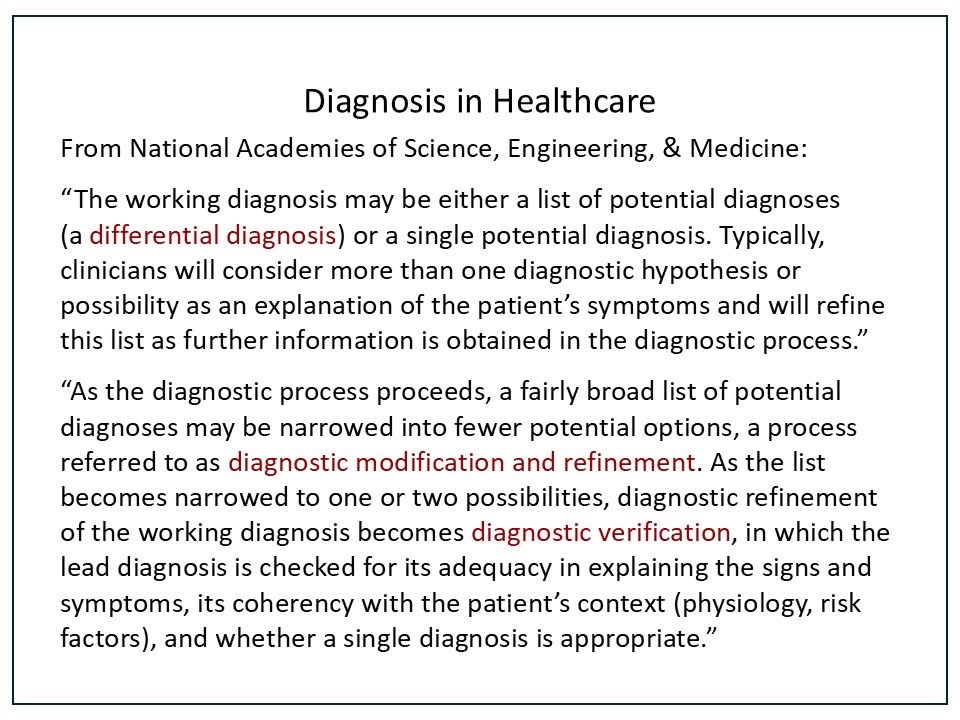
The appellate system in healthcare for a disputed diagnosis is a second opinion, or even a third opinion. Doctors in healthcare consult all the time – because we need our diagnosis accurate and early – we need to start treatment right away.
Any diagnosis returned into the legal system will be a disputed diagnosis – so – let’s get a second or even third opinion right at the start through telehealth.
Get one primary treatment provider who will both diagnose and then treat the pathology. Allow each litigant parent to appoint a second-opinion doctor of their choice to represent their interests and concerns. Then let the doctors do what doctors do.
You’ll get a report from the primary treating doctor (duty of care) and two consulting reports that agree, or perhaps disagree to a degree. Provide this information to the Court for its decision-making.
The Court can decide which doctors make sense – and the doctors should make sense. They should 1) describe the symptoms, 2) describe the diagnostic criteria and established knowledge applied, and 3) the diagnosis that is supported by the symptom pattern.
Doctors are not concerned with custody. That’s the Court’s decision based on all the evidence it considers. There is NO quasi-judicial role for doctors. Doctors diagnose and treat pathology.
In the absence of child abuse, parents have the right to parent according to their cultural values, their personal values, and their religious values.
In the absence of child abuse, each parent should have as much time and involvement with the child as possible.
In the absence of child abuse, to restrict either parent’s time and involvement with the child would damage the child’s attachment bond to that parent, thereby harming the child and harming that parent.
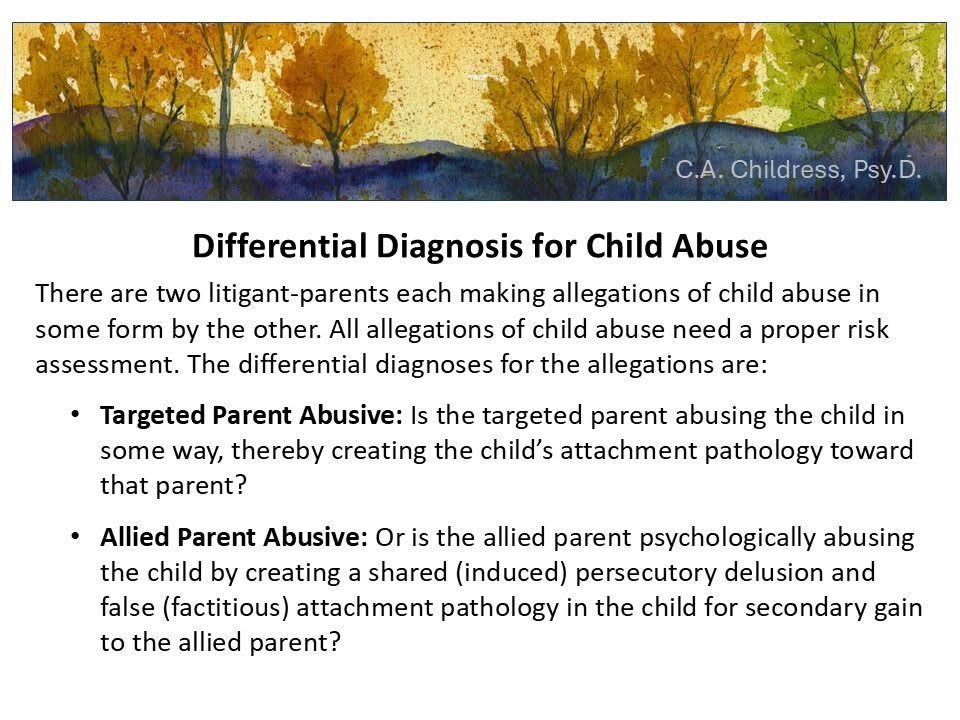
Is there child abuse? If a child is rejecting a parent, yes, there is child abuse by one parent or the other, we just don’t know which one yet.
It might be authentic child abuse by the targeted parent creating the child’s attachment pathology toward that parent – OR – it might be child psychological abuse by the allied parent who is creating a persecutory thought disorder and false (factitious) attachment pathology in the child for secondary gain to the parent.
Which parent is abusing the child? We need a proper risk assessment to the appropriate differential diagnoses for each parent to answer that question.
Then we protect the child. That’s what we do in ALL cases of child abuse. We always protect the child because ALL mental health professionals have a duty to protect in cases of three types of dangerous pathology – suicide – homicide – abuse (child, spousal, elder).
It’s not “complex” – it’s simple. What’s the diagnosis? Collect the symptom patterns, apply the diagnostic criteria patterns, and if there’s a pattern-match… that’s your diagnosis.
That’s not complex. That’s simple.
So is Following me on Bluesky. Sign up then Follow. Easy peasy for such valuable information to your professionals who surround you. Once they know… they can’t un-know what they know.
Craig Childress, Psy.D.
Clinical Psychologist
WA 61538481
OR 4392 – CA 18857


Children Hiding out in a narcissistic home
Unhealed Parents
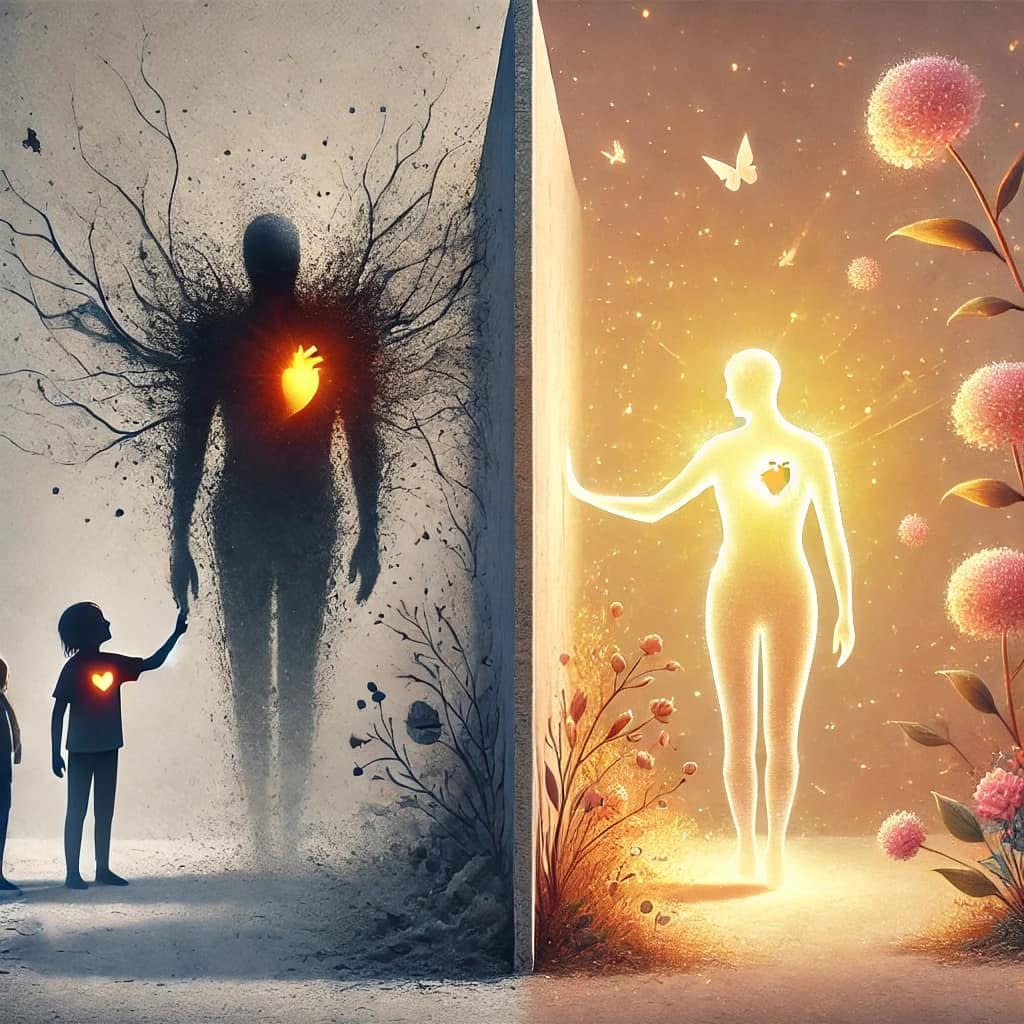
A child’s first enemy is often an unhealed parent. It’s a subtle, almost invisible dynamic that creeps into a household without warning. Picture a parent, heavy with unprocessed pain, wielding their wounds like invisible weapons—sharp words, dismissive glances, unreachable affection. The child doesn’t see the parent’s trauma; they only feel the sting of its consequences. An unhealed parent might unintentionally pass down shame, anger, or fear, not because they don’t love their child, but because their own love has been tangled in the web of their past. Imagine a parent who flinches when their child cries—not because they don’t care, but because the sound dredges up their own unheard cries from decades ago. Without realizing it, they teach the child that emotions are dangerous, that their needs are burdensome.
Now, contrast this with a healed parent. Imagine a parent who has faced their own darkness, who has wrestled their demons and come out on the other side. They create a different kind of space for their child—a sanctuary where emotions are allowed to breathe and wounds can be mended instead of ignored. When a healed parent hears their child cry, they don’t recoil; they lean in. They don’t silence the child or rush to fix it. Instead, they validate, comfort, and teach resilience. The difference is profound. An unhealed parent unknowingly becomes an adversary, while a healed parent becomes a guide. One teaches survival; the other teaches thriving. And yet, the tragedy is that the unhealed parent was once a child too—a child whose first enemy might have been their own unhealed parent. The cycle is unrelenting until someone, somewhere, decides to break it.
 GreatCosmicMothersUnite