

Tag: relationships
Highest form of love ❤️
The incubator for the Narcissist
Match energies – Men are less needed & why
Absolutely! Got so tired of non growth and I’m sure I was never as grateful as X thought I should be always !
Fathers & Sons
Non gender , not just women : Signs of manipulation
6 Common Manipulation Tactics Some Women Use to Control Men
Manipulation can subtly erode trust in any relationship. While both men and women can engage in such behavior, this article highlights six common but effective tactics some women may use to control men. Understanding these tactics helps everyone recognize and address toxic relationships, fostering healthier, more respectful connections.
- Emotional Blackmail:
Emotional blackmail is one of the most insidious forms of manipulation. It involves using guilt, fear, and obligation to control someone. For example, a woman might say, “If you loved me, you would do this for me,” or “I can’t believe you would hurt me like this.” These statements can make you feel responsible for her happiness or distress, leading you to comply with her demands to avoid guilt or fear of losing her.
- Gaslighting:
Gaslighting is a psychological tactic where the manipulator makes you doubt your own perceptions and reality. A woman using this tactic might deny events that you clearly remember, twist facts, or accuse you of being overly sensitive or paranoid. Over time, this can erode your self-confidence and make you more dependent on her version of reality, giving her more control over you.
- Playing the Victim:
Playing the victim is a manipulation tactic where someone portrays themselves as helpless or wronged to gain sympathy and control. A woman might exaggerate or fabricate stories of how others have mistreated her to elicit your pity and support. This can make you feel compelled to protect and care for her, often at the expense of your own needs and boundaries.
- The Silent Treatment:
The silent treatment involves refusing to communicate or acknowledge your presence as a form of punishment. When a woman uses this tactic, she creates a power imbalance by making you desperate for her attention and approval. This can lead you to apologize or concede to her demands, even if you’re not at fault, just to end the uncomfortable silence and restore communication.
- Triangulation:
Triangulation is a tactic where a woman brings a third party into your relationship to create jealousy, competition, or insecurity. She might flirt with someone else, talk about another person’s interest in her, or compare you unfavorably to others. This can make you feel inadequate and drive you to go to great lengths to win her approval and keep her attention focused on you.
- Withholding Affection:
Withholding affection is when a woman deliberately denies you love, attention, or physical intimacy to punish you or get her way. By withdrawing affection, she creates a sense of emotional deprivation that can make you more compliant to her wishes. This tactic exploits your natural desire for closeness and approval, making you more likely to submit to her demands to regain her affection.
Understanding these subtle manipulation tactics is crucial for maintaining healthy and balanced relationships. By recognizing these behaviors, you can protect yourself from being controlled and ensure that your relationships are built on mutual respect and genuine affection. Remember, a strong relationship thrives on trust, honesty, and open communication. Stay aware, set boundaries, and always prioritize your well-being.
Been there – Done
Wife selling
Wife for Sale:
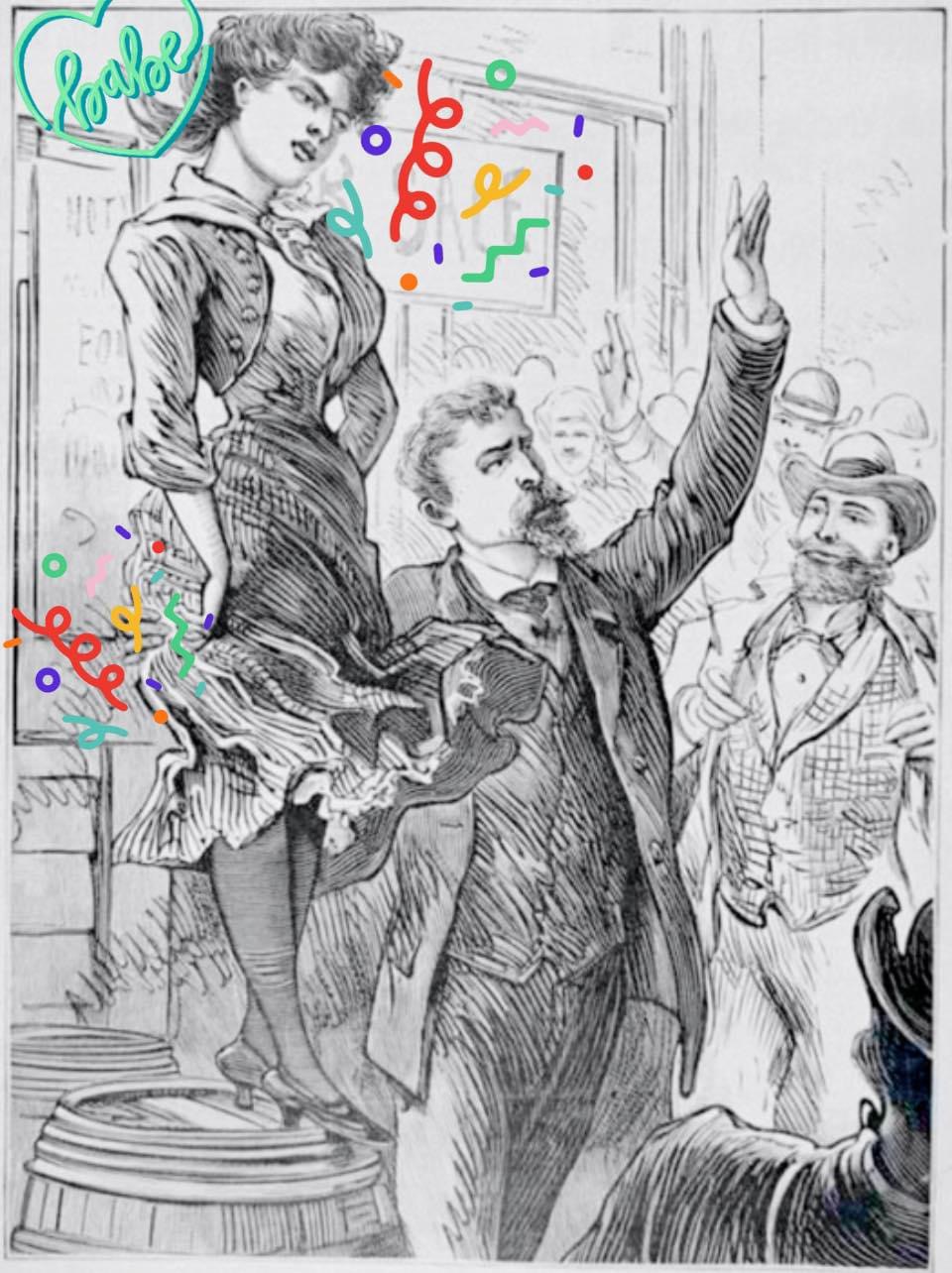
George Wray tied a halter around his wife’s waist and headed to the nearest market. He wasn’t there to buy anything—he was there to sell his wife. Onlookers shouted as he auctioned her off to the highest bidder, William Harwood. After Harwood turned over a single shilling to Wray, “Harwood walked off arm in arm with his smiling bargain,” reported an onlooker, “with as much coolness as if he had purchased a new coat or hat.” It was 1847, and Wray had just gotten the equivalent of a divorce.
.
Joseph Thompson, who allegedly sold his wife in 1832, listed his wife’s bad qualities, calling her “a born serpent” and advising the buyers to “avoid frolicsome women as you would a mad dog, a roaring lion, a loaded pistol, cholera.” Then he listed her assets, which included the ability to milk cows, sing, and serve as a drinking companion. “I therefore offer here with all her perfections and imperfections, for the sum of fifty shillings,” he concluded, adding a fun flourish to the end of his marriage.
.
The sales took on the form of cattle auctions of the time. After announcing the sale, the man would put a ribbon or a rope around his wife’s neck, arm or waist and lead her to “market”. Then, he’d auction her off, often after declaring her virtues to the onlookers. Usually, wife sales were merely symbolic—there was just one bidder, the woman’s new lover. Sometimes there wasn’t a designated buyer, though, and an actual bidding war broke out. Men could announce a wife sale without informing their wife, and she might be bid on by total strangers.
.
The scene sounds like an elaborate joke. In reality, it was anything but. Between the 17th and 19th centuries, divorce was prohibitively expensive. So some lower-class British people didn’t get them—they sold their wives instead.
Wife sales were crude and funny, but they also served a very real purpose since it was so hard to get a divorce. If your marriage broke up in the 1750s, you had to obtain a private Act of Parliament—essentially, an exception to Britain’s draconian divorce law—to formally divorce. The process was expensive and time-consuming, so wife-selling arose as a form of faux divorce. It wasn’t technically legal, but the way it unfolded in public made it valid in the eyes of many
Never 50/50 Brene’ Brown
I love her , she’s so natural in her approach and yes , communication is key and all the key ingredients to enhance a trusting relationship!
Remedy – Craig Childress PsyD
My morning coffee thought as I sit with Mr. Pippin:
Today is the last day of my general public consultation, I’m getting emotionally organized for that and then I’m done for July.
And… August is not open – the circus is coming to town and I’ve got tickets to the show – several. I’m taking August off from consultation into the family courts to play at the APA.
I’m presenting on the Contingent Visitation Schedule to the APA through Division 41 Psychology & Law Society. It’s a solution if they want it… but if they want it they must acknowledge I exist.
And if they acknowledge I exist… they take everything else that comes with that. Hmm. Is it a shared persecutory delusion? Yes. Are they misdiagnosing child abuse because they’re practicing beyond the boundaries of their competence? Yes.
Hmm…
I’m an anti-pathogenic agent. When the pathogen encounters me… it dies. So it avoids contact with Dr. Childress at all costs.
But with the C-V-S, I’m not talking to the pathogen infected part of them. I’m talking to the normal part of their brain. It’s intriguing… it’s logical… it will work.
But it takes two things, 1) an accurate diagnosis of the pathology (i.e., a DSM-5 diagnosis of Child Psychological Abuse by the allied parent), and 2) someone to run it.
Them if they want to run it.
Or not if not. It’s up to them if they want it. It’ll solve things. I’ll explain it and they’ll understand. I wonder what they’ll do?
Let’s find out.
I told Division 41 that I’d be teaching how to run a Contingent Visitation Schedule – they said they’d like to hear that. So that’s what I’ll do.
I’ll be teaching them how to run a C-V-S in the family courts. It’s so simple. It’s just a standard behavioral program… except it’s not. It’s more.
It’s crafted by a Strategic family therapist – me – to do things… strategically… in the family to change things that change things to unlock things that are stuck.
I’ll explain it all in a couple of weeks when the circus comes to town – then, once I’ve presented to the APA, I’ll do the same talk to my YouTube channel for everyone everywhere all the time.
Flatlanders… sheesh… catch up you people. We have the Internet now – zoom-zoom. It’s like we invent automobiles and they’re still using horse and buggies – the APA Amish.
Adapt to survive. If you don’t adapt… you don’t survive. Bye-bye forensic custody evaluations. Hello clinical diagnostic assessments for the family courts.
Things are changing – because things need to change.
We are in a time of deep-change, do you feel it? Of course you do, it’s everywhere around us. We are in the Times of Turbulence – whitewater in the flow.
I’ve been preparing for here, for the time of change, not for where we were, the time of insanity.
Where we were was a bad place before. It was insane. I’m not insane, so I prepared for our return to sanity. We’ll return eventually. Dum-dee-dum, I’ll wait.
It’s a shared persecutory delusion and Child Psychological Abuse – DSM-5 V995.51 – and none of them are competent in the diagnostic assessment of delusional thought disorders… in violation of APA ethical standard 2.01 Boundaries of Competence.
How much should I tell them about them when I talk to them directly? I’ll have to be truthful.
Yikes. No sooner do I think that, than I think a truthful thought to say – the universe said “say this” – Yikes. Really?
Okay. Hey courage… truth wants to say something so you’re on call. Sanity, pay attention to what truth wants to say, make sure it passes by you. Cognition keep an eye on emotion, truth has something truth wants to say – emotions… you stay out of it. This has nothing to do with you.
Truth will manage just fine on it’s own. When truth wants to say something, it’s best to just vanish entirely… if it’s sane – sanity, keep an eye on truth and keep me posted.
But that’s not the point of the talk – the point of the talk is to explain the C-V-S… which requires an accurate diagnosis of Child Psychological Abuse – a shared persecutory delusion and FDIA.
Our stroll through the truth of them is just to get to the start of the program… we need a diagnosis – diagnosis guides treatment. When the diagnosis is V995.51 Child Psychological Abuse, the C-V-S is a treatment option for that diagnosis.
Their misdiagnosis is just the assumed start – a momentary acknowledgement of their incompetence – so… let’s begin.
Once we have an accurate diagnosis of Child Psychological Abuse by the allied parent – the the Contingent Visitation Schedule is the treatment response – the remedy.
My talk is about the C-V-S… I should not have to educate them about the pathology. If Dr. Childress needs to educate them about shared persecutory delsuions and FDIA… they are not competent with the pathology by demonstrated ignorance.
Google ignorance: lack of knowledge or information.
And that’s the truth. The truth is your patients should NOT have to educate you about what the pathology is. The truth is that I should NOT have to educate you about what the pathology is.
The truth is you should already know – and should have known this entire time. You should not need to be educated… but, oh my gosh… you do.
Or do you? Do you know it’s a shared persecutory delusion?
Or do you believe a shared delusion as if it was true. If you believe a shared delusion… you become part of the shared delusion and you, the forensic psychologist, become part of the pathology (because you are practicing beyond the boundaries of your competence with delusional thought disorders).
If either your patients or Dr. Childress has to educate you about shared (induced) persecutory delusions and false (factitious) attachment pathology imposed on the child… then you are not competent with the pathology by demonstrated need to be educated – in violation of Standard 2.01 of the APA ethics code.
So… to continue, assuming you have returned a DSM-5 diagnosis of Child Psychological Abuse for the allied narcissistic-borderline-dark personalty parent, the child is then protectively separated from the abusive allied parent pursuant to duty to protect obligations, and the child’s healthy development is recovered in therapy with the court-involved DBT family therapist.
Right? Or do I need to educate you about child abuse safety plans and child abuse treatment too? I’m not going to, I’m here to educate you about how to run a Contingent Visitation Schedule, not to educate you about things you should already know – Standard 2.01.
So… to continue, once the child’s healthy development is stabilized, contact with the abusive parent is restored with enough safeguards in place to ensure the abuse does not resume when contact is reestablished. That’s what we do for all forms of child abuse.
The Contingent Visitation Schedule is that safeguard to make sure the abuse does not resume once the child abuse has been properly diagnosed (identified). The C-V-S requires court authorization to flex the custody schedule based on child symptoms.
The C-V-S does things to the family dynamics that changes things to alter rewards (called secondary gain) which alters motivations.
I’ll explain it all Saturday morning at 9:00am in Seattle in a couple of weeks. I’m going to walk to the convention… because I can. Holy cow, it’s such a weird world.
I’ll send you a snapshot on the day-of as the fairies bring me back to your world from mine. This’ll be fun.
I’m planning to do a remote broadcast from the APA with Melanie like a new-world YouTube influencer person. I have a friend who knows a guy who has a buddy who knows about that sort of stuff.
I think that’d be fun – surfing Facebook Live at the APA – cowabunga baby.
I finish my July monthly week of family court triage. I’m not triaging the family court devastation in August because the APA is coming to town and I’ll be busy entertaining all my APA friends from out-of-town.
I’ll start doing general public consults again in September. Things are getting busy – my things. It’s the Time of Turbulence – whitewater. Holy cow, here we go. Find the flow or you’ll be in trouble.
Wheee…
I have to run off now for my day of monthly weekly consultion to the pathology in the family courts. Time to get off Mr. Pippin.
Let me leave you with this tid-bit of understanding.
Did you know it’s an ethical violation of the mandatory APA ethics code to practice beyond the boundaries of your competence? It is, Standard 2.01.
Did you know that I am a walking accusation of unethical malpractice to every forensic psychologist I meet… simply because I exist. I don’t even need to say anything… in fact, it’s better if I don’t.
My mere existence is the accusation because… I’m competent and they’re not – and they know it – and I know it. It’s an unspoken understanding. My mere existence is the accusation… along with… the body of my professional work.
Which they are aware of, right? Standard 2.03 Maintaining Competence of the mandatory required APA ethics code. You’re not unethical are you? Of course not. So I shouldn’t have to explain to you what the pathology is or your troubling history of misdiagnosis…. right?
I do not need to say a word. I’m the floor, not the ceiling, but they’re looking up at the floor… because they’re in the basement of professional practice – below ground level.
We need standards of practice. Let’s start with the APA ethics code and the DSM-5. Let’s start there as the floor. Hey, forensic psychologists, get out of the basement and at least practice at the level of the APA ethics code and using the DSM-5 for diagnosis.
Gotta run. Things to do. Mr. Pippin says I’ve got other things to do than talk to you, and he’s right,
Craig Childress, Psy.D.
Clinical Psychologist, CA PSY 18857
 GreatCosmicMothersUnite