Narcissist

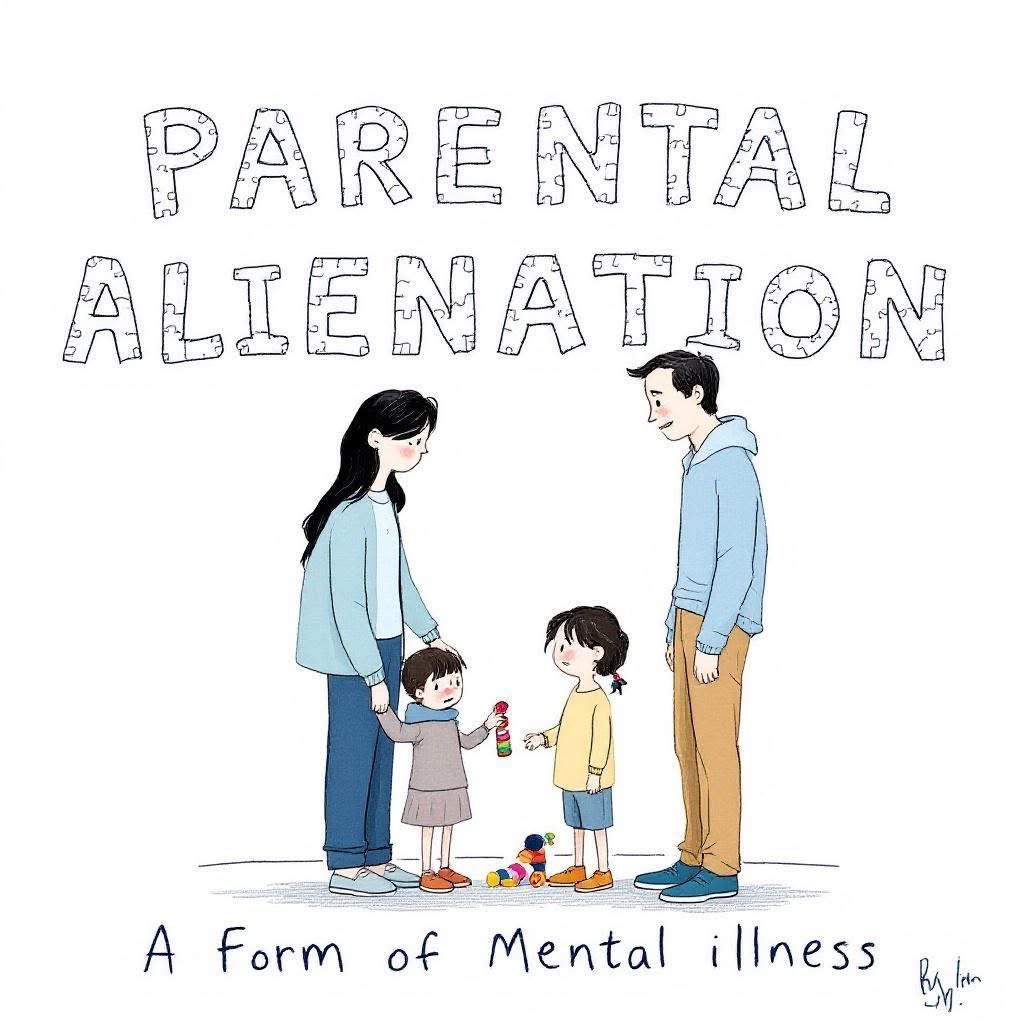
When a Narcissist alienates the partner from their children and continues the high conflict, malignant, vicious manipulation they are mentally ill .

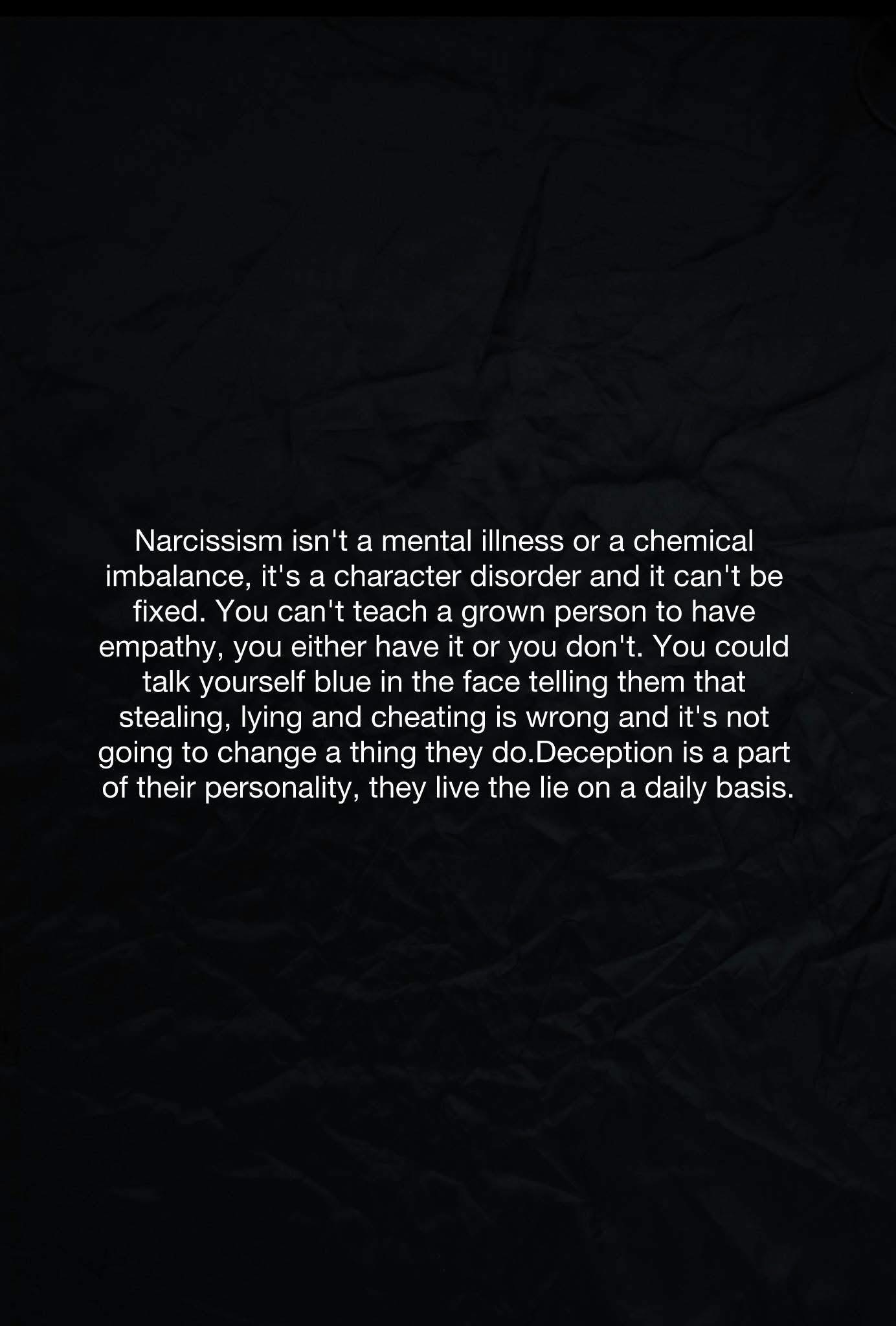
**Narcissism isn’t a mental illness or a chemical imbalance — it’s a character disorder, a deeply ingrained personality structure that shapes how someone sees themselves and the world.** It’s not caused by low serotonin, and it’s not something a prescription or a therapy session can “cure.” You can’t teach someone to have empathy if they fundamentally lack the capacity for it. It’s not a skill they forgot — it’s something they’ve rejected entirely because empathy gets in the way of control, manipulation, and self-worship.

You can try reasoning with a narcissist. You can sit them down, pour your heart out, show them how much their actions have hurt you. You can explain over and over that lying, stealing, cheating, degrading others, and gaslighting are wrong. You might even believe that, with enough love, enough patience, enough chances, they’ll change. But they won’t — because they don’t see anything wrong with what they’re doing. In their eyes, they are always justified. Always the victim. Always right.

**Deception isn’t an occasional tactic — it’s a lifestyle.** They don’t just lie to others. They lie to themselves. They construct a false self and live inside it, hiding from shame, from accountability, from reality itself. That’s why any attempt to get through to them feels like you’re speaking to a wall.

Narcissists don’t change because their behavior serves them. They don’t want to heal — they want to maintain control. And your sanity, peace, and emotional health are often the price of trying to stay connected to someone who doesn’t even have the capacity to care.
Alienators are mentally ill

People who are mentally stable—who feel balanced, happy, and secure, and who love and are loved—don’t engage in alienating behaviour. They don’t need to overpower or control others. Alienating behaviours typically stem from fear, unhealed wounds, selfishness, and narcissism. It is rooted in deep insecurity, entitlement, and a relentless need to dominate or punish for perceived wrongs to their ego/character. Narcissistic people lack empathy, guilt, and remorse. They exploit those around them and justify their most harmful actions.⁠

Alienating parents don’t care about the feelings, needs, or well-being of others—even their own children—unless it serves them. Their relationships are purely transactional. They exploit and manipulate those around them, presenting a charming and sweet façade when they want something, but discarding or punishing people when they’re no longer useful. To the sociopathic character, true kindness is weakness. They see others as pawns in their game, people to use, control, or discard when necessary.⁠

There is always a price to pay for remaining entangled with an abusive person, and the best approach is to distance ourselves as soon as possible. But beyond distancing, we can empower ourselves by understanding how they operate. Their behaviour is highly manipulative, but also predictable. Their motivation is entirely self-serving. Their needs, wants, and desires are paramount. They have no equal—they feel superior, beyond reproach, and above the law. They will not hear or believe anything that contradicts their worldview. They do not apologise or admit fault. Instead, they twist reality to suit themselves, projecting blame onto others/the target parent. They build themselves up by tearing others down. They fabricate allegations, lie without hesitation, and manipulate conflicts to get what they want.

Unfortunately, those caught in their web often accept whatever ‘crumbs’ they offer because it provides temporary relief, creating the illusion that they might change. But they don’t change. Their anger is a means of control. Their lies and blame-shifting serve to deflect from their own behaviour. Their favourite subject? Themselves. Their friends? People who can boost their image or serve a purpose/enable. Criticism is intolerable. To them, the rules do not apply—they break them, rewrite them, and twist the truth without a second thought.

Remember, the behaviour of the alienating parent is not a reflection of your worth or abilities as a parent. Continue to stand firm in your love for your child, and seek out the support you need to navigate this challenging journey. Reach out if I can help you with the coaching I offer.

#charliemccready

#parentalalienationcoach

Parental Alienation is a form of mental illness

Parental Alienation as a Form of Mental Illness: The Hidden Psychological Disorder

Parental alienation isn’t just a legal issue or a high-conflict custody matter—it is, at its core, a manifestation of deep psychological dysfunction that borders on or directly reflects mental illness.

While not yet fully classified as a distinct mental disorder in diagnostic manuals like the DSM-5, the psychological patterns and behaviors behind alienation often overlap with clinically recognized personality disorders and trauma-based pathologies.

Alienation is a form of delusional splitting, often rooted in unresolved trauma, identity enmeshment, emotional immaturity, and pathological fear of abandonment.

The alienating parent perceives the other parent not just as an ex, but as an enemy to be erased.

They may appear rational to outsiders, but beneath the surface, they exhibit signs of disordered thinking:

• Paranoia: Convinced the other parent is dangerous, even in the absence of evidence.

• Narcissistic Injury: The breakup triggers a narcissistic wound so deep they feel the need to annihilate the one who “rejected” them.

• Projection: All of their own emotional instability and abusive tendencies are cast onto the targeted parent.

• Enmeshment: The child becomes a psychological extension of themself, not a separate being with their own needs and feelings.

• Delusional Loyalty Testing: Any sign of affection between the child and the other parent is twisted into betrayal.

• Gaslighting: The child is conditioned to doubt their own memories and emotions about the loving parent.

• Emotional Triangulation: The alienator creates a “rescuer-victim-persecutor” dynamic where they are always the hero and the other parent is the villain.

These are not mature coping mechanisms. These are signs of an unstable mind—one that is emotionally regressed and often incapable of separating their inner turmoil from their parenting role.

In many cases, the alienator is suffering from a personality or attachment disorder—especially Borderline Personality Disorder, Narcissistic Personality Disorder, or untreated PTSD.

However, their illness doesn’t present as a mental breakdown. It presents as strategic manipulation, carefully calculated erasure of the other parent, and emotional indoctrination of the child.

This is what makes it so dangerous.

Because unlike other mental illnesses, alienation hides behind legal jargon, false allegations, and performative parenting.

It’s a mental illness with a mask—one that weaponizes the court system and exploits the innocence of a child to soothe the alienator’s own psychological distress.

And the result?

• A child caught in a loyalty bind so toxic, they may develop anxiety, depression, PTSD, and lifelong identity confusion.

• A targeted parent living in prolonged grief and emotional exile.

• A broken family system ruled not by love, but by control, fear, and untreated pathology.

Parental alienation is not just emotional abuse. It is a psychological syndrome—

born of mental illness, fueled by denial, and sustained by systems that refuse to name it.

We don’t just need reform.

We need the courage to recognize alienation as the psychological illness it truly is.

#ParentalAlienation #MentalHealthAwareness #PsychologicalAbuse #FamilyCourtReform #EmotionalNeglect #PersonalityDisorders #NarcissisticAbuse #AttachmentWounds #BreakTheCycle #ProtectOurChildren #CovertMentalIllness

Not mad ; Magnificent

Born in 1864, Camille Claudel arrived in Paris with fire in her soul and stone beneath her fingers. The École des Beaux-Arts barred women, so she carved her own path—joining private ateliers that welcomed female talent. There, she met Auguste Rodin.

Their bond became legend. Together, they created works of staggering beauty—fragments of shared genius now displayed in the Musée d’Orsay and the Rodin Museum. But when Rodin chose loyalty to an old lover over truth with Camille, the world followed his lead.

His name rose.

Hers fell into silence.

Labeled “hysterical,” cast aside by critics and family alike, Camille’s bold sculptures—once celebrated—were now called scandalous. Her brother, the diplomat and poet Paul Claudel, helped condemn her. In 1913, she was institutionalized against her will, deemed a disgrace to the family.

She would remain there for 30 years.

Her letters survive: pleading, lucid, heartbreaking. “Why am I here?” she asked. No one answered.

On October 19, 1943, she died of malnutrition in an asylum bed. No family came. Her body was buried in an unmarked grave.

But time has a way of restoring truth.

Today, Camille Claudel’s name stands alone—her works exhibited beside Rodin’s, and a museum near Paris now bears her name.

She was not mad.

She was magnificent.

#CamilleClaudel #ForgottenGenius

~Weird Wonders and Facts