
Tag: brain info
Grow new brain cells
There are many ways to grown new brain cells
High conflict homes effects on kids
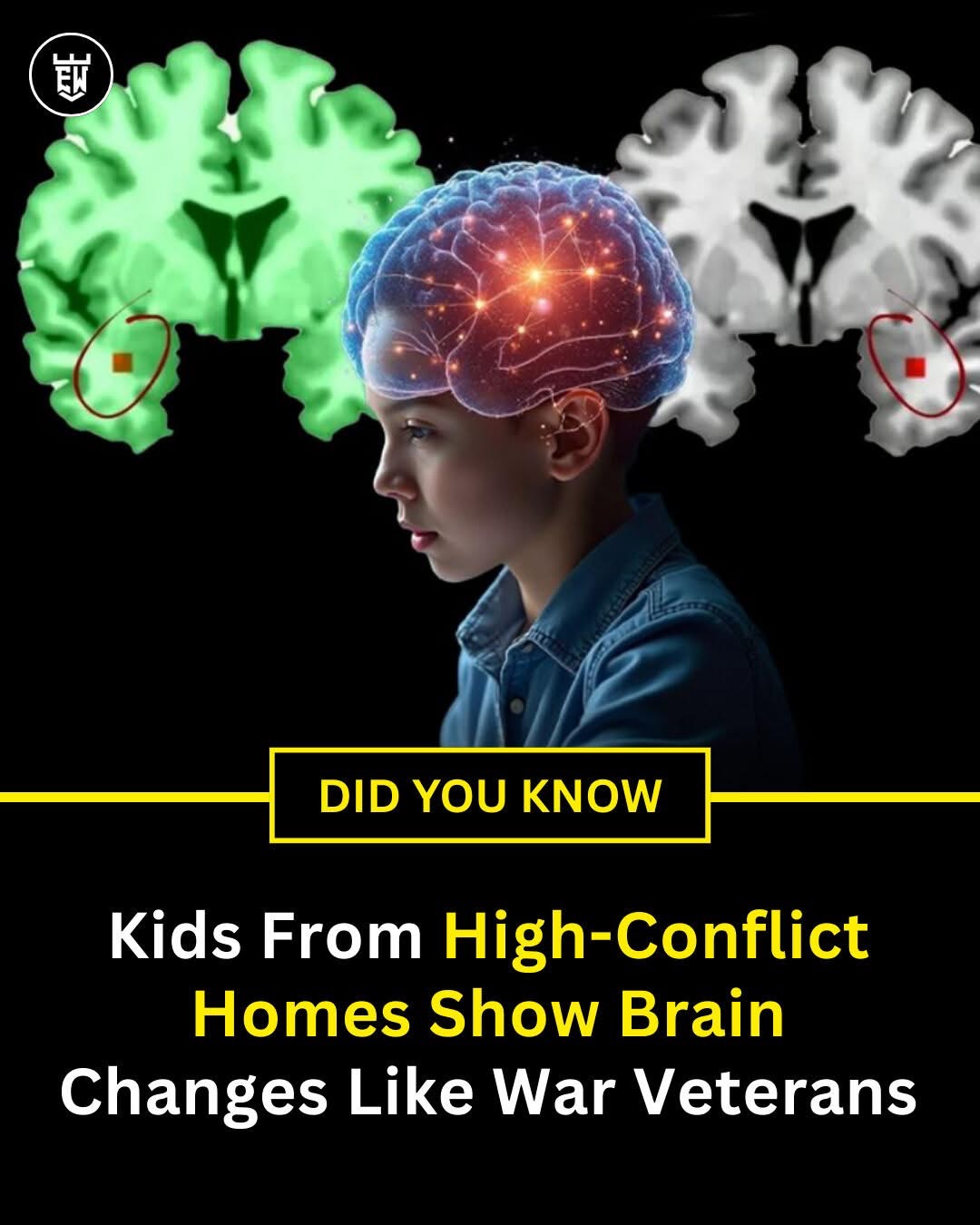
A groundbreaking study using brain scans has revealed a disturbing parallel: children exposed to intense family conflict show brain changes similar to those found in combat veterans. That’s right — the emotional warfare inside a home can mimic the neurological toll of literal battlefield trauma.
Researchers found that kids who witness chronic yelling, aggressive arguments, or domestic tension have altered brain activity in areas linked to fear, stress, and emotional regulation. These are the same brain regions often affected in soldiers returning from war zones.
The amygdala, a part of the brain responsible for processing threats and fear, becomes hypersensitive, constantly on alert. Meanwhile, the prefrontal cortex, which helps manage emotions and make rational decisions, often becomes underdeveloped or impaired. This combination can lead to long-term emotional difficulties, anxiety, or even PTSD-like symptoms later in life.
What makes this even more alarming is that many families underestimate the impact of loud fights or emotional tension on children. But the science is clear: a child’s brain is shaped by the emotional climate they grow up in.
This discovery highlights the urgent need for family therapy, safe environments, and emotional education to protect developing minds. Just because there are no visible bruises doesn’t mean the damage isn’t real.
#DidYouKnowFacts #childpsychology #brainfacts #MindMirror #familyhealth #TraumaScience

War Vet Brains in kids of Alienation Conflict
A groundbreaking study using brain scans has revealed a disturbing parallel: children exposed to intense family conflict show brain changes similar to those found in combat veterans. That’s right — the emotional warfare inside a home can mimic the neurological toll of literal battlefield trauma.
Researchers found that kids who witness chronic yelling, aggressive arguments, or domestic tension have altered brain activity in areas linked to fear, stress, and emotional regulation. These are the same brain regions often affected in soldiers returning from war zones.
The amygdala, a part of the brain responsible for processing threats and fear, becomes hypersensitive, constantly on alert. Meanwhile, the prefrontal cortex, which helps manage emotions and make rational decisions, often becomes underdeveloped or impaired. This combination can lead to long-term emotional difficulties, anxiety, or even PTSD-like symptoms later in life.
What makes this even more alarming is that many families underestimate the impact of loud fights or emotional tension on children. But the science is clear: a child’s brain is shaped by the emotional climate they grow up in.
This discovery highlights the urgent need for family therapy, safe environments, and emotional education to protect developing minds. Just because there are no visible bruises doesn’t mean the damage isn’t real.
#DidYouKnow #ChildPsychology #BrainFacts #MindMirror #FamilyHealth #TraumaScience
Psychiatric RX that worsen mental health
Narcissist survivors and memory loss
AI -MIT researchers report
🧠 MIT recently completed the first brain-scan study on ChatGPT users—and the results are deeply revealing.
Rather than boosting brain function, prolonged AI use may be dulling it.
Over four months of cognitive data suggest we might be measuring productivity all wrong ⤵️
In MIT’s study, participants had their brains scanned while using ChatGPT.
→ 83.3% of users couldn’t recall a single sentence they’d written just minutes earlier.
→ In contrast, those writing without AI had no trouble remembering.
Brain connectivity dropped sharply—from 79 to 42 points.
→ That’s a 47% drop in neural engagement.
→ The lowest cognitive performance among all user groups.
Even after stopping ChatGPT use in later sessions, these users showed continued under-engagement.
→ Their performance remained lower than those who never used AI.
→ This suggests more than dependency—it’s cognitive weakening.
Beyond the scans, educators flagged the writing itself.
→ Essays were technically solid, but often called “robotic,” “soulless,” and “lacking depth.”
Here’s the paradox:
→ ChatGPT makes you 60% faster at completing tasks…
→ But it reduces the mental effort required for learning by 32%.
The top-performing group?
→ Those who began without AI and added it later.
→ They retained the best memory, brain activity, and overall scores.
Using ChatGPT can feel empowering—but it may quietly offload your thinking.
→ You gain speed, but lose engagement.
→ You get answers, but stop learning how to think.
The takeaway isn’t to avoid AI—but to use it intentionally.
→ Use it to assist, not replace your mind.
→ Build cognitive strength—not dependency.
MIT’s early study on AI and the brain lays out the stakes. The way we use these tools matters more than ever.

Brain is an antenna
What if your thoughts aren’t just created in your brain, but received from the universe itself?
That’s the groundbreaking theory from Douglas Youvan, a respected biophysicist who believes intelligence is not confined to the skull. Instead, he suggests that the brain functions like an antenna, picking up signals from a vast “informational substrate” embedded in the fabric of the cosmos.
After decades of research at the intersection of biology, physics, and artificial intelligence, Youvan proposes that intelligence is a fundamental property of the universe, woven into repeating mathematical codes, fractals, and quantum patterns. These patterns appear everywhere, from natural formations to digital networks and even galactic structures.
According to this radical view, moments of genius, creativity, and insight may be the result of decoding this universal field. Even artificial intelligence breakthroughs, he argues, could be discoveries of patterns already embedded in reality, not inventions of human design.
This theory challenges traditional neuroscience and opens up entirely new ways to understand consciousness. It suggests our minds are not isolated but are connected to something far older, deeper, and more mysterious.
Whether you’re sceptical or intrigued, one thing is certain, this idea is pushing the boundaries of how we define thought, intelligence, and reality itself.

How brain “disorders ” went awry – Mad in America
This RX doubles Dementia risk
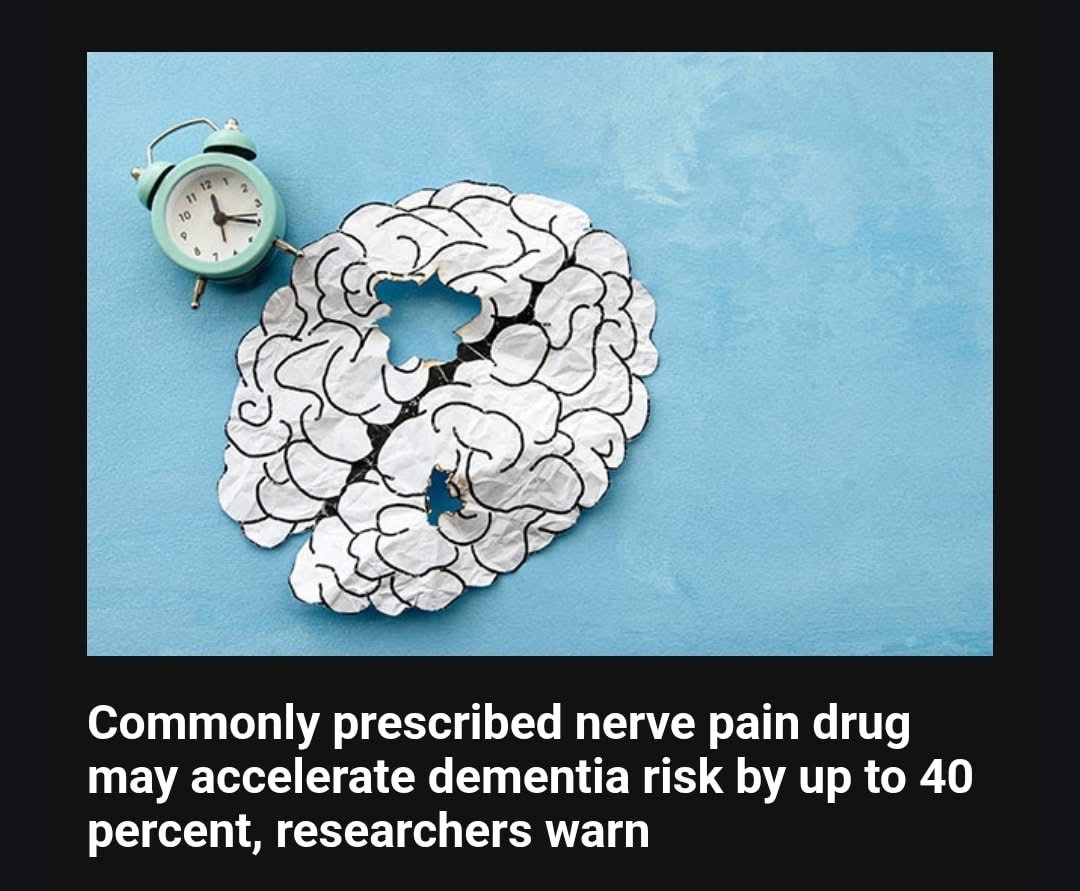
Gabapentin, widely prescribed for chronic pain, may increase dementia risk by up to 40%, according to a new U.S. study.
Younger adults (aged 35 to 49) face more than double the dementia risk when taking gabapentin in the long term.
The drug alters GABA, a key brain neurotransmitter, potentially leading to cognitive decline.
Critics dispute causation but admit concerning correlations.
Gabapentin prescriptions remain high despite study warnings, raising concerns about Big Pharma’s safety standards.
A groundbreaking U.S. study reveals that gabapentin, a drug doled out to millions for chronic pain, may increase dementia risk by up to 40%, raising urgent questions about the safety of Big Pharma’s “solutions.”
Researchers from Case Western Reserve University analyzed the health records of more than 26,000 Americans who were treated for chronic lower back pain between 2004 and 2024. Their findings, published in Regional Anesthesia & Pain Medicine, expose a harrowing trend: patients prescribed gabapentin six or more times faced a 29% higher dementia risk, soaring to 40% for those with 12 or more prescriptions. Even younger adults (35 to 49 years old) saw their risk more than double in a disturbing revelation for a drug that is marketed as “safe.”
How gabapentin attacks the brain
Gabapentin, sold as Neurontin by Pfizer, the same corporation behind dangerous Covid vaccines, works by altering gamma-aminobutyric acid (GABA), a critical neurotransmitter that calms overactive nerve cells. But this “brake” on brain activity may come at a catastrophic cost.
“Our findings indicate an association between gabapentin prescription and dementia or cognitive impairment within 10 years,” the researchers warned. They urged “close monitoring of adult patients prescribed gabapentin to assess for potential cognitive decline
 GreatCosmicMothersUnite