

Parents & Children Truths
Reality
Holding on to anger/rage in separation from parents
Narcissist
When a Narcissist alienates the partner from their children and continues the high conflict, malignant, vicious manipulation they are mentally ill .
**Narcissism isn’t a mental illness or a chemical imbalance — it’s a character disorder, a deeply ingrained personality structure that shapes how someone sees themselves and the world.** It’s not caused by low serotonin, and it’s not something a prescription or a therapy session can “cure.” You can’t teach someone to have empathy if they fundamentally lack the capacity for it. It’s not a skill they forgot — it’s something they’ve rejected entirely because empathy gets in the way of control, manipulation, and self-worship.
You can try reasoning with a narcissist. You can sit them down, pour your heart out, show them how much their actions have hurt you. You can explain over and over that lying, stealing, cheating, degrading others, and gaslighting are wrong. You might even believe that, with enough love, enough patience, enough chances, they’ll change. But they won’t — because they don’t see anything wrong with what they’re doing. In their eyes, they are always justified. Always the victim. Always right.
**Deception isn’t an occasional tactic — it’s a lifestyle.** They don’t just lie to others. They lie to themselves. They construct a false self and live inside it, hiding from shame, from accountability, from reality itself. That’s why any attempt to get through to them feels like you’re speaking to a wall.
Narcissists don’t change because their behavior serves them. They don’t want to heal — they want to maintain control. And your sanity, peace, and emotional health are often the price of trying to stay connected to someone who doesn’t even have the capacity to care.
This RX doubles Dementia risk
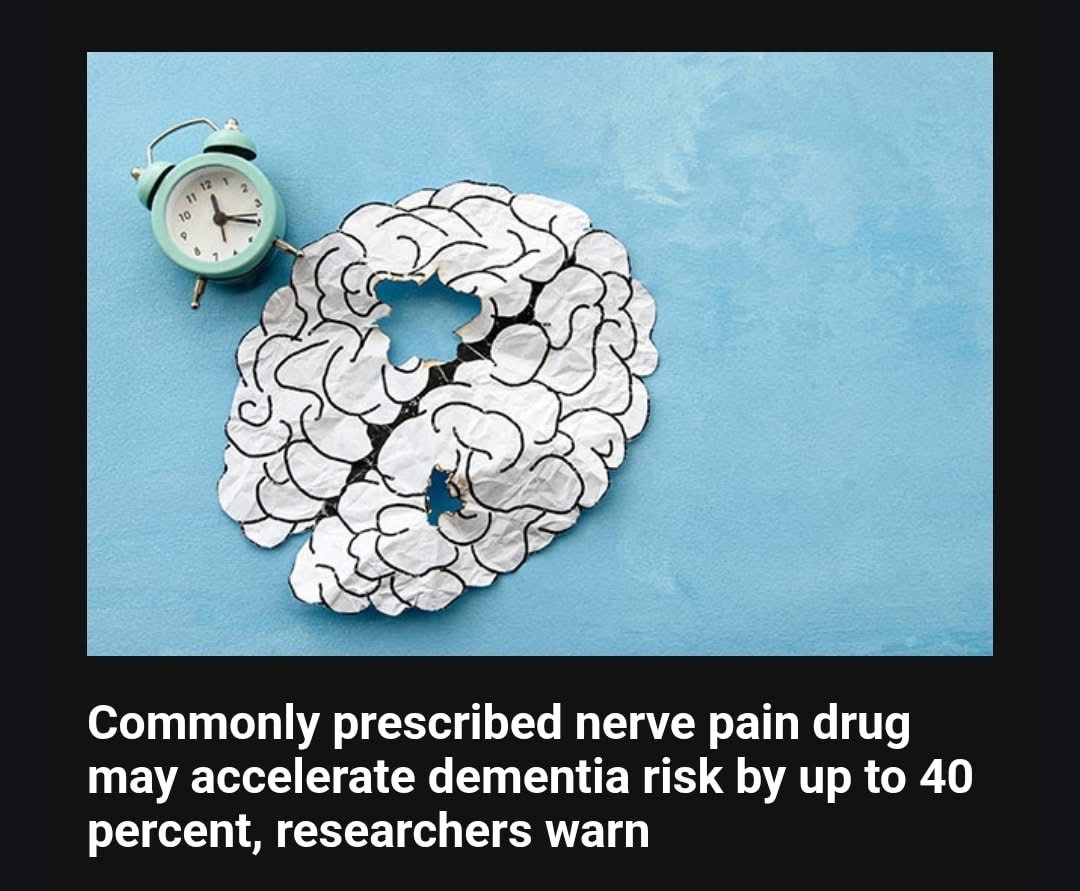
Gabapentin, widely prescribed for chronic pain, may increase dementia risk by up to 40%, according to a new U.S. study.
Younger adults (aged 35 to 49) face more than double the dementia risk when taking gabapentin in the long term.
The drug alters GABA, a key brain neurotransmitter, potentially leading to cognitive decline.
Critics dispute causation but admit concerning correlations.
Gabapentin prescriptions remain high despite study warnings, raising concerns about Big Pharma’s safety standards.
A groundbreaking U.S. study reveals that gabapentin, a drug doled out to millions for chronic pain, may increase dementia risk by up to 40%, raising urgent questions about the safety of Big Pharma’s “solutions.”
Researchers from Case Western Reserve University analyzed the health records of more than 26,000 Americans who were treated for chronic lower back pain between 2004 and 2024. Their findings, published in Regional Anesthesia & Pain Medicine, expose a harrowing trend: patients prescribed gabapentin six or more times faced a 29% higher dementia risk, soaring to 40% for those with 12 or more prescriptions. Even younger adults (35 to 49 years old) saw their risk more than double in a disturbing revelation for a drug that is marketed as “safe.”
How gabapentin attacks the brain
Gabapentin, sold as Neurontin by Pfizer, the same corporation behind dangerous Covid vaccines, works by altering gamma-aminobutyric acid (GABA), a critical neurotransmitter that calms overactive nerve cells. But this “brake” on brain activity may come at a catastrophic cost.
“Our findings indicate an association between gabapentin prescription and dementia or cognitive impairment within 10 years,” the researchers warned. They urged “close monitoring of adult patients prescribed gabapentin to assess for potential cognitive decline
 GreatCosmicMothersUnite