Mother / Child cellular bond

“Pregnancy marks the start of the bond between mother and child, but did you know that a mother and her baby share more than just a physical and emotional connection? This is due to a fascinating phenomenon called fetal maternal microchimerism, where fetal cells persist in the mother’s body long after childbirth. Conversely, maternal cells also pass over to the fetus. While the science behind this concept is in the early stages, it sheds some light on the biological bond between mother and child.

What is fetal maternal microchimerism?

Fetal maternal microchimerism (FMM) refers to the presence of fetal cells in a mother’s body post-pregnancy. According to a study published by WILEY Periodicals, during gestation, cells from the developing fetus cross the placenta and enter the mother’s bloodstream, embedding themselves in her tissues and organs. These fetal cells can persist for decades, becoming a permanent part of the mother’s biological makeup.

Interestingly, this phenomenon is not one-sided. Maternal cells can also travel into the fetus. This unique relationship challenges the traditional view that a mother’s body completely separates from her child after birth.

How do fetal cells affect a mother’s body?

Scientists have found fetal cells in various maternal tissues, including the heart, brain, liver, and even the skin. But what are these cells doing in the mother’s body?

Tissue repair and regeneration: Fetal cells may have stem-cell-like properties, meaning they might aid in tissue repair. Research suggests that these cells may help heal injuries or even protect against certain diseases. For example, in animal studies, fetal cells have been found in damaged heart tissue, leading some scientists to believe they may assist in cardiac repair.

Immune system influence: According to a review article by Obstetric Medical, “maternal acquisition of fetal genetic material has been proposed to play a role in inducing materno-fetal tolerance during pregnancy, a factor potentially contributing to why certain autoimmune diseases, like rheumatoid arthritis (RA), are temporarily ameliorated during pregnancy.” . . .

A lasting connection between mother and child

Fetal maternal microchimerism is a powerful reminder that the bond between mother and child is more than just emotional—it’s cellular. Even after a child is born, part of them remains within their mother, influencing her health.

As researchers continue to explore this fascinating field, the implications of fetal microchimerism could reshape our understanding of pregnancy, maternal health, and even medical treatments. Whether aiding in tissue repair, influencing immunity, or playing a role in disease susceptibility, these lingering fetal cells highlight the deep, lasting connection between mother and child—one that science is only beginning to understand.

Final thoughts

Overall, fetal maternal microchimerism is a testament to the profound and lasting relationship between a mother and her baby. As research advances, we may uncover even more surprising ways in which these tiny remnants of our children continue to shape our health and well-being long after birth.”

~ Tessa Anderson

(Link in comment section)

Art: Lucy Pierce

Lucy Pierce- Artist and Wordsmith,

#SacredSistersFullMoonCircle #WomensWisdom #WomensEmpowerment #Goddess #GoddessCircle #GoddessStudies #EarthWisdom #CyclicalLiving #WheeloftheYear #Mythology #Magick #Folklore #FolkTradition #SeasonoftheMother #FetalMaternalConnection

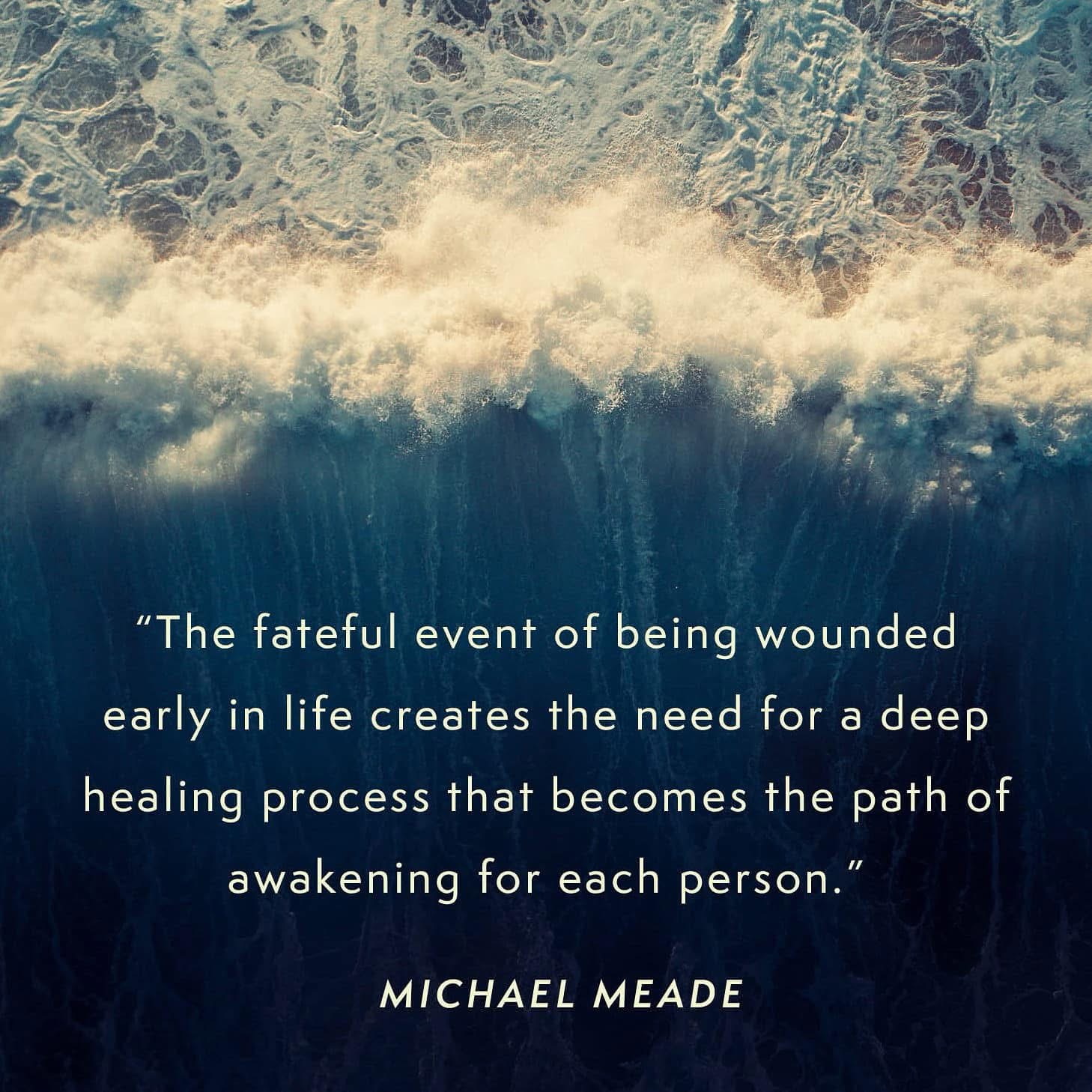
Born again Wound becomes the womb ❤️‍🩹

“As people are learning all over again in the modern world, when people who will not acknowledge their own woundedness are given power, they will make new wounds and possibly wound everyone because of their need to deny their own woundedness. The word heal means to cure and specifically to make whole. It turns out that being a whole person means we have to accept our vulnerable parts, and that we have to accept and learn to face our original inner wounds. For in this old, mythological understanding, the fateful event of being wounded early in life creates the need for a deep healing process that becomes the path of awakening for each person.

The path of the wounded healer leads to a connection to the deep self within, which is our connection to wholeness, which is the root of the human capacity to heal. There’s an old idea that says that in the same way that something greater than ourselves wounds us early on, something greater than ourselves seeks to awaken through the specific wounds we carry. In that sense, denying the inner wound means also denying the presence of the deep soul or the centering self, which holds the exact medicine we are looking for.

In some mythic stories, the wound inside a person is called the sacred affliction, or the holy wound. There’s another play on words in which the wound which can be seen as a hole, can also be seen as a holy element that secretly holds the natural antidote, the inner medicine that we also brought to life.

The wounded healer is ever wounded, and ever able to find ways of healing. It’s an archetypal condition. The point has never been to become perfect, or perfectly healed, or completely whole. The point has always been to become holy. That is to say, complete with our vulnerabilities and our wounds, because the wound becomes a womb from which we are intended to be reborn again and again. And that’s why the old saying was, the afflicted are holy.”

– Michael Meade

Choosing Peace 🙏💯

Dating when she’s finally happy alone is a different game. Because now she’s not dating out of loneliness. She’s not dating because she’s bored or broken or trying to fill a void. She’s dating from a place of peace, of snacks, silence, and sweatpants and she’s questioning everything. Like, why would I trade this cozy little bubble of emotional stability for a man who makes me anxious, confused, or constantly second-guess myself? You think I’m gonna give up eating ice cream straight from the tub in a hoodie that smells like heaven, to babysit someone’s grown-up ego? Please. When a woman is happy alone, she’s no longer impressed by bare minimum energy. She’s not excited by good morning texts that lead nowhere. She’s not clapping for “I was just busy” excuses or breadcrumb attention. She’s calm. She’s healed. She’s protective of her space. And if the vibe feels like emotional turbulence wrapped in fake deep conversations and inconsistent affection – she’s out. Immediately. No dramatic exit. No three-hour argument. No begging him to try harder. Just a quiet “no thanks,” followed by Netflix, her favorite blanket, and absolutely zero anxiety. Because peace is expensive.
And she paid full price for it with tears, with lessons, with long nights of healing, and boundaries that were built like brick walls. She’s not giving that up just because someone has a nice smile and a playlist. She needs consistency, not chemistry. Effort, not empty promises. A man, not another project. So if dating feels like a job interview, a group project, or a therapy session she didn’t ask to lead, it’s a no. Because when a woman has learned to love her own company, any man who enters her life had better feel like a bonus, not a burden. She’s not lonely, she’s selective. She’s not bitter, she’s aware. And the moment you make her feel alone might be better than being with you, she’ll choose her peace. Every. Single. Time. So if you want her, come correct or don’t come at all. Because she’s already got snacks, silence, and sweatpants. And honestly, that’s a tough act to follow.