

Tag: Children
Covert Narcissist Moms damage their kids
1st 3 years are critical in childhood
My parenting changed when I learned that the critical years are only the first three.
Yes, only the first three.
After that, everything eases up gradually until the child becomes an adult.
The first three years are called the trust versus mistrust stage, and they’re the landing phase of life.
Your work as a parent is to pour love into your child unreservedly and to travel all the distance to meet them emotionally.
When they smile, you smile back. When they’re sad, you soothe them.
When they play with you, you play with them. When they want to be held, you hold them.
If you respond consistently and lovingly to them at this stage, they learn that people are loving and the world can be safe.
They don’t learn about mom and daddy or their home. They’re learning the world.
Should we say that in other words?
During the first three years of life, the child is not just learning you. They’re learning the world through you.
If you win their trust, you have won their trust for the world. If they can’t trust you, neither can they trust the world.
There’s no other stage in life when a person is so impressionable.
Sometimes, the child will have very inconvenient needs, like asking you to carry them when you’ve just arrived from work and you’re tired.
Do not deny them or punish them. Just drop everything and pick them up. You can wisely help them transition from that mood shortly after using diversionary tactics, but you must meet their need for connection first.
When they share their toy or food with you, receive it with full attention and appreciation. They’re giving you everything they have.
It’s not just a toy but their entire possessions. When you appreciate it, you’re registering in their highly impressionable brain that they matter.
Sometimes, the child will be restless, irritable, and outright difficult.
You will try five different meals, and they refuse all of them.
You will change their diapers and clothes, and they’re still crying.
You’ll soothe them for hours, and they still refuse to fall asleep.
You’ll feel frustrated and even angry. This is understandable and totally human.
But during those moments, you should remember one thing: the child is not trying to frustrate you.
They’re simply struggling with being human on that day. They’re as lost as you.
Your task at that time is to try one thing after another until you get out of the phase.
Perhaps they have stomach discomfort or colic. Perhaps the weather is too hot. Or you brought in a new nanny, and it made the child anxious for having to lose the other one with who they had bonded so well, and now he or she needs to grieve while also embracing a new person.
Perhaps there’s water in the baby’s ear or an irritating eye after water got into their eyes during bath time.
In other words, the child could be going through any of a hundred baby problems. You should attempt one solution after another until the phase passes.
If you leave the baby with a dishonest caregiver, for example, they may disrupt their sleep schedule by letting the baby oversleep while they indulge in their own leisure. Results? At bedtime, the baby is fully awake, and your attempts to make them sleep only annoy the child.
Is the child to blame for disturbing until 2 a.m.? They’re simply not sleepy because they slept too much during the day while under the care of another parent figure whom you delegated them to.
In short, it’s not easy to parent right during this stage, but if you approach it with empathy and patience, you’ll manage.
Once the child clocks three under this intensive care, voila! The programming is done.
Now they repel mean friends and shady adults because anything that’s not loving is strange to them.
Now, you can reason and schedule your interactions with working breaks in between. You can ask them what they experienced while you were away.
The child can let you work or go to the market as long as you keep your word and continue the same reliability and commitment you had when they were under three.
But life gets easier now since they can reason, communicate their needs, and even control themselves for increasing periods.
The next fifteen years after age three are divided into blocks of 5, each with a distinct role. Ages 8, 13, and 18 are the last pivotal milestones to cross, but each is easier than the previous.
(©️ Benjamin Zulu Global)
Sons of Narcissistic Father
Narcissist Trauma Bonds children
Behaviors of Narcissist
All this and more was normalized .
Sleep deprivation was a reality that forced
me to sleep on the sofa .
Off the charts in snoring 😴
I’m so glad I learned to prioritize quality
sleep I use GABA and Kratom now
which won’t be necessary
in my own home 💯🙏
Wellness Checks $$$$$/Vaccines
Children being rude to targeted parent
2 Million spent to see her kids $$$$
Sanja Cogon – Vaccines
My friend’s 5 y/o daughter got shingles from her chickenpox vaccine. Another friend’s toddler got measles from his MMR shot.
I had both the measles and chickenpox as a child, just like the vast majority of people back in the 1970s when I was growing up. None of us ever had any complications as otherwise healthy and well-nourished children. It simply wasn’t a big deal aside from being bored staying home and being itchy while other kids were having fun playing outside.
Many people are still simply parroting back the “safe and effective” marketing message without knowing that ZERO childhood vaccines underwent randomized double-blind inert placebo trials.
Actually, some shots were approved after studying them for just a few DAYS. All were tested against another vaccine or an aluminum adjuvant, but NONE against saline or sugar pill placebo because vaccines fall under the category of “biologics” and don’t have to undergo the same golden standard clinical research as pharmaceutical drugs.
In other words, Viagra (for example) is better studied than ANY vaccine on the currently CDC recommended children’s schedule.
And yes, there are numerous side effects of jabs, including the vaccine-induced measles, which have been found in many outbreaks blamed on the unvaccinated population.
Interestingly enough, infectious diseases declined on their own due to improved sanitation, personal hygiene, and nutritional status of people even before vaccines were introduced. Oh, and even though there’s no scarlet fever shot on the market, we hardly ever even hear of anyone coming down with it anymore.
While I don’t believe that good health comes from a needle, I’m absolutely passionate about MEDICAL FREEDOM and INFORMED CONSENT. You won’t find me rolling up my sleeve over and over again to get any pokes, yet I’ll defend your right to turn yourself into a human pincushion if you CHOOSE to do so and after being able to evaluate any relevant information to decide what works best for YOU and your family.
I also firmly believe in accepting personal responsibility for one’s own health and not blaming others for refusing to have injected themselves with all kinds of problematic ingredients with potential for catastrophic consequences. After all, true “herd” immunity comes from living healthy, active lives with lots of sunshine and outdoor activities, real foods, quality relationships, good stress-management, enough sleep and rest, and regular fasting/cleansing intervals.
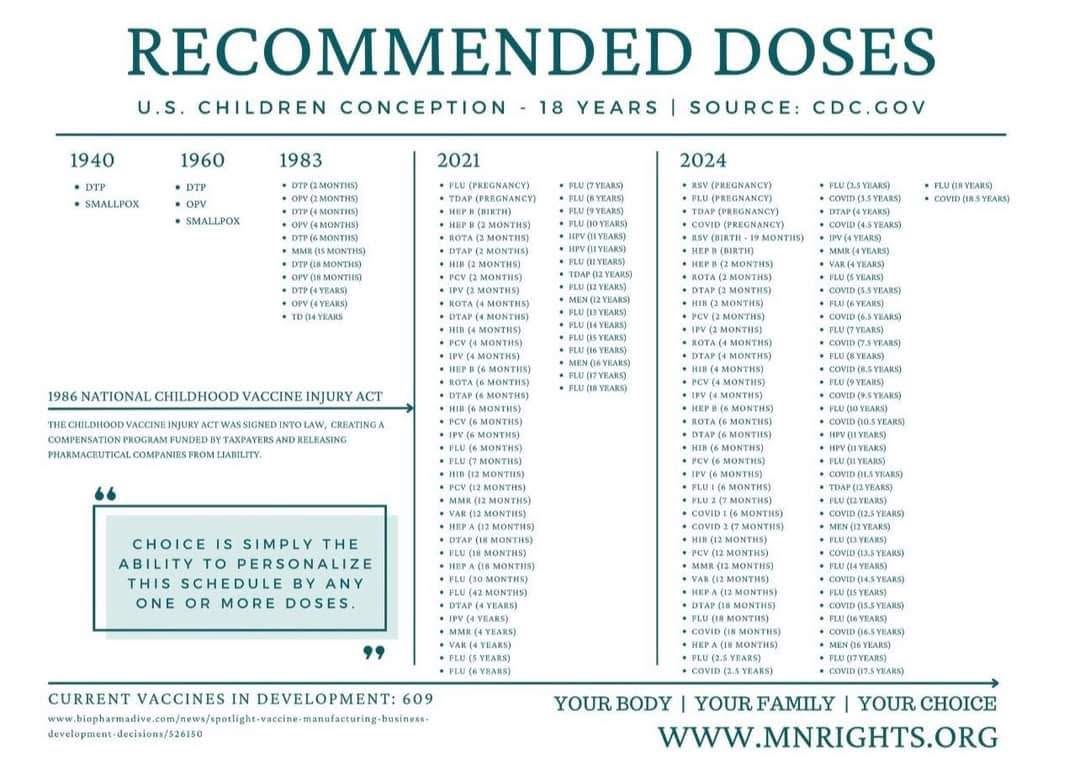
So, no, I’m not an antivaxxer. I’m an ex-vaxxer who’s done my homework and in my 30+ years of parenting have never met a pediatrician in person who knew more than me about the history and development of vaccines, their ingredients, a multitude of possible adverse reactions, VAERS database and mandatory reporting, the National Childhood Vaccine Injury Act of 1986 signed by President Reagan which has absolved vaccine manufacturers from any liability, and so forth.
Have you done YOUR due diligence yet?

 GreatCosmicMothersUnite