
Tag: abuse
Narcissist parent get same treatment as they abused you with
How partner treats you when angry 😡
How someone treats you when they are angry says everything about their character.
If they truly love and respects you, they will never let their emotions turn into cruelty. Even in frustration, they will speak to you with care because their love doesn’t waver based on their mood.
On the other hand, if anger makes them disrespectful, dismissive, or even hateful, that’s not just a “bad moment”—it’s a red flag. Real love doesn’t come with insults, manipulation, or emotional abuse.
Someone who values you will never risk damaging your heart just because they are upset. They will take a step back, communicate, and handle disagreements with maturity.
If you find yourself constantly excusing toxic behavior with “they were just mad,” take a step back. Respect and love should remain constant, no matter the emotions.

Erasing Reality
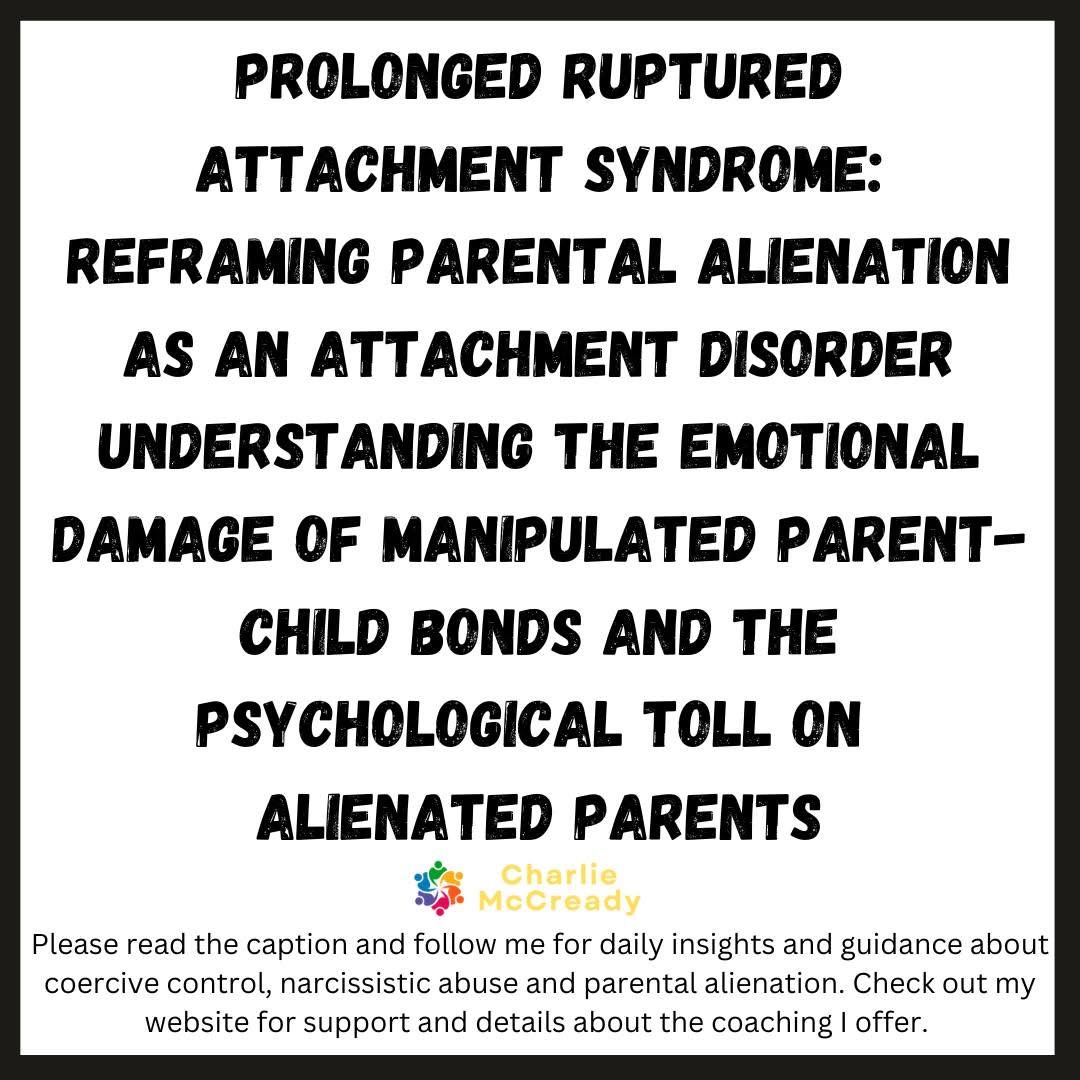
Prolonged Ruptured Attachment Syndrome
Parental alienation can be understood as an attachment disorder, where the child is manipulated into rejecting one parent, disrupting the natural attachment bonds. This psychological harm mirrors what is described in Prolonged Ruptured Attachment Syndrome (PRAS), a framework introduced by Martin Seager and colleagues. While PRAS was not developed to address parental alienation, it offers a new and potentially valuable lens for understanding the emotional damage caused by the disruption of attachment.
In cases of parental alienation, the rupture in attachment is not a clean break. Rather, it’s a painful disruption that leaves the relationship in a state of unresolved limbo—neither fully severed nor easily healed. Many alienated parents describe what feels like a living bereavement. This mirrors PRAS, where people are unable to find emotional closure because their attachment to a significant person remains unsettled. Seager describes PRAS as existing “somewhere between trauma and grief,” a state that is neither fully traumatic nor fully grief-stricken but something in between. For alienated parents, this is reflected in the constant uncertainty of not knowing if reconciliation with their child will ever happen. The pain, as Seager explains, is “ongoing without closure.”
PRAS highlights that the emotional toll of such ruptures is not just a one-time loss but an enduring, unresolved pain. The psychological effects of parental alienation are profound. This kind of emotional suffering can lead to trauma, grief, anxiety, and helplessness, making it harder for both parents and children to heal.
Healing from the emotional damage caused by these attachment disruptions requires more than just time. For alienated parents, this means specialised support to help navigate the complexities of reconnection and recovery. PRAS also underscores the importance of recognising that emotional healing from attachment ruptures needs understanding and compassionate care.
Published in Psychreg Journal of Psychology in December 2024, the newly conceptualised mental health condition, Prolonged Ruptured Attachment Syndrome (PRAS), while not developed with parental alienation in mind, offers a potentially helpful framework, with its findings validating the distress caused by attachment disruptions. Applying this to parental alienation could pave the way for more effective, empathetic responses and support for affected families.
#charliemccready
#parentalalienationcoach
#prolongedrupturedattachmentsyndrome
#emotionalabuse
Children are being bred & sold
Demonic Rituals 👿
Splitting
Inside the mind of Domestic Abusers
Let’s acknowledge that Domestic Abuse
in 2025 is Intimate Partner Violence
High Conflict
Mercenary , Manipulative Malignant
It is Spiritual
It is physical and psychological
It is financial, the never ending story
of projected blasphemy’s that create
an aura of heroic survival despite
the insanity of your partner .
Hatred lives in the heart of racist ,
discrimination, who superiority
rules all around him .
Poor Partner ? Good Father Myth
If a man believes he can protect his children while hurting his woman, he is deeply mistaken. What you give to your woman—whether love, respect, or pain—is what she will pass on to your children. This is an undeniable truth of life, one you cannot escape. A woman is the emotional and spiritual foundation of a home, and her well-being influences the emotional climate of the entire family.
When a man nurtures and supports his woman, he creates an environment where love and safety thrive. This love flows through her and reaches the children. A woman who feels cherished and respected will radiate warmth and stability. Her sense of peace will naturally create a secure world for her children to grow and flourish in.
On the other hand, when a man chooses to hurt or neglect his woman, he disrupts the harmony of the home. Her pain doesn’t stay confined within her; it becomes a silent burden that shapes the atmosphere of the household. Children growing up in a space filled with tension and emotional distress often internalize those struggles, carrying them into their own lives.
It is essential for a man to recognize that his relationship with his woman sets the foundation for his children’s emotional development. If he provides her with love and security, his children will learn the importance of healthy relationships and emotional intelligence. If he chooses to cause her harm, he risks teaching his children to repeat the same patterns of dysfunction.
A woman’s role in a family is unique. She is often the heart of the home, and her energy influences the rhythm of daily life. When a man honors this role and treats her with care, he empowers her to fulfill it wholeheartedly. This empowerment doesn’t just benefit her—it shapes the emotional well-being of their children for generations.
A man cannot claim to be a good father while being a poor partner. His treatment of the mother of his children is one of the greatest lessons he teaches them. Sons will learn how to treat women by observing their father, and daughters will learn what to expect from men. Therefore, a father’s actions have a profound and lasting impact.
Many men fail to see this connection, assuming they can compartmentalize their relationships. They believe they can show up as loving fathers while being absent or hurtful partners. But children are incredibly perceptive. They notice the unspoken dynamics and carry those observations into their understanding of relationships.
The truth is, children thrive in an environment where both parents are emotionally healthy and supportive of one another. A man who uplifts his woman not only strengthens her but also creates a stable foundation for his children to grow upon. His love and respect set an example that shapes their worldview.
Men must also recognize that protecting their children goes beyond physical safety. It involves creating a space where emotional security is prioritized. This cannot happen if the mother of the children feels unsupported, neglected, or hurt. Emotional wounds within the family ripple outward, affecting everyone.
To truly protect your children, protect their mother. Nurture her spirit and honor her contributions. When you invest in her happiness and well-being, you invest in the emotional health of your entire family. What you give her, she will magnify and return to your children tenfold.
So dear man, the greatest legacy a man can leave for his children is the example of a loving and harmonious partnership. By treating his woman with care and respect, he teaches his children the value of love, kindness, and mutual support. This is the universal truth you cannot escape—and one every man must embrace.

 GreatCosmicMothersUnite