
Unhealed Parents

A child’s first enemy is often an unhealed parent. It’s a subtle, almost invisible dynamic that creeps into a household without warning. Picture a parent, heavy with unprocessed pain, wielding their wounds like invisible weapons—sharp words, dismissive glances, unreachable affection. The child doesn’t see the parent’s trauma; they only feel the sting of its consequences. An unhealed parent might unintentionally pass down shame, anger, or fear, not because they don’t love their child, but because their own love has been tangled in the web of their past. Imagine a parent who flinches when their child cries—not because they don’t care, but because the sound dredges up their own unheard cries from decades ago. Without realizing it, they teach the child that emotions are dangerous, that their needs are burdensome.

Now, contrast this with a healed parent. Imagine a parent who has faced their own darkness, who has wrestled their demons and come out on the other side. They create a different kind of space for their child—a sanctuary where emotions are allowed to breathe and wounds can be mended instead of ignored. When a healed parent hears their child cry, they don’t recoil; they lean in. They don’t silence the child or rush to fix it. Instead, they validate, comfort, and teach resilience. The difference is profound. An unhealed parent unknowingly becomes an adversary, while a healed parent becomes a guide. One teaches survival; the other teaches thriving. And yet, the tragedy is that the unhealed parent was once a child too—a child whose first enemy might have been their own unhealed parent. The cycle is unrelenting until someone, somewhere, decides to break it.

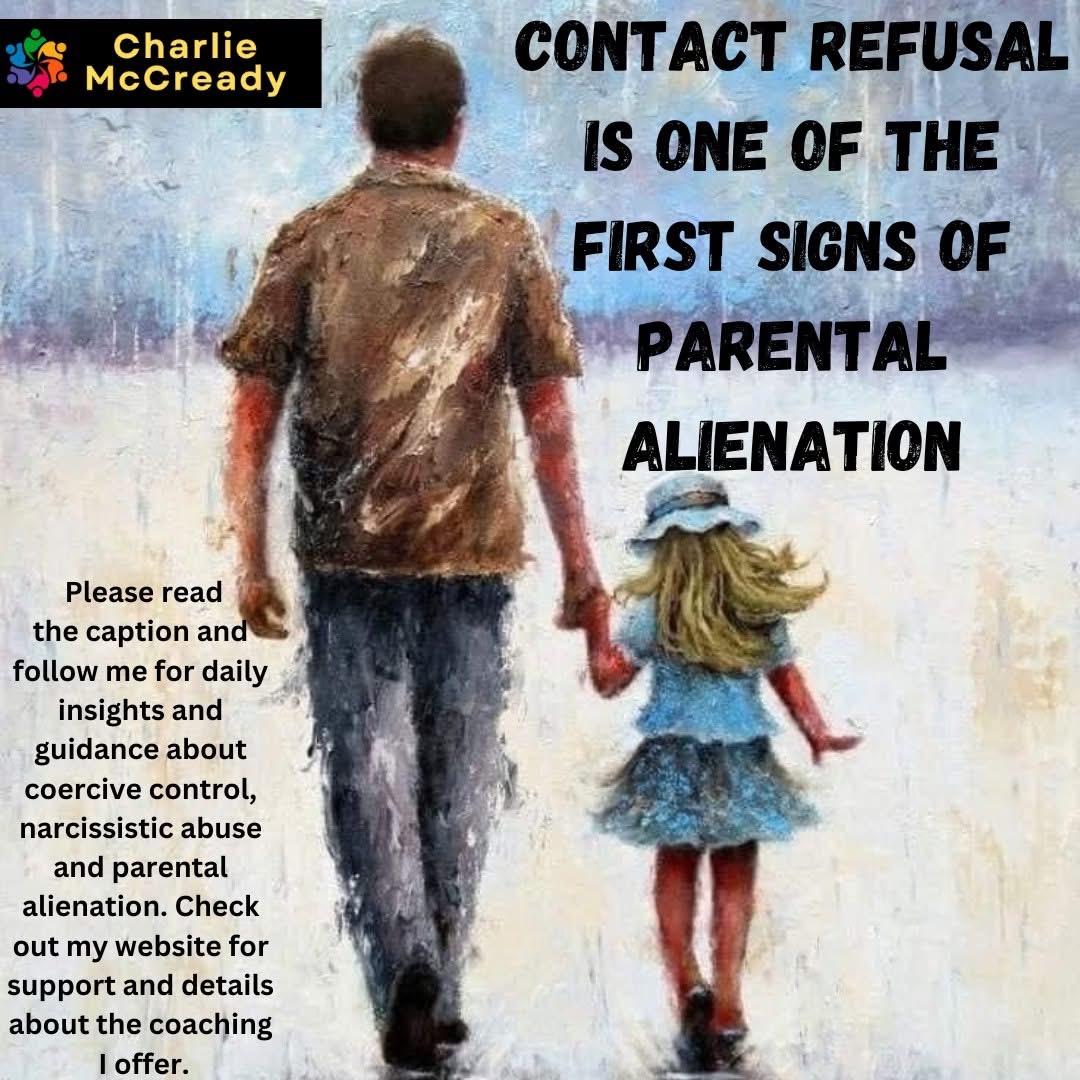
Contact Refusal / PA – Charlie McCready

It may start with what seems like innocent enough excuses: Uncle Bulgaria is over for the weekend and we’ve not seen him in years, so we’ll have to skip this weekend. And yet there’s no effort to make up your lost time. Maybe there’s a school rehearsal: they can’t miss it. And yet there’s not a reason given as to why they can’t do that from your house or a discussion about possible solutions. All the excuses mount up and it becomes obvious that everyone and everything else takes priority over your child spending time with you. If and when you get ‘given’ the time, it may well be, with all the excuses under the sun, sabotaged, shortened, or overshadowed.

Another issue that when ‘allowed’ time with your child, alienating tactics may include constant text messages or phone calls which make the child feel guilty, angry, upset. They might be told how much more fun they’d be having if they didn’t ‘have to’ be with you. The child will get the impression, loud and clear, that it’s a nuisance for them, and annoying for their ‘good’ parent whenever they spend time with the ‘bad’ parent, the one who is ruining everyone’s fun. Contact, even when indirect such as a phone call or a text message, can be even labelled ‘harassment’ in some cases.

Subliminal programming of a sort has been inflicted on the child, a form of emotional manipulation and psychological abuse. Subtly but most certainly, the child will realise that the alienating parent is delighted when the child ‘chooses’ not to spend time with the other parent. The child may even be rewarded for contact refusal. These patterns of contact refusal are the first signs that the child is being alienated.

Do any of these signs sound familiar to you?

If you face these challenges, know you’re not alone. I’ve been through all this myself, with over 20 years of experience, and I am now reunited with my children. I am here to offer support with daily posts on social media and also with the coaching I offer. Feel free to reach out to me anytime—I’m here to help.

#charliemccready

#parentalalienationcoach

#fathersrights

#mothersrights

#custody

#childcustody

#FamilyCourt

#ParentalAlienationSyndrome

#parentalalienation

#parentalalienationawareness

#FathersMatter

#custodybattle

#Fathers4Justice

#alienatedparent

#childpsychologicalabuse