Isolating ; Tuning Out in Parental Alienation

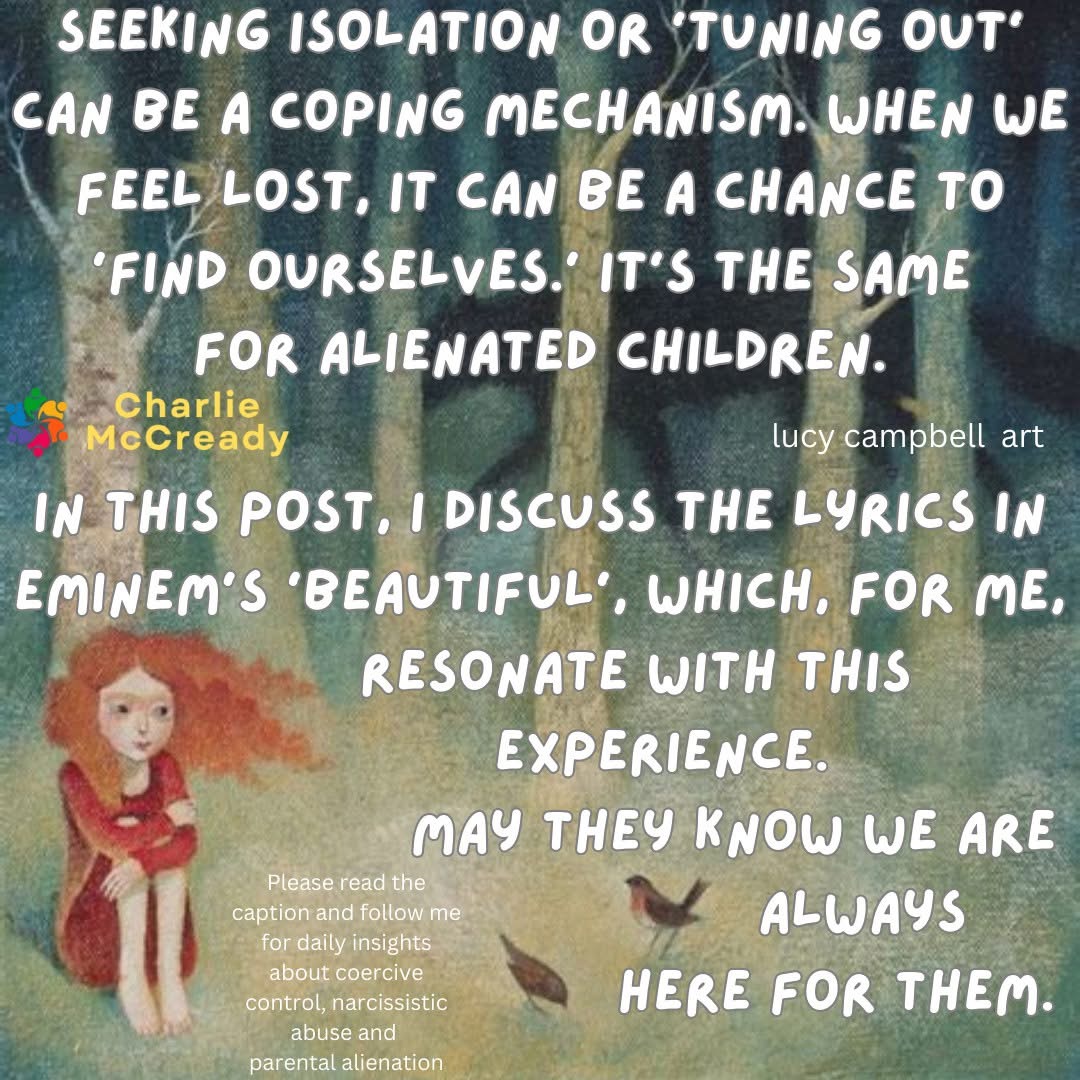
I noticed the distancing – preempting what I later became ‘parental alienation’ – happen sometime before my children left. When it was particularly unpleasant and upsetting in those weeks and months before they moved to the other side of the world, I tried to remind myself that this was how they were bracing themselves to cope with such a monumentally life-changing, scary/exciting/brave/unknown decision. I didn’t always deal with it well, either. I’d been through parental alienation before, as a step-parent in 2001, but this took me to another level of grief long before the alienation kicked in.

It was 2009, and in the time before they left, Eminem’s’ Beautiful’ was played a lot in my children’s bedrooms. It’s a song that expresses a struggle with depression, self-doubt and a yearning for understanding, acceptance, and a desire for a better life. After they’d gone and I heard the song, I grieved. I convinced myself that the lyrics were a child’s hope for a bridge between worlds, and that mine could come back anytime. The time with their other parent became permanent, and then I was cut off, no longer necessary, and even deemed unsafe. It’s the 180 turnaround from good parent with happy, healthy children to monster that’s nonsensical and horrifying.

But they don’t lose us – we’re still here.

The song ‘Beautiful’, to me, is about alienation. It’s about longing for connection after being rejected, building ourselves up no matter how many times we’re set back or fall. We and our children are disconnected by enforcement and manipulation. We cope with it the best we can. The ‘distancing’ or ‘emotional cutoff’ is also known as disassociation. This is something in our children that the alienating parent can exacerbate, too.

There are times we have to let things run their course. We need the time and space to figure things out, and so do they. We’re still here. Mine did figure things out, reach out, and they came back. It is my heartfelt wish that yours do, too.

#charliemccready

#parentalalienationcoach

#alienatedchild

#parentalalienation

#familycourts

#childpsychologicalabuse

#parentalalienationawareness

#adversechildhoodexperiences

#FamilyCourt

#custody

#custodybattle

#ChildCustody
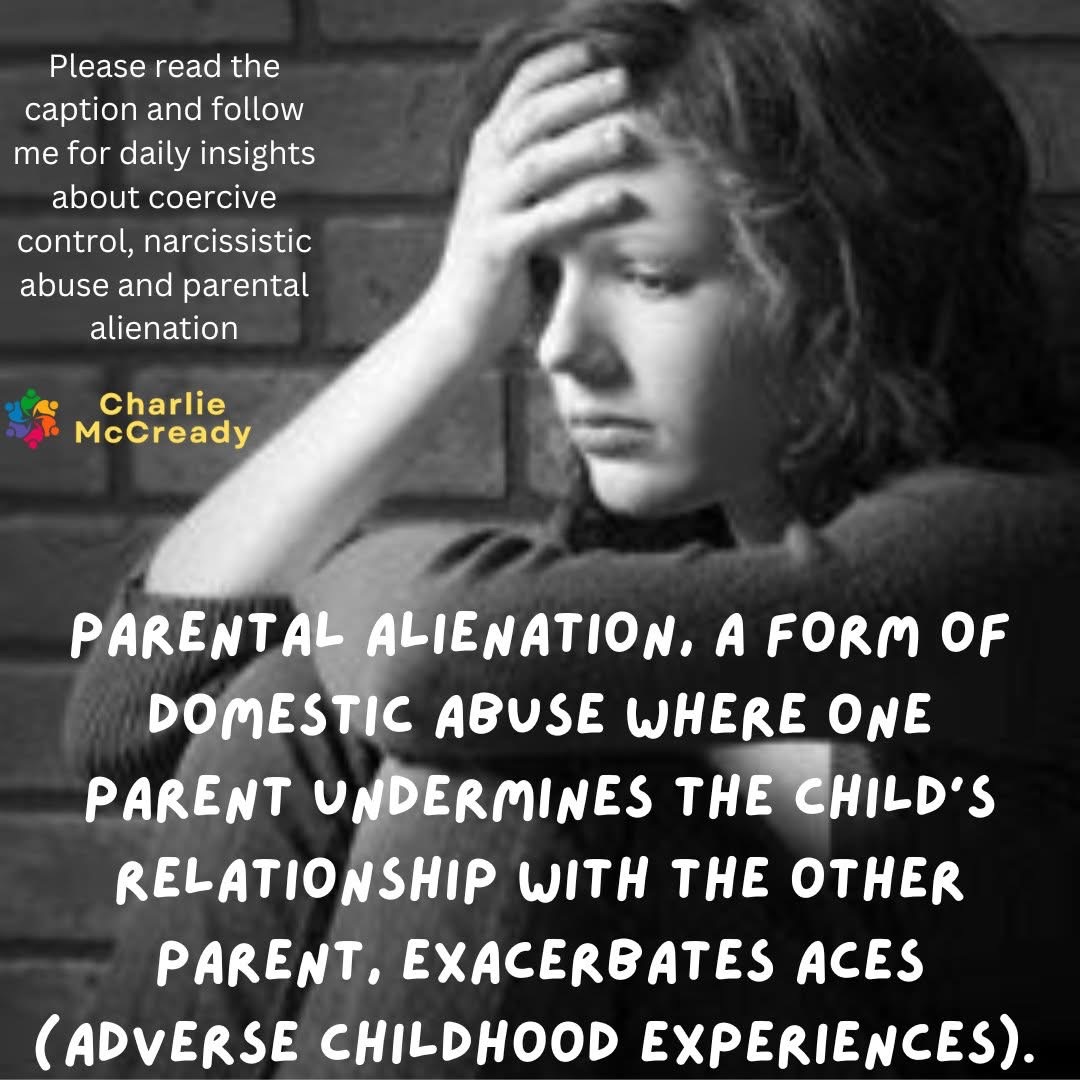
Adverse Childhood Experiences-Charlie McCready

Adverse Childhood Experiences (ACEs) are potentially traumatic events from 0 to 17. The original study in 1998 identified seven categories of ACEs, including physical and emotional abuse, neglect, parental substance abuse, parental mental illness, domestic violence, and having an incarcerated parent. These experiences were found to have lasting and profound impacts on mental health, physical well-being, and overall development. The research found that children who experienced four or more ACEs were 12 times more likely to suffer from alcoholism, depression, drug abuse, and suicide attempts. Subsequent research expanded the list of ACEs to include parental separation/divorce due to the recognised adverse effects it has on children’s well-being.⁠

Parental alienation, a form of emotional abuse, usually following parental separation/divorce, usually involves at least these two ACEs. The attachment system, vital for forming bonds between children and parents, is severely impacted by parental alienation. It can lead to persistent fear and stress. The complete severance of a parent-child bond constitutes psychological abuse and damages this attachment system. Addressing parental alienation is imperative to safeguard children from the lasting trauma it inflicts.⁠

Those who have faced ACEs are not alone. It’s estimated that 1 in 6 adults experienced as many as 4 ACEs before they turned 18. Support can be found through trauma-focused therapy, support groups, self-care, exercise, healthy living, but there is an urgent need for greater awareness about the problem of parental alienation and training for mental health and legal professionals working with separating families so that there is early detection and intervention. Let us collectively work towards a world where children can thrive, breaking the cycle of ACEs and creating a nurturing environment that fosters their potential and well-being.⁠

#charliemccready

#parentalalienationcoach

#alienatedchild

#childpsychologicalabuse

#narcissisticparent

#parentalalienationawareness

#FamilyCourt

#parentalalienation

#adversechildhoodexperiences

#familycourts

#ChildCustody

Weaponized Alienated Children

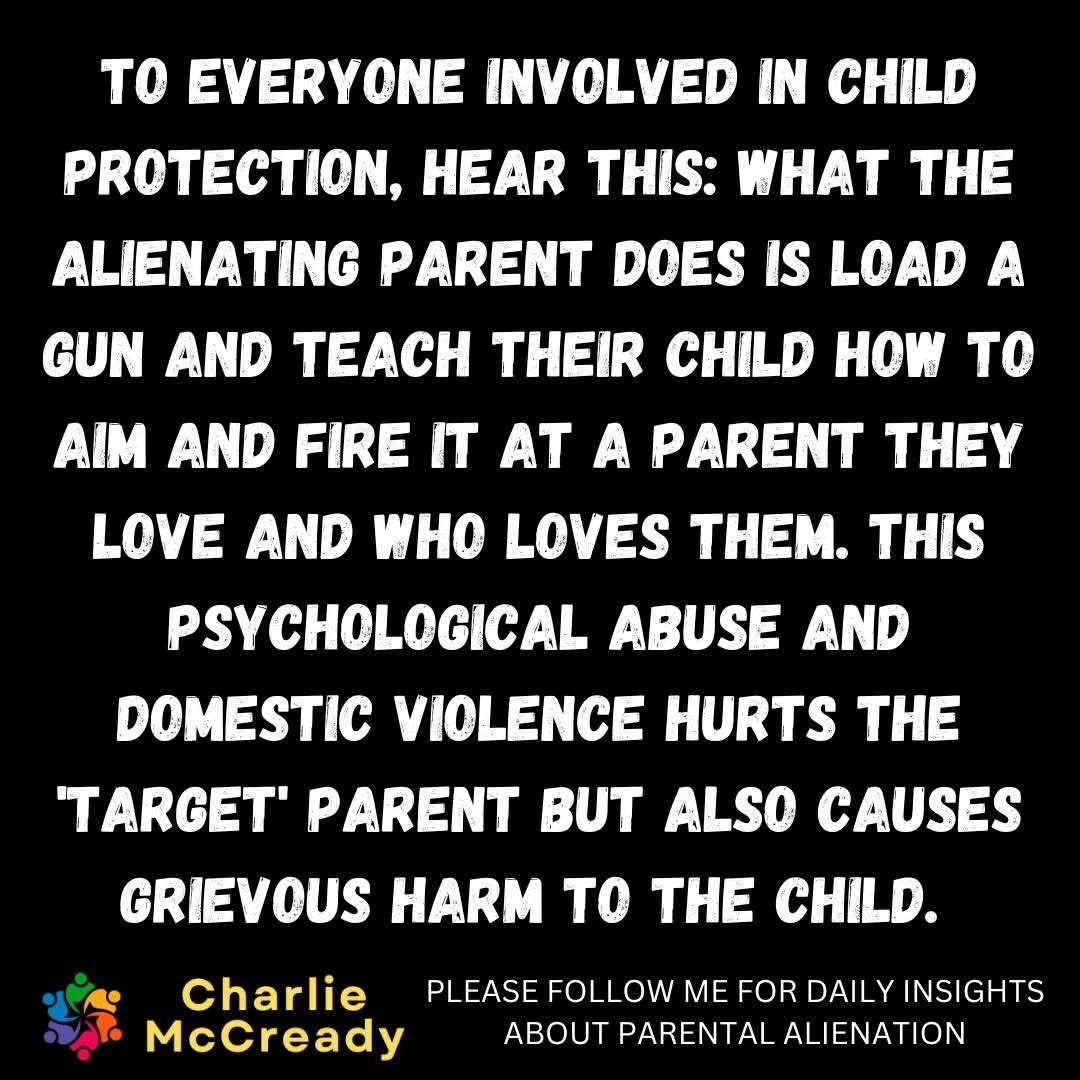
To all those engaged in safeguarding the well-being of children, it is crucial to recognise and address the deeply troubling phenomenon of weaponised, alienated children. This behaviour is far from natural; it results from a manufactured conflict that transforms innocent children into emotional weapons aimed at a parent they have loved and would still love. Family courts and mental health professionals must grasp the gravity of this situation.⁠

Imagine a scenario where an alienating parent loads a figurative gun and instructs their child on how to aim and pull the trigger against the other parent, a parent who loves them deeply. This shocking analogy draws attention to the psychological abuse and domestic violence within the dynamics of parental alienation. Just as a loaded gun can inflict physical harm, an alienated child, driven by coercive control, fear and confusion, can cause immense emotional and psychological damage to the targeted parent.⁠

This situation is akin to a psychological war waged against a loving parent. The tactics employed by the alienating parent distort the child’s perceptions, turning them into unwitting participants in this emotional conflict. The consequences are profound and far-reaching. The targeted parent is hurt by the betrayal, the severed bond, and the false accusations, but the child also suffers grievously.⁠

Family courts and mental health professionals must be equipped to recognise the signs of this weaponised behaviour. A child who acts like a loaded gun demonstrates the results of insidious manipulation. This destructive behaviour should not be trivialised or ignored. Instead, it requires urgent intervention to dismantle the psychological weaponry and to restore the child’s emotional well-being.⁠

By acknowledging and addressing the gravity of weaponised alienation, we can work toward protecting the targeted parent’s and child’s mental and emotional health. We need to look at who is loading the gun and teaching their child to fire it, as well as educate them so they know the harm they are causing. We can then hope to rebuild healthy relationships and create an environment where the child can flourish without being caught in the crossfire of adult conflicts.

#charliemccready

#parentalalienationcoach

#alienatedchild

#childpsychologicalabuse

#CoerciveControl

#parentalalienation

#FamilyCourt

#custody

#mothersmatter

#FathersMatterToo

#FathersMatter

#ChildCustody

#narcissisticabuseawareness

#traumabond

#parentalalienationawareness

#mothersrights

#FathersRights

#narcissisticparent

#FamilyCourtReform

#attachmenttheory

#custodybattle