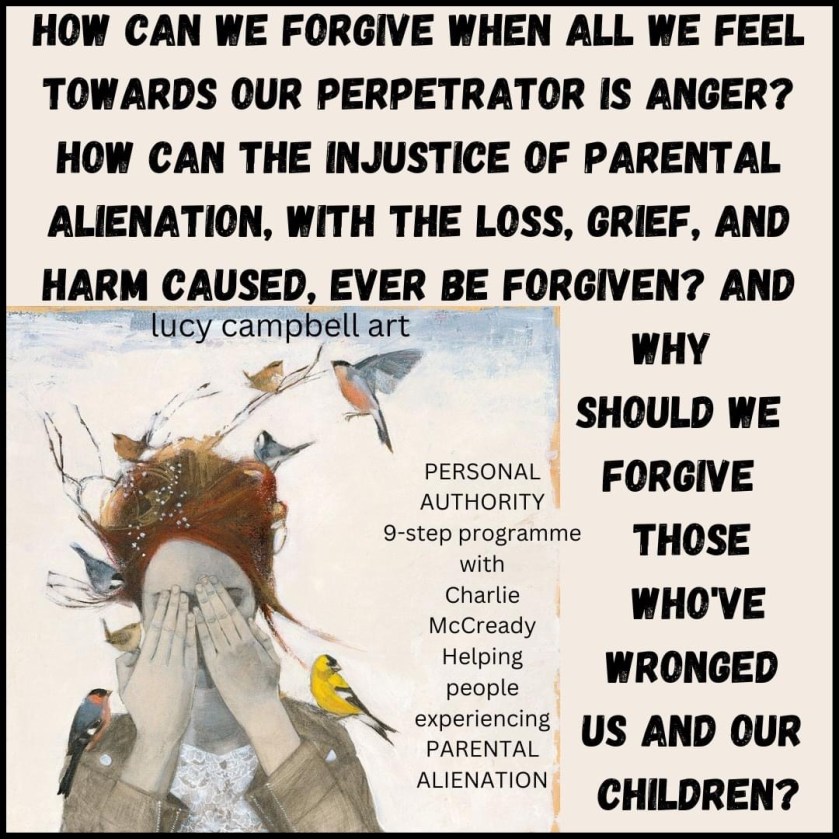
Forgiveness involves learning to let go, and that is of great benefit to you. Forgiveness helps you to focus on your happiness and the good things in life. It is a decision you can make – replacing ill will with good-will. While you may have envisaged revenge or ‘an eye for an eye’ (which leaves everyone blind as the saying goes), you can make a choice to find peace of mind instead. This is decisional forgiveness. On an even deeper level, and harder to achieve, there’s emotional forgiveness. That’s when you’ve completely moved away from thinking about the person/people who have done you wrong. You no longer hold any negative feelings or dwell on the offence, hurt and harm inflicted. Reaching this stage takes time, but it is immensely beneficial to your health and well-being. It reduces the self-pity and ‘victimhood’ mentality, and eventually, this can disappear completely. It liberates you from being triggered or stuck in a cycle of grief and anger. How to achieve this? Try visualising that person (this might not be pleasant or easy at first) and understand why they did what they did. Time and distance make it a little easier to be objective. Feel the feelings that come up. Don’t suppress them. Why did they do this thing? Would they have done this to anyone they were with (it’s not about you)? So this is their problem, and they will continue having this problem long after you’ve moved on and let it go. Can you see the place of fear they’re coming from? Remember, somebody else’s decision to hurt you was not your fault. Have you ever behaved poorly and upset/offended/wilfully or inadvertently harmed someone else yourself? Have you forgiven yourself? Were you forgiven? It could be you behaved poorly when you didn’t know better at the time. You may have behaved the way you did, said, felt and done what you did back then because you had given away your power, and you were just trying to survive and cope the best you could. You didn’t know how much harm or hurt it would cause. Forgive yourself. Forgive others who have done the same thing. Stick with this, it’s not easy. It’s not to forget. We might never truly understand why why they did what they did. We can’t erase what’s happened, or minimise it. Nor do we want these people back in our lives. We don’t forgive to help the other person who hurt us, but we do it to heal our own wounds. Forgiveness is really for us. What we can do is reframe our thinking about the harm caused, and our reaction to it going forwards. The other person doesn’t have to be present. Think it, feel it, or write it down, and let it go. Burn the paper and see it go up in smoke. Imagine it’s gone from your life. Now here comes the really tough bit. Send love to your persecutor. There’s logic to this. Imagine how good things would be if they felt love not fear, and were not constantly at war with life and with you. Imagine how much easier life would be for your child if the alienating parent knew how to love – themselves and others. How much easier would life be. People in pain often cause pain to others. Send them love because if they are healed, the alienating behaviours will dissipate. They’ll no longer feel anger and fear and vengeance, if they’re actually happy and full of love. Imagine that. They may never apologize, or admit to their wrongdoing, they may never be happy and have good relationships, but that is no longer your problem once you let go of the hold they’ve had over you, the grief and anger you’ve been holding onto because of the injustice and harm they caused. Practice forgiveness anyway for your own sake.
If you like our posts, please help us help others by sharing our posts to other people and sites. My mission is to spread awareness about parental alienation, inform and uplift. We’re also on Instagram, and we’d love you to follow us there too.
https://www.instagram.com/charliemccready1/
AND PLEASE DO JOIN ME ON MY NEW COMMUNITY PAGE. Thanks.
https://www.facebook.com/groups/3214325232164553
The Personal Authority 9 Step Program helps my clients understand and deal with their alienated child/ren, the alienating parent, plus how to overcome the mental and emotional issues that they experience. This program can help transform your experience of alienation and how you live your life. Typically people experience a change in mindset after a few weeks. Please send me a message if you are interested to know more, and I can send you testimonials and further details on what the program covers and the benefits you could gain.
.
.
.
.
.
#alienatedparent
#narcissisticabuseawareness
#coparentingwithanarcissist
#highconflictdivorce
#familylaw
#FamilyCourt
#ParentalAlienationSyndrome
#parentalalienation
#parentalalienationawareness
#parentalguidance
#generationaltrauma
#custody
#custodybattle
#childrenfirst


 GreatCosmicMothersUnite