This pathology tries to destabilize you in every way possible. You need support. You have support. Let’s talk about that over coffee and crumpets this Sunday, 8:00 Pacific on Facebook Live.
I’ll talk about booklets and handouts. I’ll talk about what Dorcy does and what I do, we do different things to the same purpose, restoring you and your kids back to normal.
I’ll talk to you about your path moving forward – treatment not custody. You’re in the leadership position. You’re the healthier parent. The other parent is leading the family to destruction. The child is giving you the problem because you can solve it.
So let’s do that. Let’s solve it.
It starts with a plan. Let’s get your feet under you and develop a plan. It’s always the same pattern. Some of you are in the narcissistic-dad pattern, that has a higher spousal abuse feel. Some of you are in the borderline-mom pattern, that pattern has higher anxiety and false allegations.
But it’s pattern. You do this, it does that. It fights about everything. Everything. Set your ground. Make it fight about what YOU want to fight about – treatment not custody.
You need mental health support. So let’s set about getting you that. You’re going to have to be smarter than your mental health people. Sorry. That should never happen but it has happened here. We’re fixing that.
But we don’t want to lose your children as the plane we’re flying is being fixed. Twenty years from now, everything is fixed. That doesn’t help you now today.
Let’s talk about resources you can bring to your battle with the mental health people and broken systems. Start by shifting the ground you stand on from custody to treatment – you want a written treatment plan, for that you’ll need a diagnosis – the treatment for cancer is different than the treatment for diabetes.
Is there a shared persecutory delusion, also called an induced persecutory delusion. It’s a real thing. Melanie Greenham explains it all in our articles available on ResearchGate. You have resources.
How do you use them to best effect? Let’s talk about that this Sunday over coffee, 8:00am Pacific on Facebook Live. I love the Internet.
Craig Childress, Psy.D. Clinical Psychologist, CA PSY 18857
Standards. We need Standards for mental health professionals in the family courts.
Let’s begin with the mandatory ethical Standards of the American Psychological Association.
All psychologists are required – mandatory – to comply with the ethical Standards of the American Psychological Association. So let’s start there – with the Standards of the APA ethics code.
All psychologists in the family courts are making professional judgments about what the pathology is (what the problem is) and what to do about it (the necessary treatment to fix it).
Standard 2.04 requires – mandatory – the application of the established scientific and professional knowledge of the discipline as the bases for professional judgments.
2.04 Bases for Scientific and Professional Judgments
Psychologists’ work is based upon established scientific and professional knowledge of the discipline.
The established scientific and professional knowledge of the discipline is:
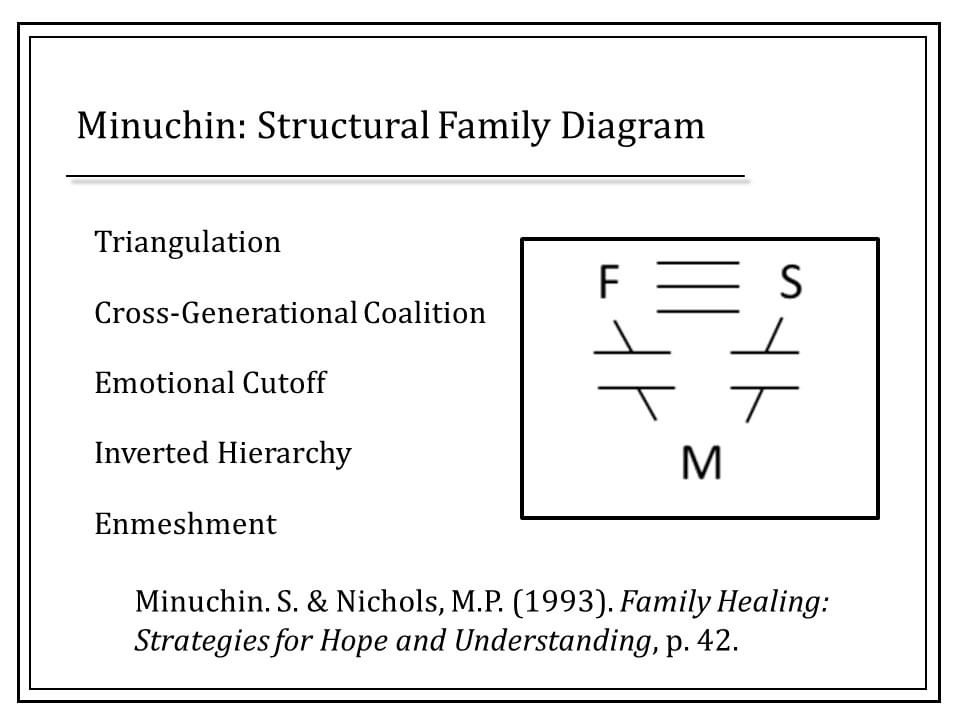
Family systems therapy – Minuchin & others – because they are assessing and treating a family conflict.
Attachment system – Bowlby & others – because they are assessing and treating attachment pathology, a child rejecting a parent.
Delusional thought disorders – DSM-5; American Psychiatric Association – because they are assessing and treating a shared persecutory delusion (Walters & Friedlander, 2016).
If they do NOT apply the established scientific and professional knowledge of the discipline as the bases for the professional judgments, then their opinions as contained in their recommendations, reports, diagnostic or evaluative statements, including their forensic testimony, are NOT based on information and techniques sufficient to substantiate their findings.
9.01 Bases for Assessments
(a) Psychologists base the opinions contained in their recommendations, reports, and diagnostic or evaluative statements, including forensic testimony, on information and techniques sufficient to substantiate their findings. (See also Standard 2.04, Bases for Scientific and Professional Judgments.)
Let’s start there. We need Standards. Let’s start with the application of the mandatory Standards of the APA ethics code.
Where are the licensing boards? Why aren’t they enforcing ethical Standards for competence – Standards 2.01, 2.03, 2.04? Nowhere to be seen. Why is that?
Until professional psychology stops covering up for the unethical practice in forensic psychology the abuse of children and their parents will continue.
They have obligations. They are failing.
They have duty to protect obligations for your child. They have duty to protect obligations for you.
They are failing in their duty to protect your children from the psychological child abuse of your pathological ex-spouse. They are failing in their duty to protect obligations to you, to protect you from brutal spousal emotional and psychological abuse by your pathological ex-spouse using the child as the weapon.
We need to hold incompetence accountable. We need Standards for professional psychology in the family courts. Let’s start with the Standards of the APA ethics code – mandatory – required.
Standard 2.04 is mandatory, ethical practice is not optional, it is required.
Standard 9.01 is mandatory, ethical practice is not optional, it is required.
All psychologists have duty to protect obligations – a duty to protect your child – a duty to protect you.
I made plenty of mistakes , medications played havoc with me on all levels .
I used to go through pictures , and as the family photographer, there were tons , and it broke my heart each time.
I kept hearing so much blame and hurt , that I divided up photos and gave each child a portion.
I still had photos , which have been stored for 14 months .
I have pictures and memories a plenty and no interest in healthier relationships , preferring to stay in the energy of negativity , which does not fit me and my personal effort of healing
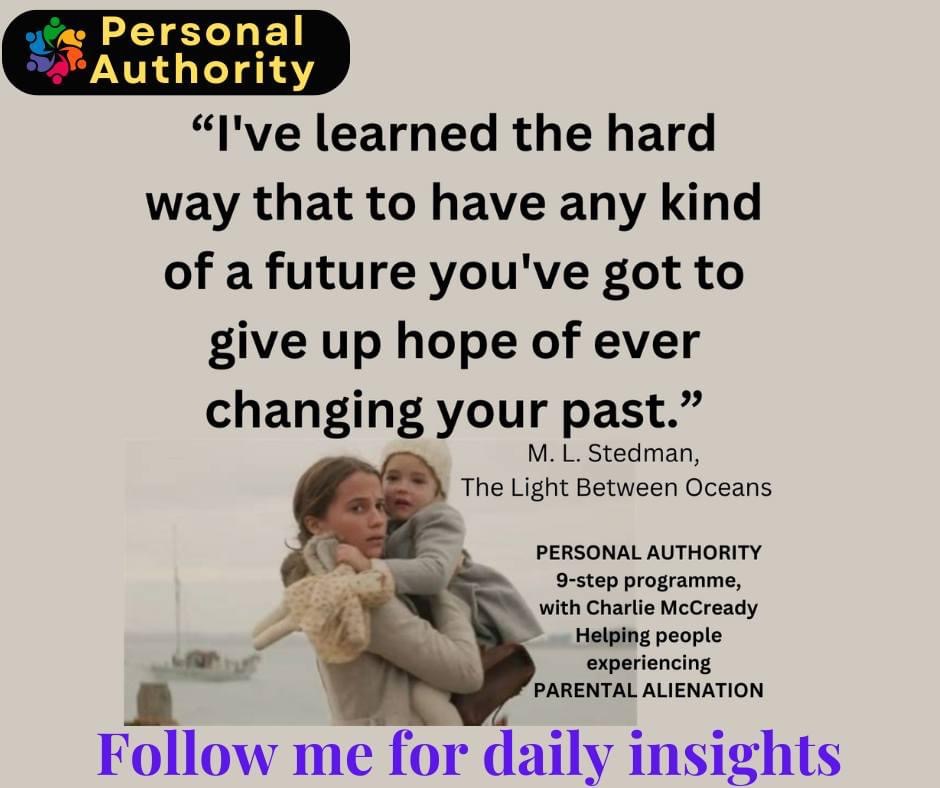
When I was at rock bottom, I put away all photographs of my children that I had scattered around my house. It was incredibly hard, and sad, but almost a ritualistic thing, I felt I had to stop holding onto the past. Not only this but they were by then teenagers, and the photographs were from when they were much younger, happier days before alienation put a dreadful, painful, heartbreaking barrier between us. I didn’t realise it at the time because I hadn’t yet embarked upon a healing journey that would lead to me running my programme to help others, but this marked a new start, a clean slate, and the end of my longing for the past, and being stuck in grief. I packed up those photographs in a box which I put in my attic. Gone but not forgotten> Not a part of present life. A part of my life, but presently apart from each other. It was accepting and facing up to reality. My children returned of their own volition. They returned to a parent who wasn’t angry or stuck in the past, but instead living a happy, fulfilling life. I realised later, they would have been relieved not to have a parent making them feel guilty, ashamed, or sad. We could all move on. I know there’s a huge temptation to address the wrongs of the past, but we can’t change it. There might be an opportunity, but I always say it is a ‘handle with care’ situation. If you have the chance to have a new start with your alienated child/ren, don’t let the past overshadow it. Believe me, I made my mistakes, which I cover in my programme, easy-to-avoid mistakes. I do what I can now to help others fast-track to better relationships.
In the book, The Light Between Oceans by M.L. Stedman which was turned into a film starring Alicia Vikanda and Michael Fassbender, a couple on an isolated island, unable to have children, are blessed with the miracle ‘gift from God’ delivery of baby washed up in a boat with a dead man. The wife implores her husband not to report this as he would like to as is his job as a lighthouse keeper. Against his better judgement, they keep the baby. ‘We’re not doing anything wrong,’ she says. What’s interesting with regard to parental alienation is that the film throws some light on the immorality of keeping a child away from a loving, living parent. The main character feels it is her right to keep the child after all she’s suffered, even when she discovers the mother is grieving her lost child (and husband). There’s a happy ending in this film with the stolen child returned to her rightful mother, albeit this mother is from a rich family and has the means to press charges. If she was impoverished it would be a different story. This is what is so dreadfully wrong with alienation. A parent shouldn’t have to pay (a small fortune) to have access to their child which is then often not honoured by the alienating parent anyway. “You only have to forgive once. To resent, you have to do it all day, every day,” says the birth mother in her decision to forgive the couple, even though her child hardly knew her with all the difficulties that would entail.
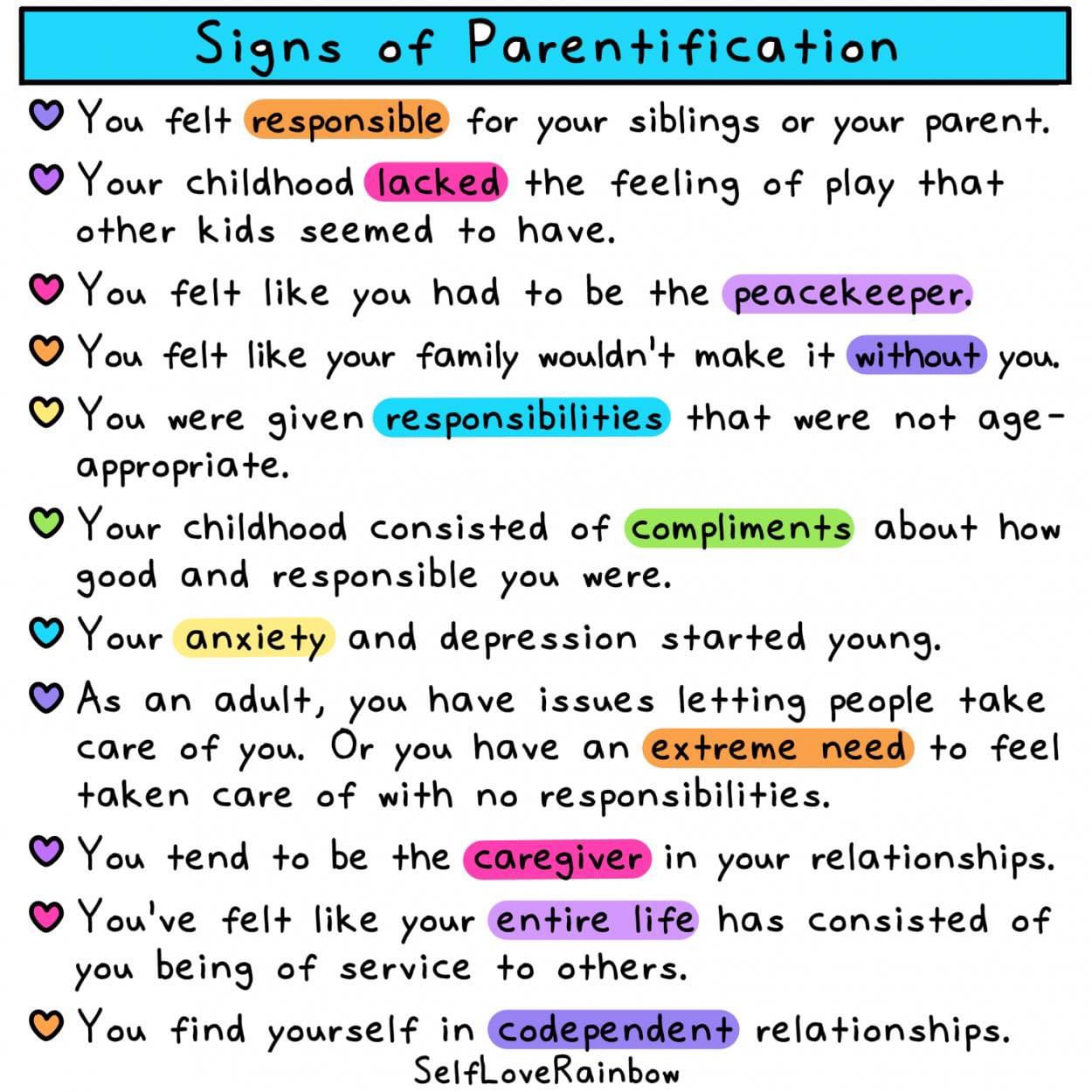
Alienated children of narcissistic personality disordered parents are reared to be their parents’ keeper. They owe their parent everything.
They have many non age appropriate responsibilities both emotionally and physically.
They are hurled into adult problems and placed smack dab in the middle of an adult conflict that has nothing to do with them.
They are manipulated by a perceived sense of complete dependency on their “good” parent to choose a side.
They are so terrified of losing the conditional love they have always received from that parent that they comply.
They are purposefully involved in adult issues that they are not equipped to handle.
They are not able to be their authentic, independent selves. They are sole supporters of someone who is supposed to be their support. They are an extension.
Look how wonderful switching to proper professional language can be – cross-generational coalition – emotional cutoff – enmeshment – inverted hierarchy.
They each give a different focus to the pathology, while the nonsense made-up construct of “parental alienation” is just one big blob of a thing. No precision.
Bad Parenting: cross-generational coalition.
The cross-generational coalition allows you to single out the bad parenting from everything else – apart from the child consequences in pathology and symptoms, the cross-generational coalition (a “perverse triangle”; Haley) refers just to what the pathological parent is doing by creating the alliance with the child against you.
Child Rejection: emotional cutoff
Using the professional construct of an emotional cutoff allows you to separate the effects on the child, the attachment pathology (emotional cutoff), from the bad parenting (cross-generational coalition). That’s helpful because now you can be more precise. Are you talking about the bad parenting of your ex- (forming a cross-generational coalition with the child against you), or are you talking about the effect on your child (the emotional cutoff and attachment pathology).
And they are both fully grounded professional constructs that are NOT “controversial” and are completely accepted – with lots of associated linkages to additional information about each family construct.
Judging You – inverted hierarchy
When a child is empowered by the cross-generational coalition with one parent against the other to judge the targeted parent as if the parent was the child and the child was the parent, that’s called an inverted hierarchy.
All those minor made-up grievances of the child… now become a symptom feature of the pathology of the ex-spouse (cross-generational coalition) rather than a serious attack on you.
When you use the proper language of family systems of an inverted hierarchy from the child’s cross-generational coalition with the allied parent, the nonsense attack on you now becomes the symptom of an inverted hierarchy – which is a symptom created by the cross-generational coalition.
They thought they were attacking you… no… they are displaying a symptom feature of the pathology.
Brainwashing – enmeshment
Don’t use “brainwashing” – use the construct of enmeshment, it’s called a “boundary violation” and is a totally established construct. The allied parent and child have an enmeshed psychological relationship created by the manipulative parenting of the pathological parent.
From Kerig: “Examination of the theoretical and empirical literatures suggests that there are four distinguishable dimensions to the phenomenon of boundary dissolution: role reversal, intrusiveness, enmeshment, and spousification.” (Kerig, 2005, p. 7)
From Kerig: “Enmeshment in one parent-child relationship is often counterbalanced by disengagement between the child and the other parent (Cowan & Cowan, 1990; Jacobvitz, Riggs, & Johnson, 1999).” (Kerig, 2005, p. 10)
From Minuchin: “Enmeshment and disengagement refer to a transactional style, or preference for a type of interaction, not to a qualitative difference between functional and dysfunctional… Operations at the extremes, however, indicate areas of possible pathology. A highly enmeshed subsystem of mother and children, for example, can exclude father, who becomes disengaged in the extreme.” (p. 55)
Do you get all those wonderful quotes and support from “parental alienation”? No. It’s just a big amorphous blob that solves nothing and locks you into “controversy” and conflict.
Don’t listen to the Fox and Cat, Pinocchio. Listen to the cricket, stay in school and use real knowledge to solve your problems.
Add psychological control to your use of descriptions. That’s another bad-parenting term that explains how the child is manipulated and… psychologically controlled… by the pathological parent.
Manipulation – psychological control
Stone, Buehler, and Barber: “The concept of triangles “describes the way any three people relate to each other and involve others in emotional issues between them” (Bowen, 1989, p. 306). In the anxiety-filled environment of conflict, a third person is triangulated, either temporarily or permanently, to ease the anxious feelings of the conflicting partners. By default, that third person is exposed to an anxiety-provoking and disturbing atmosphere. For example, a child might become the scapegoat or focus of attention, thereby transferring the tension from the marital dyad to the parent-child dyad. Unresolved tension in the marital relationship might spill over to the parent-child relationship through parents’ use of psychological control as a way of securing and maintaining a strong emotional alliance and level of support from the child. As a consequence, the triangulated youth might feel pressured or obliged to listen to or agree with one parents’ complaints against the other. The resulting enmeshment and cross-generational coalition would exemplify parents’ use of psychological control to coerce and maintain a parent-youth emotional alliance against the other parent (Haley, 1976; Minuchin, 1974).” (Stone, Buehler, & Barber, 2002, p. 86-87).
See? All there in one tidy quote from the research literature – not even the family court literature – outside – real knowledge applied to the pathology in the family court.
Do you get that with the blob-construct of “parental alienation”? Nope. You lose all of your power when you leave established knowledge… which is exactly what the pathogen wants.
The construct of “parental alienation” is bait – don’t take the bait. Use real knowledge… and you will force them to use real knowledge in return. If you talk about cross-generational coalitions and inverted hierarchies… they’ll have to respond using the same constructs in a coherent way.
You will be educating them by being more educated than them so they’ll have to catch up to the patient.
The patient should NEVER have to explain the pathology to the doctor. That should never happen. But it happens here. That gives you an indication of how bad the professionals are here in the family courts – they are ignorant like a rock – they are unethical – they are not competent to be doing what they’re doing.
It’s their job to protect your child and you from abuse, all forms of abuse. They are failing in their professional duty to protect obligations. We need to hold incompetence accountable. They need to stand-up and acquire the professional backbone to protect your child from child abuse.
That is all it takes. All that is required is for them to do their job. They are failing. They need to be held accountable for their failure… and they need to be successful in protecting your child from abuse.
You’re the protective parent. I know that and you know that. Protecting your children from child abuse is a serious-serious professional matter. All mental health professionals have duty to protect obligations.
There are three dangerous pathologies – suicide – homicide – abuse (child, spousal, elder). Whenever a mental health professional encounters any of the three dangerous pathologies… they have duty to protect obligations.
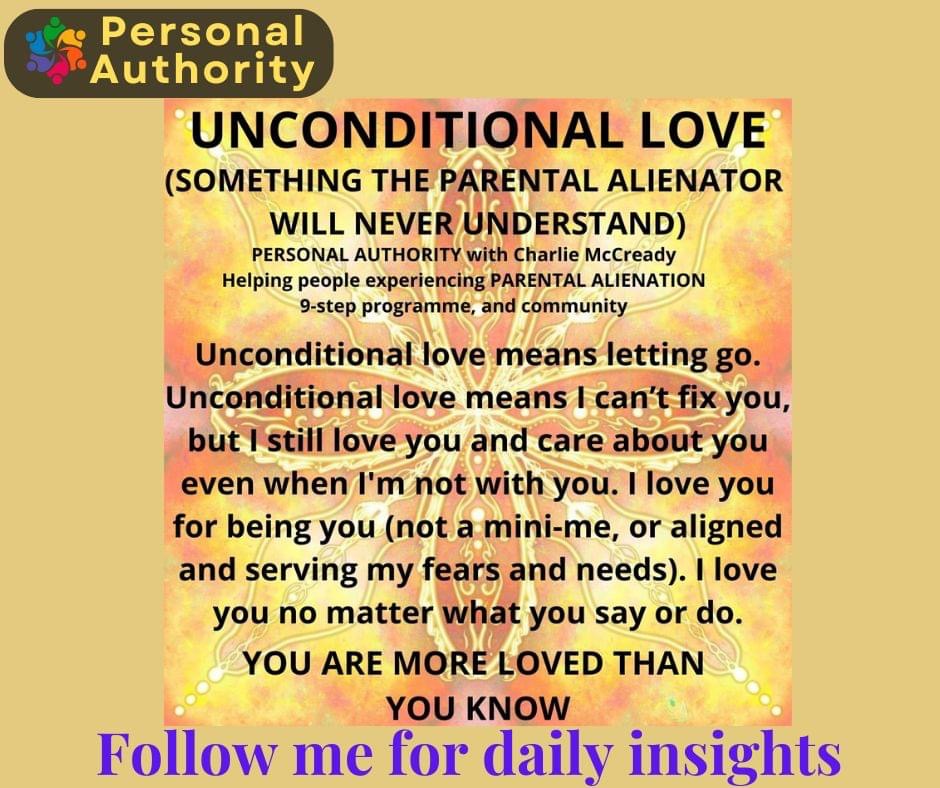
In many ways, the alienated child, however long they cut off emotionally, and for however long, knows they have our love. It’s a given. But they’re not secure in the love of the alienating parent, and they’ve been told they’re the ‘all and everything’ and filled with negative thoughts and beliefs about the ‘target’ parent. It’s confusing, upsetting, and psychologically abusive. They start to doubt their feelings and beliefs. They trauma bond with the alienating parent for fear of losing both parents. For fear the alienating parent might be right. And yet, deep down, when they allow themselves – and are brave enough to face it, overcoming the feeling of guilt, and the fear/control of the alienating parent – they know you love them. Sometimes they don’t know it on a conscious level, or they ‘cut off’ and psychologically ‘split’ in order to comply with the alienating parent and feel safe somewhere, but on an unconscious level, where there was once love, there is still LOVE. Let’s hope they can be open to it, take off the bandaid of control/fear, and feel it. They are truly more loved than they (allow themselves) to know. Never give up hope. Near or far, think of them with love.
I regret I spoke truths sons were not ready for.. I regret they carry the anger , hostility, and fears of their Dad that allow them to target me and relay how worthless I am .
I regret I did not have an awareness in 2003 , as I began to wake , eventually understanding the gravity of decisions made when I wasn’t awake, or alert to schemes to separate me from anything normal in so many ways including the rejection of me , so Dad would be happy ..
I regret , but am surrendered after over 2 decades that I remain the monster in their closets , they are happy and secure in the love and family dynamic of a Dad who had to WIN, at everything , disregarding the abuses of each child and myself .
They have families, they have children , and their own destiny which they have allowed me to know doesn’t include me .



 GreatCosmicMothersUnite