Detachment of adult child

The detachment a mother experiences when letting go of an adult child is a multifaceted and often profound emotional process.

Its not a sudden severing of ties, but rather a gradual shift in the mother-child relationship as the child transitions into independence.

Heres a breakdown of what this detachment can entail:

Emotional Shifts:

* A Sense of Loss and Grief:

Even though its a natural progression, mothers can experience a sense of loss akin to grief.

This can stem from the changing daily interactions, the feeling of no longer being the primary caregiver and the realization that their childs life is now largely separate from their own.

The “empty nest syndrome” is a well-known manifestation of this.

* Letting Go of Control and Worry: Mothers have often spent years ensuring their childs safety and well-being.

Letting go involves relinquishing a degree of control and learning to trust their adult child’s decisions, even if they differ from their own.

This can be a source of anxiety and worry for some mothers.

* Redefining Identity:

For many mothers, a significant part of their identity is tied to being a parent.

As their children become independent, they may need to redefine their role and sense of purpose beyond active mothering.

This can be a time of self-discovery but also potential uncertainty.

* Mixed Emotions:

The detachment process often involves a complex mix of emotions.

There can be sadness and nostalgia for the past but also pride and joy in seeing their child thrive.

There might be relief at having more personal time, coupled with a pang of missing the daily connection.

* Emotional Distance (Healthy vs. Unhealthy):

A healthy detachment involves creating appropriate emotional boundaries, allowing the adult child to navigate their own life while still offering support when needed.

Unhealthy detachment can manifest as emotional unavailability, disinterest, or a premature pushing away, which can harm the parent-child relationship.

Behavioral and Relational Changes:

* Shifting from Caregiver to Supporter:

The mothers role evolves from direct caregiving to offering emotional support, guidance (when asked), and a safety net.

The dynamic becomes more adult-to-adult.

* Respecting Boundaries:

A crucial aspect of healthy detachment is respecting the adult child’s boundaries regarding their personal life, decisions and space. This can be challenging after years of being deeply involved.

* Less Frequent Direct Involvement:

Daily interactions and involvement in the childs life naturally decrease as the adult child establishes their own routines, relationships and responsibilities.

* New Forms of Connection:

The relationship doesnt necessarily diminish but transforms.

Connection might shift to less frequent but more meaningful interactions, focusing on shared interests and mutual respect.

Psychological Aspects:

* Attachment Theory:

This theory suggests that the bond between parent and child evolves over time.

Healthy detachment in adulthood signifies a secure attachment where the child feels confident to explore independently, knowing the parent is still a secure base to return to if needed.

* Developmental Stages:

Both the parent and the adult child are navigating new developmental stages.

The mother might be entering a phase of re-focusing on personal goals, while the child is establishing their independence.

* Individual Differences:

The experience of detachment varies greatly among mothers.

Factors such as personality, the closeness of the previous relationship, the mothers support system and her own interests and activities play a significant role.

Challenges:

* Enabling vs. Supporting: Mothers may struggle with the balance between offering support and enabling dependence, hindering their childs growth.

* Difficulty Letting Go of the “Baby”:

It can be emotionally challenging to see a grown adult instead of the child they nurtured for so long.

* Societal Expectations: Sometimes, societal norms or personal expectations can make it difficult for mothers to embrace their changing role.

The detachment a mother goes through is a complex emotional and relational adjustment.

Its a necessary process that allows the adult child to fully step into their own life while ideally maintaining a loving and supportive, albeit different, relationship with their mother.

A healthy detachment fosters independence, mutual respect, and an evolving bond that reflects the changing needs of both individuals.

“Life is a balance between holding on and letting go.”

Rumi

On a personal note:

I Am going through this process right now and to be honest this has been one of the absolute most difficult things I have ever had to do.

I have practiced detachment for many years.

To some degree, I have had to let go of every single person I have ever loved.

But there is nothing, NOTHING, that can prepare a mother to learn how to detach from their child in a healthy, loving way.

I was talking with my husband and said to him:

“I feel lost.

The mother role is an identity I have lived with for 25+ years.

I dont know who I Am. And its confusing.”

He said to me:

“Maybe it’s not about who you are but about who you want to become.”

To the Mamas out there:

If you have gone through this or have yet to, just know that you are not alone, that every single feeling you experience upon the entire spectrum of emotion is VALID.

The only way to heal is to feel.

Bless your beautiful Mama hearts.

I bow deeply and with respect for the challenge we all share as being the Mothers.

One of the hardest things a mother will ever do is watch her heart walking around outside her chest and hope the world is gentle with it.

~Monique Satonin

Art: FreePik

Sacred Divine Feminine

https://EmpowerWholeness.com

Why little boys want to be girls

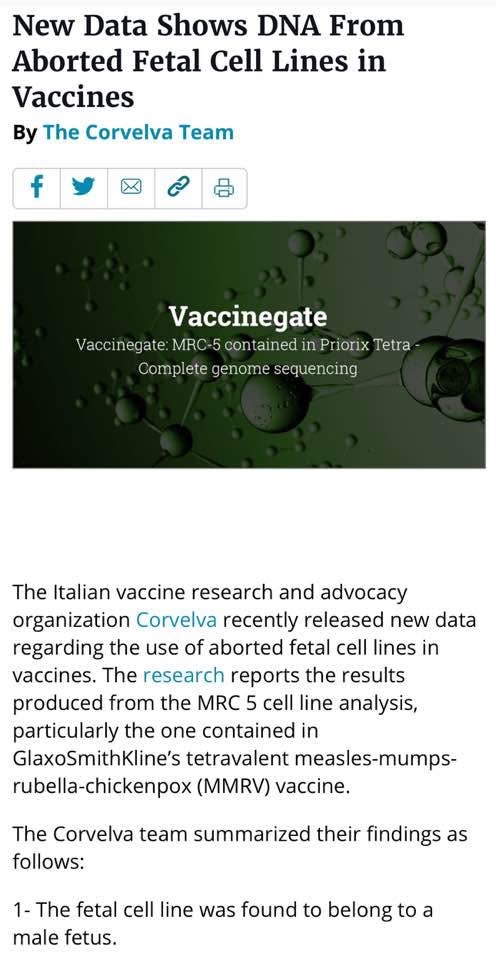
LITTLE BOYS WANT TO BE GIRLS BECAUSE THEY ARE — WI-38 is the cell lines from a FEMALE aborted fetus, used to cultivate viruses used in vaccines.

When you inject the DNA from a FEMALE (carrying two X chromosomes) into a MALE (who already carries one X chromosome and a weaker Y chromosome) you now have an overload of the X chromosome.

Now we have an onslaught of BOYS who think they should be GIRLS.

Do we have male DNA in vaccines? YES!

The MRC-5 is the code given to the fetal cell line also used to cultivate vaccine viral components, and it comes from a MALE aborted fetus.

Do we have girls thinking they are boys? YES

Is it as prominent as boys wanting to be girls? NO

Why? Because girls have two dominant X chromosomes. When they are injected with a vaccine containing MRC-5, they aren’t just getting a Y chromosome, but yet another dominant X chromosome, on top of the two they already have.

More data on defective human DNA introduced into many vaccines via cloning — https://childrenshealthdefense.org/news/new-data-shows-aborted-fetal-cells-in-vaccines/

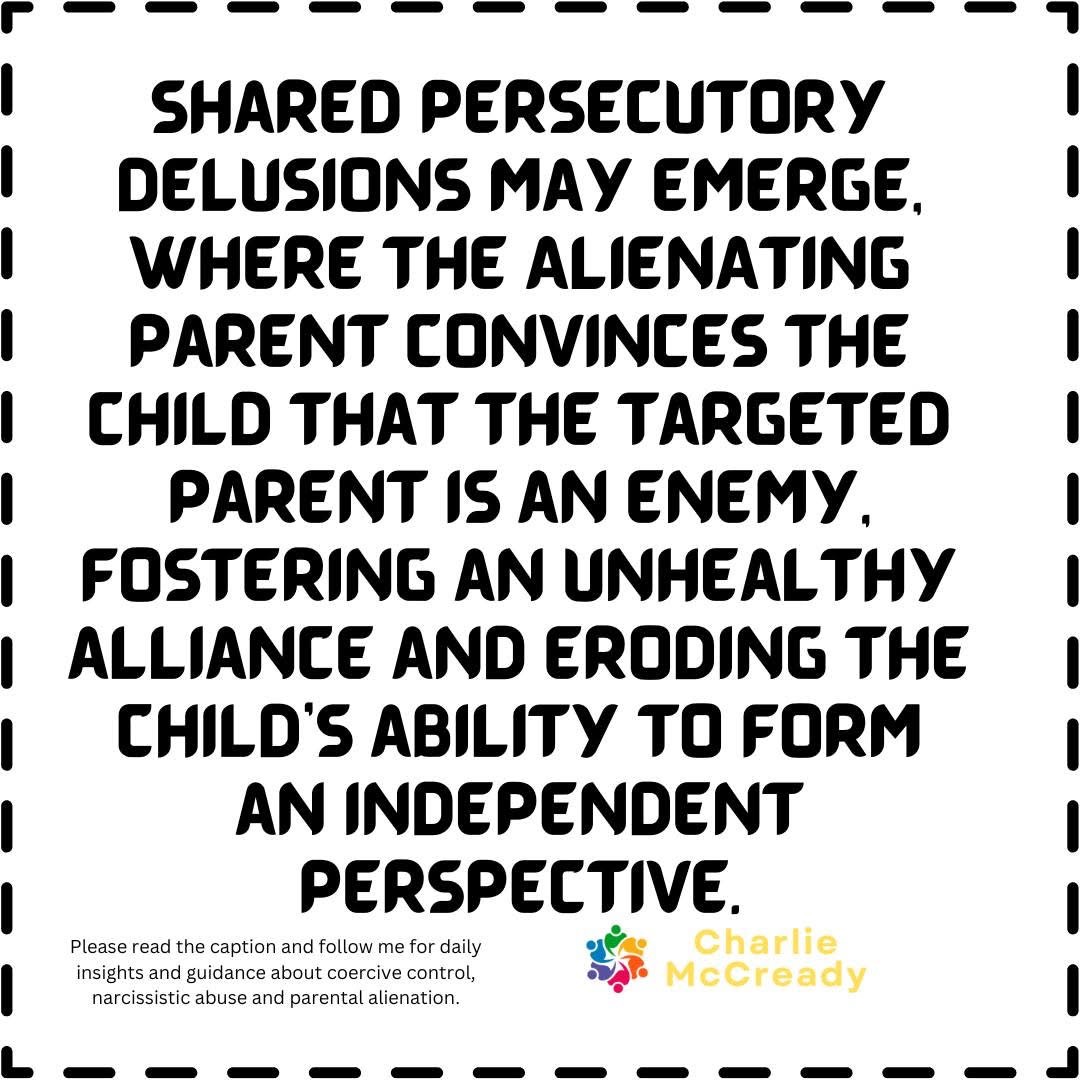
Shared Persecutory Delusions – Charlie McCready

Alienating parents delude themselves about their superiority and their x’s inferiority. The following quote from Theodore Millon, considered an expert in personality disorder pathology, describes the alienator’s delusions very well. “Deficient in social controls and self-discipline, the tendency … to fantasize and distort may speed up. The air of grandiosity may become more flagrant … As their behaviors and thoughts transgress the line of reality, their alienation will mount, and they may seek to protect their phantom image of superiority more vigorously and vigilantly than ever … No longer in touch with reality, they begin to accuse others and hold them responsible for their own shame and failures. They may build a “logic” based on irrelevant and entirely circumstantial evidence and ultimately construct a delusion system to protect themselves from unbearable reality.”

Unbearable reality – that’s so key. Unfortunately, they share their delusions with the child/ren, and they make no apologies for any harm caused as a result of their behaviour. It’s narcissistic and selfish, and their grandiose, alienating behaviour often worsens after a humiliation, sense of failure, or serious setback challenges their (deluded) image of themselves, such as a separation or divorce. They need to reimagine themselves anew, with a narrative that protects their delusions, and the ‘target’ parent is the perfect scapegoat. Things become misconstrued, twisted, and when that doesn’t work, the alienator just makes stuff up that didn’t really happen.

It is child psychological abuse when the alienating parent shares their persecutory delusions, and tells the child/ren ‘a good parent wouldn’t do this/that/whatever’, putting the blame on the other parent and destroying their attachment bonds. While ‘parental alienation’ as a term is deemed controversial, Child Psychological Abuse (DSM-5 V995.51) is an accepted pathology. A shared persecutory delusion is abusive. The child should be removed from the abusive/alienating parent and given time with the healthy-minded target parent. Obviously, checks must be made to ensure the target parent isn’t (also) abusive, or using false allegations of ‘parental alienation’.

Psychoeducational guidance, such as I provide in daily social media posts (and to the parents I work with/coach), hoping to support people going through this – as I did myself – can help you to try and understand and validate this confounding, extraordinarily challenging experience. It’s important to be the parent your child needs and may return to one day and to be the person you truly are regardless of others’ behaviour. Embrace your strengths, seek support, and strive to do something that lifts your mood and makes you feel happier each day.

#charliemccready

#parentalalienationcoach

#traumabonding

#coercivecontrol

#parentalalienationawareness

Your nervous system

Let’s talk about your “nervous system.”

Terrible name. Sounds like a glitchy bundle of wires barely holding it together.

“Nervous system”? No wonder everyone’s anxious.

Let’s call it what it really is:

Your Divine Transmission Core.

The living interface between your soul and your body.

The sacred circuitry through which Heaven communicates with Earth—through you.

It’s not just nerves.

It’s a vibrational instrument, a resonance chamber, a tuning fork for truth.

When it’s dysregulated, you feel:

• Scattered

• Hypervigilant

• Shut down

• Disconnected from God, self, and others

But when it’s aligned and tuned:

• You feel safe

• Clear

• Centered

• Receptive to guidance, love, and power

Here’s what the nervous system actually is:

• The brainstem sets your survival tone (fight, flight, freeze, fawn)

• The vagus nerve connects your breath, heart, gut, and voice (your intuitive and expressive axis)

• The spinal cord and nerves carry divine signals to your organs and limbs

• Your heart and gut carry their own intelligence—they’re not followers of the brain, they’re leaders when attuned

Want to heal it? Tune in. Don’t escape it.

1. Breathe slower than the world moves.

• Inhale 4, hold 4, exhale 6

• Let your breath signal safety

2. Touch your body.

• Press your chest, rub your arms, feel your legs—reclaim your temple.

3. Speak truth.

• Your voice calibrates your vibration. Speak love. Speak courage. Let your voice clear the static.

4. Sound + silence.

• Use tones (humming, “OM,” singing in your native soul tongue)

• Then let there be silence, where God rewrites your code

5. Stillness + Movement.

• Rest. Walk. Shake. Dance. Let your body transmute what your mind cannot.

6. Let the energy rise.

• The spinal column is Jacob’s ladder. When the system is open, Spirit climbs it like fire.

You are not a nervous wreck.

You are a divine antenna—tune yourself.

Not to the noise of the world, but to the frequency of the Kingdom.

This isn’t self-help.

This is God-Body reclamation.

Say it with me:

I am not broken.

I am divine infrastructure.

I tune to Truth.

I resonate with Love.

I vibrate in Power.

It is done.

– Yeshua Ben Yosef

ARTIST: Bradley Snook

– “Fractal of Consciousness”