
Tag: consciousness
Cosmic Antenna- Pineal Gland
Weather used as a Weapon by Government
Lesson Learned
Someone once said “you like taking care of others bc it heals the part of you that needed someone to take care of you”
that hit..
Seems I’ve known that all my life and I was in error believing that certain people “cared “ for me . I didn’t need hoards of folks caring , just authentic folks who did . Thankfully , I keep my faith , despite feeling at times the shadow was winning . Even as a drug induced mental patient , a part of me knew the truth, that it was the toxic RX and even not having a name for it then, trauma was the root of my sadness .
It was a true Blessing , to learn the facts , reading 13 years of medical charts from the psychiatrist, and the damage done , but ignored . As I learned about parental alienation/ child psychology abuse , along with council from Carole Carbone , who certified me as an Intuitive Councilor, I nurtured/ parented myself , and forgiveness and grief for myself transformed my whole life .
Our children don’t accept this , there is no forgiveness , no future , no healing , just the same old past energy . I regret this for their soul growth , Thank them for coming through me , and allowing me to know love deeply , wholly , for the brief time we had .
My efforts , to heal myself , to greet each day with joy , have actualities , and though I may have challenges currently , I am moving through each one , with support , both Divinely higher powered and with Earth Angels that amaze me with sincerity that’s enough .
More challenges may arise , but I will greet them and surmount them and invest in reciprocal efforts in cooperation and trust towards friendships etc .
I pray for each of you to rise to your highest potential, to not let anyone or anything to retard your soul growth , as you let self love ( from inside out ) return you to your place of joy and peace within that love ❤️
Blessings & Peace,
Dona Luna 🐸✌️🙏🏼
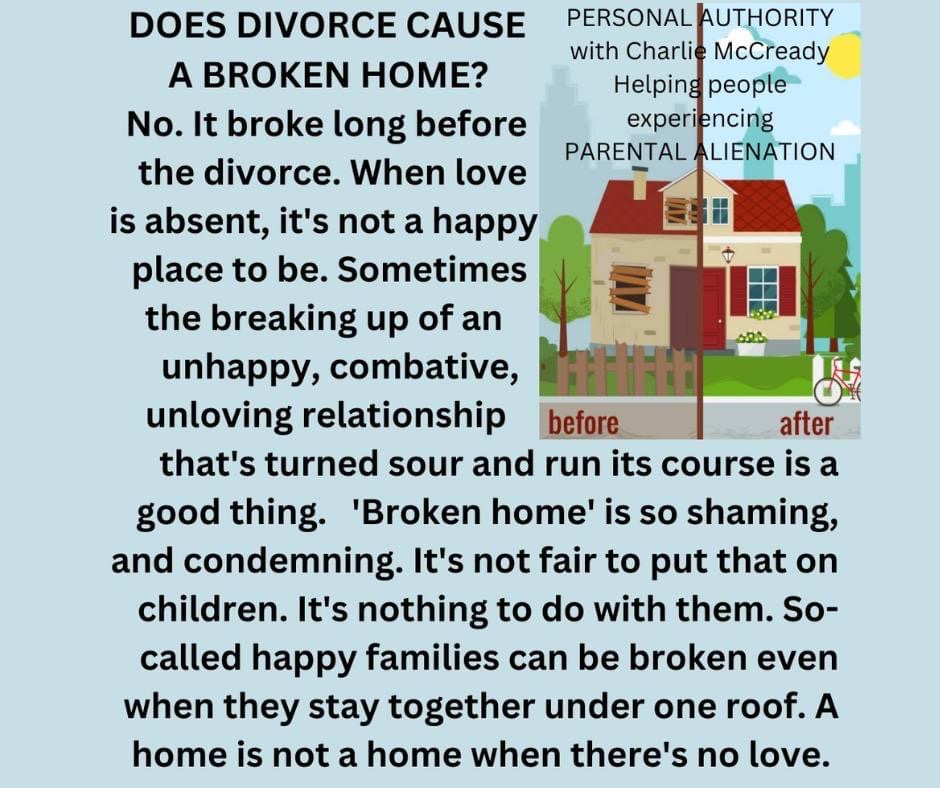
Does divorce cause a broken home?
The term ‘broken home’ needs to be binned. Homes that are within one family member who is no longer there for whatever reason, can function perfectly well and happily. Loss of a loved one is heartbreaking, of course, but that doesn’t condemn a family to being broken. It’s an old-fashioned, derogatory, judgemental term that stems from the time when divorce was condemned. But with parental alienation, the loss (and coerced rejection) of a parent has been inflicted on a loved, loving ‘target’ parent and their child. It is not the home that is broken, but the pathology of the alienating parent, and the system that fails us.
#ParentalAlienationSyndrome#parentalalienation#parentalalienationawareness#coparentingwithanarcissist#coparentingwithanarcissist#divorce#narcissisticchildabuse#narcissisticabuseawareness#narcissisticabuserecovery#narcissism#narcissist#highconflictdivorce#childabuse
Not deficient;Surrounded by Ass Holes – Mad in America
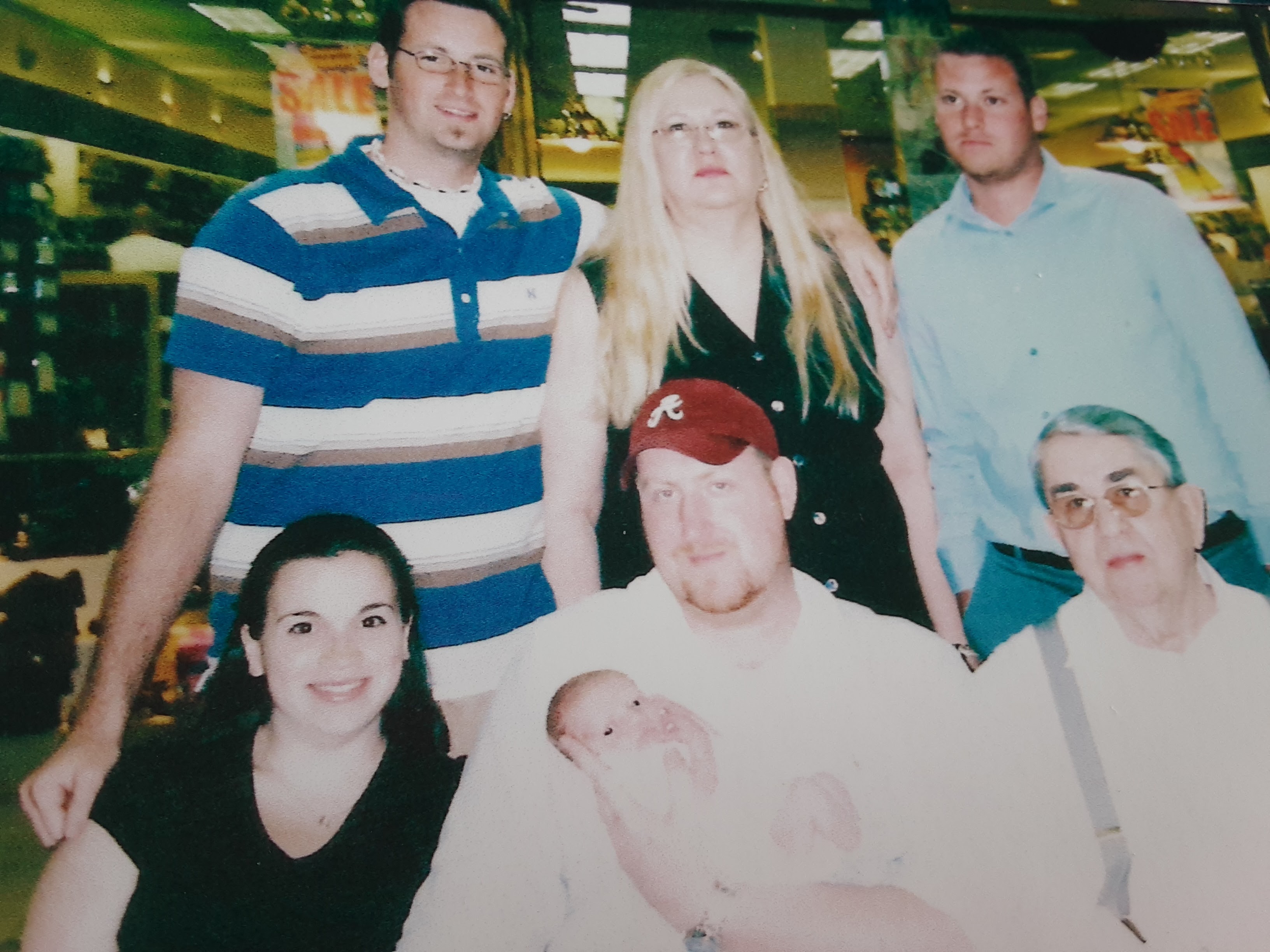
20 years ago ; Medicated on Psych RX. The baby’s birth induced me to exit the matrix of psychiatric care and I did it
Depression is Real So is Trauma
Most read quote for me this week;
“Depression is real”.
The slope is steep;
Too much pain to feel,
Makes the heart feel weak.
Depression is suppression,
To bury the grief,
As we look to substance for relief.
It’s easier to be when the difficulties are buried underneath.
It’s easy to say,
But not easy to see;
That vulnerability can give us strength.
We will protect our wounds for certain.
We keep them down under,
As to feel others dismantles our comfort,
So to feel ourselves is projected as a burden.
Hurt people hurt people,
Because they won’t stop to feel the pain;
So hurt people become evil,
And justify the change.
This is how we throw ourselves a rope;
We forge a mental path,
Out of the hole surrounded by these steep slopes,
That draws a mental map,
Back to the breath from traumas aftermath.
This map is a signal to the brain,
Reminding that you are okay;
When your mind is convinced otherwise,
So your nervous system can regulate.
Embodied movements,
Cathartic release,
Small improvements,
Allowing peace to increase.
Noticing where you are,
Slowing down to touch the scars,
And contemplate the stars;
Can be extremely hard.
Especially when we feel alone,
And feeling lonely steals our sense of home.
Suicide in the back of the mind,
Struggling with life,
in an internal fight.
We demand,
That no one understands.
We exclaim,
That we are not okay.
We don’t know how to feel that way,
On purpose.
Our lives feel like they’ve strayed,
From a sense of service.
Many are barely surviving,
Our hearts and souls depriving.
To be alive,
And feel like dying,
Because we find we no longer feel alive.
Stuck in between a hard space within an even harder place to be.
We bargain to be free,
After we deny what’s happening,
Depression makes three,
Of the five stages of grief;
Then anger takes the stage right before relief,
While acceptance is the key to peace.
This process is natural,
Because so is pain and loss.
It’s life’s collateral,
For to live and love,
There is a cost.
This is difficult to trust,
For what follows loss is immense pain,
And so the courage to love,
Is an act of pure faith.

Redefining Trauma – Mad In America
Around the Web, from The New York Times: “In the fall of 1994, the psychiatrist Dr. Judith Herman was at the height of her influence. Her book Trauma and Recovery, published two years earlier, had been hailed in The New York Times as ‘one of the most important psychiatric works to be published since Freud.’
Her research on sexual abuse in the white, working-class city of Somerville, Mass., laid out a thesis that was, at the time, radical: that trauma can occur not only in the blind terror of combat, but quietly, within the four walls of a house, at the hands of a trusted person.
More than most areas of science, psychology has been driven by individual thinkers and communicators. So what happened to Dr. Herman — as arbitrary as it was — had consequences for the field. She was in a hotel ballroom, preparing to present her latest findings, when she tripped on the edge of a rug and smashed her kneecap.
‘Just, wham,’ she said. ‘Smack.’
On and off for more than two decades, Dr. Herman groped her way through a fog of chronic pain, undergoing repeated surgeries and, finally, falling back on painkillers. The trauma researchers who surrounded her in the Boston area moved on with their work, and the field of trauma studies swung toward neurobiology.
‘She is a brilliant woman who lost 25 years of her career,’ said her friend and colleague Dr. Bessel van der Kolk, whose 2014 book, The Body Keeps the Score, helped propel the field toward brain science. ‘If you talk about tragedy, that is a tragedy.’
At the age of 81, Dr. Herman has rejoined the conversation, publishing Truth and Repair, a follow-up to her 1992 book Trauma and Recovery: The Aftermath of Violence — From Domestic Abuse to Political Terror. During that period, trauma has gained broad acceptance in popular culture as a way to understand mental health.
. . . in Truth and Repair, she picks up where she left off in 1992, arguing that trauma is, at its heart, a social problem rather than an individual one.
Drawing on interviews with survivors, she lays out a theory of justice designed to help them heal, centering on collective acknowledgment of what they have suffered. Her approach is frankly political, rooted in the feminist movement and unlikely to go viral on TikTok.
This does not seem to trouble her at all. ‘In my own life, I feel like I’m in a good place,’ she said. ‘On the other hand, I think psychiatry will have to be dragged, kicking and screaming, into any kind of progressive future.’”
www.madinamerica.com/2023/04/she-redefined-trauma-then-trauma-redefined-her/
 GreatCosmicMothersUnite