

Tag: Children
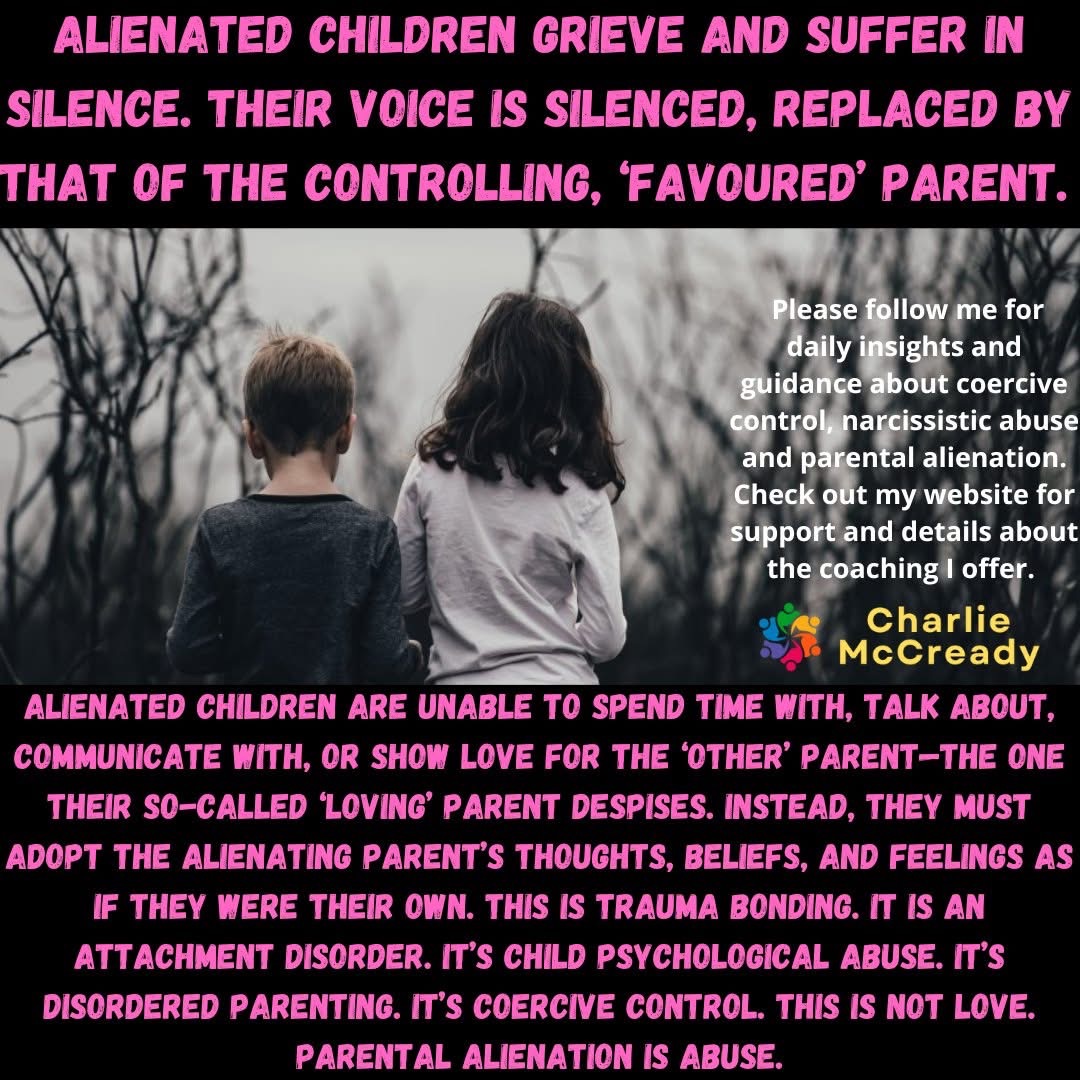
Alienated Children grieve in silence
Many alienated children know, deep down, that they have one parent’s love. Often, it is the parent who loves conditionally—the one often exhibiting toxic, narcissistic, or borderline personality traits—from whom they crave affection, sacrificing their happiness and their relationship with the other parent in the process. Children inherently desire love from both parents. A child does not naturally reject a parent, even an abusive one (which I’ve covered in other posts), and needs to be far better understood.
The targeted parent, like the child, has likely been operating in survival mode within a toxic home environment. If the healthier-minded parent chooses to leave because the home life has become unbearable—recognising that it is harmful for the child too—the fears triggered in the toxic parent can escalate alienating behaviours, which may have already been in play, either overtly or covertly. At this juncture, if not before, the previously loved parent is demonised by the toxic parent, who now positions themselves as the best mother or father in the world.
The child, who may have long craved the love and attention of the toxic parent, may become enamoured with the newfound closeness and the secrets (often lies and delusions) shared by that parent. Yet, they are also scared and confused. They might begin to question whether they misjudged their other (target) parent: Have they truly been abandoned? Did that parent ever love them? This internal conflict often manifests as anger or loyalty to the alienating parent, masking the deeper grief they experience. Their grief may not be overt; instead, it can be expressed through rage, confusion, and compliance, making it difficult for others to see the silent suffering beneath the surface. And they probably are not getting the opportunity (little or none), to believe anything other that what the alienating parent is telling them.
These negative beliefs, reinforced by lies and the alienation tactics of triangulation (obstruction of contact and divide-and-rule), become ingrained. The toxic parent, now playing the roles of victim and hero, often becomes the child’s closest confidant.
In coping with this turmoil, the child may resort to psychological ‘splitting,’ using their anger and hurt feelings as justification for rejecting
the other parent. They adopt the thoughts, beliefs, and behaviours of the toxic parent, believing they have consciously chosen this alignment without external influence. They think it is entirely their decision to turn their back on the other parent. However, what they receive from their aligned parent is not love; it is manipulation. The alienating parent seeks to use the child as a weapon to inflict the maximum emotional pain on the other parent, removing the beloved child from that parent’s life in the most dramatic way possible.
My posts are here not to alarm or upset but to spread awareness about what’s known as ‘parental alienation’ and to provide guidance to those who are going through it, as I did myself. Apart from these daily posts, which I hope help you know you’re not alone, and to better understand it’s an attachment disorder, a pathology, it’s not you; please reach out if I can help with the coaching I offer.
#charliemccready
#parentalalienationcoach
#abuseinthefamily
#pathogenicparent
Abusive partners know what they are doing
The world will tell you that your partner, who is abusive physically and emotionally, who is unfaithful and inconsistent, is dealing with childhood trauma. Their parents didn’t love them correctly.
Their exes hurt them. They’re dealing with deep issues.
It’s not intentional but unconscious. You should wait for them to be talked to, counselled, and so forth.
You should stick it out for the children. Do not break your marriage.
Your partner knows what they’re doing, and that’s why they usually do it when there are no witnesses.
Their anger is a strategy because they never lose their temper in front of other people. Just behind closed doors.
They abuse you for some very sweet reasons, which were listed by one Chuck Derry in this manner.
Derry runs the Gender Violence Institute, and he gathered this information from holding group discussions with abusive partners.
They said it gives them full control over the relationship and their partner. They get to make all decisions and have their partners do their bidding without asking questions.
If you intimidate him or her, they submit and do what you say.
You get their money, their service, their body, all for free. You don’t have to hang out with them or spend time loving them.
You can just disappear and come home whenever you want. They will be at your service and clean up after you.
If you’re generous and kind to everyone else, they will help you convince him or her that they must be the problem. Nobody sees you that way, and so they must be the ones triggering that side of you.
You can win the children to be on your side and isolate this person from their friends so they don’t confront you or strengthen your partner against you.
You can get them to quit their job or get into huge debts so that they’re all the more at your mercy.
This is a game of power.
You can make him or her too ashamed or tired of asking for help, and they surrender to you.
If you dangle the hope of a good future, you can get them making excuses for you and covering your history of violence.
In short, abuse is the ultimate massage to a bloated ego and a weak person.
It gives them a human robot, a live-in nurse and cook, a submissive servant, a punching bag and outlet for all their rage, a dumping site for all their frustrations.
And what do abusers fear most? What could make them stop? These three things they dread, and for them, they’ll change immediately or run away: getting exposed or arrested, breakup or divorce, and their children learning the truth, thereby alienating them.
Your solution is two-fold. Stop thinking your abuser is a victim. They’re strategic with everything, including the drinking, the explosive rage, the late nights, the silent treatments, the affairs.
Everything is strategic. Stop getting emotional with someone who is playing games with your life.
Secondly, leave and talk.
Break away and refuse any reconciliation meetings with relatives and friends.
Your partner’s worst fear is you leaving and telling the world the truth. So they’ll bribe, lobby, mobilize, and do anything to get people pressuring you to stay and be silent.
They’ll start fake therapy, get prayed over, and even plan a wedding.
All these are gimmicks. And even if they stopped the violent abuse, they can never rise to treasuring you. The best you can get is a peaceful but loveless existence. What’s the point? You can get that and better by yourself.
As for the marriage, they broke it themselves with their abuse and mistreatment. You didn’t.
About the children, they will ultimately benefit from you standing up for yourself and giving them the chance to see the truth and choose a better lifestyle than their diabolical parent.
(©️ Benjamin Zulu Global)
Self Soothing
Repetition Convulsions
Judges on child custody
Difficult Past – Charlie McCready
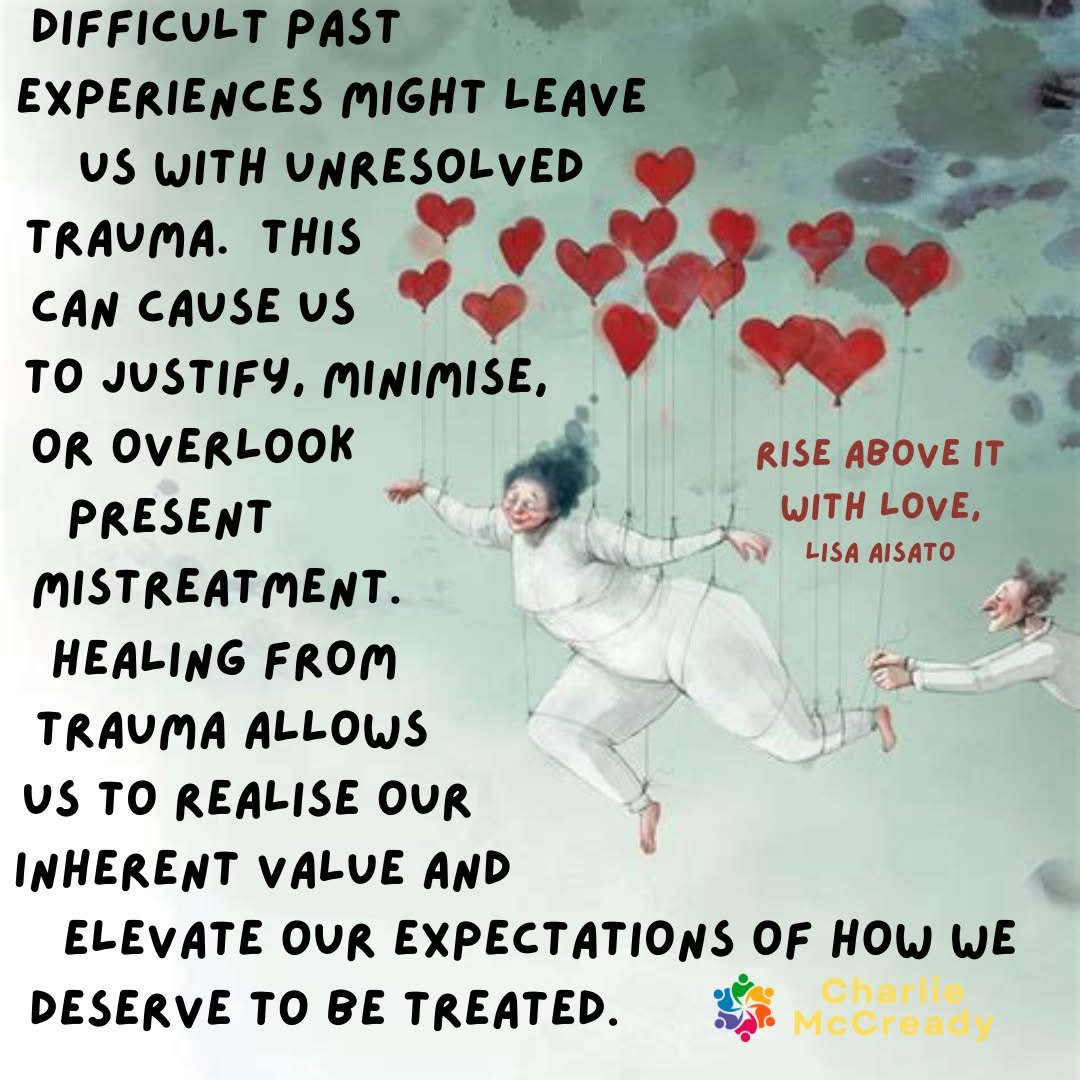
Self-worth and self-love are integral to our happiness. If we don’t get a sense of our own value when we’re children, during school years, or with our spouse/partners, we can potentially open ourselves up to experiences in our lives that reflect our low self-esteem/lack of self-love back at us, reinforcing the proverbial vicious cycle.
“You don’t attract what you want, you attract what you are.” Wayne Dyer
“Emancipate yourself from mental slavery, none but ourselves can free our minds” Bob Marley
I speak from experience. I have been through many dark nights of the soul over the years. Many. And always, it comes back to the need for more self-love and worth. It starts with that.
I’m sure you’ve heard it before, but we must love ourselves first and be our own best friends. We must love and care for ourselves as we love and care for others. Those people and experiences we’ve attracted into our lives, like those parental alienators, take advantage of kindness, generosity, love, and compassion. Healthy relationships come from mental and emotional maturity and balance. Boundaries. Self-respect. Love is not conditional – attachment, promises, control, manipulation. We don’t need validation from others. We are enough We can let go of fear, anger, and grief … I know it’s hard, but it can be done with time, kindness, and some conscious effort, of course. We can start afresh every day—a clean slate. We are not victims. We can transform pain into power. The past is over. Our memories can’t hold us back forever.
“There is no coming to consciousness without pain. People will do anything, no matter how absurd, in order to avoid facing their own souls. One does not become enlightened by imagining figures of light, but by making the darkness conscious.” Carl Jung
Nobody else has the permission to tell us we are less, not good enough, unlovable … that stems from their own issues and fears. We should know better if only our minds would just give us a break and be our friends, not our prison guards. Today offers the gift of the present. We can be the saviour, the hero and the creator of our lives.
#charliemccready
#parentalalienationcoach
#selfworthmatters
#healing
#selfcare
#selflovejourney
#parentalalienation
#parentalalienationawareness
#FamilyCourt
#custody
Coercive Controlling Behavior
Parental Alienation: How to trust your child who has lied about you
Building or maintaining a relationship with an alienated child who has made false accusations against you is one of the most challenging aspects of parental alienation. It is deeply painful to hear your child say things that you know are untrue, especially when those accusations damage the trust and bond you once shared. The path forward requires incredible strength, patience, and resilience.
It’s important to remember that these accusations are not coming from your child’s authentic self. Children in situations of parental alienation are often under immense pressure to conform to the alienating parent’s narrative. They may feel coerced, fearful, and/or confused, and as challenging as it is for us/the alienated parent to understand, repeating these falsehoods can be their way of surviving within that dynamic. It is compared to Stockholm syndrome for good reason. Recognising this can help you separate your child from the behaviour, understanding that their words are a reflection of the manipulation they are experiencing rather than an expression of their true thoughts or feelings.
Rebuilding trust starts with showing unconditional love, even when it feels undeserved. It can be helpful to avoid reacting with anger or defensiveness when faced with false accusations. Again, I know this is not easy! (Even as a life coach, I’m guilty of reacting in anger when very provoked/accused of falsehoods and threatened with violence.) Do all you can to respond calmly and kindly, emphasising your love for them and your willingness to listen without judgment. For example, you might say, “I understand that this is how you see things right now, and I’m sorry you feel that way. I love you no matter what.” Such responses demonstrate that you are a safe, steady presence in their life, even when the relationship feels unjustly, painfully fractured.
Trust can feel like a two-way street, but in cases of parental alienation, it’s often one-sided for a time. While you extend trust and love to your child, it’s also essential to protect yourself emotionally. It’s sometimes a good idea to keep a record of interactions and communication, not to use against your child, but to safeguard your own well-being and ensure clarity about what has been said or done. Target parents get gaslighted and manipulated, especially when we’re so emotionally drained. Maintaining realistic expectations is also key; rebuilding the relationship may take months – even years.
Some parents, including myself for a time, face the unbearable reality of no contact or communication with their alienated child. When your child refuses to see you, doesn’t respond to messages, or seems unreachable, it can feel as though they’ve slipped through your fingers. I know how isolating and heart-wrenching it can be. The questions of “How did it come to this?” and “What more could I have done?” can consume you.
In those moments, it’s easy to feel hopeless. They may not show it, they may not acknowledge it, but somewhere deep down, they know you’re there, and you love them. This is what many previously alienated children have said was something like a lifeline.
Social media, for instance, might be one of the few ways they can see you—so present yourself as a person who is calm, loving, and thriving. Avoid posts that reflect your grief or anger, even though those feelings are valid. Over time, your steady presence and resilience may plant seeds of doubt about the alienating narrative and leave the door open for reconnection.
For 1:1 coaching, please DM me for more info, and we can have a chat about how it might help you as I have helped hundreds of others.
#charliemccready
#parentalalienationcoach
#alienatedchild
#narcissisticabuseawareness
#narcissisticparent
#emotionalabuse

 GreatCosmicMothersUnite