

Clips of the movie within this video
Tag: Parental Alienation
Estrangement example
There are many professionals who have addressed the alienation and trauma of family estrangement and many are dangerous concepts . Inner healing is individual and should be as long and hard process .
I have statistics that state 1 of 5 kids are affected and that demands better therapies , better treatment, more educated and legal professionals and procedures that are based on truths , on facts and ultimately in the best interest of each family member , Justice , and the child that does not require treatments , prescription medications and life experiences that are more than challenging.
My daughter posted this on her FB page. I’ve never read or heard of this book and I didn’t send it to her. I’ve had no contact with her for over 6 years. They all ghosted me. She is a covert narcissist. When she no longer needed me she discarded me and convinced everyone I abused her. I was in shock. I told her I did everything for her and my now-grown grandchildren. She said every parent does that. No big deal.
I’m mostly healed from the estrangement, but this post angered me due to her total lack of gratitude. I raised my kids alone after finding their father dead from suicide. I was only 22 years old. I had no help and it was not easy. I showered my kids with love constantly. I guess hardship is considered abuse now. There is no abuse worse than an adult child discarding their elderly mother. There is no greater pain.
This is her post.
It Didn’t Start with You: How Inherited Family Trauma Shapes Who We Are and How to End the Cycle by Mark Wolynn
It Didn’t Start with You is about how trauma is passed down generationally, and how to heal it.
In my (unpopular, according to reviews) opinion, the reason this book has sold so well is because we, as a society, don’t know why we’re traumatized. It’s easier for us to paint over a dirty fence, attempting to bandage our family problems through “feel good” efforts.
Wolynn suggests that we all have inherited familial trauma that’s passed down through our DNA, and once we become aware of what our parents and grandparents experienced, we can heal all wounds and have happy relationships.
Easy peasy.
Maybe when you’ve had the ideal upbringing. But did you?
He doesn’t address dysfunction or abuse within the family. Instead he suggests being compassionate towards them, as if knowing about their traumas will absolve them from anything they may have done to you when you were growing up, or even as an adult.
Learned behaviors, beliefs, and feelings that have formed as a result of one’s experiences within the family—Wolynn attributes these to genetic generational trauma, subconscious memories from our ancestors. To him, these drive our behavior. He uses this framework for his system of “healing.” He does not address poverty, hardship, or emotional, verbal, physical, or sexual abuse.
He shares stories about his patients’ sense of relief and healing, but their underlying challenges have not been addressed, their relationships not truly changed. If none of the reader’s personal circumstances are looked at, all of this “generational trauma” is conjecture. The fence is still dirty and the paint peels sooner or later.
“We must first repair our broken relationships with our parents.”
How does he suggest that we do this? He suggests we take responsibility for our parents. He doesn’t suggest how to seek a relationship with them where they do the same. If they took responsibility for their past grievances, they would change their behavior, not in the short term, but for the long haul.
The onus falls on the adult child.
If your parents experienced past traumas, it doesn’t mean they win a “get out of jail free card.”
Wolynn states, “You can’t change what was, but you can change what is, as long as you don’t expect your parents to change or be different from who they are. It is you who must hold the relationship differently. That’s your work. Not your parent’s work. The question is are you willing?”
You can be compassionate and understand your parents’ pain, but that doesn’t mean you must acquiesce to dysfunction or abuse.
Here are a couple of my favorite “healing sentences” he suggests using if you’ve “rejected” a parent:
“I’m sorry for how difficult I’ve been.”
“I’ll take your love as you give it, not as I expect it.”
“I’m sorry that I pulled away. I promise, for the remaining time we have together, I’ll be closer.”
People think this is helping them, but it’s putting them through the same pain their parents did.
It Didn’t Start with You is dysfunctional therapy. I’m concerned for any vulnerable person who seeks out this type of “therapy”, or for any therapist who employs its ideas. It’s better suited to line a bird cage.
In fact, this book did line my bird’s cage. That’s because my abusive mother sent it to me after I finally cut contact—to absolve herself from her behavior, and to tell me that it’s my fault.
You can heal even if your parents refuse to.
Alienation- Charlie McCready
Alienation isn’t forever. I will explain by defining the word ‘alienation’ which is part of the term ‘parental alienation’. Alienation refers to a state of feeling disconnected, estranged, or isolated from others or from oneself. It describes the loss of our children from our lives and from how we used to be with them. It is a loss which has been manipulated by a vengeful ex (or others). But we have the ability to shift our perception and understanding of a situation, allowing us to view it from a different angle or with a new mindset. By doing so, we can alleviate feelings of alienation by fostering a sense of connection, empathy, and understanding, both with others and with ourselves. Hopefully it will be with our children again. In many cases, it is so. But it helps to make this shift regardless. We can still feel we belong, feel connections, love and be loved. While the children are not in our lives, it is important to fill our days, fill the void, and strive to be happy.
Alienation can feel like it lasts forever. I will explain by defining the word ‘alienation’, which is part of the term ‘parental alienation’. Alienation refers to a state of being cut off, disconnected, or isolated from others or even from oneself. It’s not just the loss of our children from our lives; it’s the deliberate destruction of the bond we once shared—a loss created through manipulation by a vengeful ex or others (enablers, including the family court and mental health establishment). This grief is often compounded by deep feelings of rejection, helplessness, and disbelief that such a severing could be engineered. But it’s important to remember that while the alienating parent may keep trying to provoke us—using every reaction as proof against us—the most powerful response is to refuse to remain stuck in anger and grief. (I know it’s not easy, having been through it myself, and even as a coach, it had a huge impact on my life).
The pain of this forced separation is overwhelming, and it’s easy to be trapped in cycles of anguish or reactive anger. But healing is not only for our own survival; it’s a necessity if we’re ever to reconnect with our children. By shifting our perception and rebuilding our sense of self, we can lessen the grip of alienation over our lives. The more we choose to heal, the more we undermine the alienating parent’s portrayal of us as “broken” or “dangerous.” We show our children that, while we’ve been deeply wounded, we are strong, resilient, and capable of offering them the stable and loving parent they were made to believe no longer exists.
So while they’re not in our lives, we must work to live as fully as we can—finding ways to fill the emptiness and rediscover joy. If our lives are consumed by bitterness, it becomes easy for our children to see us only through the distorted lens of the alienating parent’s propaganda. But when we commit to healing and refuse to let the pain define us, we send a message that no manipulation can erase: that we are still here, whole, and ready to rebuild a loving relationship whenever they find their way back to us. Our happiness and peace, even in their absence, are the most profound gifts we can give—whether they are near or far.
#charliemccready
#parentalalienationcoach
#parentalalienation
#parentalalienationawareness
#FamilyCourt
#mothersmatter
#FathersMatter
#healing
#traumabond
#custody
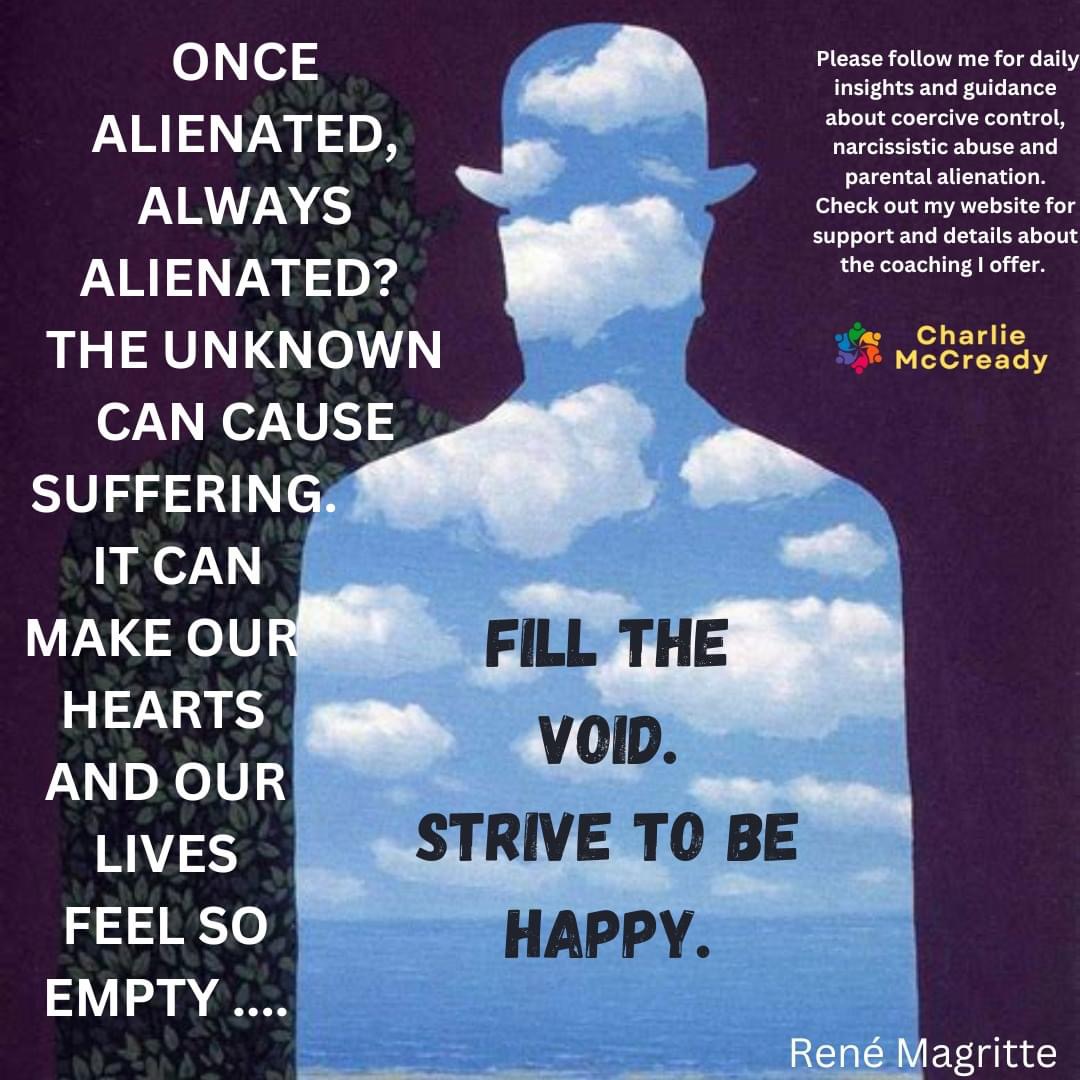
The Bottomless Pit of learned ingratitude- Charlie McCready
Alienated parents often experience a painful dynamic where their children feel they have to “payback” for perceived shortcomings. This belief is instilled by the alienating parent, who paints (projects) a picture of the targeted parent as neglectful or selfish. The child, who has been led to believe these narratives, may come to expect constant compensation for the perceived wrongs.
In reality, the alienated parent has been prevented from giving their love and support. Their attempts to provide for and connect with their child have been limited or entirely blocked. Despite their genuine efforts and desire to be involved, the child has been conditioned to see these efforts as inadequate.
The alienated child often becomes complicit in this dynamic, unknowingly perpetuating the cycle of blame. They carry the belief that they have been short-changed by the targeted parent, even though the reality is that the alienated parent had so much more time and love to give. This disconnect creates a lasting sense of injustice and unresolved tension.
Understanding this dynamic can help alienated parents find some solace in knowing that the problem is not rooted in their actions but in the manipulative influence of the alienating parent. It isn’t easy to be blamed so mistakenly when we know our children truly have been shortchanged – against our wishes and at the instigation of the alienating parent – and we have to, despite all adversity, triggers, injustice, grief …, maintain our patience, empathy, and continued efforts to rebuild trust and connection with their children.
#charliemccready #9StepProgram #parentalalienationcoach #parentalalienation #parentalalienationawareness
Life long side effects of family estrangement
Holidays as an Estranged Child – Stressful to say the lease
Alienator wants child to really increase abuse of targeted parent .
The Stranger by Albert Camus / Charlie McCready
From The Stranger by Albert Camus:
“In the midst of hate, I found there was, within me, an invincible love.
In the midst of tears, I found there was, within me, an invincible smile.
In the midst of chaos, I found there was, within me, an invincible calm.
I realized, through it all, that…
In the midst of winter, I found there was, within me, an invincible summer.”
Of course, some days are darker than others but always look to find that invincible summer inside of you. Every day.
It is painful to experience the parental alienator not acting in the best interests of our children which is to have both loving, available parents in their lives. But know yourself as a good, mentally healthy and strong parent. Not quitting, not rolling over, not letting this experience destroy you. And you are going through this with so many other wonderful, good, loving parents, people who love so much they feel the grief very profoundly. But feel happy too. You absolutely deserve it.
#charliemccready
#parentalalienationcoach
#healing
#parentalalienation
#traumahealing
#parentalalienationawareness
#parentalalienationisreal
#mothersmatter
#FathersMatter
#mothersrights
#fathersrights
#FamilyCourt
#custodybattle
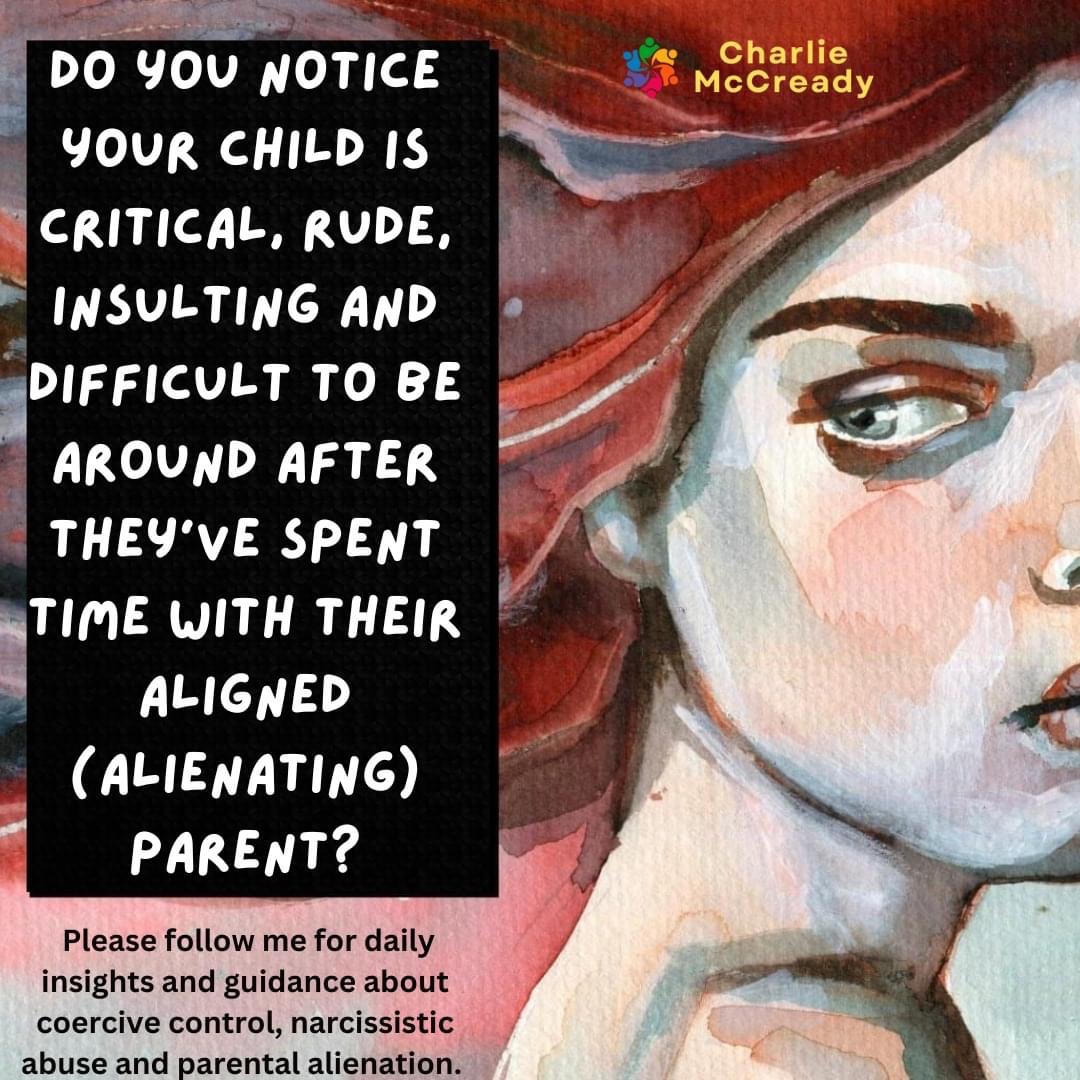
Charlie McCready – worse after visits with Alienator parent
It’s almost as if when they’ve spent time with a toxic, alienating parent (or other), they become contaminated. It can even be a phone call or a five-minute visit. The toxicity is that strong! You might notice an increased contempt or disrespect. I always feel it’s like they’ve plugged into the source of negativity and there’s a boost of activity. Have you noticed something similar?
#charliemccready
#parentalalienationcoach
#parentalalienation
#alienatedchild
#FamilyCourt
#childpsychologicalabuse
#emotionalabuse
#traumabonding
#coercivecontrol
#parentalalienationawareness
#parentalalienationisreal
1 in 5 children experience parental alienation
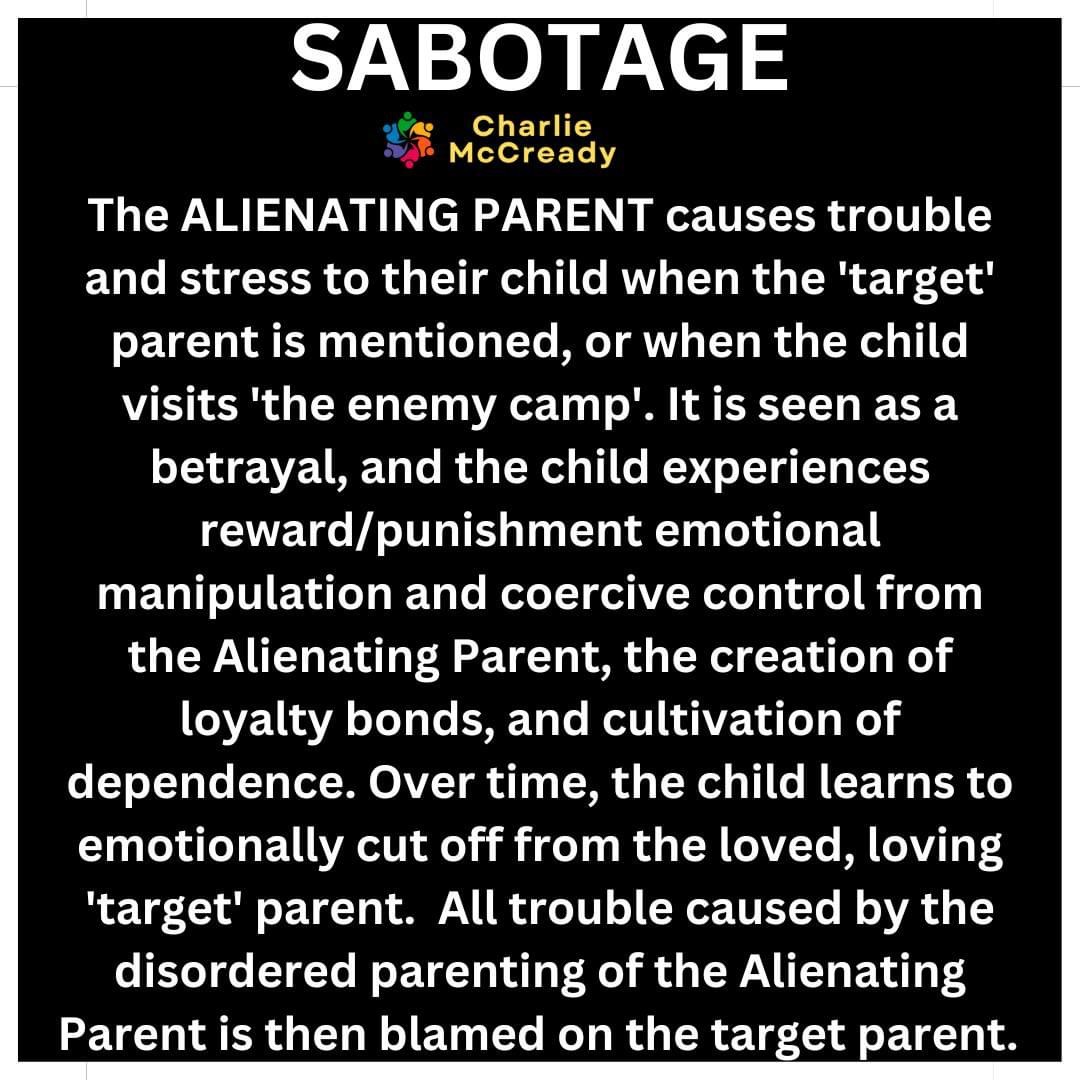
Trauma Bonds , Sabotage, Coercive, Control – Alienating Parent – Charlie McCready
The loyalty/trauma bonds are created because the alienating parent consistently portrays the other parent in a negative light, using derogatory language, making false accusations, and highlighting perceived flaws or mistakes. This constant denigration aims to sabotage the connection between the targeted parent and child. It is abuse.
The alienating parent often isolates the child from the targeted parent, their extended family and support system. They may restrict access to communication or visitation, limit opportunities for bonding, and discourage or prohibit positive interactions with the targeted parent. They emotionally manipulate the child by leveraging their emotions, guilt, and fear. Not only this but they also instil a sense of obligation and loyalty by making the child believe that supporting or loving the targeted parent would hurt or betray them. It’s childish, and utterly selfish behaviour, but the child doesn’t know this.
The child is ‘parentified’, but the alienating parent also fosters an unhealthy dependency, so the child feels reliant on them for emotional support, validation, and approval. This dependency reinforces the loyalty bond and makes it difficult for the child to express positive feelings towards the rejected parent especially when the alienating parent creates a false narrative where the targeted parent is consistently portrayed as the cause of all the family problems and the source of the child’s distress.
Over time, these tactics can create a strong trauma/loyalty bond between the child and the alienating parent. The child may internalise the alienating parent’s views, blame the targeted parent for the family’s dysfunction, and believe that aligning with the alienating parent is the only way to maintain their love and approval.
Not all children will respond in the same way, even in the same family with the same family dynamics. However, the creation of loyalty bonds and the shifting of blame onto the targeted parent are common patterns observed in alienation cases.
#charliemccready
#parentalalienationcoach
#parentalalienation
#ParentalAlienationAwareness
#FamilyCourt
#alienatedchild
#custody
#custodybattle
#traumabond
#traumabonding
 per
per
 GreatCosmicMothersUnite