Writer on Estrangement/ Parental Alienation/ Child Psychological Abuse

Yesterday, I posted a long essay here about the experience of parental estrangement. I am sad to say, it’s an experience I know personally. Over a thousand readers responded, many to say that they share this experience, and it is as brutal as any they have known. A kind of death.

This morning’s New York Times ran a long story by a Times reporter, Ellen Barry, about parental estrangement. Over the past many months, I had spoken to Ellen Barry a number of times about parental estrangement, directing her to a number of deeply thoughtful and self-examined parents I know well, who struggle with the devastating experience of having been cut off from an adult child and grandchildren.

None of the kinds of stories of the estranged parents I’ve come to know well (and I know dozens now) were covered in Barry’s article in today’s Times. Barry focused largely on a social worker (and Tik Tok star) named Patrick Teahan, who leads a vast and growing community of young adult and millennials, unhappy (deeply so, no doubt) in their relationships with their parents. His advice: Take his online quiiz to determine how toxic your parents were in your childhood. Then send them a note, no more than a paragraph long if possible, informing them that you are “going no-contact”. Forever.

Not surprisingly, I have a great deal to say about this social worker, and about the article in today’s Times, which I believe may do untold damage to families –not only in our own lifetimes, but beyond.

When I write about parental estrangement, I never fail to acknowledge the experiences of adults who justifiably distance themselves or cut off all contact with a parent who has abused them irredeemably. Those situations exist. I know some of these too.

But there are so many other stories–and they are heartbreaking– of well-intentioned, deeply loving, self-examined parents ready to admit to their failures and to the ways their children may have been hurt by them, whose relationships have been felled by the same brutal ax of the radical (and growing) no-contact community.

I am posting a link to Ellen Barry’s article below–free without paywall, along with my response to it.

i know well how hard it is for estranged parents to speak publicly of their experience. Speaking only for myself, I can no longer remain silent.

A terrible tragedy is unfolding in families across America.

There are circumstances in which all an adult child can do to save herself is to sever contact from dangerous parents. Abusive parents. Parents who truly abandoned their responsibilities and brought harm to their children.

Then there are the others, who made mistakes, but never out of a deficiency of love or care. Now comes a world of therapy ready to endorse the idea that the only answer to pain or sorrow or discomfort in a relationship is to sever contact–employing the predictable vocabulary of “toxic narcissist”, “need for boundaries” “trauma” –a word whose definition has become looser and looser with every passing year.

The no-contact therapist quoted in Ellen Barry’s piece recommends that estranging adult children construct a mock funeral for their parent–with “an unsparing ‘goodbye letter attached to the parent’s photo, propped on an empty chair.”If more is needed to liberate one’s self from the clutches of parents, he “recommends using a foam baseball bat to hit or smash things, like eggs or plates.”

As for the estranged parents. They are unlikely to take out their baseball bats. We who have lost a child to estrangement will mourn that relationship forever. Often in silence.

You can read the Times story in its entirety in a link, below.

https://www.nytimes.com/…/therapy-family-estrangement…

Estrangement is not simply a tragedy for the parents who suffer the loss of a beloved child, and the inability to know or be known by their grandchildren. It is a tragedy that will reverberate through the generations.

Trauma Bonds , Sabotage, Coercive, Control – Alienating Parent – Charlie McCready

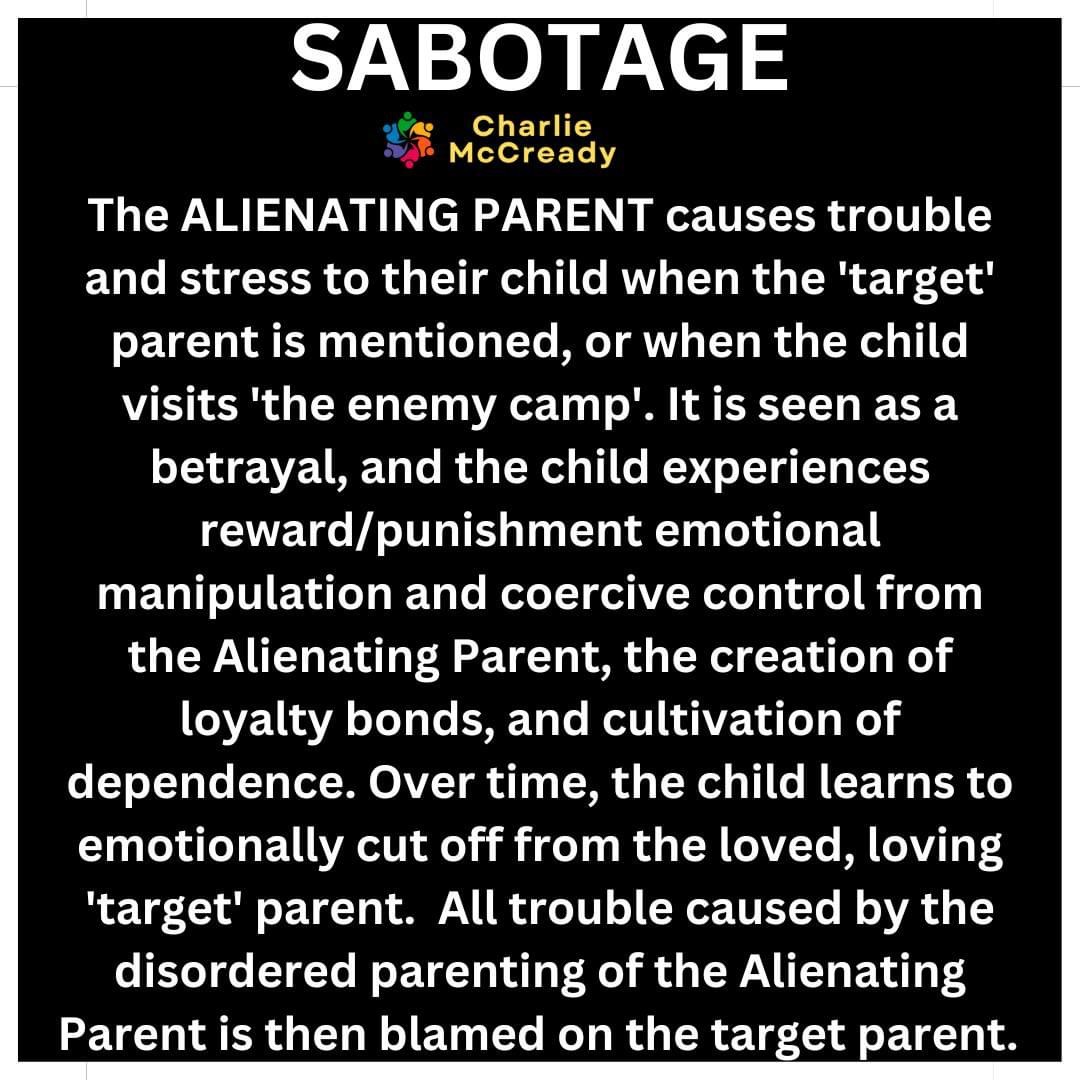
The loyalty/trauma bonds are created because the alienating parent consistently portrays the other parent in a negative light, using derogatory language, making false accusations, and highlighting perceived flaws or mistakes. This constant denigration aims to sabotage the connection between the targeted parent and child. It is abuse.

The alienating parent often isolates the child from the targeted parent, their extended family and support system. They may restrict access to communication or visitation, limit opportunities for bonding, and discourage or prohibit positive interactions with the targeted parent. They emotionally manipulate the child by leveraging their emotions, guilt, and fear. Not only this but they also instil a sense of obligation and loyalty by making the child believe that supporting or loving the targeted parent would hurt or betray them. It’s childish, and utterly selfish behaviour, but the child doesn’t know this.

The child is ‘parentified’, but the alienating parent also fosters an unhealthy dependency, so the child feels reliant on them for emotional support, validation, and approval. This dependency reinforces the loyalty bond and makes it difficult for the child to express positive feelings towards the rejected parent especially when the alienating parent creates a false narrative where the targeted parent is consistently portrayed as the cause of all the family problems and the source of the child’s distress.

Over time, these tactics can create a strong trauma/loyalty bond between the child and the alienating parent. The child may internalise the alienating parent’s views, blame the targeted parent for the family’s dysfunction, and believe that aligning with the alienating parent is the only way to maintain their love and approval.

Not all children will respond in the same way, even in the same family with the same family dynamics. However, the creation of loyalty bonds and the shifting of blame onto the targeted parent are common patterns observed in alienation cases.

#charliemccready

#parentalalienationcoach

#parentalalienation

#ParentalAlienationAwareness

#FamilyCourt

#alienatedchild

#custody

#custodybattle

#traumabond

#traumabonding

per

Alienated Children victim / punisher

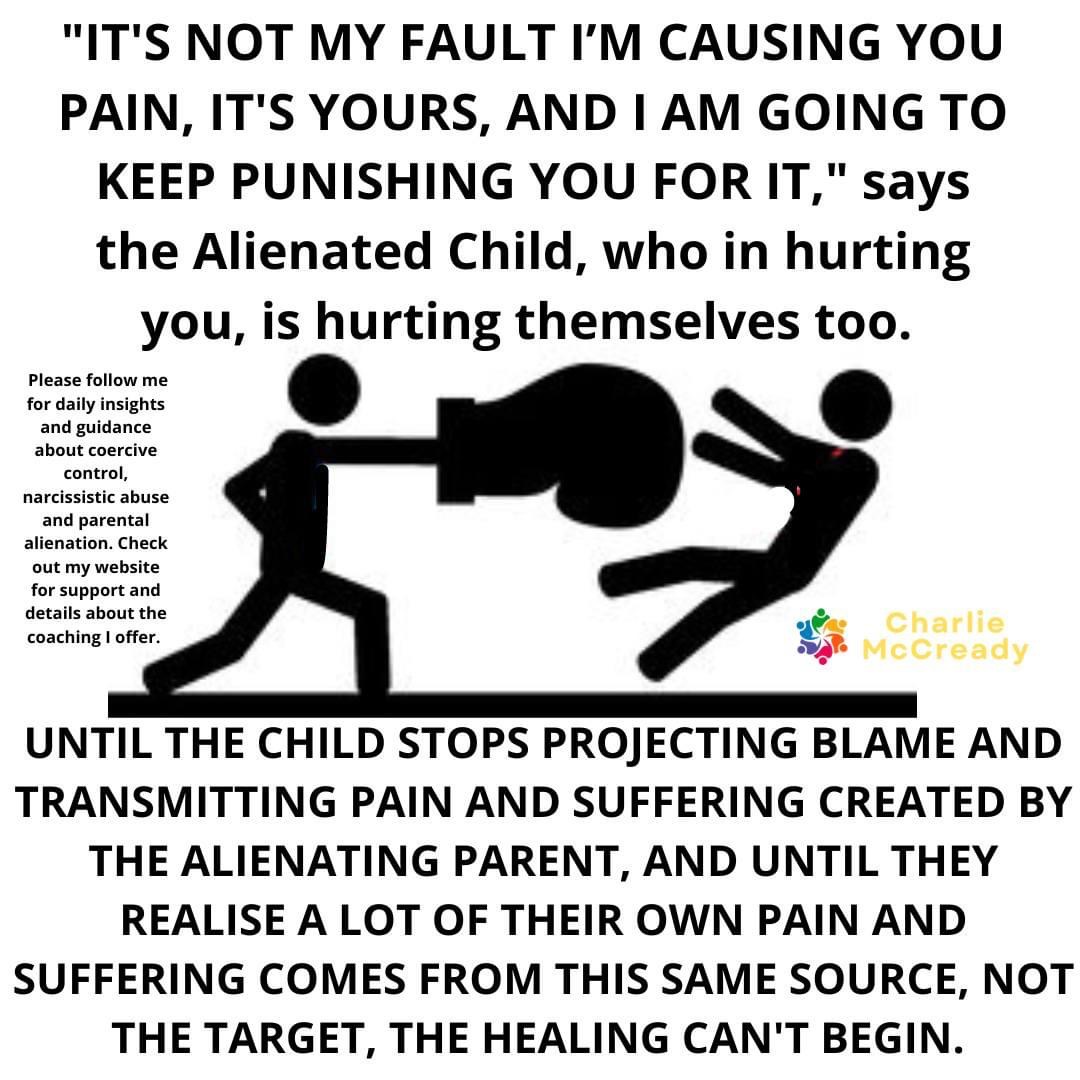
Many alienated children keep playing their imposed role – victim/punisher – to try to justify the ‘choice’ they made as being right, instead of facing and accepting the reality of their weaponisation. The alienating parent put those boxing gloves on their child. But instead of feeling shame and guilt, it’s almost easier for the child to keep on punching. All the while they’re hurting themselves. I know this is a horrible idea and visual but it’s to make this point. The alienating parent projects and punches too. The child learns to behave the same, they think they’re protecting their aligned parent. It’s much easier to keep attacking the target parent than to see what part they’ve played – and how much they’ve been played! So long as they deny it, and project all anger/blame on the target parent, this remains unresolved trauma. It can create stunted psychological development, and the child can remain stuck in, and trigger back to, the age they were hurt. We need to remember this when our alienated child (even as a ‘grown up’) expresses their wounds, and continues to project all their unhealed trauma, all their shame, guilt and anger on us, the alienated parent. They are righteously angry, confused, hurt. And unfortunately they will stay stuck so long as they don’t accept they were complicit/used, and abused by ONE parent, not both. The target parent, as much a victim as them, is that missing part of their lives – it is the ‘split’ part of the personality. The lost part. It was a terrible choice, rejecting one parent over another, it was a painful, survival mechanism. The alienating, mentally unhealthy parent did this to them. And without healing the relationship with the rejected parent, the alienated child, cannot heal those parts of themselves caught up in the trauma, that denied part of themselves, vital to their healing and sovereignty.

#charliemccready

#parentalalienationcoach

#ParentalAlienationAwareness

#parentalalienation

#FamilyCourt

#childcustody

#FathersMatter

#mothersmatter

#custodybattle

Abandonment Issues in Parental Alienation / Charlie McCready

Siblings suffer too, when their brother or sister is a victim of alienation and they may grow up burying their feelings of grief, guilt and abandonment. It can have a profound impact on their own emotional well-being. I have personal experience of this and it can’t be underestimated.

The child ‘left behind’ may be aware of the strained or severed relationships, even if they never talk about it. Internally, they can be mourning the loss of the close bond they once shared and struggle with the emotional void left behind. It is not their fault at all, but they might not know this, blaming themselves and feeling guilty. They may feel ‘left behind’ or ‘the lucky one’ but they may also feel that all the focus is on others and not them. If all attention and focus is on the alienating parent or the target parent, or the alienated child, the one who remains may feel a bit lost and isolated. They may even suppress their own needs, not wanting to cause any more trouble or to avoid any further the conflict in the family. Some may feel obligated to choose sides or align. They may think they need to protect themselves from similar treatment. When they witness manipulation and trauma, they may grapple with their own identity issues. It is similar to the less favoured child in a family dynamic.

It is important for siblings and step-siblings in these circumstances to seek support and understanding from people who understand the dynamics of parental alienation, or trusted individuals outside of the family. They may not be able to talk about their experience with their siblings who are all going through their own different journey even within the same family group. They need a safe space to process their feelings, address unresolved emotions, and develop coping strategies. Additionally, fostering open communication and maintaining strong bonds with other supportive family members can help siblings navigate the challenges and minimise the long-term effects of the alienation on their well-being.

#charliemccready

#parentalalienationcoach

#ParentalAlienationAwareness

#parentalalienation

#alienatedchild

#FamilyCourt

#custody

#divorce

#childcustody

Don’t feed the parental Alienator – Charlie McCarthy

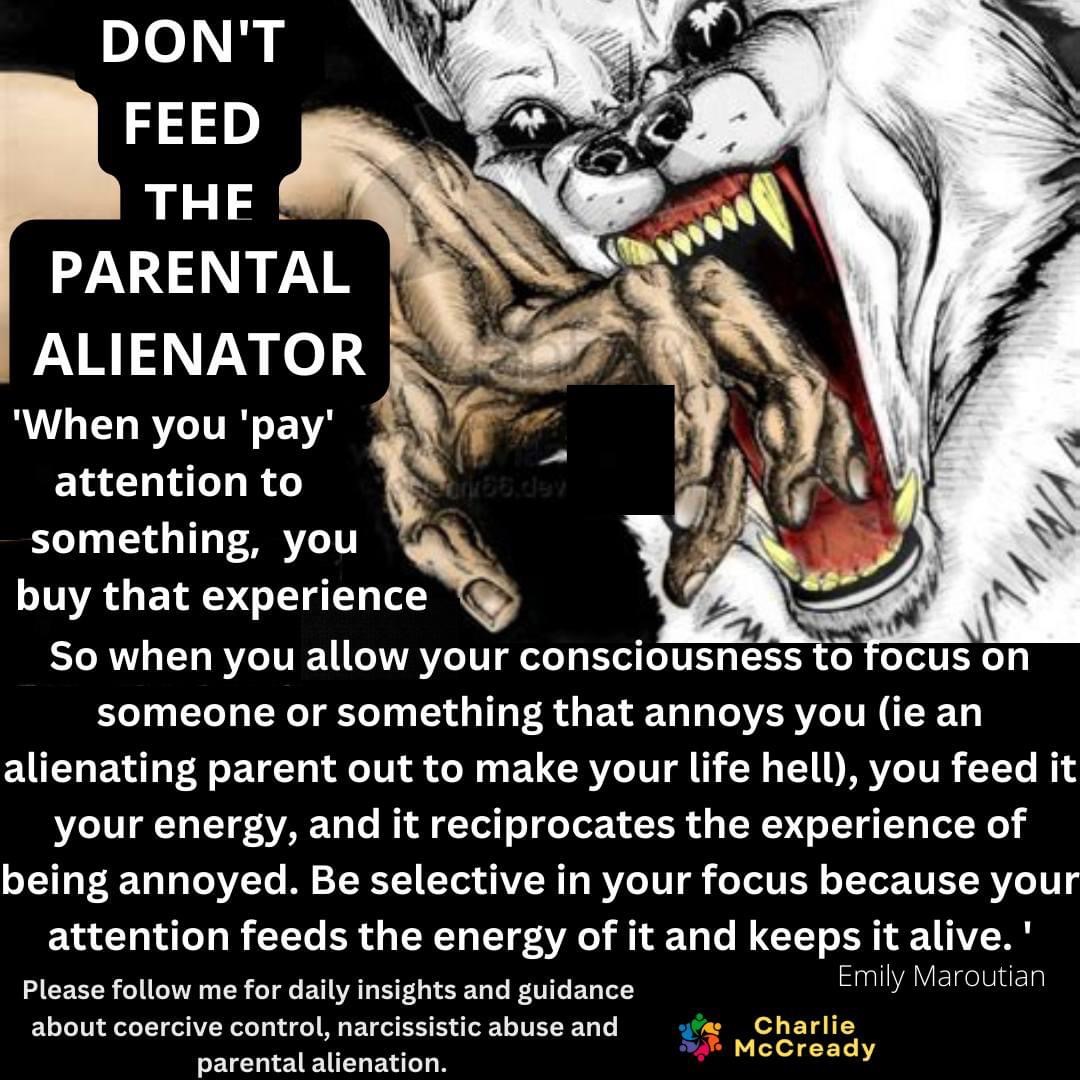
When alienated parents react and become outraged, and heartbroken by the loss of their child and the injustice they face, it’s perfectly understandable, and natural. However, continually dwelling on these negative emotions and allowing them to consume our energy can be detrimental to our emotional well-being.

The quote by Emily Maroutian about ‘paying’ attention to what we focus on, serves as a reminder. While it’s crucial to acknowledge and process our emotions, dwelling on them excessively can perpetuate the cycle of pain and hinder our ability to heal. Instead, it’s beneficial to redirect energy towards self-care, seeking support, and taking proactive steps to address the situation constructively. By shifting attention towards personal growth, healing, and finding ways to reconnect with their child, as and when that’s possible, we can create a healthier space for ourselves and increase the chances of eventual resolution and reconciliation.

#charliemccready

#parentalalienationcoach

#alienatedchild

#ParentalAlienationAwareness

#parentalalienation

#mothersrights

#fathersrights

#FamilyCourt

Living Bereavement – Charlie McCready

Alienated parents often describe their experience as a ‘living bereavement.’ Despite their children being alive, they are kept away and turned against them, leading to a profound sense of loss and grief. We miss them even more on occasions that remind us of them, such as Halloween, which is also a day traditionally associated with remembering those who are not in our lives anymore.

In the ancient Celtic calendar, Halloween, or All Hallows’ Evening, marks a significant time of transition. It begins at sunset on October 31st, signifying the end of the old year. However, the new year doesn’t commence until dawn on November 3rd. These intervening days, collectively known as Samhuinn (which corresponds with the Christian All Souls’ and All Saints’ days), exist ‘outside of time.’ During this ‘absent time’ period, the veil between the living and the departed is believed to be thin, allowing for a closer connection with the Otherworld and our loved ones who are gone from our lives.

When we light a candle during this ‘absent time’ we can send out our love. In churches and cathedrals, we often see the bible quote: “The light shines in the darkness, and the darkness did not overcome it.” This is to symbolise the triumph of good (light) over evil or darkness, signifying hope. Lighting candles is an ancient custom that predates organised religion. It’s a belief in being able to ‘commune’ beyond space and time, and in particular, for alienated parents it can be an expression of love that transcends physical distance and familial discord, with the prayer/wish that our children’s path will be illuminated, bringing them back into our lives. These heartfelt prayers and wishes testify to the enduring bond between parent and child, even in the face of alienation, and it can be a beacon of hope that the path back home will be illuminated, reuniting us with our children once more.

#charliemccready

#parentalalienationcoach

#alienatedparent

#parentalalienation

#parentalalienationisreal

#ParentalAlienationSyndrome

#traumahealing

#traumabonding

#alienatedchild

#custodybattle

Charlie McCready Kids with 1 parent

An alienated child will often discard presents bought by the ‘target’ parent. They will post photos on social media of their aligned parent but never the alienated parent. It is as if they only have one parent and it is excruciating for the ‘target’ parent to see this. Much as they want to see what’s going on with their child, and they want to see them happy, their non-existence is painful. I know from personal experience. These behaviours can become learned. Even a child who has reunited with a previously rejected parent, will be wary of showing evidence of a good relationship (with both parents). They may still have lingering fears, conditioned responses, or a sense of loyalty towards the alienating parent. These emotions and behaviours can persist even after reconciliation, as the alienation process often creates deep-seated trauma bonds and conflicting emotions within the child. Years later, the child/adult may inherently fear upsetting or angering the alienating parent. They know that showcasing a relationship with the previously rejected parent is going to trigger the alienating parent. They may worry about potential repercussions, such as further manipulation, guilt trips, or even retaliation from the alienating parent. Additionally, the child may feel a sense of obligation or loyalty towards the alienating parent, leading them to prioritise that relationship on social media while keeping the relationship with the previously alienated parent private.

It’s essential to understand that healing from parental alienation is a complex and ongoing process. Even if the child or young adult has reconnected with the previously alienated parent, the psychological impact of the alienation may still be present. I speak from personal experience of this, and picking my battles, in fact, choosing to focus on gratitude for my children being in my life again, after a very long time, I let this one go, I see the previously alienating parent is given a lot of coverage on social media … I let it go (except for sharing this with you).

Overcoming fear, guilt, and loyalty conflicts can take time and a supportive environment. A previously alienated parent should respect the child’s boundaries and emotional needs, allowing them to navigate their healing journey and find their voice in their own time.

#charliemccready

#parentalalienationcoach

#parentalalienation

#parentalalienationisreal

#parentalalienationawareness

#FathersMatter

#mothersmatter

#FamilyCourt

#custody

#childcustody

#divorce

Charlie McCready – Professional advice on PA-

Coping with the opinions and suggestions of friends, family, and even mental health care professionals can be challenging when facing parental alienation. It’s helpful to remember, they don’t mean to be unkind, they’re just ignorant and have no idea what we’re going through. That’s why it is helpful to be on groups such as this (I hope). I’ve walked in your shoes. My partner has too. We have over 20 years experience, and as step-parents too. We have also experienced the lack of empathy and true understanding from friends, family and ‘experts’. We sometimes find ourselves educating the educators and suggesting how people in positions of authority and safeguarding might better be able to detect alienating behaviours. Do you, too? Make sure you prioritise self-care. It does feel isolating. But you are not alone. Unfortunately, there are thousands and thousands feeling alone just like you. Just like I did (which is why I do all these posts). Set up boundaries. Reach out for help. Focus on the present, not the past and the love, not the loss. Maintain hope and – if you can – stay committed to maintaining a loving and open presence in your child’s life. Stay strong, my friends.

#charliemccready

#parentalalienationcoach

#parentalalienationisreal

#parentalalienationawareness

#parentalalienation

#narcissisticabusesurvivor

#narcissisticabuseawareness

#FamilyCourt

#fathersrights

#mothersrights

#custody

#childcustody

#custodybattle

#mothersmatter

#FathersMatter

Highly improbable that your alienated child is acting autonomously/ Charlie McCready

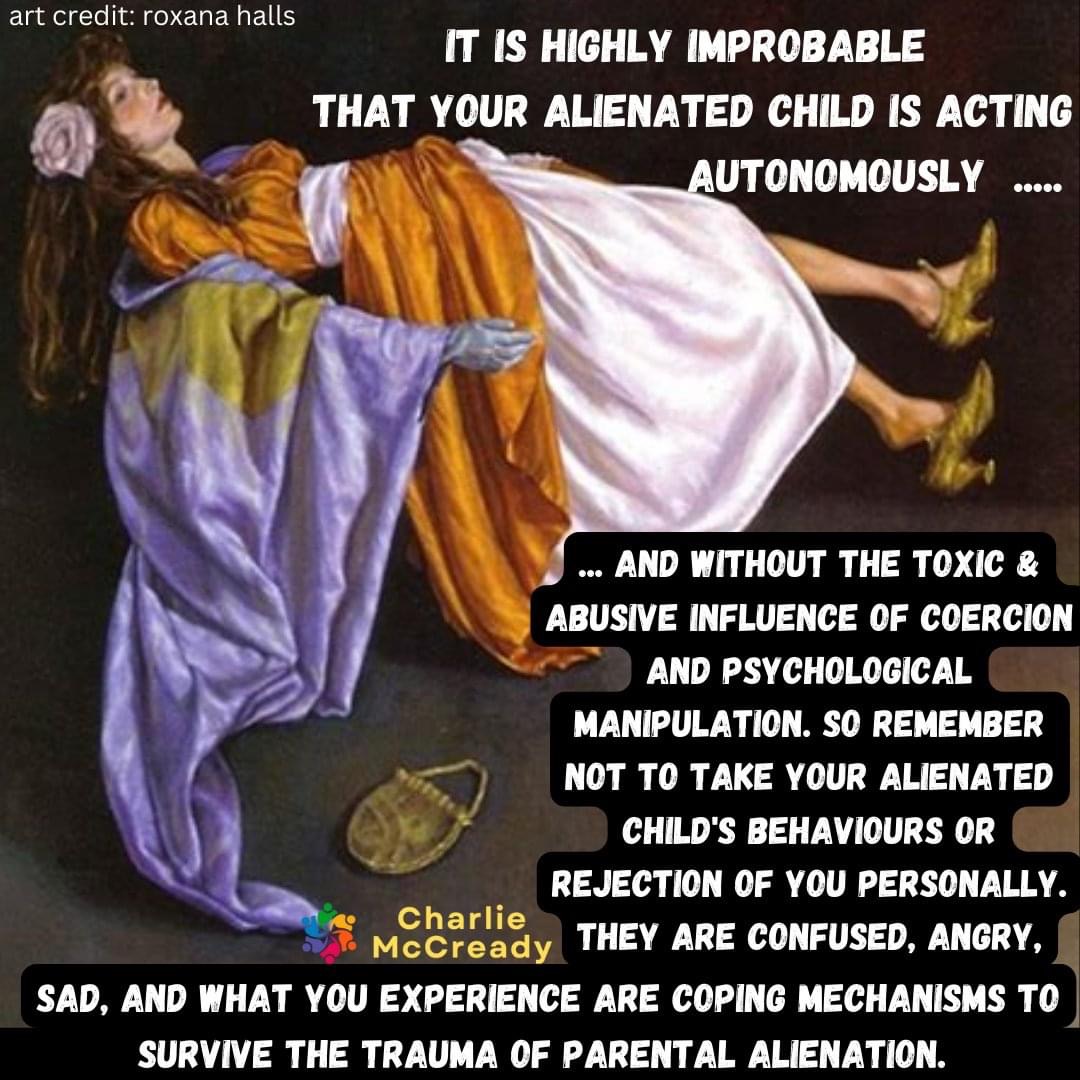
Dealing with the rudeness, insults, and rejection from an alienated child can be incredibly challenging and emotionally distressing for a parent. Hard as it is sometimes (and believe me, I know!) we must try to remember their behaviour and their words don’t stem from them. This was downloaded like a software programme, it was inflicted on them. It was repeated until they believed this programme was their own creation. The child acts out of trauma-bonded loyalty and enforced alignment. That can be really irritating and upsetting to witness, but they’re not aware of it. We are the ‘target’ and often it’s only us who sees it. That’s also difficult for us to cope with! So, unpacking all this, we have to remember that deep down, hidden and dormant maybe, our children love us. They’ve just been told they shouldn’t or can’t. Isn’t that appalling? It’s tragic for them as much as for us. They’re victims of this abuse too. They might be confused and in emotional turmoil. It’s hard growing up at the best of times. This adds a huge amount of pressure.

Meanwhile, take care of yourself emotionally and physically. Focus on what you can control. Keep communication channels open if that’s possible (often it’s not). Engage in activities that bring you joy and provide support through therapy, support groups, or trusted friends and family. Prioritise your well-being to ensure you have the strength to navigate the difficult emotions associated with alienation. I’m here for you if you want to get some 1-2-1 coaching or take a look at my 9-step program. My posts are daily to inform, spread awareness and uplift. You’re not alone in going through this. Remember that healing from parental alienation takes time and is a complex and deeply emotional process. By adopting a compassionate and understanding mindset, seeking support, and prioritising your well-being, you can navigate the challenges, become more resilient and maintain hope for the future.

#charliemccready

#parentalalienationcoach

#parentalalienationawareness

#parentalalienation

#alienatedchild

#narcissticabuserecovery

#FamilyCourt

#childcustody

#mothersmatter

#FathersMatter