You may have read previous posts I’ve written about virtue signalling, which is a symptom of a culture that prioritises appearances over substance, often at the expense of real accountability. In the same way, family courts often strive to maintain an image of fairness and impartiality, but this frequently leads to both parents being treated as equally culpable in high-conflict cases. Tragically, this can result in the targeted parent—the one alienated from their child—being unjustly placed in the same “naughty” camp as the alienating parent. Or worse, they don’t see through the charade and manipulations of the true persecutor.
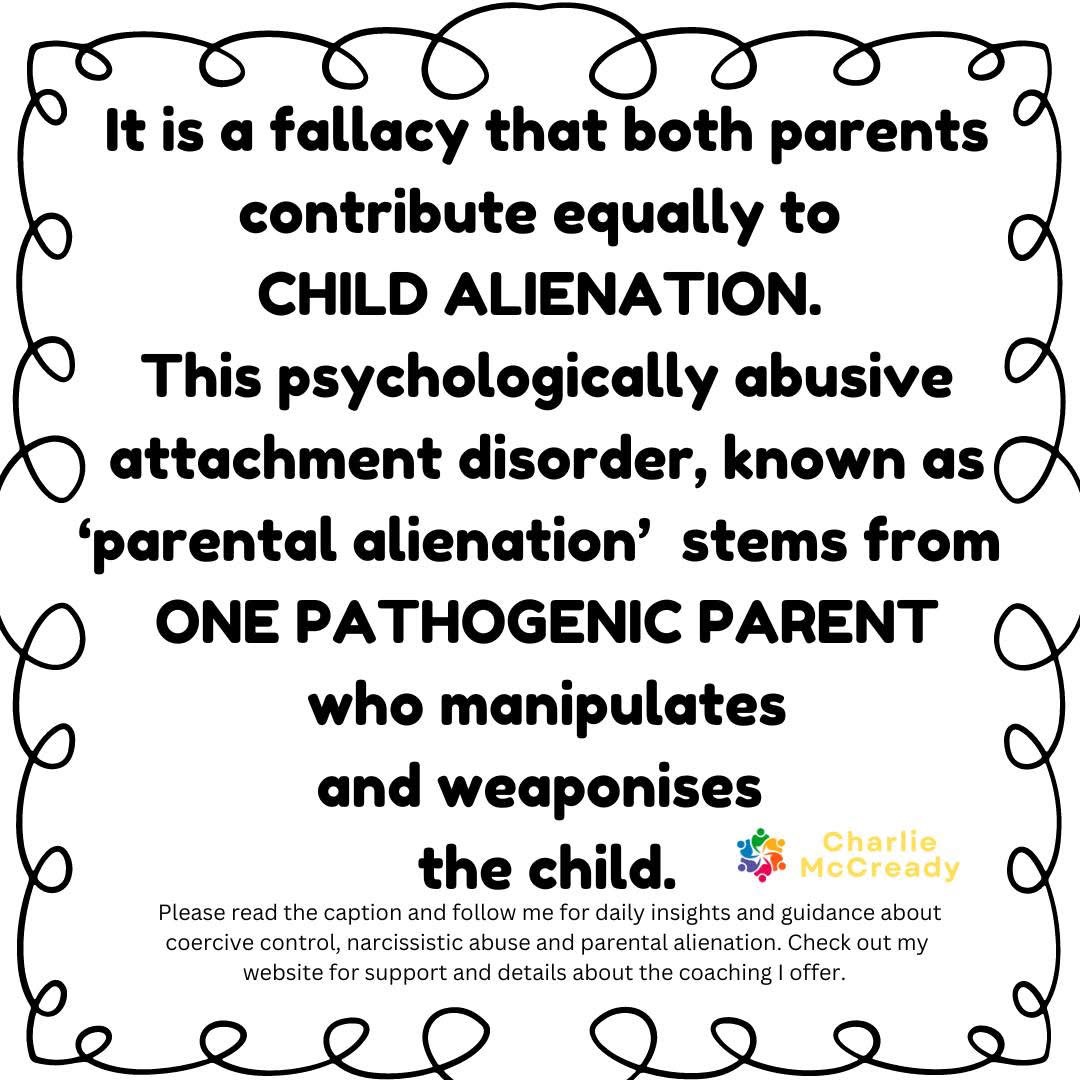
What’s commonly known as ‘parental alienation’ is a psychologically abusive attachment disorder caused by one pathogenic parent who manipulates and weaponises the child against the other parent. Despite this being well-documented in psychiatry, psychology, and social sciences, family courts rarely recognise or act decisively on this knowledge.
Extensive research demonstrates that children fare better with the involvement of two loving, available parents and the wider family on both sides. The American Psychological Association (APA) highlights the significant mental health benefits for children who maintain strong relationships with both parents, even after separation or divorce. A meta-analysis by Bauserman (2002) found that children in shared parenting arrangements experience better emotional, behavioural, and academic outcomes compared to those in sole custody arrangements. Research from Canada’s McGill University reveals that children benefit emotionally, socially, and cognitively when supported by a loving, extended family network.
Furthermore, there is evidence to show that even children who suffer abuse can remain bonded to their abusive parent. This trauma bonding often stems from identification with the aggressor, a psychological survival mechanism in abusive relationships. It is tragic but revealing—children are hardwired to seek love and approval from their caregivers, even in the most harmful circumstances. In cases of parental alienation, this same dynamic is exploited, intensifying the child’s attachment to the alienating parent.
If this is the case, why are the courts not taking decisive action when one parent is clearly sabotaging contact and communication with the other parent?
The courts often listen to the ‘voice of the child,’ influenced by organisations like CAFCASS in the UK or Guardian ad Litem (GAL) representatives in the US, without fully appreciating that this is a child who has been emotionally abused and indoctrinated. Alienating parents engage in coercive control, spreading lies, false narratives, and projections, and using techniques such as triangulation and interference with contact.
These behaviours fall under the umbrella of coercive control. In the UK, coercive control is recognised as a form of domestic abuse under the Serious Crime Act 2015. However, this is not consistently the case in other countries, including the US, where recognition of coercive control varies by state and is not uniformly codified in federal law. In any case, the courts rarely recognise this when it is directed at children, even though it meets the criteria for emotional abuse (at least, under UK safeguarding standards). This failure to understand the dynamics of alienation leaves targeted parents—mothers and fathers alike—with devastating outcomes.
I’m not a fan of the nanny state or ‘big government’, I believe that specialist and experts in the field should have government listen to them, rather than the other way around. Things need to change:
Education and training for family court professionals is critical. Judges, solicitors, CAFCASS/GAL officers, and social workers must understand the tactics of coercive control, false narratives, and manipulation to make decisions that prioritise the child’s best interests. Independent psychological assessments must accompany the “voice of the child” to identify coercive control and emotional abuse. Clear consequences are also needed for parents who violate parenting plans or engage in alienating behaviours, such as therapy mandates or changes in custody arrangements.
Independent Psychological Assessments: The child’s voice should not be considered in isolation but evaluated alongside independent psychological assessments to determine the influence of coercive control and emotional abuse.
Enforcement of Parenting Plans: Clear, enforceable consequences must be in place for parents who violate court-ordered parenting plans or demonstrate alienating behaviours, including mandatory therapy for the alienating parent and the child and fines or changes to custody arrangements when alienation persists.
Mental Health Support for Children: Alienated children need therapeutic support to address the psychological harm caused by indoctrination. This should include trauma-informed therapy aimed at deprogramming the false beliefs instilled by the alienating parent.
Accountability for False Allegations: Alienators who fabricate allegations to restrict the other parent’s access should face legal consequences. False claims of abuse not only harm the targeted parent but also undermine the integrity of genuine abuse cases.
Parental alienation is not simply a family dispute—it is psychological abuse. It leaves lasting scars on the mental health of children and targeted parents. As the courts continue to demonstrate their inability to address this issue effectively, systemic change is urgently needed to protect children from coercive control and to preserve the attachment bond between children and the alienated parent.
The focus must be about identifying and addressing abuse. Parental alienation is an insidious form of psychological harm by one parent (and enablers) against the other parent – which harms the children, too.
#charliemccready
#parentalalienationcoach
#CoerciveControl