

Tag: education
Mother Wound in Men
Nicotine for Spike Protein
HARRP testimony
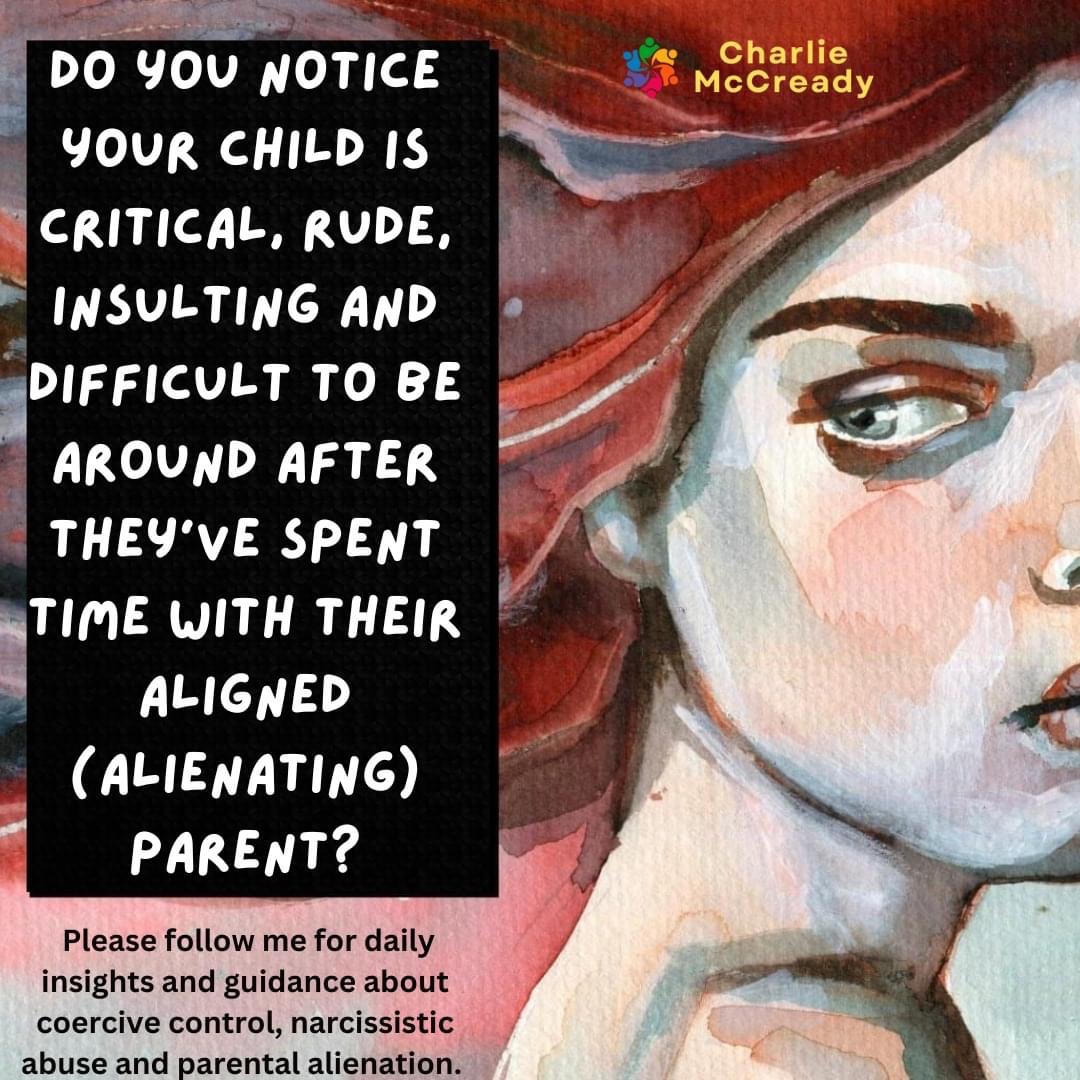
Charlie McCready – worse after visits with Alienator parent
It’s almost as if when they’ve spent time with a toxic, alienating parent (or other), they become contaminated. It can even be a phone call or a five-minute visit. The toxicity is that strong! You might notice an increased contempt or disrespect. I always feel it’s like they’ve plugged into the source of negativity and there’s a boost of activity. Have you noticed something similar?
#charliemccready
#parentalalienationcoach
#parentalalienation
#alienatedchild
#FamilyCourt
#childpsychologicalabuse
#emotionalabuse
#traumabonding
#coercivecontrol
#parentalalienationawareness
#parentalalienationisreal
Cherokee Women – It’s a cellular memory within me . To stand .
In Cherokee culture, women held significant positions and enjoyed certain privileges and responsibilities.Women in Cherokee society were considered equals to men and could earn the title of War Women. They had the right to participate in councils and make decisions alongside men. This equality sometimes led outsiders to make derogatory remarks, such as the accusation of a “petticoat government” by the Irish trader Adair.
Clan kinship was matrilineal among the Cherokee, meaning that family lineage and inheritance were traced through the mother’s side. Children grew up in their mother’s house, and maternal uncles held the role of teaching boys essential skills related to hunting, fishing, and tribal duties.
Women owned houses and their furnishings, and marriages were often negotiated. In the event of a divorce, a woman would simply place her spouse’s belongings outside the house. Cherokee women had diverse responsibilities, including caring for children, cooking, tanning skins, weaving baskets, and cultivating fields. Men contributed to some household chores but primarily focused on hunting.
Cherokee girls learned various skills by observing and participating in their community. They learned story, dancing, and acquired knowledge about their heritage. Women were integral to the Cherokee society, and their roles played a central part in the community’s functioning and adaptation to changing circumstances.

Female Early Education
In 1903, six sisters from Hindman, Kentucky, exemplified determination and resilience as they made the arduous daily journey to their settlement school, walking four miles each way. Hindman, located in the Appalachian foothills, was a remote region where access to education was limited, especially for children in rural areas. For these sisters, the trek was not just a matter of convenience, but of necessity, as the settlement school offered one of the few opportunities for formal education in the region. These young girls, dressed in simple, practical clothing, likely carried homemade books or materials wrapped in cloth, as they navigated through the mountainous terrain, often on foot, regardless of the weather or challenges.
The walk itself, through the rugged hills and valleys of eastern Kentucky, was a daily ritual that not only shaped their physical endurance but also bonded the sisters. It was common in this time and place for children to walk long distances to attend school, as rural communities often lacked school buses or other transportation options. The settlement school they attended was likely part of an effort to bring education to underserved areas, offering basic literacy, vocational training, and other life skills that could help the children improve their circumstances. For these girls, the school was a symbol of hope—a place where they could learn the skills to break free from the limitations imposed by their environment.
Despite the exhausting journey, the sisters likely saw education as a valuable privilege, something that could provide a way out of the hardships of rural life. Their dedication to attending school every day, walking four miles in each direction, reflects a profound commitment to bettering themselves and contributing to the future of their community. Education in such areas was not just about learning from books; it was about developing the tools needed for survival and progress in a challenging world. The image of these six sisters walking together, perhaps in the early morning light or at dusk after a full day of lessons, is a testament to the strength and perseverance of rural families in the early 20th century, who saw education as a path toward a better life, no matter the distance they had to travel.

Crystals 5000 years old
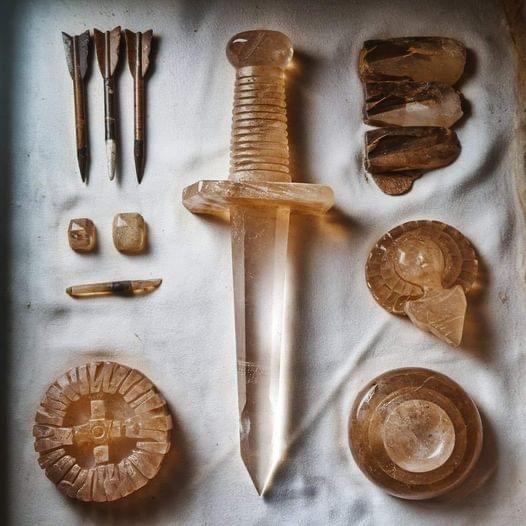
Archaeologists unearthed a rare 5,000-year-old dagger made of rock crystal during excavations at the Montelirio Tholos, a megalithic tomb in southern Spain. Measuring 8.5 inches long, this exquisitely crafted dagger was found with an assortment of other crystal artifacts, including 10 arrowheads, 4 blades, and a core for producing weaponry -all carved from the same luminous stone. These unique items highlight the importance of rock crystal in Neolithic funerary practices, likely symbolizing power or a connection to the afterlife.
Buried deep within the Montelirio Tholos lay a chamber that held treasures seemingly forged from starlight itself a trove of rock crystal weaponry. The centerpiece was a dagger, its blade carved with such precision that it captured the light from above and glinted with an ethereal glow, even after thousands of years.
It is said that the dagger, known as *The Shard of Eternity,* was the prized possession of an ancient chieftain, a warrior who ruled not just through might but through mystery and reverence for the unseen forces of the world. Rock crystal, thought to be a conduit between realms, was reserved for those who communicated with the spirits of earth and sky. This blade was, therefore, not merely a weapon; it was a bridge, believed to imbue its wielder with clarity in battle and insight in peace.
Beside the dagger lay arrowheads and blades, forming a crystalline arsenal as if prepared for the chieftain’s journey beyond life. Each artifact gleamed, symbolizing a final testament to the ancient people’s belief in the cycle of life, death, and the afterlife, with the crystal artifacts as their safeguard through unknown realms. To those who unearthed it millennia later, the dagger stood as a testament to an ancient people’s art, spirit, and enduring reach toward eternity.
Narcissistic thrive on Negative Karma
Mother Mary’s Message to the World
I bought copies of this , and I believe I gave it to each of 3 sons .
“Crickets”
I found it comforting ❤️
 GreatCosmicMothersUnite