


Tag: babies
Jabs – Accumulation of vaccines by age 2 . Graphic Depiction

Breastfeeding
Pregnancy and the Narcissist
Original of ‘Rock a by Baby’
The Origin of America’s Favorite Nursery Rhyme:
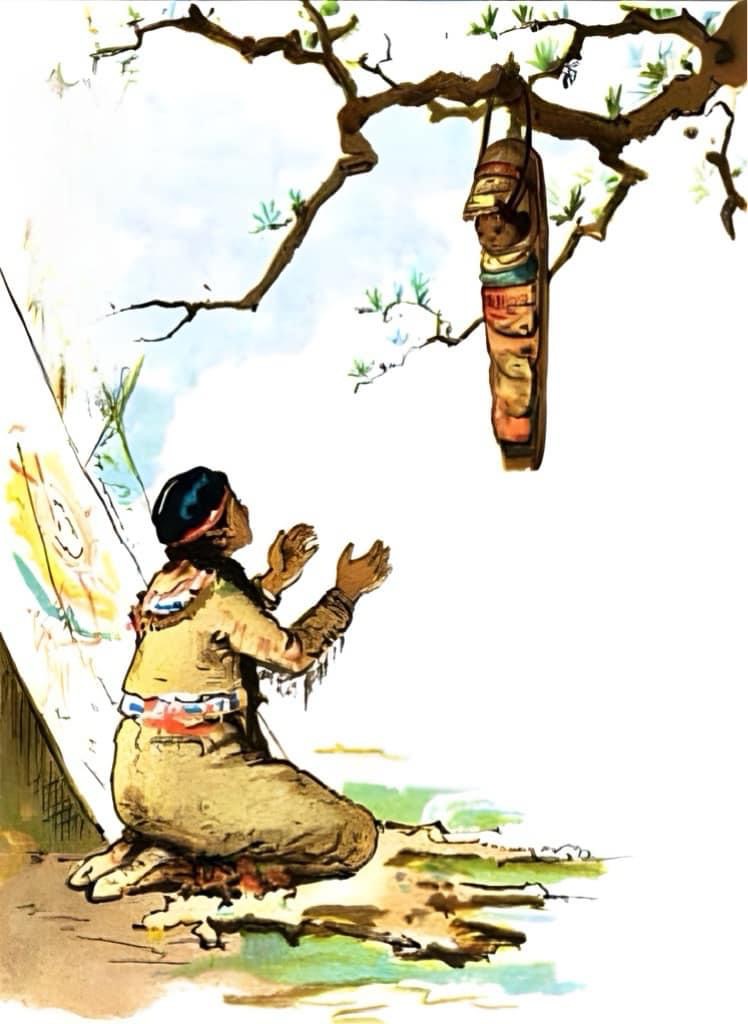
Davy Crockett’s older sister, Effie Crockett was invited to help some mothers in the Muskogee Tribe. Once she arrived in camp, Effie laughed at what she saw. The Muskogee Tribe had a custom of cradling their pappooses among the swaying branches of birch trees. This protected their babies from ground insects, the sun, and wild animals.
After first finding it funny, she soon learned all the great reasons for this practice and marveled at the beauty of it.
Effie watched the swaying and soothing motion of the topmost branches of the trees. She loved how each baby enjoyed nature, how they listened to the songbirds, observed every ladybug, and smiled at the colors of a butterfly, every little breeze was felt and enjoyed by these young ones; each babe seemed perfectly content.
One of the Tribal mothers began to sing a song to the children in her native tongue. As the Muskogee mother sang, Miss Effie observed a small tear running down the mother’s cheek.
Lulu se pepe i le pito i luga o le laau,
A agi le matagi e luluina le moega pepe,
A gau le lala e paʻu ai le moega pepe,
Ma o le a sau i lalo pepe, moega pepe ma mea uma.
Effie translated the words and kept the tune. She shared it with everyone and it soon became a wildly popular nursery rhyme among the Colonies.
The English translation:
Rock-a-bye baby on the tree top,
When the wind blows the cradle will rock,
When the bough breaks the cradle will fall,
And down will come baby, cradle and all.
Why did the Muskogee mother cry?
A “bough” is simply a tree branch, and its breaking was used by the Muskogee mothers as an analogy of their little baby growing up.
Their little baby would soon outgrow his cradle. With each gently rocking wind, time was passing. One day, little baby would no longer need the protection of his mother. One day, the “branch” would break because her little baby had become too heavy. The “cradle” would fall to the earth – the child, no longer a baby, would dust himself off and grow into a man.
The now famous lullaby was first printed in Mother Goose’s Melody.
The rest is history.
#BeforeMissRachel #BabiesLoveNature #Gooutside
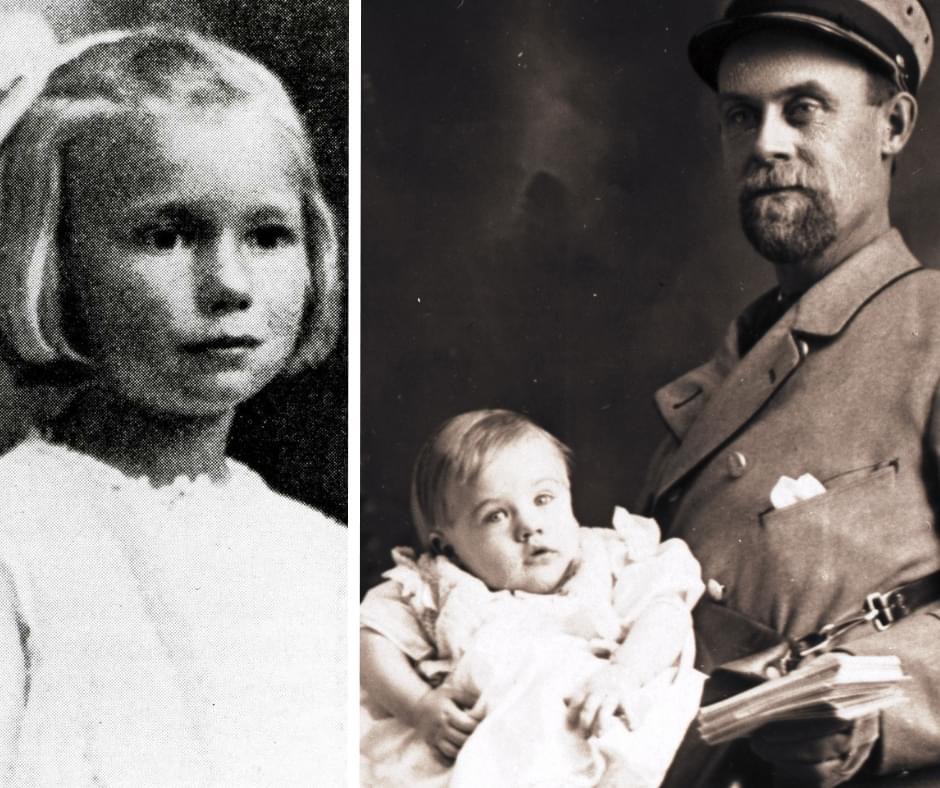
Mailing Babies 1913
#DidYouKnow The early decades of the 20th century saw a rather unusual practice take hold in the United States – the mailing of babies and young children through the Parcel Post system. This peculiar phenomenon emerged shortly after the launch of Parcel Post services on January 1, 1913, which allowed Americans to send packages and parcels through the mail in a convenient and affordable way.
While intended for inanimate objects, some enterprising and frugal parents quickly realized the potential to use this service to transport their children over long distances. At the time, purchasing a train ticket was prohibitively expensive for many families. However, the Parcel Post rates were very economical – it cost just 15 cents for the first pound and about 1 cent per pound for every additional pound after that. For cash-strapped parents needing to travel with young kids, mailing their little ones turned out to be the thriftiest option.
The first baby to be delivered via mail was one James Beagle, an eight month old who, at just under 11 pounds, was still technically under the weight limit that the postal service was imposing at the time. The child was mailed to his grandparents, who only lived a few miles away; so, fortunately for the tot, the journey was not arduous. (Indeed, sources claim that he slept most of the way there). According to the Smithsonian, James cost a mere 15 cents in postage – a “discount rate” if ever there was one. However, his parents also “insured” him for $50.00, which was no small charge back then. James’s journey created a sensation, and it established a child mailing trend that would continue for several years to come.
The process of sending babies through the mail was not as haphazard or dangerous as it may sound today. Their journeys were intentionally short, and parents were required to accompany and keep watchful eye over their mailed children during transit. Postmasters would simply affix the necessary postage stamps to the child’s clothing and have them ride along with mail clerks on trains and delivery vehicles. Upon arrival, the kids would be collected from the destination post office by waiting relatives.
While certainly an unorthodox practice through today’s lens, mailing babies was seen as a creative and acceptable solution for families with limited means in that era. Records indicate that at least a few dozen and potentially over 100 children were sent through the mail in this fashion during the mid-1910s before the service was eventually banned as being inappropriate and improperly taking advantage of the Parcel Post system.
The last documented case of a mailed baby occurred in 1915, when a young girl was shipped from Stratton, Oklahoma to her grandparents in Kansas – a journey of over 720 miles by rail! After this incident gained national headlines and public outcry, the Post Office finally prohibited the mailing of children for good in 1916. But it remains an amusing, if bizarre footnote in American history when sending kids became briefly acceptable postage!
Breastfeeding produces protection for generations against breast cancer
I breastfed all 3 sons
Mother/Child bond is deep
Not just babies that grow
Oh, how I’d love to go back to those first weeks and months. I was ever-present, yet never really there at all.
My head was elsewhere, caught up in all the shoulds, in the baby books, the apps, the impossible schedules; all the perceived perfections of motherhood that felt so at odds with what you were telling me you needed.
I followed my heart every single time. But never with conviction. Always apologetically as though I were somehow giving in. Not doing it right.
I fought it. Like a quiet war. It was exhausting.
I’d love to go back and mother that version of you, but as this version of me; the mum I am today.
More relaxed, more rested, more sure, no longer seeking approval, embracing the fact that I will be happily rocking my boy to sleep until he doesn’t need it anymore.
It’s not just our babies that grow.
———————–
CTTO
Art by: Amanda Greavette Fine Art

 GreatCosmicMothersUnite