

Totally acknowledge this
Tag: education
Secret Doctrine
Freemasons-Get Out of Jail Free Card
I heard this concept as a county deputy
explained to X , how to get out of a
a speeding ticket .
Another time , we left a party in separate
cars and I was pulled over and considered
a tad wobbly, after walking in heels 👠 X
volunteered to drive me home .
We doubled back , I got my car and
drove.👋
He was connected 🤢
1st 3 years are critical in childhood
My parenting changed when I learned that the critical years are only the first three.
Yes, only the first three.
After that, everything eases up gradually until the child becomes an adult.
The first three years are called the trust versus mistrust stage, and they’re the landing phase of life.
Your work as a parent is to pour love into your child unreservedly and to travel all the distance to meet them emotionally.
When they smile, you smile back. When they’re sad, you soothe them.
When they play with you, you play with them. When they want to be held, you hold them.
If you respond consistently and lovingly to them at this stage, they learn that people are loving and the world can be safe.
They don’t learn about mom and daddy or their home. They’re learning the world.
Should we say that in other words?
During the first three years of life, the child is not just learning you. They’re learning the world through you.
If you win their trust, you have won their trust for the world. If they can’t trust you, neither can they trust the world.
There’s no other stage in life when a person is so impressionable.
Sometimes, the child will have very inconvenient needs, like asking you to carry them when you’ve just arrived from work and you’re tired.
Do not deny them or punish them. Just drop everything and pick them up. You can wisely help them transition from that mood shortly after using diversionary tactics, but you must meet their need for connection first.
When they share their toy or food with you, receive it with full attention and appreciation. They’re giving you everything they have.
It’s not just a toy but their entire possessions. When you appreciate it, you’re registering in their highly impressionable brain that they matter.
Sometimes, the child will be restless, irritable, and outright difficult.
You will try five different meals, and they refuse all of them.
You will change their diapers and clothes, and they’re still crying.
You’ll soothe them for hours, and they still refuse to fall asleep.
You’ll feel frustrated and even angry. This is understandable and totally human.
But during those moments, you should remember one thing: the child is not trying to frustrate you.
They’re simply struggling with being human on that day. They’re as lost as you.
Your task at that time is to try one thing after another until you get out of the phase.
Perhaps they have stomach discomfort or colic. Perhaps the weather is too hot. Or you brought in a new nanny, and it made the child anxious for having to lose the other one with who they had bonded so well, and now he or she needs to grieve while also embracing a new person.
Perhaps there’s water in the baby’s ear or an irritating eye after water got into their eyes during bath time.
In other words, the child could be going through any of a hundred baby problems. You should attempt one solution after another until the phase passes.
If you leave the baby with a dishonest caregiver, for example, they may disrupt their sleep schedule by letting the baby oversleep while they indulge in their own leisure. Results? At bedtime, the baby is fully awake, and your attempts to make them sleep only annoy the child.
Is the child to blame for disturbing until 2 a.m.? They’re simply not sleepy because they slept too much during the day while under the care of another parent figure whom you delegated them to.
In short, it’s not easy to parent right during this stage, but if you approach it with empathy and patience, you’ll manage.
Once the child clocks three under this intensive care, voila! The programming is done.
Now they repel mean friends and shady adults because anything that’s not loving is strange to them.
Now, you can reason and schedule your interactions with working breaks in between. You can ask them what they experienced while you were away.
The child can let you work or go to the market as long as you keep your word and continue the same reliability and commitment you had when they were under three.
But life gets easier now since they can reason, communicate their needs, and even control themselves for increasing periods.
The next fifteen years after age three are divided into blocks of 5, each with a distinct role. Ages 8, 13, and 18 are the last pivotal milestones to cross, but each is easier than the previous.
(©️ Benjamin Zulu Global)
Collapse of public health 💰
Mercury has never been tested for use in medicine!
50k for placentas
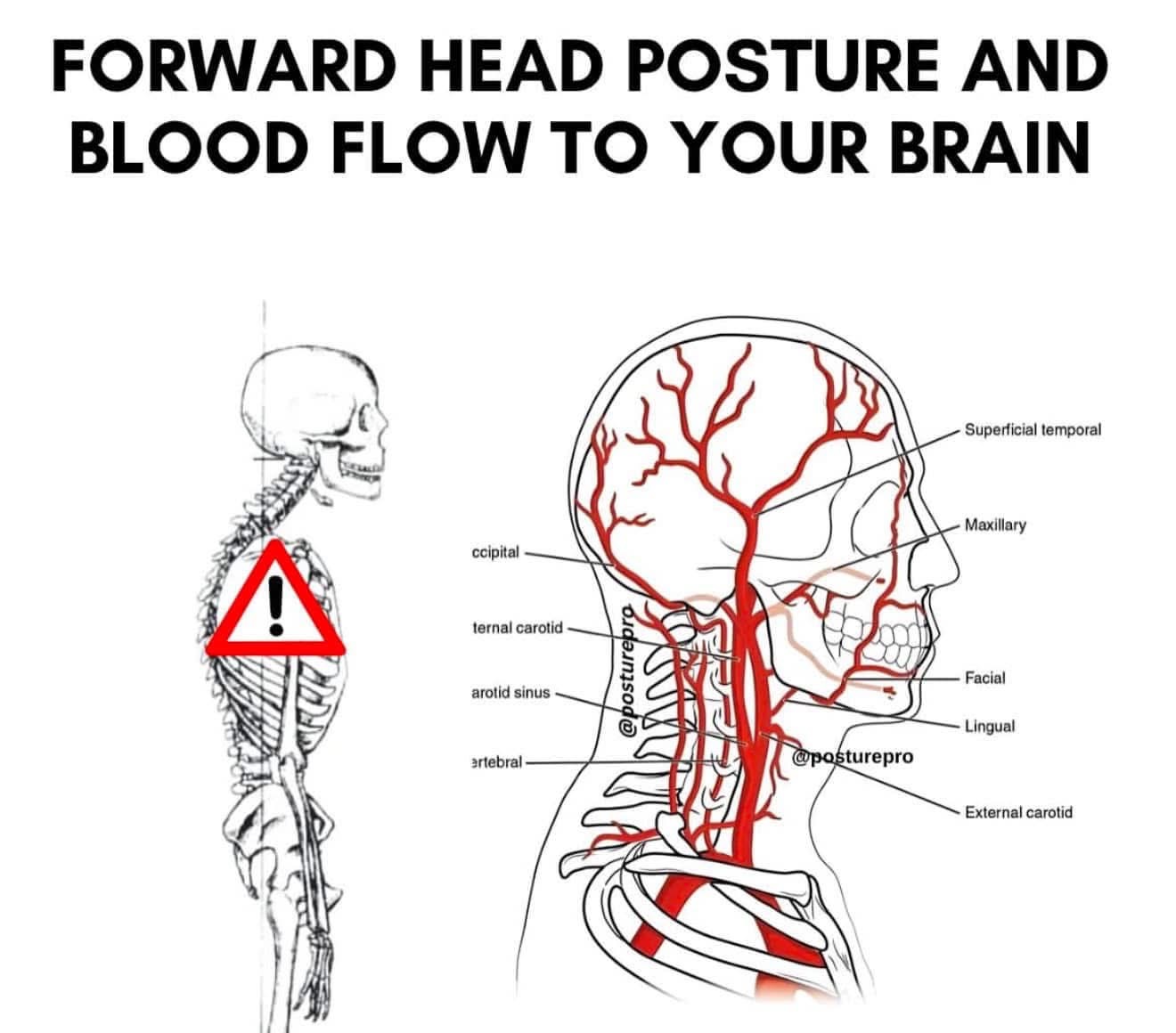
Head Posture & blood flow to your brain
According lo a recent study, forward head position and blood flow to the brain are clinically observable by taking the carotid pulses and can lead to debilitating symptoms within the brain.
The carotid pulses are weaker when the head is in a forward position; however, the carotid pulses are stronger when the head is over the spine.
When the head is forward over the spine, the brain may not receive sufficient blood flow and oxygen due to compression of the carotid arteries.
If this compression is severe enough, it can result in cerebral ischemia (CNS dysfunction).
Clinically, we see disturbed sleeping patterns, increased anxiety, and mental sluggishness.
The March 2000 Mayo Clinic reported that prolonged FHP also leads to myospasm, disc herniations, arthritis, and pinchedoid nerves.
Dr. Alf Breig, a Swedish neurosurgeon and Nobel Prize recipient, describes how the loss of a normal cervical lordotic curve creates dysfunction and disease.
Through cadaver studies, Dr. Breig demonstrated that neck flexion could stretch the spinal cord 5-7 cm causing tensioning of the meninges (covering of the brain and spinal cord) and elicit measurable pressure on brainstem nuclei (nerve control centers) which control all basic life functions.
ctto: @posturepro
Treating Cancer with sound waves
NEW TREATMENT USES SOUNDWAVES TO DESTROY TUMOURS WITHOUT SURGERY OR RADIOTHERAPY
A revolutionary new cancer treatment, called histotripsy, is becoming a game-changer. Approved by the FDA in America, this non-invasive therapy utilises ultrasound waves that target cancer cells with pinpoint precision, breaking them apart instantly without harming surrounding tissue.
Providence Mission Hospital in Viejo, California, is at the forefront of this groundbreaking treatment, providing hope for patients like Chris Donaldson who faced limited options after his ocular melanoma spread to his liver.
Unlike traditional treatments, histotripsy leaves behind benign genetic material, potentially strengthening the body’s immune response against cancer. One of its key advantages is that it requires no incisions, making recovery quicker and less painful. Using degassed water to focus the soundwaves, doctors can liquefy tumours without damaging nearby organs, allowing for repeat treatments as necessary.
Patients like Donaldson, who had been given a grim prognosis, are now experiencing remarkable results – his liver remains cancer-free months after the procedure.
As research continues, experts believe this innovative approach could be expanded to treat other cancers, including those affecting the thyroid and breast. For many, histotripsy represents not just a medical breakthrough, but a second chance at life.

 GreatCosmicMothersUnite