Alienator’s Perception of the World

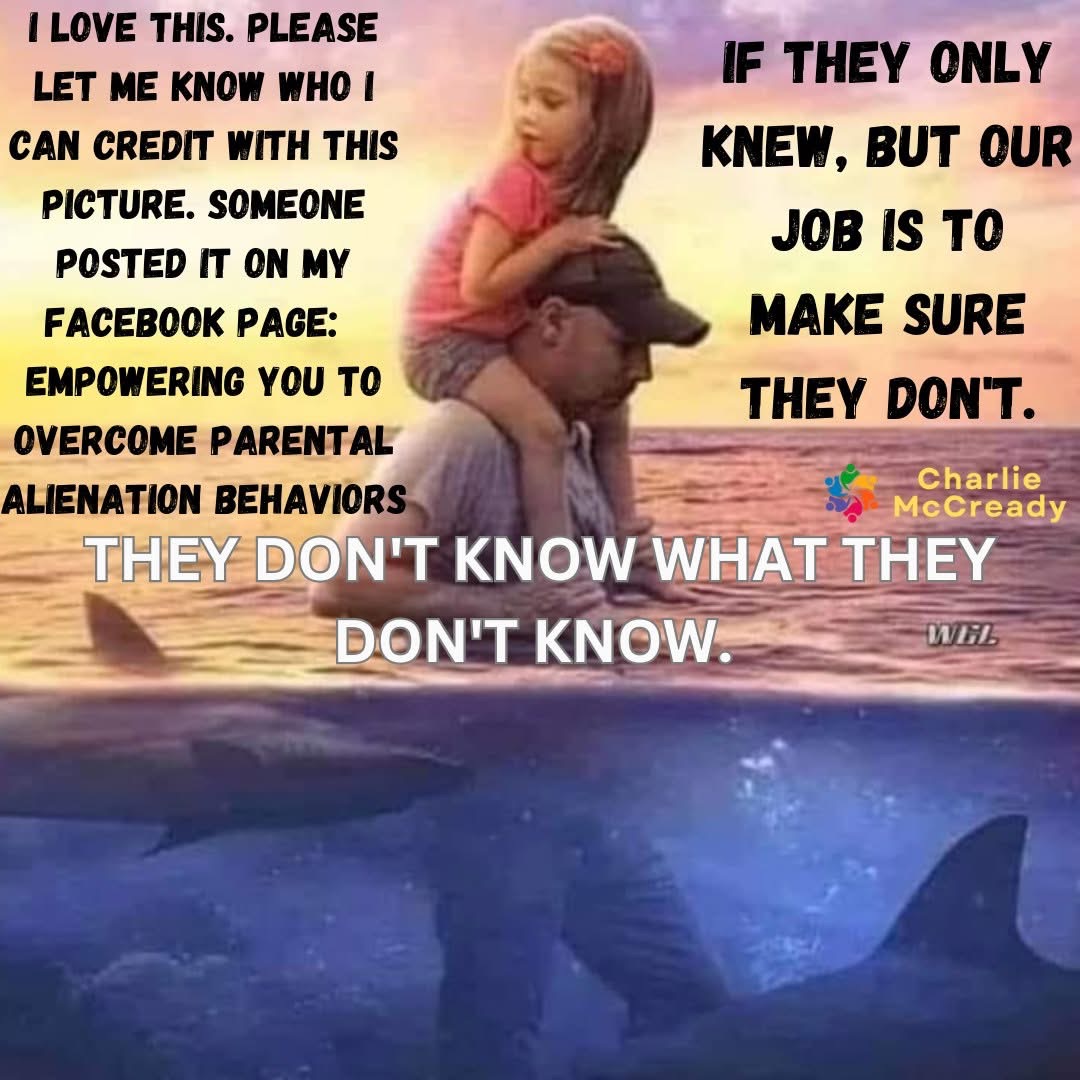
I saw this picture on my Facebook group page. It visually portrays how we try to protect our children, and they don’t know the harm around them – which is how it should be. Long may they be children, innocent and carefree! ⁠

Unfortunately, the alienating parent’s perception of the world as being ‘shark infested’ and dangerous is shared with the child. Namely, they’re told they should be protected from us, a loving parent. The only ‘dangerous waters’ for our child are the ones full of manipulation, emotional turmoil, fractured relationships with us, and trauma bonds with the ‘favoured’ parent. ⁠

The child doesn’t see the trouble they’re in. They’re enmeshed and aligned with the alienating parent and may not, for some time, perceive it’s not as calm as they believe. It’s turbulent, and the psychological abuse hides beneath the surface. ⁠

The challenge lies in bridging the gap between the children’s perception and the actual risks they face. Sadly, they have to see it for themselves. They have to tread water, trying to survive this experience and we have to as well. We have to become like lighthouses showing them the way. ⁠

#charliemccready

#parentalalienationcoach

#CoerciveControl

#selfcare

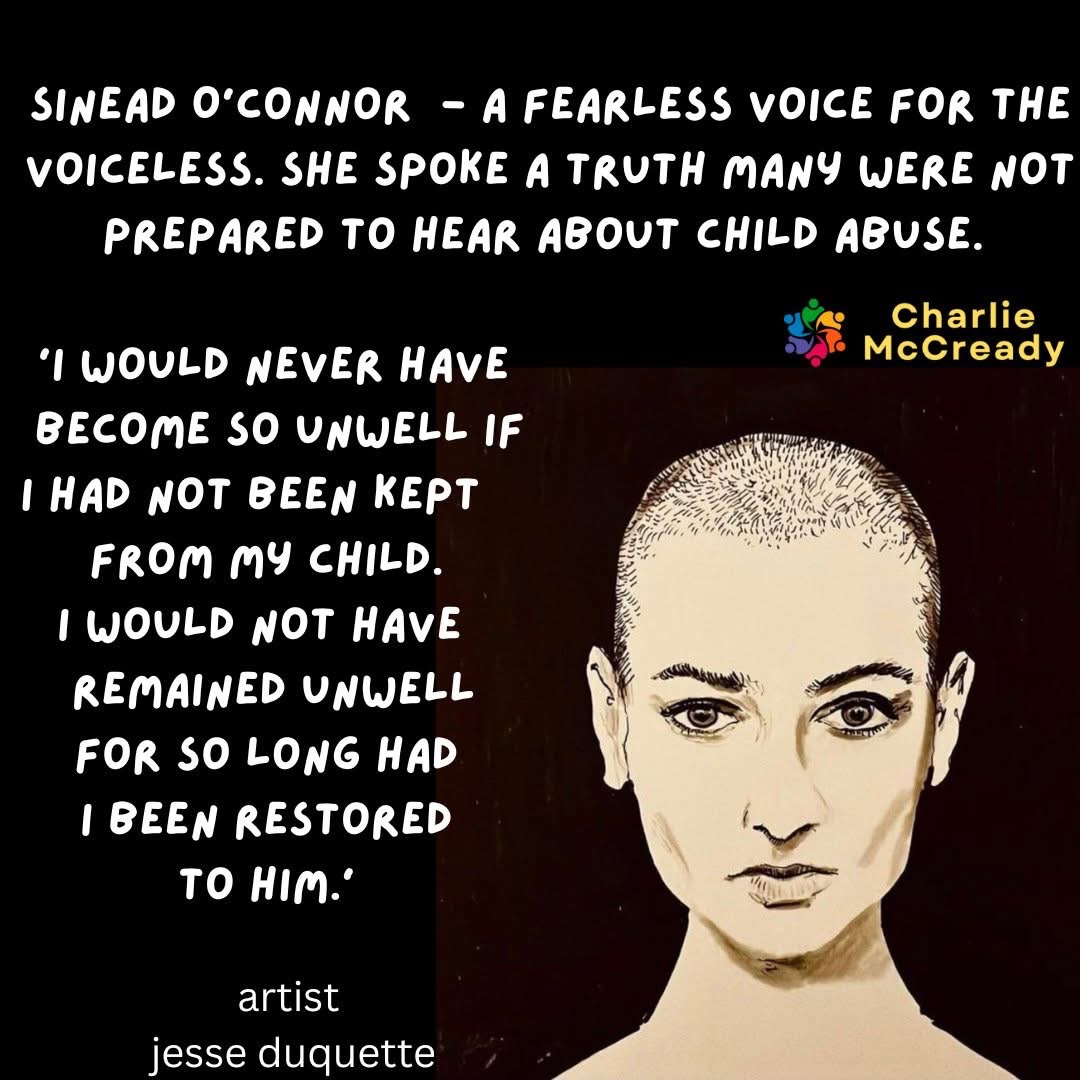
Sinead O’Connor -Charlie McCready

Irish singer and activist Sinéad O’Connor was one of the first artists to go public about being a child abuse survivor. She said that talking about it made people uncomfortable. They were even more so when in 1992, she tore up a photograph of Pope John Paul II during her ‘Saturday Night Live’ performance. The industry shunned her, but her beautiful, powerful, distinctive voice and deeply personal lyrics still found an audience. Her passing greatly saddened me. I loved her 1994 album, ‘Universal Mother’; especially the tracks ‘Fire on Babylon’ where the power and rage in her voice is truly awesome, and the sweet tenderness in ‘My Darling Child’ touches your heart. I sang this lullaby to my children. There’s never a doubt she loved her children (Shane, Jake, Roisin and Yeshua) and she wanted to protect all children. Later when explaining why she risked her career in such a dramatic way, she said it wasn’t an attack on the pope but on the complicity, hypocrisy and systematic cover-up of child abuse within the church’s ranks. Later, she was proven to be right. During a meeting with victims of clerical abuse in Malta, Pope Benedict XVI in 2010 expressed ‘shame and remorse’ for the harm caused by clergy members who had abused children.

Sinéad O’Connor bravely spoke out about her experiences as both a mother and a victim of the flawed child protection system. Through her pain and activism, O’Connor shed light on the urgent need to address child abuse, the wrongful separation of families, and her courageous stand against abuse within the Catholic Church. Her personal experiences of physical and sexual abuse at the hands of her devoutly religious mother resonated deeply with countless victims who felt voiceless and unheard. And her refusal to conform to the commercial pressures of the music industry and her outspoken stance against materialism set her apart from conventional pop stars. She used fame to address pressing social issues, including racism and censorship, challenging the status quo and inspiring others to speak out against injustice.

Sinéad O’Connor’s life took a tragic turn when Family Court took her son Shane from her. In an emotional and tearful Facebook video, she said she’d been severely depressed and suicidal for two years since Family Court took her son away from her. ‘I have two young kids in Ireland…and I can’t even get anywhere near them…How come I can have one kid but not the other?… I’m supposed to be supervised with one child but not with my 10 year-old child? It is a f***ing joke.’ As Sinéad O’Connor said then: ‘I want and deserve to see my baby Shaney any time we want without anyone breathing down our necks…We should never have been separated…You have left me with nothing to lose.’ O’Connor subsequently turned her frustrations on herself, saying, ‘FYI please don’t imagine I am less than keenly aware I failed my child, alongside Tusla and the HSE and the Irish State. And alongside others in his life ….’ This is what we do. Blaming ourselves is an expression of our anger which is how we process grief.

Tragically, Sinéad O’Connor’s son Shane O’Connor died by suicide two days after he had gone missing in January 2022, leaving a profound impact on his grieving mother. He was 17 years old. The Irish singer, who died just over a year later on July 26, 2023, at 56 years old, publicly mourned his death in the days after. ‘My beautiful son, Nevi’im Nesta Ali Shane O’Connor, the very light of my life, decided to end his earthly struggle today and is now with God,’ Sinéad wrote in a since-deleted tweet. ‘May he rest in peace and may no one follow his example. My baby. I love you so much. Please be at peace.’ Just days before her own death, Sinéad shared a post on social media that gave insight into her emotional struggles after losing her son. In a now-deleted tweet, she wrote, ‘Been living as undead night creature since. He was the love of my life ….’

Sadly, her experiences are not isolated; countless parents are in a similar plight after losing their children in Family Court battles. The trauma of such separations often leaves them battling depression, anxiety, and post-traumatic stress disorder (PTSD). Despite being a devoted mother, O’Connor found herself in a harrowing battle with the very agencies entrusted with safeguarding children’s well-being. The lack of sufficient resources, funding, and training within these services can result in grave errors in judgment, leading to wrongful separations and further exacerbating the trauma experienced by vulnerable families. Sinéad O’Connor’s heart-wrenching journey and her advocacy against child abuse in the Catholic Church and Family Court prompt us to question the effectiveness and compassion of our current child protection system. It underscores the urgency for significant reforms, increased funding, and improved training for protective services. In her memory, let us continue the conversation she started on the pressing issue of child abuse, including parental alienation. Parental alienation, a form of emotional abuse that separates children from one of their parents, must be acknowledged and addressed as child abuse to protect the rights and well-being of innocent children. As a society, we must join hands to support vulnerable families and protect children from harm. Only then can we hope to prevent further tragedies and provide a safer, more nurturing environment for future generations where love, support, and understanding prevail and where every child is safe, cherished, and able to thrive.

RIP beautiful Sinéad.

In the UK, the charity Mind is available on 0300 123 3393 and Childline on 0800 1111. In the US, Mental Health America is available on 800-273-8255. In Australia, support is available at Beyond Blue on 1300 22 4636, Lifeline on 13 11 14, and at MensLine on 1300 789 978

#charliemccready

#parentalalienationcoach

#mentalhealthawareness

#parentalalienation
Children waking to Pathogenic Parenting – Charlie McCready

As they grow older and gain more life experience, the alienated child may start to question the narrative that has been imposed upon them and realise the manipulation and control tactics employed by one of their parents (typically it’s a parent). They may become aware of the discrepancies between the image of the targeted parent presented by the alienating parent and the reality they observe themselves. This is why it’s so important we do all we can to remain non-reactive, calm, loving … as I cover in many of my posts.

This realisation can be a gradual process, sparked by various factors such as interactions with the targeted parent, exposure to different perspectives, or their own inner reflection. As the child starts to critically analyze the situation, they may begin to see the patterns of emotional manipulation, denigration, and falsehoods employed by the alienating parent. They may recognise the parent’s ulterior motives, such as jealousy, vengeance, or a desire for control.

Becoming aware of the disordered parenting of the alienating parent can be a transformative and emotionally challenging experience for the child. It may evoke a range of emotions, including anger, confusion, and a deep sense of betrayal. However, this awareness can also be a catalyst for personal growth and healing as the child begins to reclaim their own voice and establish their own identity independent of the alienating parent’s influence. It opens the door to the possibility of reconnecting with the targeted parent and developing healthier relationships based on truth, understanding, and mutual respect.

Hold on, my friends. Stay strong. Stay loving. Strive to be happy.

#charliemccready

#parentalalienationcoach

#reactiveabuse

Alienated Children & their awareness

Our 3 resist awareness or healing

As they grow older and gain more life experience, the alienated child may start to question the narrative that has been imposed upon them and realise the manipulation and control tactics employed by one of their parents (typically it’s a parent). They may become aware of the discrepancies between the image of the targeted parent presented by the alienating parent and the reality they observe themselves. This is why it’s so important we do all we can to remain non-reactive, calm, loving … as I cover in many of my posts.

This realisation can be a gradual process, sparked by various factors such as interactions with the targeted parent, exposure to different perspectives, or their own inner reflection. As the child starts to critically analyze the situation, they may begin to see the patterns of emotional manipulation, denigration, and falsehoods employed by the alienating parent. They may recognise the parent’s ulterior motives, such as jealousy, vengeance, or a desire for control.

Becoming aware of the disordered parenting of the alienating parent can be a transformative and emotionally challenging experience for the child. It may evoke a range of emotions, including anger, confusion, and a deep sense of betrayal. However, this awareness can also be a catalyst for personal growth and healing as the child begins to reclaim their own voice and establish their own identity independent of the alienating parent’s influence. It opens the door to the possibility of reconnecting with the targeted parent and developing healthier relationships based on truth, understanding, and mutual respect.

Hold on, my friends. Stay strong. Stay loving. Strive to be happy.

#charliemccready

#parentalalienationcoach

#parentalalienation

The Alienated Child -Charlie McCready

It’s painful for the alienated child when they realise they’d put their trust in a parent who didn’t entirely have their best interests in mind, they were mostly thinking of themselves. They were being childish, vengeful and selfish when as a parent they’d have been expected, and trusted to be emotionally mature, mentally balanced, nurturing, and unconditionally loving.

Coming to terms with being manipulated, lied to, and deprived of a relationship with a loving parent can be a challenging process for an alienated child. It often involves recognising and acknowledging what really happened, which can evoke feelings of anger, sadness, and betrayal. Healing and reconciliation requires support from people who understand parental alienation. They can gradually gain insight into the dynamics at play and develop a healthier perspective on the situation. It is essential for the child to separate their own identity and emotions from the alienating parent’s influence, allowing them to reclaim their autonomy and make informed decisions about their relationships. Ultimately, the healing process involves finding ways to rebuild trust, establish boundaries, and create a fulfilling life that includes a sense of love and connection with both parents, regardless of the alienating parent’s actions.

A significant amount of programming of false beliefs and fictions need to be untangled so they can move on with their life as a sovereign, happy, healthy-minded individual who is free to love who they choose, not only who their alienating parent allows them to love.

Alienated children need to be immensely brave and strong to break free, but they can and do. Some cut ties with the alienating parent; some find a way to have both parents in their lives, which was always the best

Holding peace

You are a rockstar! Whereas, an alienating parent engages in emotional abuse and manipulative tactics. Their actions can stem from deep-seated emotional issues, such as unresolved trauma, low self-esteem, or a need for control and power.

During a divorce or separation, this internal conflict is exacerbated, as the alienating parent may perceive the dissolution of the relationship as a personal attack or rejection. A narcissistic wound. They’re angry, resentful, and a desire for revenge can manifest in the weaponisation of your children as pawns or collateral to further their agenda. In their distorted worldview, they may view you as an enemy to be defeated rather than a co-parent to collaborate with.

Their controlling and manipulative behaviours are an attempt to exert dominance and influence. They may engage in character assassination, spreading false narratives and actively trying to alienate the child from you and anyone associated with you. Their actions can create an environment of fear, anxiety, and instability for everyone involved. An inability to separate their own emotional struggles from their role as a parent can lead to emotional neglect and confusion for the children who unfortunately get caught in the crossfire, feeling torn between their loyalty to both parents and manipulated into taking sides with the alienating parent.

You cannot change an alienator. You can only change how you deal with them. You must become the rock that protects yourself and your children and provides support to your family. There are plenty of tools and techniques to help you do this, creating emotional and mental strength and resilience.

If you are interested, check out my 9-step program. I also offer 1-2-1 coaching both of which guide you through the process of becoming a ROCK.

#charliemccready

#parentalalienationcoach

#parentalalienation

#parentalalienationawareness

#healing

#custody

#custodybattle

#childcustody

#FamilyCourt

Trauma Bonds , Sabotage, Coercive, Control – Alienating Parent – Charlie McCready

The loyalty/trauma bonds are created because the alienating parent consistently portrays the other parent in a negative light, using derogatory language, making false accusations, and highlighting perceived flaws or mistakes. This constant denigration aims to sabotage the connection between the targeted parent and child. It is abuse.

The alienating parent often isolates the child from the targeted parent, their extended family and support system. They may restrict access to communication or visitation, limit opportunities for bonding, and discourage or prohibit positive interactions with the targeted parent. They emotionally manipulate the child by leveraging their emotions, guilt, and fear. Not only this but they also instil a sense of obligation and loyalty by making the child believe that supporting or loving the targeted parent would hurt or betray them. It’s childish, and utterly selfish behaviour, but the child doesn’t know this.

The child is ‘parentified’, but the alienating parent also fosters an unhealthy dependency, so the child feels reliant on them for emotional support, validation, and approval. This dependency reinforces the loyalty bond and makes it difficult for the child to express positive feelings towards the rejected parent especially when the alienating parent creates a false narrative where the targeted parent is consistently portrayed as the cause of all the family problems and the source of the child’s distress.

Over time, these tactics can create a strong trauma/loyalty bond between the child and the alienating parent. The child may internalise the alienating parent’s views, blame the targeted parent for the family’s dysfunction, and believe that aligning with the alienating parent is the only way to maintain their love and approval.

Not all children will respond in the same way, even in the same family with the same family dynamics. However, the creation of loyalty bonds and the shifting of blame onto the targeted parent are common patterns observed in alienation cases.

#charliemccready

#parentalalienationcoach

#parentalalienation

#ParentalAlienationAwareness

#FamilyCourt

#alienatedchild

#custody

#custodybattle

#traumabond

#traumabonding

per

Abandonment Issues in Parental Alienation / Charlie McCready

Siblings suffer too, when their brother or sister is a victim of alienation and they may grow up burying their feelings of grief, guilt and abandonment. It can have a profound impact on their own emotional well-being. I have personal experience of this and it can’t be underestimated.

The child ‘left behind’ may be aware of the strained or severed relationships, even if they never talk about it. Internally, they can be mourning the loss of the close bond they once shared and struggle with the emotional void left behind. It is not their fault at all, but they might not know this, blaming themselves and feeling guilty. They may feel ‘left behind’ or ‘the lucky one’ but they may also feel that all the focus is on others and not them. If all attention and focus is on the alienating parent or the target parent, or the alienated child, the one who remains may feel a bit lost and isolated. They may even suppress their own needs, not wanting to cause any more trouble or to avoid any further the conflict in the family. Some may feel obligated to choose sides or align. They may think they need to protect themselves from similar treatment. When they witness manipulation and trauma, they may grapple with their own identity issues. It is similar to the less favoured child in a family dynamic.

It is important for siblings and step-siblings in these circumstances to seek support and understanding from people who understand the dynamics of parental alienation, or trusted individuals outside of the family. They may not be able to talk about their experience with their siblings who are all going through their own different journey even within the same family group. They need a safe space to process their feelings, address unresolved emotions, and develop coping strategies. Additionally, fostering open communication and maintaining strong bonds with other supportive family members can help siblings navigate the challenges and minimise the long-term effects of the alienation on their well-being.

#charliemccready

#parentalalienationcoach

#ParentalAlienationAwareness

#parentalalienation

#alienatedchild

#FamilyCourt

#custody

#divorce

#childcustody

Charlie McCready – Professional advice on PA-

Coping with the opinions and suggestions of friends, family, and even mental health care professionals can be challenging when facing parental alienation. It’s helpful to remember, they don’t mean to be unkind, they’re just ignorant and have no idea what we’re going through. That’s why it is helpful to be on groups such as this (I hope). I’ve walked in your shoes. My partner has too. We have over 20 years experience, and as step-parents too. We have also experienced the lack of empathy and true understanding from friends, family and ‘experts’. We sometimes find ourselves educating the educators and suggesting how people in positions of authority and safeguarding might better be able to detect alienating behaviours. Do you, too? Make sure you prioritise self-care. It does feel isolating. But you are not alone. Unfortunately, there are thousands and thousands feeling alone just like you. Just like I did (which is why I do all these posts). Set up boundaries. Reach out for help. Focus on the present, not the past and the love, not the loss. Maintain hope and – if you can – stay committed to maintaining a loving and open presence in your child’s life. Stay strong, my friends.

#charliemccready

#parentalalienationcoach

#parentalalienationisreal

#parentalalienationawareness

#parentalalienation

#narcissisticabusesurvivor

#narcissisticabuseawareness

#FamilyCourt

#fathersrights

#mothersrights

#custody

#childcustody

#custodybattle

#mothersmatter

#FathersMatter

Connection & Support – Charlie McCready

We’re a community of people who have the most unfortunate shared experience. There can’t be many experiences worse than having our loved, loving children turned against us and coerced into rejecting us by a vengeful ex. Parental alienation is often called a living bereavement for good reason. I post daily to spread awareness, inform and uplift. But your comments are integral and so valued. Thank you for contributing when you feel moved to do so. Sharing your opinions and experiences helps others. We have a connection and a common struggle. We can gain insights from each other. When we’ve received kindness and support from others, we know what a difference it makes. Personal suffering can lead to personal growth, resilience and a heightened sense of love and compassion. Connection and support is a wonderful thing. Thanks for being here.

#charliemccready

#parentalalienationcoach

#alienatedparent

#parentalalienation

#selfcare

#FamilyCourt

#custody