God – Good Bad in all religions – Jim Palmer

There are common characteristics associated with almost all religion that I see as having a significant downside. They include:

1. Separation from God

The basic notion is that the source of what we most deeply or ultimately want and need as human beings is outside ourselves. In other words, the love, peace, power, wisdom, insight, courage, belonging, worth, significance, and meaning we desire is not something we can generate or find naturally within or through ourselves, but is given by “God” and contingent upon a proper relationship with God.

2. Externalization of authority to revelatory knowledge

Who gets to say or how are we to determine the answers to the ultimate questions of life? What is the meaning of life? What is my true identity? What is my greater purpose? How should I live my life? What is death? What happens when we die? Is there a god, and, if so, what is this god like? Religion claims that the correct answers to such questions are imparted through revelatory knowledge such as the teachings of a special messenger of God (i.e. Jesus, Mohammad, Buddha, Bahá’u’lláh, etc.) or a sacred text (Bible, Koran, Bhagavad Gita, Lankavatara Sutra, etc.). The further stipulation to this idea is the authority given to a select few to properly interpret these teachings and texts.

3. Deference to the not yet

I have found in most religions that special attention is given to the not yet. What I mean by the “not yet” is the fulfillment of a future prophecy or the idea of the afterlife. The prevailing religious narrative seems to be that our current reality and order is messed up, lacking and hopeless, and something better is coming in the future as a direct result of divine intervention or some grand eschatological ending. Karl Marx wrote, “Religion is the sigh of the oppressed creature, the heart of a heartless world, and the soul of soulless conditions. It is the opium of the people. The abolition of religion as the illusory happiness of the people is the demand for their real happiness.” In other words, rather than confront the unjust and oppressive conditions of society, the working class is lulled into complacency and a pseudo happiness by the promised eternal reward of Heaven, preached in church each Sunday.

4. Divine intervention

It is a common characteristic of religion to appeal to God in moments of great need or crisis. The notion is that there are some personal and societal circumstances that are beyond human capacity to resolve and require supernatural intervention. This is the logic behind intercessory prayer – requesting God’s direct action in a personal matter or world affairs.

5. Innate badness

The idea that human beings are fundamentally flawed is a common characteristic of religious thinking. The Christian religion teaches that people are born into this world as “sinners” in need of forgiveness and salvation. Guilt is, “I did something bad;” shame is, “I am bad.” What typically follows from the “I am bad” belief is a mistrust of oneself and one’s ability to direct and govern their own lives.

6. Personification of evil

The religious narrative of good versus evil teaches that just as there is a supernatural reality of goodness at work in the world (“God”), there is also an opposing supernatural force of evil (“Satan”). We laugh at the phrase “the devil made me do it,” but most religious traditions externalize the fundamental source of evil and foul play in the world to “spiritual warfare,” which is belief in evil spirits which are able to intervene in human affairs.

In my experience, these characteristics tend to influence people in what I believe to be the following harmful ways:

1. The inability to generate meaning and cultivate wholeness and well-being naturally in and through oneself.

2. Failure to nurture a holistic and comprehensive view of self, life and the world through the convergence of evidence and knowledge from all fields of study and inquiry.

3. Failure to fully embrace, honor, protect and invest oneself in the present gift of life.

4. Abdicating human responsibility for the condition of the world and avoidance of direct action to bring change.

5. Ineptness for self-governance, free-thinking, self-confidence and psychological well-being.

6. Failure to acknowledge ourselves as the cause and for taking responsibility for the breakdown of society and our human and planetary ills and maladies.

One might stop and ask if it’s possible for religion to renounce or let go of these characteristics, and instead encourage, teach, inspire and promote values such as:

1. A higher view of humanity as a source for generating meaning, wholeness, ethics and harmony.

2. An interdisciplinary approach for understanding and unraveling the mysteries and marvels of life and the universe.

3. Inspired, mindful and passionate living based on the notion that life is a wonderful gift and won’t last forever.

4. Taking ownership and responsibility for the task of building a world that works for everyone.

5. Encouraging and promoting self-actualization or the fulfillment of one’s individual human potential.

6. Acknowledging that the only ugliness in the world is what we do to ourselves and other living things.

~ Jim Palmer

Jim Palmer – Christian doctrine

As you know, I once was an evangelical megachurch pastor and my pastoral career stretched over many years. Eventually, I could no longer teach Christian doctrine with a good conscience and realized this teaching was not truly changing people’s lives… and so I walked away from the whole enchilada.

Below are 14 things that the misguided religious establishment doesn’t want you to know. Speaking for myself and my personal experience, I was not able to see or admit these things to myself. I truly got into ministry initially because I wanted to make a difference and help people, and I relied upon the belief-system I learned as the proper framework to achieve this. It took a lot of post-religion reflection to see the ways this belief-system was hurting people.

I offer the below list in hopes that you might disentangle yourself from harmful beliefs and attitudes impacting your life.

14 things the misguided religious establishment doesn’t want you to know:

1. Toxic religion is rooted in fear, especially fear about the afterlife. It leverages the false doctrine of hell to win converts and demand holiness. The fear of God’s disapproval, rejection, abandonment and punishment is another hallmark of toxic religion.

2. Clergy have no innate authority. Holding a church leadership position or having a theological degree does not imbue a person with special divine authority or superiority. The terms “anointed”, “called”, or “chosen” or titles such as “pastor”, “priest”, “bishop”, “elder”, “evangelist” or “apostle” do not confer any innate authority on an individual or group.

3. We hold sacred what we are taught to hold sacred, which is why what is sacred to one community is not sacred to another.

4. The stories in our sacred books aren’t history, nor were they meant to be. The authors of these books weren’t historians but writers of historical fiction: they used history (or pseudo history) as a context or pretext for their own ideas. Reading sacred texts as history may yield some nuggets of the past, but the real gold is in seeing these stories as myth and parable, and trying to unpack the possible meanings these parables and myths may hold.

5. Prayer doesn’t work the way you think it does. You can’t bribe God, or change God’s mind through obedience, devotion, or groveling. The underlying theistic premises of prayer are untenable.

6. Anything you claim to know about God, even the notion that there is a God, is a projection of your psyche. What you say about God—who God is, what God cares about, who God rewards, and who God punishes—says nothing about God and everything about you. If you believe in an unconditionally loving God, you probably value unconditional love. If you believe in a God who divides people into chosen and not chosen, believers and infidels, saved and damned, high cast or low caste, etc. you are likely someone who divides people into in–groups and out–groups with you and your group as the quintessential in-group. God may or may not exist, but your idea of God mirrors yourself and your values.

7. Nobody is born Jewish, Muslim, Hindu, Catholic, Protestant, etc. People are born human and are slowly conditioned by narratives of race, religion, gender, nationality, etc. to be less than human.

8. Theology isn’t the free search for truth, but rather a defense of an already held position. Theology is really apologetics, explaining why a belief is true rather than seeking out the truth in and of itself. All theological reasoning is circular, inevitably “proving” the truth of its own presupposition.

9. Becoming more religious cannot save us. Religion is a human invention reflecting the best and worst of humanity; becoming more religious will simply allow us to perpetuate compassion and cruelty in the name of religion. Because religion always carries the danger of fanaticism, becoming more religious may only heighten the risk of us becoming more fanatical.

10. Becoming less religious cannot save us. In fact, being against religion can become it’s own fanaticism. Becoming less religious will simply force us to perpetuate compassion and cruelty in the name of something else. Secular societies that actively suppress religion have proven no more just or compassionate than religious societies that suppress secularism or free thought. This is because neither religion nor the lack of religion solely nullifies our human potential to act out of ego, greed, fear, hostility, and hatred.

11. A healthy religion is one that helps us own and integrate the shadow side of human nature for the good of person and planet, something few clergy are trained to do. Clergy are trained to promote the religion they represent. They are apologists not liberators. If you want to be more just, compassionate, and loving, you must do the personal work within yourself, and free yourself from the conditions that lock you into injustice, cruelty, and hate, and this means you have to free yourself from all your narratives, including those you call “religious.”

12. Religious leaders claims that their particular understanding and interpretation of their sacred books should be universally accepted. Religious leaders often say, “My authority is the Bible.” It would be more accurate for them to say, “My authority is what they taught me at seminary the Bible means.” People start with flawed or false presuppositions about what the Bible is, such as: the Bible was meant to present a coherent theology about God or is a piece of doctrinal exposition; the Bible is the inerrant, infallible and sole message/”Word” of God to the world; the Bible is a blueprint for daily living. Too often religious leaders make God about having “correct theology.” There are a lot of unhappy, broken, hurting, suffering, depressed, lonely people in church with church-approved theology.

13. If your livelihood depends on the success of your church as an organization, it doesn’t take a rocket scientist to see that you will mostly define and reward Christianity as participation in church structures and programs. Christian living is mostly a decentralized reality or way of life, not a centralized or program-dependent phenomenon. Church attendance, tithing, membership, service, and devoted participation, become the hallmarks of Christian maturity.

14. You are capable of guiding your own spiritual path from the inside out and don’t need to be told what to do. You naturally have the ability, capacity, tools and skills to guide and direct your life meaningfully, ethically and effectively. Through the use of your fundamental human faculties such as critical thinking, empathy, reason, conscience and intuition, you can capably lead your life. You have the choice to cultivate a spirituality that doesn’t require you to be inadequate, powerless, weak, and lacking, but one that empowers you toward strength, vitality, wholeness, and the fulfillment of your highest potentialities and possibilities.

Jim Palmer

Human experience

A learned man was once asked to explain the difference between Religion and Spirituality. His response was profound:

▪ Religion is not just one, there are many.
▪ Spirituality is one.

▪ Religion is for those who sleep.
▪ Spirituality is for those who are awake.

▪ Religion is for those who need someone to tell them what to do and want to be guided.
▪ Spirituality is for those who pay attention to their inner voice.

▪ Religion has a set of dogmatic rules.
▪ Spirituality invites us to reason about everything, to question everything.

▪ Religion threatens and frightens.
▪ Spirituality gives inner peace.

▪ Religion speaks of sin and guilt.
▪ Spirituality says, “learn from an error”.

▪ Religion represses everything which is false.
▪ Spirituality transcends everything, it brings you closer to your truth!

▪ Religion speaks of a God; It is not God.
▪ Spirituality is everything and therefore, it is in God.

▪ Religion invents.
▪Spirituality finds.

▪ Religion does not tolerate any question.
▪Spirituality questions everything.

▪ Religion is human. It is an organization with rules made by men.
▪ Spirituality is Divine, without human rules.

▪ Religion is the cause of divisions.
▪Spirituality unites.

▪ Religion is looking for you to believe.
▪ Spirituality you have to look for it to believe.

▪ Religion follows the concepts of a sacred book.
▪ Spirituality seeks the sacred in all books.

▪ Religion feeds on fear.
▪ Spirituality feeds on trust and faith.

▪ Religion lives in thought.
▪ Spirituality lives in Inner Consciousness.

▪ Religion deals with performing rituals.
▪ Spirituality has to do with the Inner Self.

▪ Religion feeds the ego.
▪ Spirituality drives to transcend beyond.

▪ Religion makes us renounce the world to follow a God.
▪ Spirituality makes us live in God, without renouncing our existing lives.

▪ Religion is a cult.
▪ Spirituality is inner meditation.

▪ Religion fills us with dreams of glory in paradise.
▪ Spirituality makes us live the glory and paradise on earth.

▪ Religion lives in the past and in the future.
▪ Spirituality lives in the present.

▪ Religion creates cloisters in our memory.
▪ Spirituality liberates our Consciousness.

▪ Religion makes us believe in eternal life.
▪ Spirituality makes us aware of Eternal Life.

▪ Religion promises life after death.
▪ Spirituality is to find God in our interior during the current life before death. -We are not human beings, who go through a spiritual experience.

-We are spiritual beings, who go through a human experience.

Source UnKnowN….

Jesus by Jim Palmer

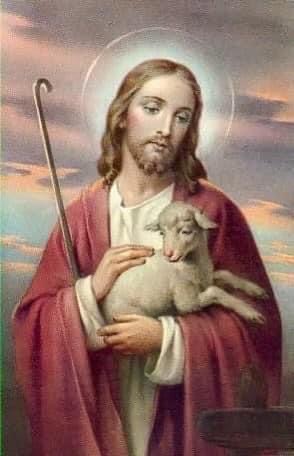
“Jesus was not some sweet, neatly-shaven white guy who carried a baby lamb in his arms, picking daisies, patting children on the head and spouting off sappy stories about being nice. Religious pictures of Jesus have a glowing halo around his head. That doesn’t work either. Jesus was no saint.

Jesus raised hell against the religious establishment, and his life was a middle-finger to the ways religion oppressed, exploited, and divided people. He once drove a bunch of hypocrites out of the temple, wielding a whip. Jesus was not fond of entrenched power structures – political or religious. Whether in the name of God or Caesar, Jesus would have none of it.

There was a Jesus before Christianity. That Jesus was fierce, courageous, and unyielding. He stood for the inherent worth of every human being. He denounced the religious lie that humankind was separated from God and told people to find heaven within themselves.

Jesus proclaimed another world was possible. He chastised people for sitting around waiting for God to save the world, and challenged them to wake up and save it themselves.

Jesus rebuked those who tried to make a religion out of him, and insisted that everyone is Jesus. He proclaimed that the hope of the world is not floating up in the sky, but present in our own hearts. The real Jesus of history was a lightning rod. The religious establishment hurriedly condemned him to death for blasphemy, while the political regime executed him for sedition.

The church is fond of asking the WWJD question.

P L E A S E! Let’s be honest here. Very few people truly sign up to live as Jesus did. It’s much easier to make Jesus into a religion and sing about him on Sundays, and get all dressed up for Christmas and Easter.

Jesus said you have to take up a cross in order to follow him. In other words, to join the revolution Jesus started meant you had to quit playing religion, confront your ego, give up your comforts, speak truth to power, and endure hardship and suffering. No one really wants to do that. The cheap alternative is to wear a cross and sing Jesus songs.”

Jim Palmer, Inner Anarchy

Get a copy here -> http://tinyurl.com/pr67yz2

How secular family values stack up – Los Angeles Times

I was questioned and found guilty by a DIL , for not baptizing our sons .

The corruption I lived with , the abuse of a Christian husband , who left

everything to me , and wasn’t going to participate, added to the failure of

Christianity and Christians l,which I did not want to poison our 3 sons with.

Since learning more about who and what was worshiped , I realized

the ” shield ” that Christianity is for many ..fake and false .. I prayed our

sons would find their faith and higher power.

A lack of religion while growing up appears to have little effect on ethical standards and moral values
— Read on www.latimes.com/nation/la-oe-0115-zuckerman-secular-parenting-20150115-story.html