Integration Time 🤩

“One way out from denser energy levels into higher energy is through your Will and Intent.

You can go higher by simply affirming that you Intend to go higher. Battling with the problems or struggling with the issues gets you bogged down.

Every time you come to an issue that you cannot resolve, affirm to yourself that you have the will and intent to go higher.

The Imagination has the ability to take you higher by creating a Vision of what you want to Be.”

~ Orin, channeled by Sanaya Roman, in the book “Personal Power Through Awareness”

Soul knows it’s truth and it’s worth

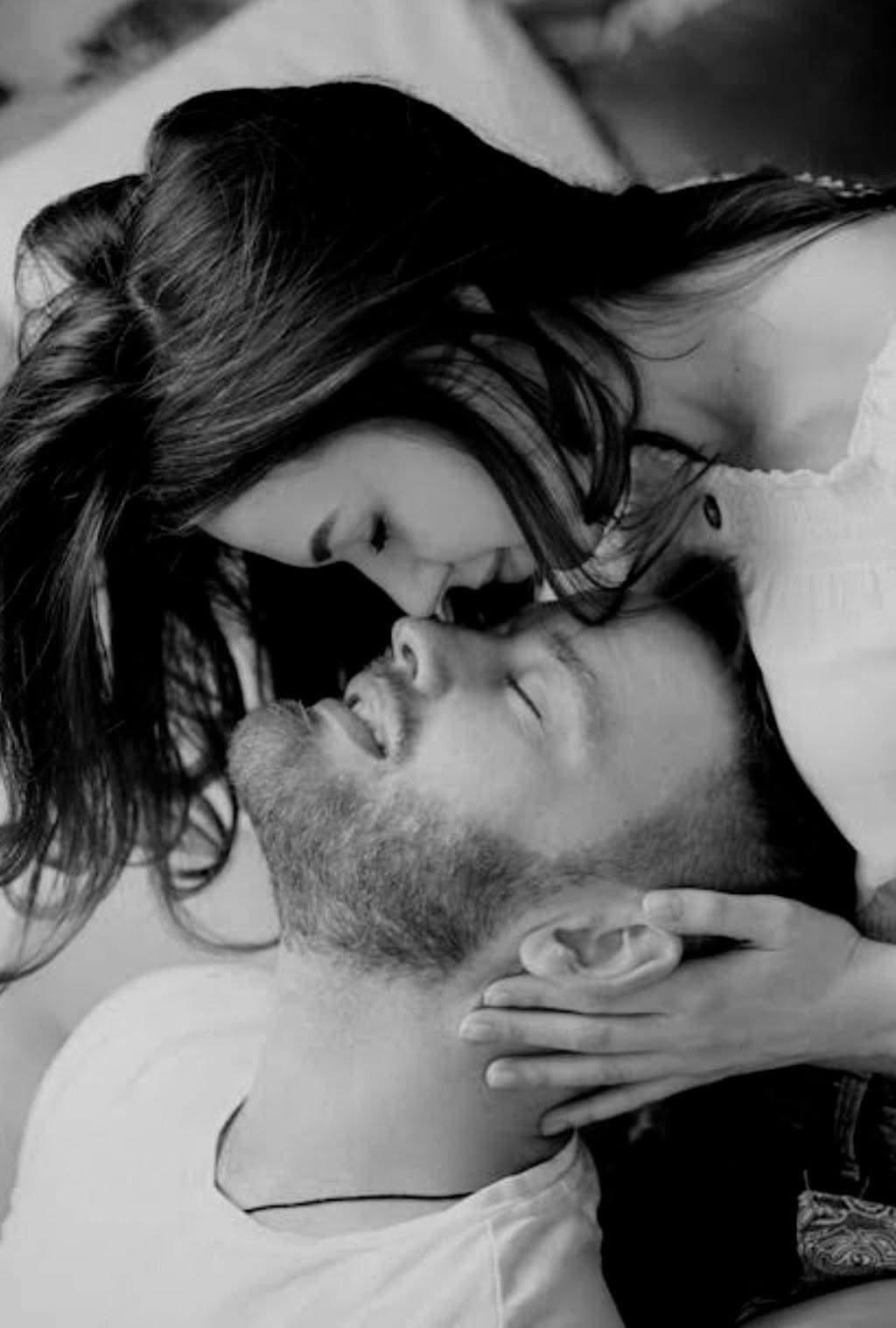
Love isn’t all about physical attraction or romance. it’s all about finding your soul in another person’s body… it’s not physical desire you’re feeling inside,.. it’s a craving for tender human touch, genuine affection, mutual intimacy, belonging, and a meaningful, deep, unbreakable connection. Your heart wants more than fleeting passion, it craves mental stimulation, non-sexual warmth and hug, honest, deep and open conversation, and unfiltered vulnerability. You’re truly seeking a profound bond where masculine and feminine energies harmonize effortlessly. It’s not just about sharing a bed with someone, it’s about someone who touches the depths of your soul, ignites your inner fire, and sees you for who you really are. The soul knows its truth and its worth, and it will never settle for anything less than the richness, depth, and fullness it deserves. (My Love for you is not merely physical attraction or infatuation, in fact, I loved you in times past before I even saw you. I think I know you from an unknown time. My soul was yearning for yours for so long and when we met, we fell in love and we both belonged to each other. 🤍❤️‍🔥🖤

Fairy Tales – Einstein

Albert Einstein said, “If you want your children to be intelligent, read them fairy tales. If you want them to be more intelligent, read them more fairy tales.” Fairy tales stimulate their imaginations and encourage critical thinking, not to mention presenting them with moral dilemmas, allowing kids to think about right and wrong, thereby learning valuable life lessons!

#fairytale #fairytalevibes #tangled #rapunzel #illustration #maryengelbreitstudios #artists

Wolves & Women

“Wolves and women have much in common. Both share a wild spirit. Women and wolves are instinctual creatures, able to sense the unseen. They are loyal, protective of their packs and their pups. They are wild and beautiful. Both have been hunted and captured. Even in captivity, one can see in the eyes of a woman, or a wolf, the longing to run free, and the determination that should the opportunity arise, whoosh, they will be gone.”

~ Clarissa Pinkola Estés

Art by Debbie Clark

Behavior

Behavior is the purest reflection of the soul, an unfiltered revelation of character. Long before words are spoken, justifications are offered, facades are carefully arranged, and there is action—raw, instinctive, and telling. I do not simply hear what is said; I listen to the silences in between, the inflections that betray intent, and the shifts in energy that accompany every interaction. Tone, body language, and the weight behind one’s words are not trivial details; they are the threads that weave the fabric of authenticity.

Respect is not a performance, nor is it situational. It is a principle, a fundamental measure of a person’s depth. Status, intellect, or achievements cannot compensate for a lack of grace. No matter how valuable someone believes themselves to be, if their manner lacks sincerity, their presence is of little consequence to me. Relationships built on imbalance—where courtesy is conditional, where dignity is disregarded—are doomed to dissonance. I do not entertain them.

There is a profound peace in the company of those who humbly move through life. They do not impose themselves with arrogance or demand reverence through force. Instead, they offer their presence as a quiet strength, understanding that true influence is not wielded through intimidation but through integrity. Their words do not cut—they connect. Their actions do not take—they give. They understand that kindness is not weakness, that patience is not passivity, and that self-awareness is the mark of an evolved mind.

By contrast, those who are careless with their words, erratic in their actions, or blind to the weight of their behavior find no place in my world. There is an undeniable discomfort in the presence of those whose energy is chaotic, whose tongues are sharp with condescension, and whose actions betray a disregard for others. Whether subtle or overt, disrespect is a symptom of a fractured character, and I have neither the inclination nor the obligation to engage with those who cannot offer the bare minimum of decency.

The way people treat others is an unguarded confession of their spirit. It is a mirror reflecting their values, their wounds, and their understanding of the world. I do not need words to know who someone is; their behavior tells me everything. And so, I do not argue, I do not plead, and I do not linger where I am not met with grace. My space, energy, and presence are reserved for those who understand their own weight.

~Katie Kamara

Art by Anna Bocek

Let us ….Rumi

Let us fall in love again

and scatter gold dust all over the world.

Let us become a new spring

and feel the breeze drift in the heavens’ scent.

Let us dress the earth in green,

and like the sap of a young tree

let the grace from within sustain us.

Let us carve gems out of our stony hearts

and let them light our path to Love.

The glance of Love is crystal clear

and we are blessed by its light.

~Rumi

Art by Bijdehansje

Rivers in the Ocean ❤

Acts of Restoration

“We need acts of restoration, not only for polluted waters and degraded lands, but also for our relationship to the world. We need to restore honor to the way we live, so that when we walk through the world we don’t have to avert our eyes with shame, so that we can hold our heads up high and receive the respectful acknowledgment of the rest of the earth’s beings.” ~Robin Wall Kimmerer, Braiding Sweetgrass: Indigenous Wisdom, Scientific Knowledge, and the Teachings of Plants

Image: Mother Earth by First Nations Ojibwe artist Jackie Traverse

Body Content

“You are made up of 84 minerals, 23 elements and 8 gallons of water divided by 38 billion cells.

You were built from nothing by the spare parts of the earth you consumed, according to a set of instructions hidden in a double helix small enough to be carried by a sperm cell.

You are made of recycled butterflies, plants, rocks, streams, firewood, wolf skins and shark teeth broken into their smallest parts and rebuilt into the most complex living thng on our planet.

You are not only living on earth… you ARE the earth !”

So, please, love, honor, care and respect Mother Earth. ❤

Illustrated by @motherearth_365

Men – Woman / Relationships

Romantic relationships are more central to men’s well-being than women’s, according to recent research.

Popular culture suggests women prioritize romantic relationships more than men, though recent evidence paints a different picture. Studies often depict women as emotionally dependent on their partners, while men are stereotypically viewed as independent and emotionally reserved. These assumptions have influenced not only cultural narratives but also academic research.

Iris V. Wahring and colleagues challenge this narrative by providing a comprehensive analysis of how romantic relationships impact men and women differently, drawing on interdisciplinary research across psychology, sociology, and evolutionary biology.

The researchers argue that men, on average, rely more on their romantic partners for emotional support and intimacy than women do. They suggest that this discrepancy stems from gendered socialization patterns: men are less likely to cultivate strong, emotionally supportive friendships or family ties outside of romantic relationships, while women are encouraged to develop broader networks of intimacy and care. These differences make romantic relationships disproportionately significant for men in fulfilling emotional and psychological needs.

The authors outline four key findings to support their argument. First, men expect greater benefits from relationships and are more motivated to form romantic partnerships. Compared to women, men perceive romantic relationships as offering a more substantial improvement in their well-being, partly because they tend to have fewer alternatives for fulfilling emotional and intimacy needs.

For example, research indicates that single men are more likely than single women to actively search for a partner, and men are more likely to idealize romantic connections, believing in concepts such as “love at first sight” and confessing love earlier in a relationship. Men also report falling in love more often and more quickly than women, reinforcing their stronger drive to initiate romantic involvement.

Second, men derive more mental and physical health benefits from romantic involvement compared to women. Romantic relationships provide men with a source of emotional support, which translates to higher life satisfaction, improved mental health, and better physical health outcomes. The paper cites evidence showing that single men experience higher rates of depression, stress, and loneliness compared to single women, and men who lack a partner are at greater risk of adverse health outcomes, including reduced life expectancy.

Conversely, married or partnered men tend to experience lower rates of hypertension, inflammation, and other health issues compared to single men. Women’s broader social networks and alternative sources of support mean that they are less dependent on their romantic partners for these health benefits, resulting in a weaker overall association between relationship status and health for women.

Third, men are less likely to initiate breakups than women, partly due to their stronger dependence on the emotional support provided by romantic partners. The authors highlight that approximately 70% of divorces are initiated by women, and women are more likely to end non-marital relationships as well. Men’s greater reluctance to end relationships is explained by their perception that the costs of leaving, primarily the loss of emotional and intimacy support, outweigh the potential benefits. Additionally, men are less likely to view breakups as opportunities for growth or self-discovery, further decreasing their likelihood of initiating separation.

Fourth, men experience greater emotional and psychological distress following the dissolution of a romantic relationship. After a breakup, men are more likely to report feelings of loneliness, sadness, and reduced life satisfaction compared to women. They also experience more severe physical health consequences, including an increased risk of suicide and mortality after losing a partner through separation or death. The authors argue that these negative outcomes are tied to men’s dependency on romantic partners as their primary source of emotional support. Women, by contrast, are more likely to turn to friends and family for support during and after a breakup, which helps them cope more effectively and recover more quickly.

These findings are grounded in broader societal and cultural norms that discourage men from seeking or expressing emotional vulnerability outside of romantic relationships. From an early age, men are socialized to prioritize independence and emotional restraint, which limits their ability to form deep, supportive connections with friends and family. As a result, romantic partners often become the sole providers of emotional intimacy and care in men’s lives. This dynamic explains why men tend to strive harder for relationships, benefit more from being in them, and struggle more deeply when they end.

Wahring and colleagues highlight the importance of rethinking cultural narratives around gender and relationships, particularly in recognizing men’s emotional vulnerabilities and their reliance on romantic relationships for well-being.

Mane Kara-Yakoubian

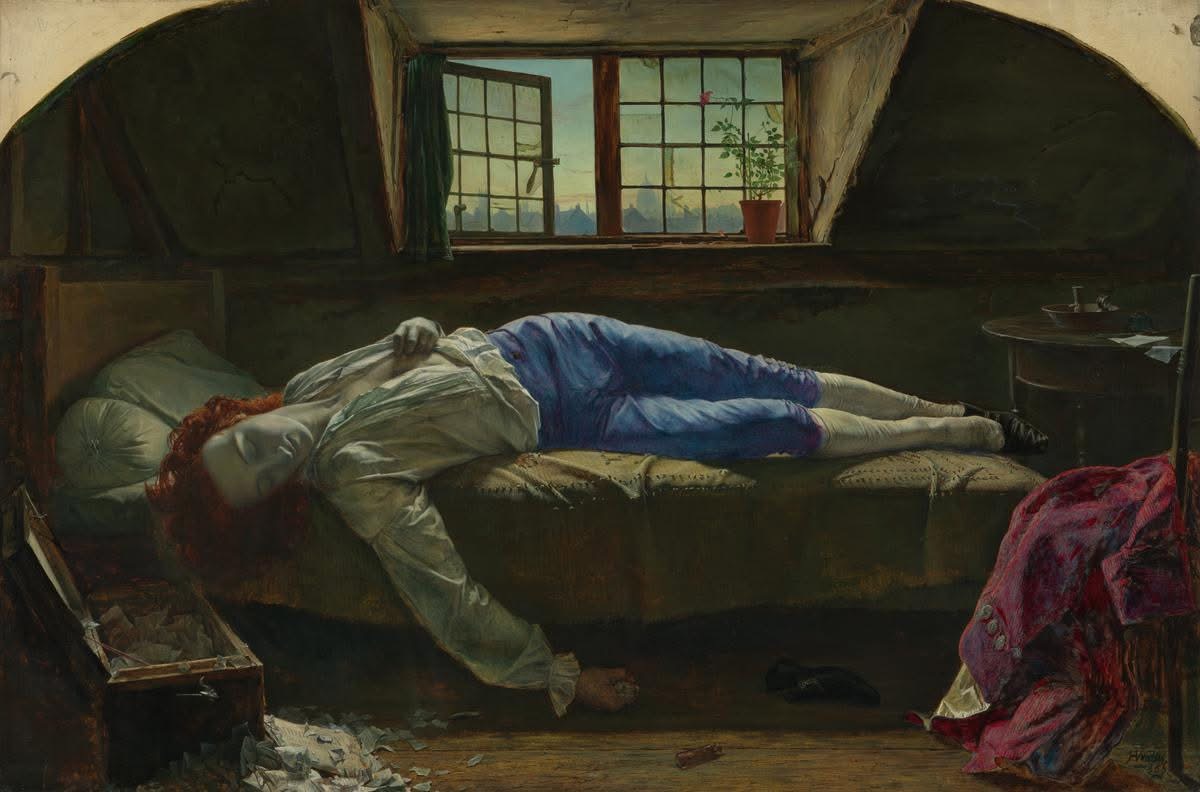
Art- Chatterton, 1856, Henry Wallis. Visual description-The painting depicts the impoverished late 18th-century poet Thomas Chatterton, who poisoned himself in despair at the age of seventeen, and was considered a Romantic hero for many young and struggling artists at the time. The poet is lying on a bed, his eyes closed and his long red hair falling away underneath an open window.