

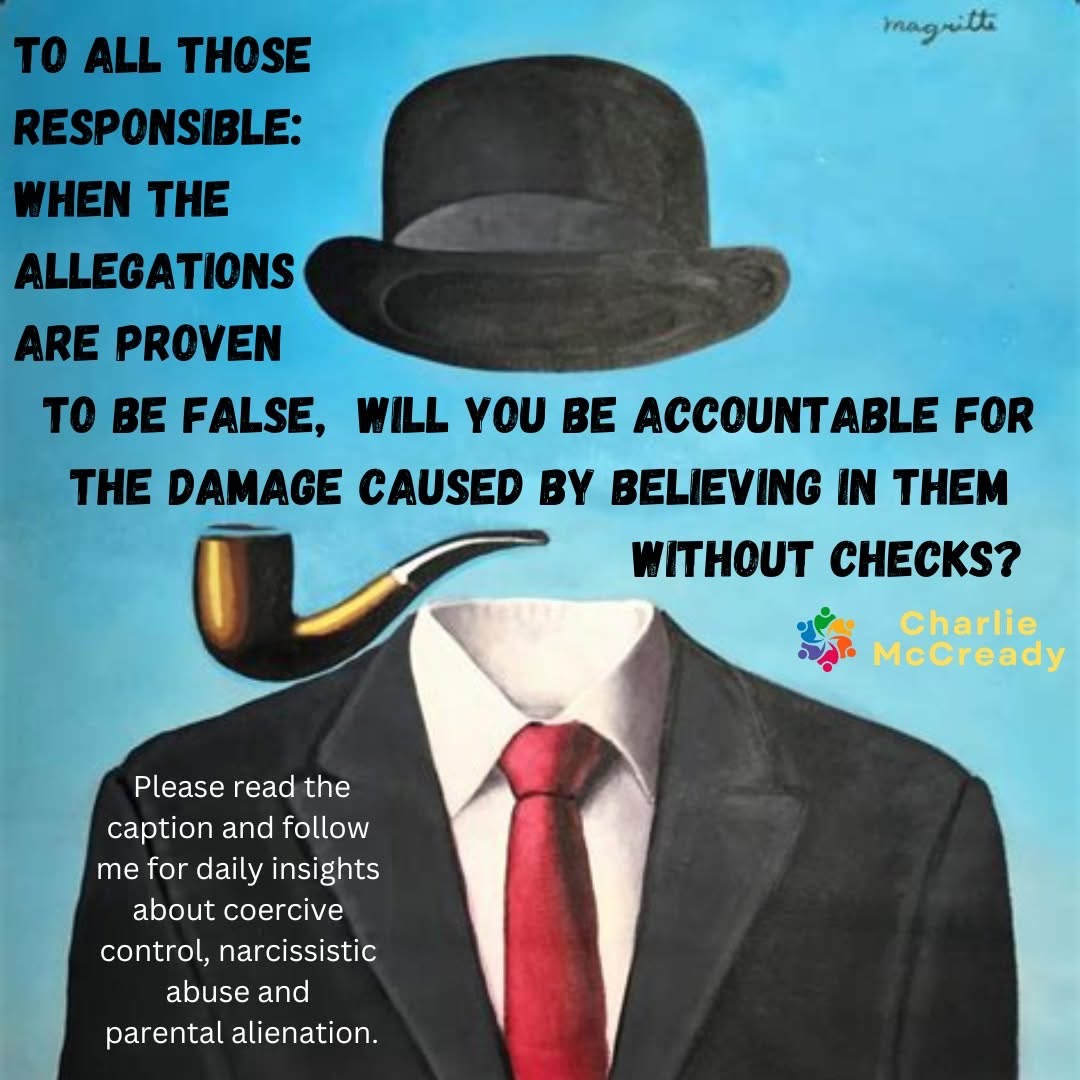
Despite being a victim of false allegations and manipulative alienating tactics, the ‘target’ parent finds themselves entrapped in a system that often fails to adequately assess the truth, allowing baseless accusations to persist. The alienated parent, unjustly kept away from their child, experiences a profound sense of loss, rejection, and helplessness. Their relationship with their child deteriorates as the alienating parent continues to poison the child’s mind against them, and often it worsens during custody cases.
Legal and mental health professionals, who are expected to protect the child’s best interests, often fail to intervene effectively. Even when assessments are conducted, they are sometimes ignored or not acted upon, leaving the alienated parent in a state of perpetual despair and disbelief.
The frustration deepens as the ‘rejected’ parent witnesses the alienating parent’s blatant disregard for court orders and their refusal to cooperate in co-parenting. Despite these clear signs of malicious intent, the legal and mental health system often sticks with the status quo/does next to nothing, sometimes even making things worse.
There is currently no ‘one size fits all’ remedy. But I’d like to share what a parent wrote to me suggesting – something that had worked for him. I paraphrase: “Demand from those in positions of power to put in writing what the allegations are about you. Ask them if your parenting has ever been in question before separation/divorce/allegations. Question them as to whether these allegations are a breach of your right to a private family life.”
This is great because by doing so, you assert your rights but also prompt the professionals to examine the credibility of the allegations thoroughly. If there is no prior evidence or history of concerns, it raises doubts about the authenticity of the claims made during the alienation process. Questioning whether these allegations breach your right to a private family life underscores the fundamental human rights aspect of the situation. This emphasises the need to protect the parent-child relationship and the family’s right to privacy. By raising these questions, the alienated parent not only advocates for their own rights but also challenges the professionals to uphold the principles of fairness, justice, and due diligence in their assessments.
#charliemccready
#parentalalienationcoach
#abuseinthefamily

 GreatCosmicMothersUnite