

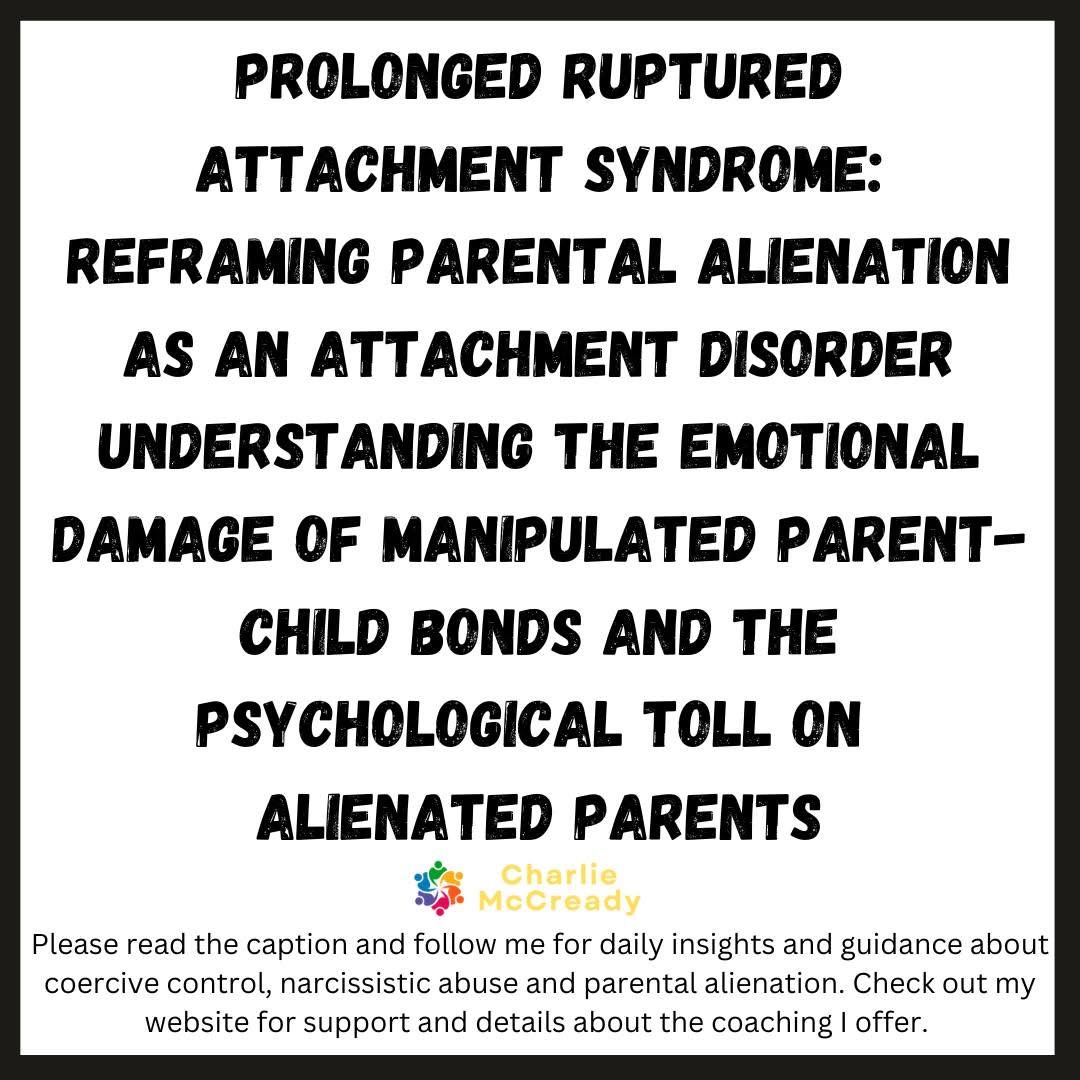
Parental alienation can be understood as an attachment disorder, where the child is manipulated into rejecting one parent, disrupting the natural attachment bonds. This psychological harm mirrors what is described in Prolonged Ruptured Attachment Syndrome (PRAS), a framework introduced by Martin Seager and colleagues. While PRAS was not developed to address parental alienation, it offers a new and potentially valuable lens for understanding the emotional damage caused by the disruption of attachment.
In cases of parental alienation, the rupture in attachment is not a clean break. Rather, it’s a painful disruption that leaves the relationship in a state of unresolved limbo—neither fully severed nor easily healed. Many alienated parents describe what feels like a living bereavement. This mirrors PRAS, where people are unable to find emotional closure because their attachment to a significant person remains unsettled. Seager describes PRAS as existing “somewhere between trauma and grief,” a state that is neither fully traumatic nor fully grief-stricken but something in between. For alienated parents, this is reflected in the constant uncertainty of not knowing if reconciliation with their child will ever happen. The pain, as Seager explains, is “ongoing without closure.”
PRAS highlights that the emotional toll of such ruptures is not just a one-time loss but an enduring, unresolved pain. The psychological effects of parental alienation are profound. This kind of emotional suffering can lead to trauma, grief, anxiety, and helplessness, making it harder for both parents and children to heal.
Healing from the emotional damage caused by these attachment disruptions requires more than just time. For alienated parents, this means specialised support to help navigate the complexities of reconnection and recovery. PRAS also underscores the importance of recognising that emotional healing from attachment ruptures needs understanding and compassionate care.
Published in Psychreg Journal of Psychology in December 2024, the newly conceptualised mental health condition, Prolonged Ruptured Attachment Syndrome (PRAS), while not developed with parental alienation in mind, offers a potentially helpful framework, with its findings validating the distress caused by attachment disruptions. Applying this to parental alienation could pave the way for more effective, empathetic responses and support for affected families.
#charliemccready
#parentalalienationcoach
#prolongedrupturedattachmentsyndrome
#emotionalabuse

 GreatCosmicMothersUnite