
Tag: relationships
Healthy Relationships
The healthiest relationships and friendships are not necessarily the ones that look happiest to the naked eye.
They aren’t necessarily the ones where two people are always found holding hands, giggling, dancing and singing with the butterflies on Instagram, where nothing ever goes wrong and love is beautiful and blissful and perfect.
External ‘perfection’ can easily mask internal devastation, disconnection and that awful, unspoken desperation to be free.
The healthiest relationships are the honest ones. And they might not look so ‘happy’ or ‘carefree’ from the outside. They might not fit the image of what a relationship ‘should’ or ‘must’ look or feel like.
Here, two people tell the honest, painful truth about today, and continually let go of all their preconceived ideas about each other. The relationship is forever renewed in the furnace of authenticity. There may be ruptures, misunderstandings, even intense feelings of doubt and disconnection, but there is a mutual willingness to face this seeming mess head-on! To look – with open eyes – at the present rupture, and not turn away or cling to the past. To sit together in the midst of mutual shattered dreams and expectations, and work to find a place of reconnection, here, now, today.
Here, relationship is seen as the ultimate yoga – an ongoing and ever-deepening adventure and rediscovery of each other, a constant letting-go and a constant meeting! Love is not a future destination, conclusion, point of arrival, or a convenient story to tell others. Love is alive.
As Eckhart Tolle says, relationships aren’t here to make us happy – for true happiness lies within. They’re here to make us profoundly conscious.
To break us, to humble us, to make us whole again.

Daughters with Absent Fathers
My Dad was mostly away as a truck driver . I missed him so deeply and would grab his pillow for a deep smell when he was away .
Boys also have losses as a result of absent Fathers . I have witnessed the results in our sons , my brothers and male dates or male friends .
“The Absent Father Effect on Daughters” by Susan E. Schwartz delves into the profound impact that the absence of a father can have on a daughter’s development, identity, and emotional well-being. Through a psychological lens, Schwartz explores how this absence—whether physical, emotional, or both—affects daughters and shapes their adult lives.
Here are several key lessons from the book
- Understanding the Impact of Absence: The book highlights the importance of recognizing the depth and breadth of the impact an absent father can have on a daughter’s psyche. This absence can manifest in various aspects of life, including issues with self-esteem, difficulties in forming healthy relationships, and challenges in understanding one’s identity.
- The Role of Recognition and Acknowledgment: A vital step in addressing the effects of an absent father is the acknowledgment of his absence and its impact. Recognizing these effects allows for the beginning of healing and provides a framework for understanding behaviors and emotions that may have been confusing or painful.
- Navigating the Path to Healing: Schwartz offers insights into the healing process, emphasizing that while the journey is personal and can be challenging, it is also filled with opportunities for growth and self-discovery. Healing may involve therapy, creating supportive relationships, and engaging in self-care practices.
- The Importance of External Support Systems: The book suggests that building a strong support system is crucial for daughters dealing with the absence of a father. This support can come from other family members, friends, mentors, or professional counselors who can provide understanding, validation, and guidance.
- Exploring One’s Identity Beyond Absence: One of the lessons is the encouragement for daughters to explore and define their identity independently of the father’s absence. This exploration can lead to a more robust sense of self and a reclamation of power over one’s life narrative.
- Developing Healthy Relationships: Schwartz discusses the impact of an absent father on a daughter’s relationships, particularly in choosing partners and establishing boundaries. The book offers strategies for understanding and breaking patterns that may lead to unhealthy relationship choices.
- The Power of Narrative: There’s a focus on the power of personal narrative and storytelling in healing. By reframing their stories, daughters can find meaning in their experiences and move towards a more empowered and self-aware future.
- The Role of Forgiveness: The concept of forgiveness, both of oneself and the absent father, is explored as a potential component of healing. Forgiveness is presented not as an obligation but as a choice that can lead to emotional freedom.
- Empowerment through Understanding: Gaining insight into the ways in which an absent father has influenced one’s life can be incredibly empowering. It allows for a reclaiming of control over one’s emotional well-being and life decisions.
- The Continuum of Absence: Schwartz acknowledges that absence can vary in degree and type, affecting daughters in uniquely individual ways. Understanding this spectrum is crucial in addressing and healing from its effects personally and sensitively.
“The Absent Father Effect on Daughters” is a comprehensive guide to understanding and healing from the complex dynamics of growing up without a father’s presence. It provides valuable insights and practical advice for those looking to navigate the challenges and find a path toward healing and fulfillment.
Book: https://amzn.to/43ClrMW
Understanding
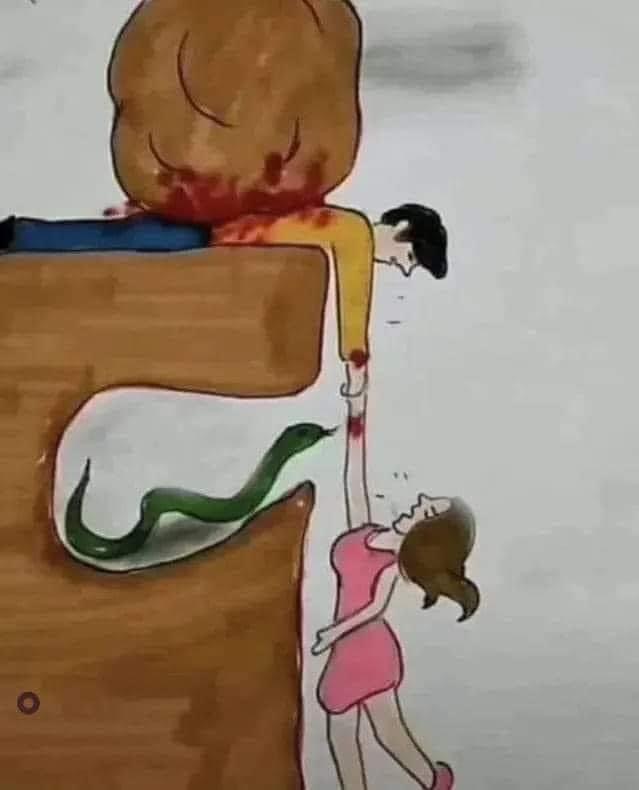
The man doesn’t know that there is a snake underneath.
The woman doesn’t know that there is a stone crushing the man.
The woman thinks: “I am going to fall! And I can’t climb because the snake is going to bite me! Why can’t the man use a little more strength and pull me up!”
The man thinks: “I am in so much pain! Yet I’m still pulling you as much as I can! Why don’t you try and climb a little harder!?”
The moral is— you can’t see the pressure the other person is under, and the other person can’t see the pain you’re in.
This is life, whether it’s with work, family, feelings or friends, we should try to understand each other.
Learn to think differently, perhaps more clearly and communicate better. A little thought and patience goes a long way.
Author – Unknown
 GreatCosmicMothersUnite