
Tag: music
Church of Satan
Musical Geometry
The phrase “Physical matter is music solidified,” attributed to Pythagoras, captures a profound mystical and metaphysical insight. Pythagoras, known for his teachings on the harmony of the cosmos, believed that all of existence is governed by numerical relationships and vibrations. This statement suggests that matter, in its essence, is a crystallization of vibrational patterns—an idea that unites music, mathematics, and physical reality.
1. The Primacy of Vibration and Harmony:
Music is fundamentally vibration organized into patterns of harmony. In this view, physical matter, too, is the result of vibratory patterns, albeit on a denser and slower scale. The atoms and molecules that compose physical objects can be seen as “standing waves” of energy, stabilized into forms that we perceive as solid. Matter, then, is a lower-frequency manifestation of the same cosmic principles that give rise to sound.
2. The Bridge Between the Intangible and the Tangible:
Music is intangible—it exists in time, not space. Matter, conversely, exists in space and seems permanent. Yet both emerge from the same metaphysical substrate: the dynamic interplay of energy and structure. This view implies that the material universe is not separate from the spiritual or the abstract but is a concretized expression of these higher principles.
3. The Universe as a Symphony:
For Pythagoras, the cosmos was a grand orchestra, with celestial bodies moving according to mathematical laws, producing the “music of the spheres.” If matter is music solidified, then every object, from the tiniest particle to the vastness of the stars, participates in this cosmic symphony. Existence itself is a divine composition, and our perception of physical matter is but one octave of a multi-dimensional scale.
4. A Modern Resonance:
This idea echoes through modern physics, where matter is understood not as inert substance but as energy bound into specific configurations. Quantum mechanics reveals that particles are waveforms, oscillating in fields of probability. The vibrational nature of reality, hinted at by Pythagoras, resonates with the cutting-edge understanding of matter as energy in rhythmic motion.
In sum, the statement “Physical matter is music solidified” invites us to see the material world not as a dead, static construct but as a living, resonant expression of universal harmony. It suggests that to understand matter is to understand music, and to understand music is to glimpse the divine architecture of the cosmos.

Rockefeller and HZ music

Spiritual Attack
Why Music ?

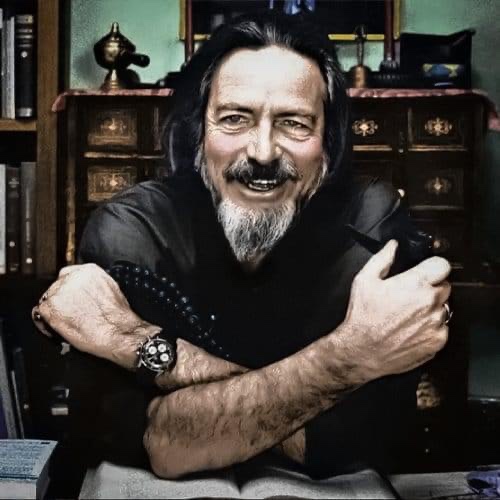
Music is a Dance – Alan Watts
“The standpoint of the fool is that all social institutions are games.
He sees the whole world as game-playing, and that’s why—when people take their games seriously and put on stern and pious expressions—the fool gets the giggles: because he knows it’s all a game.
Now, when I say that he sees everything as a game, this does not mean mere game. Hamlet, although it’s a play, is not mere entertainment.
Or when you go to listen to a great orchestra, it is playing music indeed, but you are not seeing something purely frivolous.
The idea of game, basically, is this: that the nature of the world is musical. That is to say, it is doing all these forms of trees and stars and people and all their complexities just to do them. It has no purpose beyond doing it.
And in exactly the same way, in music: music has no destination. It isn’t aimed at the future. It does travel in time; that is true. But it doesn’t aim at a goal in time.
The point of music is every phrase as it unfolds itself, and as you perceive the relationship of those phrases to earlier and later phrases.
But music itself is dance. It’s dancing with sound. And likewise, in the art of dancing, you are not traveling, you are not aiming at a particular place. You are dancing to dance.”
~ Alan Watts
Embodying Emotional Taboos: Musicians and Mental Health – Mad In America
Mia Berrin is a songwriter, producer, and recording artist based out of Brooklyn, whose project, Pom Pom Squad, has garnered attention over the last few
— Read on www.madinamerica.com/2023/06/embodying-emotional-taboos-musicians-and-mental-health/
Musical Concepts
Appendices: Part D – Musical Concepts (excerpt 2)
This harmonic interval, which Bekesy pointed out is the basis of music, language and speech and, by extrapolation, is also the basis of our DNA (not only human DNA, but all earthly DNA), corresponds to the twelve frequency ratios within an octave. Our present even-tempered (diatonic) scale has seven notes (C, D, E, F, G, A and B.), but the twelve steps (semitones), which represent the flats and sharps as the average of the frequency of the note above and below it. Therefore, the entire octave is divided into C, C#, D, D#, E, F, F#, G, G#, A, A# and B.
The reason for the twelve steps or semitones is explained in P͟s͟y͟c͟h͟o͟l͟o͟g͟y͟ ͟o͟f͟ ͟M͟u͟s͟i͟c͟: “It is found that on the whole, our present half-tone step is as small a step as the average of an unselected population can hear with reasonable accuracy, enjoy and reproduce in the flow of melody and harmony in actual music.”¹⁹
These twelve steps or ratios of successive notes to the tonic in the major mode are as follows:
N͟o͟t͟e͟s͟ R͟a͟t͟i͟o͟s͟
C:D 9:8
C:E 5:4
C:F 4:3
C:G 3:2
C:A 5:3
C:B 15:8
C¹ :C 2:1 (an octave)
In the A minor mode, the ratios are: 9:8 (A:B), 6:5 (A:C), 4:3 (A:D), 3:2 (A:E), 8:5 (A:F), 9:5 (A:G), and 2:1 (A:A) (an octave).
As demonstrated by Sir James Jeans, the frequency ratios between the twelve notes represent “a frequency ratio of 1.05946, since this is the twelfth root of 2.”²⁰ The square root of 2 is used because “the exact interval of 2 is spread equally over the twelve semitone intervals which make the octave.” 2:1 is C¹ :C, which represents an octave.²¹
“Frequency ratios within the octave are as follows (C=1):
C# = 1.05946
D = (1.05946)² = 1.1225
D# = (1.05946)³ = 1.1892
E = (1.05946)⁴ = 1.2599
F = (1.05946)⁵ = 1.3348
F# = (1.05946)⁶ = 1.4142
G = (1.05946)⁷ = 1.4983
G# = (1.05946)² = 1.5874
A = (1.05946)⁸ = 1.6818
A# = (1.05946)¹⁰ = 1.7818
B = (1.05946)¹¹ = 1.8877
C1 = (1.05946)¹² = 2.0000”²²
The octave corresponds to a 2 to 1 ratio frequency, just as hydrogen does to oxygen in the water molecule, H₂O, having the molecular shape of a right , whose = 90° and whose height/amplitude or hypotenuse = √2, so that the frequency doubles when you increase the octave, and it is a general law that the frequency is proportional to the square root of the tension [of a string] and that the period is exactly proportional to the length of the string, so that the frequency of vibration varies inversely as the length of the string. The frequency interval of 1.05, π/3, which corresponds to our interval of consciousness, is what both the melody and harmony are built upon, and it is also the ratio that determines the lunar and solar year in the eclipse cycle.²³
As pointed out in P͟s͟y͟c͟h͟o͟l͟o͟g͟y͟ ͟o͟f͟ ͟M͟u͟s͟i͟c͟, “While all music is objectively due to physical sound waves, we must bear in mind that we can never be directly aware of the rate of vibrations as such, for we hear it as musical pitch. This is one of the wondrous transformations from matter to mind.”²⁴
Then pitch (frequency) represents the 120 discrete tones which, as the rest of the electromagnetic spectrum, are quantized by musical instruments which “are inherently resonant systems and therefore respond to only certain frequencies.”²⁵
End Notes:
19 Psychology of Music, Seashore, p. 140
20 Science and Music, Jeans, p. 25
21 Ibid., p. 63
22 Ibid., p. 29
23 Sacred Geometry, Lawlor, p. 51
24 Psychology of Music, Seashore, p. 128
25 Music, Physics, and Engineering, Olson, p. 59
Hello Darkness
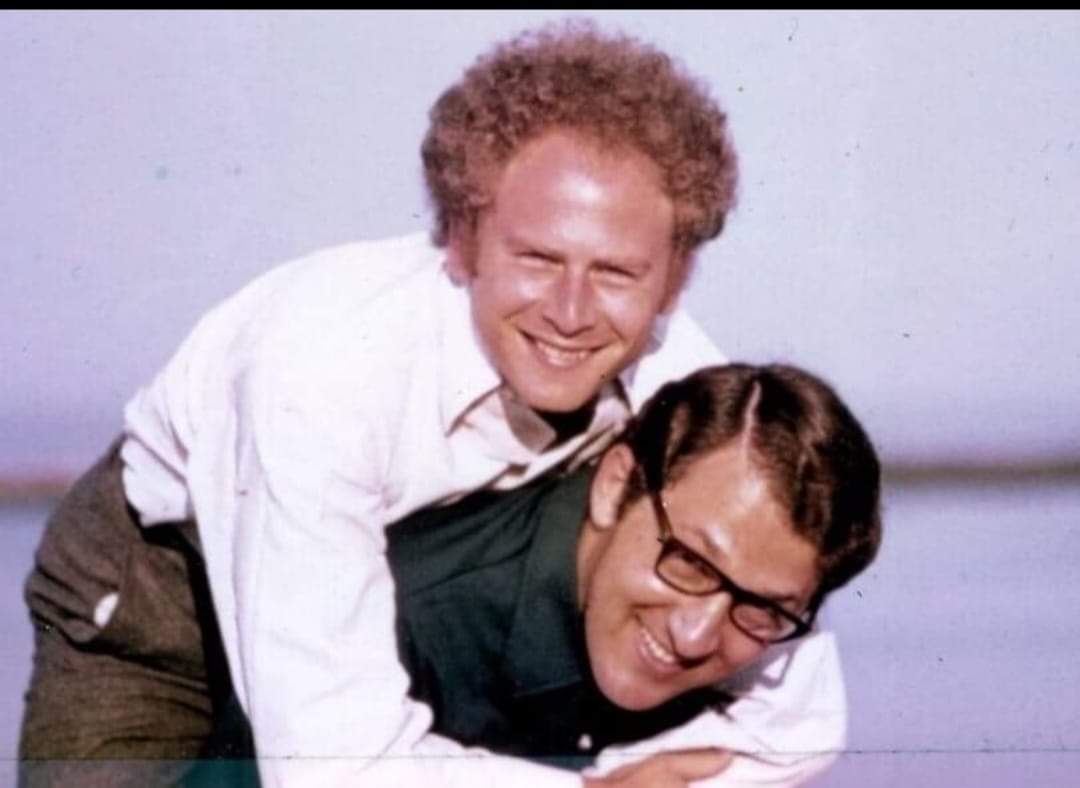
“Hello darkness, my old friend…” Everybody knows the iconic Simon & Garfunkel song, but do you know the amazing story behind the first line of The Sounds of Silence?
It began 62 years ago, when Arthur “Art” Garfunkel, a Jewish kid from Queens, enrolled in Columbia University. During freshman orientation, Art met a student from Buffalo named Sandy Greenberg, and they immediately bonded over their shared passion for literature and music. Art and Sandy became roommates and best friends. With the idealism of youth, they promised to be there for each other no matter what.
Soon after starting college, Sandy was struck by tragedy. His vision became blurry and although doctors diagnosed it as temporary conjunctivitis, the problem grew worse. Finally after seeing a specialist, Sandy received the devastating news that severe glaucoma was destroying his optic nerves. The young man with such a bright future would soon be completely blind.
Sandy was devastated and fell into a deep depression. He gave up his dream of becoming a lawyer and moved back to Buffalo, where he worried about being a burden to his financially-struggling family. Consumed with shame and fear, Sandy cut off contact with his old friends, refusing to answer letters or return phone calls.
Then suddenly, to Sandy’s shock, his buddy Art showed up at the front door. He was not going to allow his best friend to give up on life, so he bought a ticket and flew up to Buffalo unannounced. Art convinced Sandy to give college another go, and promised that he would be right by his side to make sure he didn’t fall – literally or figuratively.
Art kept his promise, faithfully escorting Sandy around campus and effectively serving as his eyes. It was important to Art that even though Sandy had been plunged into a world of darkness, he should never feel alone. Art actually started calling himself “Darkness” to demonstrate his empathy with his friend. He’d say things like, “Darkness is going to read to you now.” Art organized his life around helping Sandy.
One day, Art was guiding Sandy through crowded Grand Central Station when he suddenly said he had to go and left his friend alone and petrified. Sandy stumbled, bumped into people, and fell, cutting a gash in his shin. After a couple of hellish hours, Sandy finally got on the right subway train. After exiting the station at 116th street, Sandy bumped into someone who quickly apologized – and Sandy immediately recognized Art’s voice! Turned out his trusty friend had followed him the whole way home, making sure he was safe and giving him the priceless gift of independence. Sandy later said, “That moment was the spark that caused me to live a completely different life, without fear, without doubt. For that I am tremendously grateful to my friend.”
Sandy graduated from Columbia and then earned graduate degrees at Harvard and Oxford. He married his high school sweetheart and became an extremely successful entrepreneur and philanthropist.
While at Oxford, Sandy got a call from Art. This time Art was the one who needed help. He’d formed a folk rock duo with his high school pal Paul Simon, and they desperately needed $400 to record their first album. Sandy and his wife Sue had literally $404 in their bank account, but without hesitation Sandy gave his old friend what he needed.
Art and Paul’s first album was not a success, but one of the songs, The Sounds of Silence, became a #1 hit a year later. The opening line echoed the way Sandy always greeted Art. Simon & Garfunkel went on to become one of the most beloved musical acts in history.
The two Columbia graduates, each of whom has added so much to the world in his own way, are still best friends. Art Garfunkel said that when he became friends with Sandy, “my real life emerged. I became a better guy in my own eyes, and began to see who I was – somebody who gives to a friend.” Sandy describes himself as “the luckiest man in the world.”
Adapted from Sandy Greenberg’s memoir: “Hello Darkness, My Old Friend: How Daring Dreams and Unyielding Friendship Turned One Man’s Blindness into an Extraordinary Vision for Life.”
 GreatCosmicMothersUnite