

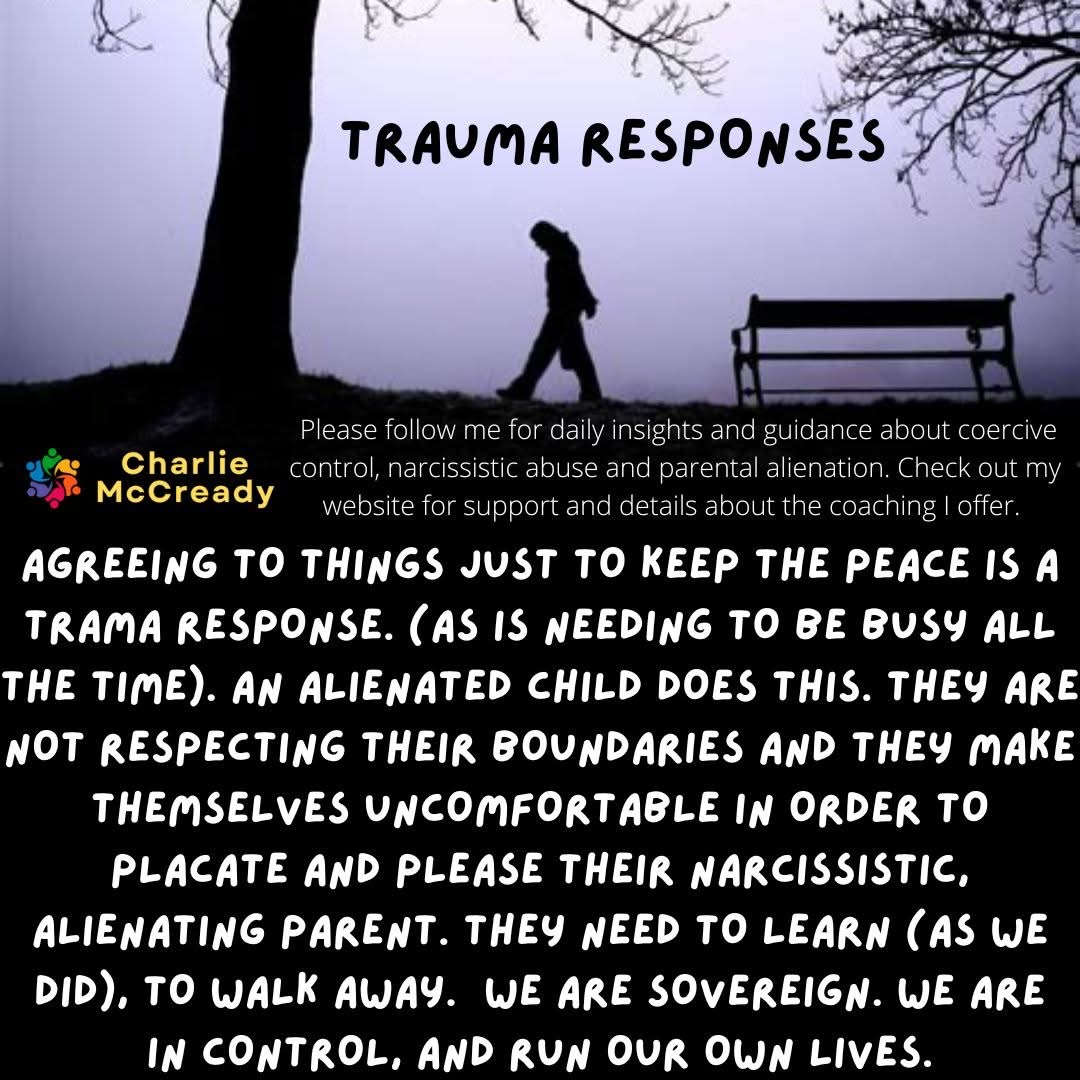
Agreeing to things just to keep the peace is a trauma response. It’s a way of surviving in a hostile or controlling environment where saying ‘no’ or ‘I don’t believe you’ isn’t an option without severe consequences. This response is often seen in alienated children—children who have been manipulated and coerced to the point that their own needs and feelings no longer matter. Instead, they learn to prioritise the emotions and expectations of the alienating parent. They walk on eggshells, eager to placate and please, because defiance causes even more trauma than they’re already dealing with.
This behaviour becomes a form of self-protection, a way to avoid conflict and ensure that they remain in the good graces of the parent who controls their reality. Over time, these children can lose the ability to recognise their own boundaries, and their sense of self becomes enmeshed with the parent’s demands and manipulations. Their ‘agreeability’ isn’t a sign of compliance but of survival. They’ve learned that resistance leads to emotional punishment—withdrawal of love, guilt trips, or accusations of betrayal. So, they agree, they nod along, and they become what they think the alienating parent wants them to be, sacrificing their own comfort, autonomy, and well-being.
Similarly, the need to be constantly busy can also be a sign of trauma. When a child is caught in a world of conflicting loyalties and intense emotional manipulation, stillness and quiet can become unbearable. There’s research into ADHD and alienated children which is very interesting, if alarming. But being alone with their thoughts means confronting feelings of anxiety, guilt, and confusion—the result of a parent’s relentless campaign to control their mind and emotions. Constant busyness, then, becomes a way to avoid these feelings—a distraction from the chaos brewing beneath the surface.
But this coping strategy comes at a cost. It prevents them from ever truly understanding what they want, who they are, and where their own boundaries lie. Instead, they become attuned to others, hyper-vigilant to the moods and reactions of those around them, and disconnected from their own inner world. The challenge is that these patterns sometimes can persist into adulthood, long after the child has left the direct influence of the alienating parent. We, as alienated parents, have had to learn this the hard way. Many of us lived for years in a state of constant appeasement—agreeing, conceding, and sacrificing parts of ourselves to keep the peace with our abusive ex-partners. It’s taken time, therapy, and a great deal of inner work to realise that
agreeing just to avoid conflict isn’t harmony. And we’ve had to learn to say ‘no’, to walk away, and to reclaim our sense of sovereignty.
The same journey is ahead for our children. They, too, will have to unlearn the trauma responses they developed out of necessity. They will need to realise, as we did, that their value doesn’t lie in their ability to keep the peace, to stay busy, or to put others’ needs before their own. One day, we hope they will come to understand that they are not just the product of a manipulative parent’s expectations. They are not defined by the demands of those who sought to control (or hurt) them. And when our children are ready, we hope they find the strength within themselves—the courage to live life on their own terms.
#charliemccready
#parentalalienationcoach
#traumabond
#traumabonding
#emotionalabuse
#mentalhealth
#mothersmatter
#FathersMatterToo
#FathersMatter
#FamilyCourt
#custody
#parentalalienation
#childcustody
#mothersrights
#fathersrights
#childrensrights
#custodybattle
#parentalalienationawareness

 GreatCosmicMothersUnite