

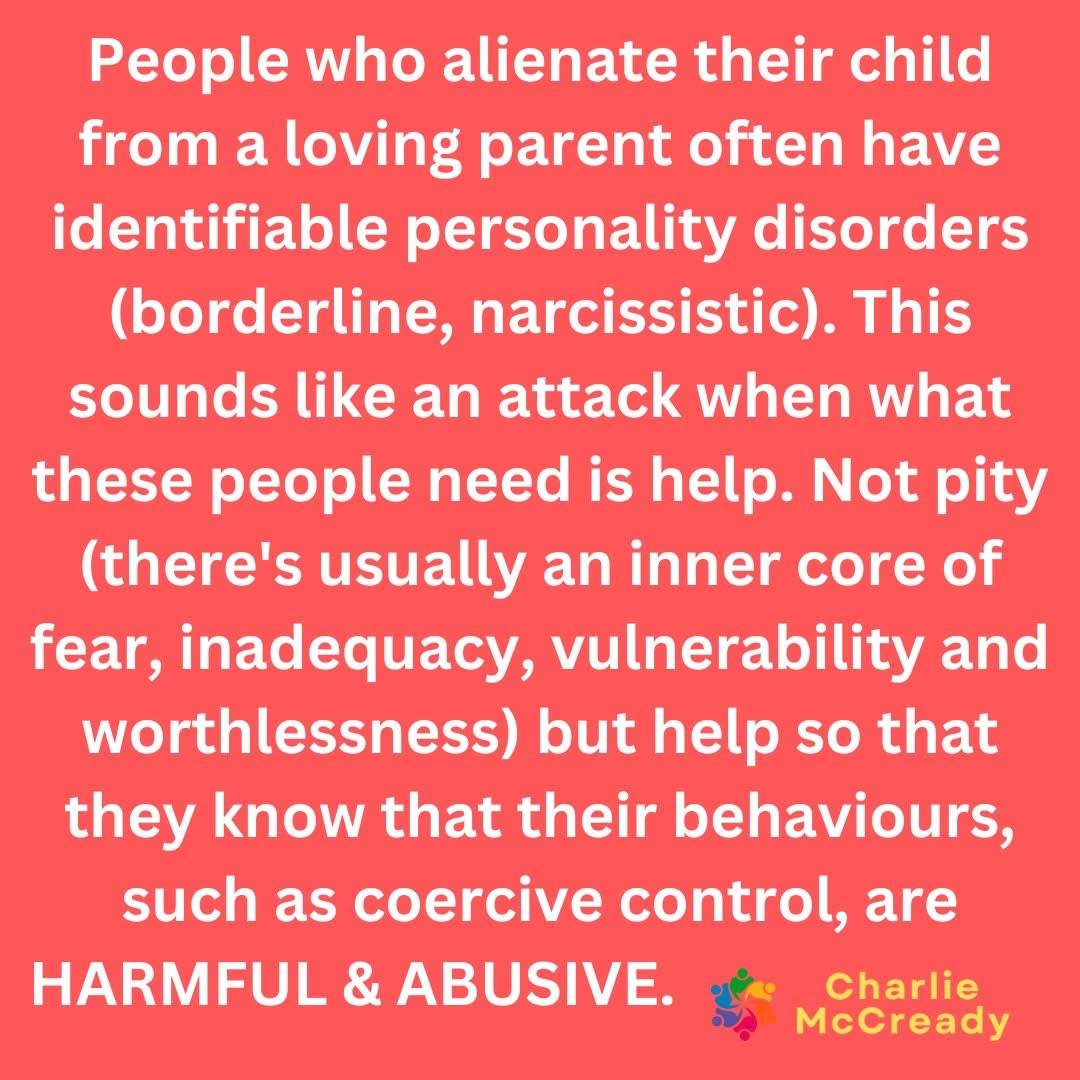
People who alienate their child from a loving parent often exhibit identifiable personality disorders, such as borderline and narcissistic personality disorders. While labelling these individuals as having personality disorders may seem like an attack, it is essential to recognise that they need help rather than pity. Behind their harmful behaviours, such as emotional abuse and coercive control, is an inner core of fear, inadequacy, vulnerability, and worthlessness that drives their actions. Understanding the mental health issues and personality disorders behind parental alienation can guide interventions and support systems to address these issues effectively.
Statistics on the prevalence of personality disorders among alienating parents can be challenging to obtain, as diagnosing personality disorders often requires in-depth psychological assessments and evaluations. Studies and expert observations indicate a higher prevalence of individuals with borderline and narcissistic personality traits among alienating parents.
Borderline personality disorder (BPD) is characterised by difficulties managing emotions, unstable relationships, impulsive behaviour, and a fear of abandonment. These traits can manifest in intense and unstable relationships, including the parent-child relationship, contributing to alienation.
Narcissistic personality disorder (NPD) involves a grandiose sense of self-importance, a lack of empathy, and a constant need for admiration and validation. Alienating parents with NPD may manipulate and control their children to maintain a sense of power and control over them, leading to the alienation of the other parent While it is essential to recognise the internal struggles of people with personality disorders, addressing the root causes of their behaviour and the impact it has on the targeted parent and child is equally crucial. Unfortunately, many alienating parents blame the targeted parent, make false allegations, and subject them to psychological abuse, which can be emotionally devastating. Alienating parents typically struggle with self-reflection and are often resistant to seeking help to address their behaviour. As a result, the cycle of harmful and abusive actions towards the targeted parent and the child continues.
Convincing them to seek help can be challenging even though if they could break free from harmful patterns, it would create healthier environments for their children. Simultaneously, interventions should prioritise the well-being of the child and the targeted parent, recognising the pain and distress they experience due to the alienation. Acknowledging the complexities of parental alienation, particularly when personality disorders are involved, is crucial in developing more effective strategies to address this damaging phenomenon and promote healthier family dynamics.
#charliemccready
#parentalalienationcoach
#narcissisticabuseawareness
#mentalhealth
#healing
#parentalalienation

 GreatCosmicMothersUnite