

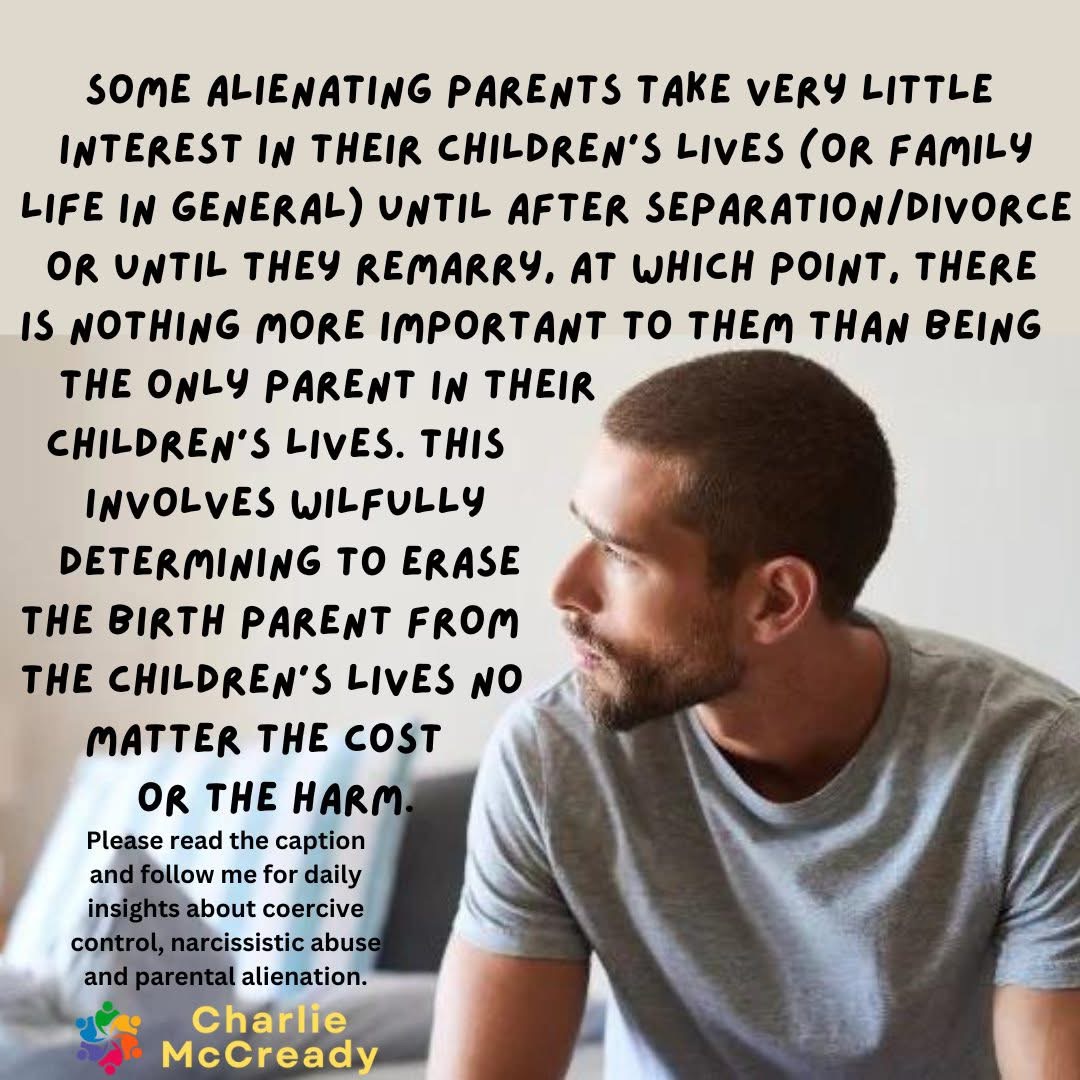
Parental alienation occurs when one parent, typically after separation or divorce, actively and deliberately attempts to distance the child from the other parent. It’s not uncommon for an alienating parent to have shown far less interest in the child’s life before separation, only to suddenly become intensely involved once the other parent is no longer in the picture. It can be even more so when they remarry.
The alienating parent may use manipulative tactics to undermine the relationship between the child and the other parent. This can involve making negative comments about the other parent, falsely accusing them of wrongdoing, or deliberately preventing the child from spending time with the other parent. The goal is often to erase the other parent’s influence from the child’s life, creating a sense of loyalty and dependence solely on the alienating parent. This behaviour is widely considered harmful to the child’s well-being, as it can lead to emotional distress, confusion, and strained relationships with both parents.
The alienated parent might wonder how alienating behaviours impact the relationship between the alienating parent and the alienated child (a convoluted sentence, but I want to be clear). Some (though not nearly enough yet) may view alienating behaviours as a form of psychological child abuse, especially given there are allegations without proof that the child is better off without one of their parents in their life. It may lead to legal consequences such as changes in custody arrangements or supervised visitation for the alienating parent. We do hear of these stories (again, they are few and far between) as the courts tend to take the lead from the ‘voice of the (indoctrinated/alienated) child’. But, also, and more generally, the alienating parent is not easy to live with. They are highly manipulative, and the child may come to realise this. Their love is conditional. After-all, this is a parent who requires the child to cut the other loved/loving parent out of their life. This is NOT loving behaviour. Deep down, the child knows even if they make excuses and align with this parent.
NB: A father can be a biological parent. A biological parent is someone who is genetically related to a child and participated in the child’s conception. Both the mother and father of a child are considered biological parents.
#charliemccready
#parentalalienationcoach
#narcissisticabuseawareness
#narcissisticparenting
#coercivecontrol
#fathersrights
#mothersrights
#parentalalienation

 GreatCosmicMothersUnite