
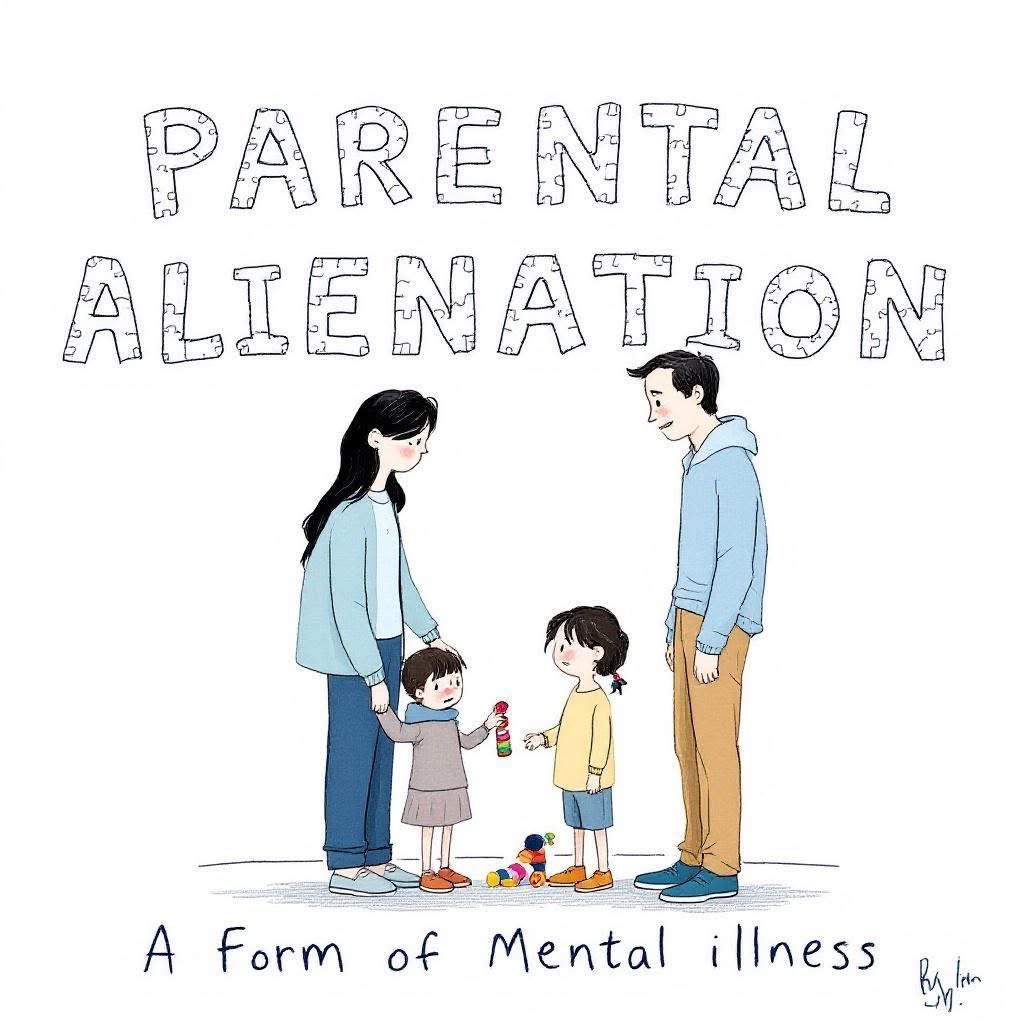
Parental Alienation as a Form of Mental Illness: The Hidden Psychological Disorder
Parental alienation isn’t just a legal issue or a high-conflict custody matter—it is, at its core, a manifestation of deep psychological dysfunction that borders on or directly reflects mental illness.
While not yet fully classified as a distinct mental disorder in diagnostic manuals like the DSM-5, the psychological patterns and behaviors behind alienation often overlap with clinically recognized personality disorders and trauma-based pathologies.
Alienation is a form of delusional splitting, often rooted in unresolved trauma, identity enmeshment, emotional immaturity, and pathological fear of abandonment.
The alienating parent perceives the other parent not just as an ex, but as an enemy to be erased.
They may appear rational to outsiders, but beneath the surface, they exhibit signs of disordered thinking:
• Paranoia: Convinced the other parent is dangerous, even in the absence of evidence.
• Narcissistic Injury: The breakup triggers a narcissistic wound so deep they feel the need to annihilate the one who “rejected” them.
• Projection: All of their own emotional instability and abusive tendencies are cast onto the targeted parent.
• Enmeshment: The child becomes a psychological extension of themself, not a separate being with their own needs and feelings.
• Delusional Loyalty Testing: Any sign of affection between the child and the other parent is twisted into betrayal.
• Gaslighting: The child is conditioned to doubt their own memories and emotions about the loving parent.
• Emotional Triangulation: The alienator creates a “rescuer-victim-persecutor” dynamic where they are always the hero and the other parent is the villain.
These are not mature coping mechanisms. These are signs of an unstable mind—one that is emotionally regressed and often incapable of separating their inner turmoil from their parenting role.
In many cases, the alienator is suffering from a personality or attachment disorder—especially Borderline Personality Disorder, Narcissistic Personality Disorder, or untreated PTSD.
However, their illness doesn’t present as a mental breakdown. It presents as strategic manipulation, carefully calculated erasure of the other parent, and emotional indoctrination of the child.
This is what makes it so dangerous.
Because unlike other mental illnesses, alienation hides behind legal jargon, false allegations, and performative parenting.
It’s a mental illness with a mask—one that weaponizes the court system and exploits the innocence of a child to soothe the alienator’s own psychological distress.
And the result?
• A child caught in a loyalty bind so toxic, they may develop anxiety, depression, PTSD, and lifelong identity confusion.
• A targeted parent living in prolonged grief and emotional exile.
• A broken family system ruled not by love, but by control, fear, and untreated pathology.
Parental alienation is not just emotional abuse. It is a psychological syndrome—
born of mental illness, fueled by denial, and sustained by systems that refuse to name it.
We don’t just need reform.
We need the courage to recognize alienation as the psychological illness it truly is.
#ParentalAlienation #MentalHealthAwareness #PsychologicalAbuse #FamilyCourtReform #EmotionalNeglect #PersonalityDisorders #NarcissisticAbuse #AttachmentWounds #BreakTheCycle #ProtectOurChildren #CovertMentalIllness

 GreatCosmicMothersUnite