

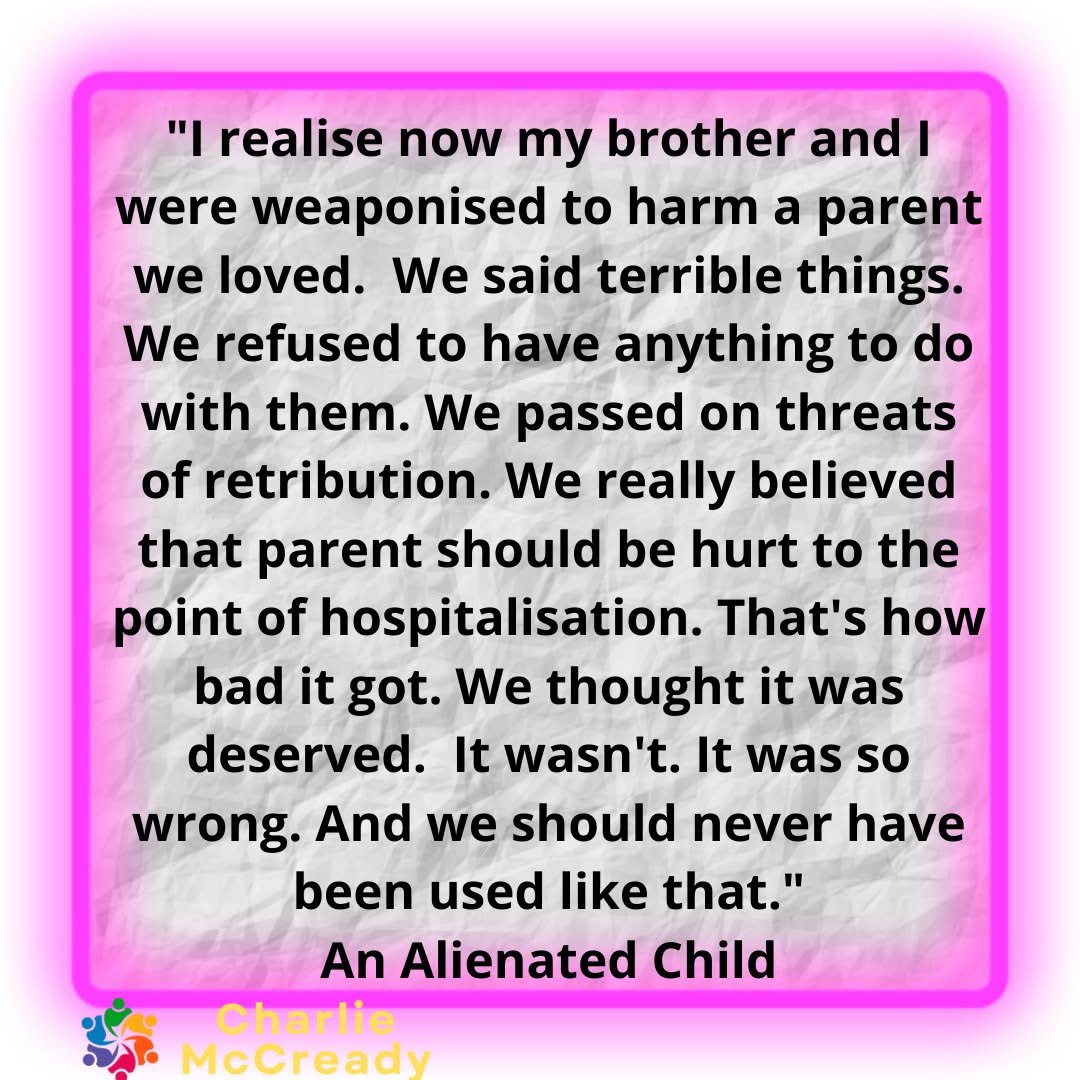
As an alienated child grows older and gains more independence, they may begin to have a deeper understanding of the manipulation and coercion they experienced. They may start to realise that they were used as a weapon to reject a parent they once loved and who loved them unconditionally. This realisation can evoke a wide range of emotions, including betrayal, anger, confusion, and sadness.
The alienated child may feel betrayed because they were led to believe hurtful and false narratives about the targeted parent, causing them to say and do things that they now recognise were unjust and harmful. They may feel guilty and regret their actions, and have different ways of dealing with this.
As they mature and gain a broader perspective, some alienated children may try to see both sides of the story rather than solely aligning with the aggressive alienating parent. They may feel a longing to reconnect with the rejected parent and seek understanding and reconciliation. However, the process of navigating these complex emotions can be challenging, as they may still harbour feelings of anger and resentment towards the alienating parent. They may also have to work hard to ‘deprogramme’ as if detoxing from years of poisonous narratives.
Ultimately, each alienated child’s experience and feelings may vary based on their unique circumstances and individual resilience. Some may choose to distance themselves from the alienating parent, on realising the toxicity of the relationship, while others may strive to establish a healthier connection, aiming for personal growth and healing. The journey towards finding peace and restoring the parent-child relationship can be a difficult and multifaceted one, requiring support, therapy, and a commitment to self-reflection and understanding.
#charliemccready
#parentalalienationcoach
#parentalalienation
#FamilyCourt
#parentalalienationawareness
#childcustody
#custodybattle

 GreatCosmicMothersUnite