

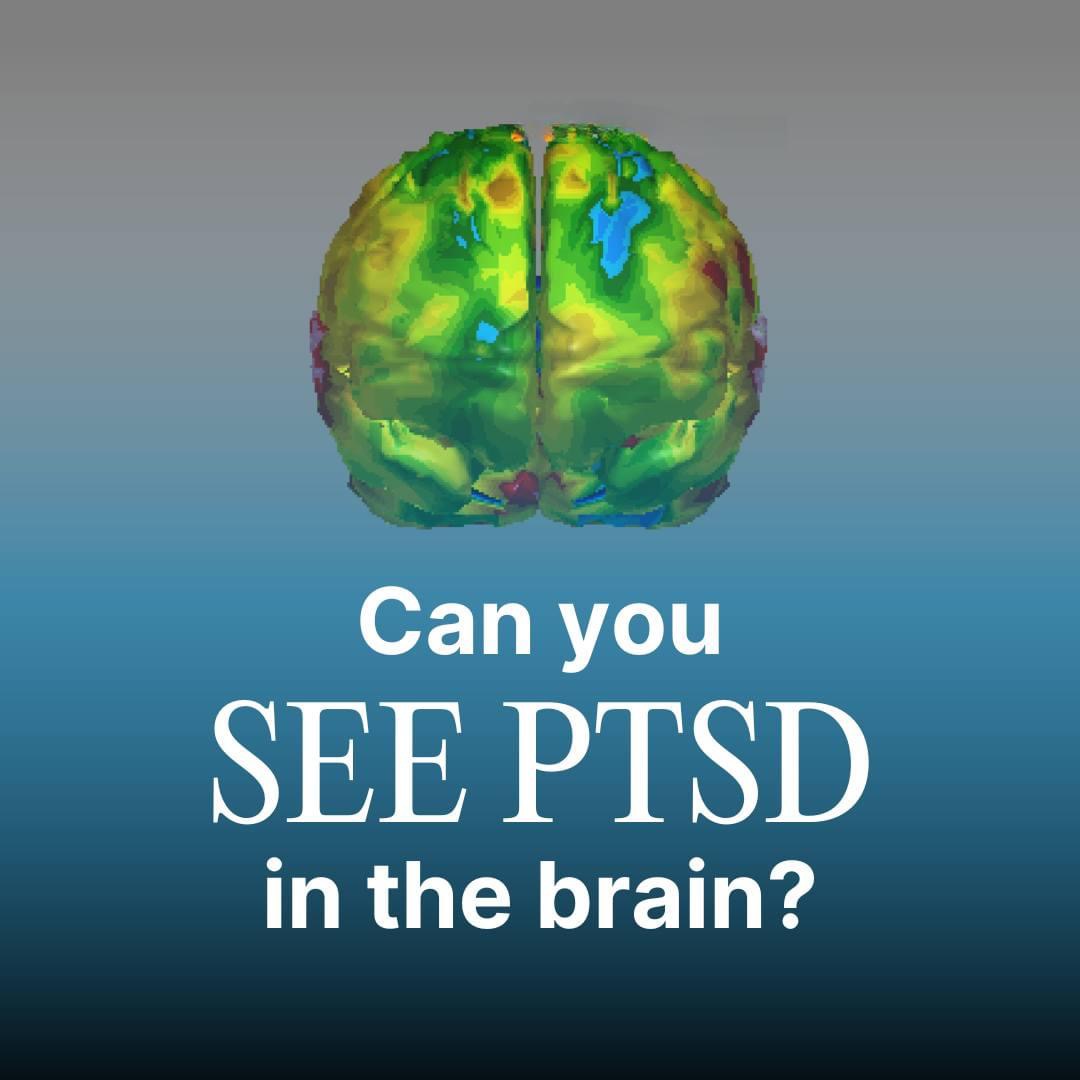
Once thought to be “just” a psychological disease, it is now possible to see visible changes in the brain as a result of PTSD.
When you experience trauma, your brain goes into survival mode. It activates the sympathetic nervous system, releasing stress hormones and preparing you for fight, flight, or freeze.
But what happens when the threat is gone?
Often, people get stuck in survival mode, preventing relaxation and normal functioning. As a result, our scans often show:
🧠Amygdala Hyperactivity: The amygdala, responsible for processing emotions, becomes hyperreactive to trauma-related stimuli in PTSD patients.
🧠Hypoactivity in Other Areas: The hippocampus, right inferior frontal gyrus, ventromedial prefrontal cortex (PFC), dorsolateral PFC, and orbitofrontal cortex become significantly less active, some even atrophying.
The good thing about being able to see this dysfunction in the brain is that there are additional options to address the cause and reduce or eliminate PTSD symptoms.
Here is a case study I collaborated on showing some of the great results we’ve achieved with some of our veteran PTSD clients: https://ow.ly/pHbK50SqokT

 GreatCosmicMothersUnite