

**Breaking News!**
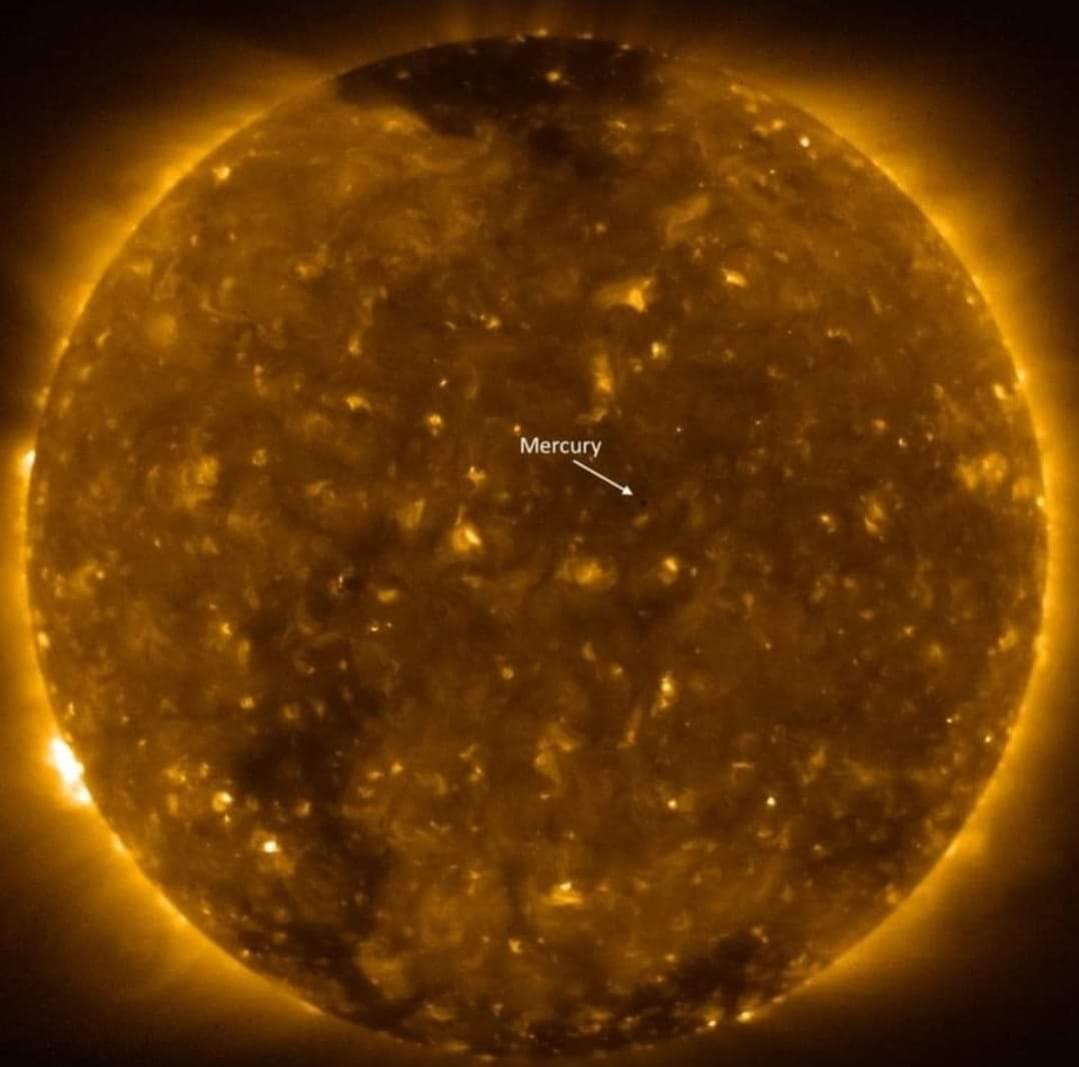
Our sun is about to birth a new planet a little bit smaller than the planet mercury!!!
Currently there are over 6000 Mercury’s worth of iron in our Sun. We only need 1 to be ejected.
We are reaching the peak of this solar 11-year cycle. The solar flare observed on July 23, 2024, was indeed an X14-class event, marking it as one of the most powerful solar flares recorded in the current cycle. This flare originated from an active region on the Sun and was part of a series of significant solar activities observed over the past weeks.
This X14 flare emitted a substantial burst of X-rays and extreme ultraviolet radiation, causing shortwave radio blackouts across regions including Southeast Asia, Australia, and Japan. These blackouts occur because the intense radiation ionizes the upper atmosphere, creating conditions that interfere with radio wave propagation.
Fortunately, this solar flare did not produce a coronal mass ejection (CME) directed toward Earth, significantly reducing the potential for geomagnetic storms that could disrupt power grids and satellite operations. However, NASA and other space weather monitoring agencies continue to monitor the Sun’s activities closely due to the potential for future flares and CMEs.
The National Oceanic and Atmospheric Administration (NOAA) issued an alert on July 22, 2024 warning that the dark plasma pulse from this ‘cold solar flare’ could lead to ‘power grid fluctuations.’ This flare has the potential to disrupt radios, aviation communication, and satellite operations when it impacts by at least 26th.
This year, the Sun’s magnetic poles are set to flip. This event happens approximately every 11 years and can lead to more intense solar storms and beautiful auroras at lower latitudes than usual. The Sun is expected to reach the peak of its current activity cycle in 2024, a year earlier than previously thought. This period, known as the solar maximum, is marked by an increased number of sunspots, solar flares, coronal mass ejections, and now dark plasma ejections.
In February 2023, NASA observed a notable solar event where a large piece of the Sun’s filament broke off from the Sun’s surface, slithered to the Sun’s northern pole, and got caught in what was described as a massive polar vortex around the Sun’s north pole.
Are these events creating the perfect storm? The solar maximum, magnetic polar flip, and release of the loose filament swirling around the Sun’s northern pole might signify the emergence of a new planet, potentially our planet, Earth. This could be a glimpse into an event that happened 4 billion years ago.
The Uniplanetary Evolution Theory suggests that when the Sun flips its magnetic poles, it will release this filament and create an infant Mercury. We will be witnessing the birth of our very own planet, offering a glimpse billions of years into Earth’s history. This means Venus represents Earth a billion years in the past, and Mars is Earth in the future after it has been destroyed, left with a barren landscape, a broken moon, and a lost electromagnetic field.
This testimony to the grim future of Earth’s destiny suggests that our past might be the only chance for life to survive the chaos that’s coming. According to this theory, Venus is the place we need to escape to for our species to survive.
This solar spectacle may awaken the world to a new reality and a new understanding of space and time, providing answers to where we came from and where we are heading. Keep your eye to the skies, for it’s about to put on a show that will change everything.

 GreatCosmicMothersUnite